
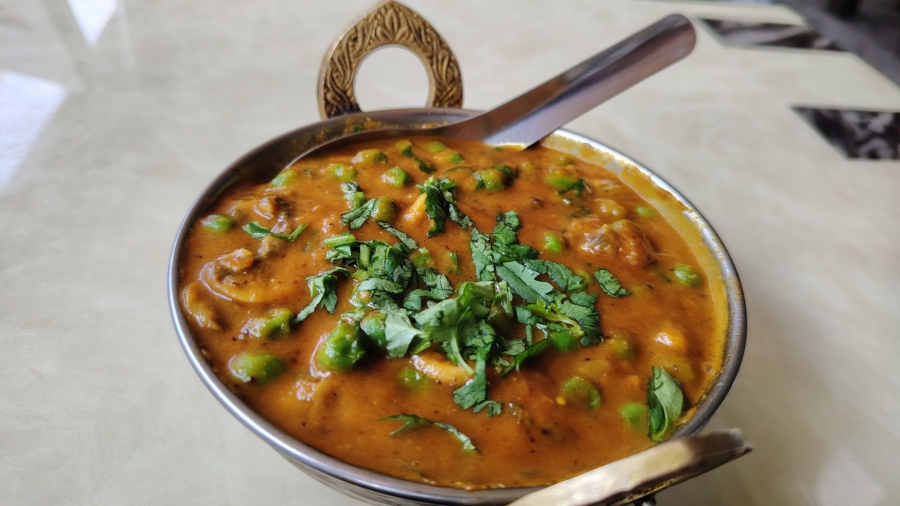
I’ve passed by Kohinoor Indian Restaurant several times during my daily visits to Fisherman’s Village. Today I stopped in for lunch.
My mom asked me one day how I choose food. One of my answers is that I usually choose the one that chooses me. In other words, the one that speaks to me. I like this freedom: I wait for something to catch my attention with some feature. Often it’s just the work of a moment. And the thought comes to mind: this and here. The other answer is the same, only in a nutshell: I often choose based on the picture, the list of ingredients, or the interesting name.
I’ve looked at this restaurant several times, and once I already had the determination to come here. Somehow, today was the only day I had to come here. I hadn’t planned to eat here today. All I had in mind was to eat somewhere light. While walking aimlessly, I turned back a few steps to look at the menu displayed on the street. It was nice. While I was looking, one of the – or was it the only? – waiters spoke to me. Since both the menu and the waiter were friendly, the question of where I would have lunch was settled.
Brown tamarind chutney
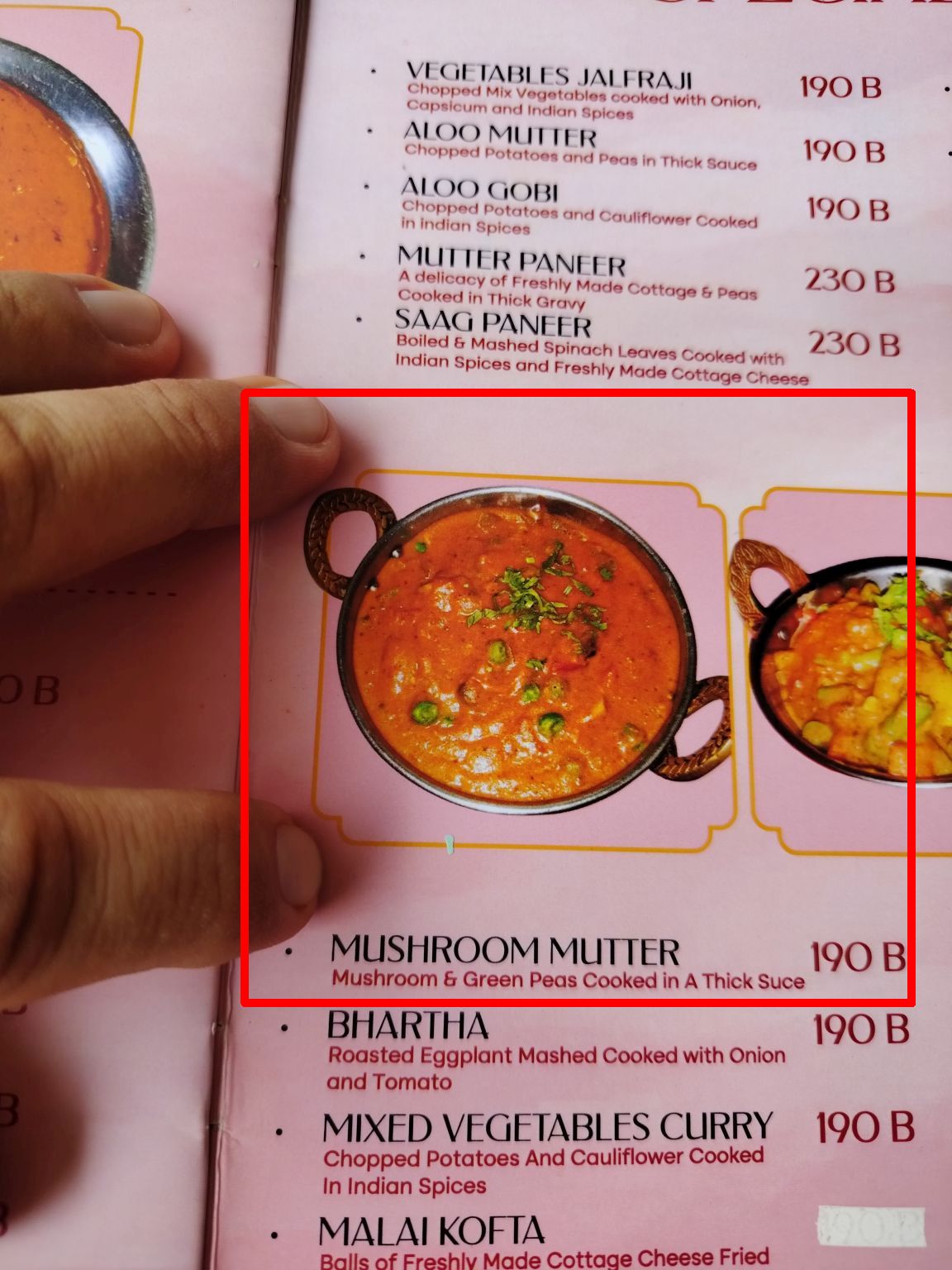
After studying the menu, I chose based on a picture and the description. A mushroom and green pea dish cooked in a thin sauce. The question arose whether I would like rice or bread with it, but I skipped them.
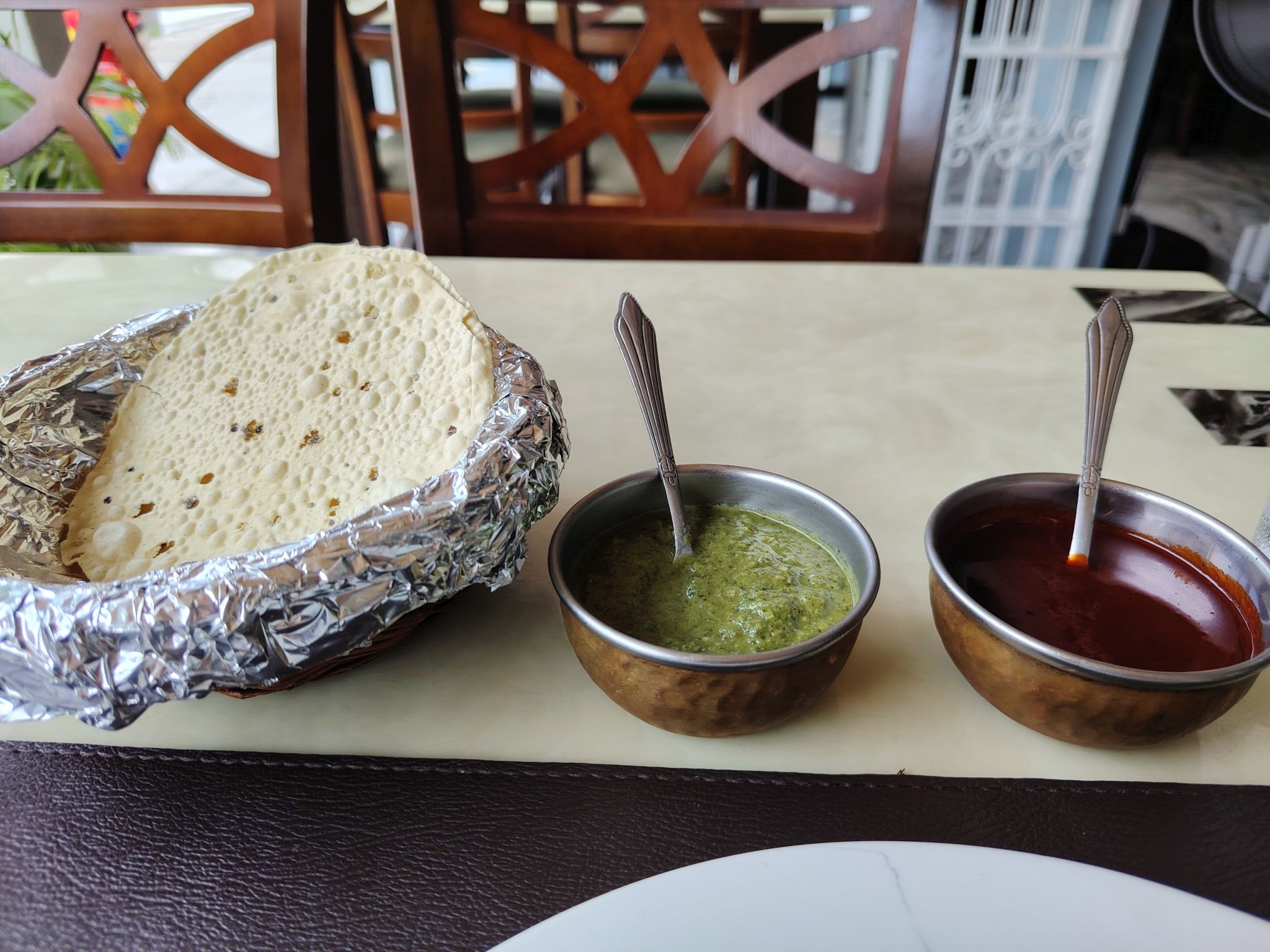
As an appetizer, however, I received 2 sauces and two thin slices of bread without asking. At home, we don’t even call this kind of bread bread, and we don’t really eat it.
By the time I got to this point in writing, I must have laughed out loud in the restaurant. I’m done eating and started writing this.
I was curious to see how familiar the bread the waiter introduced as papad was to the AI. My question was simple, but the answer was surprisingly detailed.
What is the name of the half of the bread they bake in India, it’s very thin and crispy. I took a picture of it too.
The very thin and crispy Indian bread pictured here is called papadum (or papad for short).
It is made from lentil flour (most often urad dal), seasoned with spices, then rolled thinly and fried or deep-fried in oil to make it crispy.It is usually served as an appetizer or side dish, often with various sauces (like the green coriander-chili chutney pictured here and the brown tamarind chutney).
Both chutneys tasted really good, by the way. There was something about the brown that really caught my attention, but I couldn’t figure out the source of the flavor. In retrospect – after asking AI again, I can see that it was not by chance that I couldn’t tell the source of the flavor, just as I had a hard time deciding what flavor I was talking about.
Brown tamarind chutney (also known as imli chutney) is a sweet-sour-spicy sauce that is often served as an appetizer, samosas, pakoras or even papadums in India.
Basic ingredients:
- Tamarind (imli) – the main ingredient, which gives it a sour taste.
- Jaggery or sugar – sweetens and balances the sour taste of tamarind.
- Spices – usually ground cumin, ginger powder, chili, black salt (kala namak), sometimes coriander powder.
- Water – to achieve the right consistency.
Taste:
- sweet from the jaggery (or sugar),
- sour from the tamarind,
- slightly spicy and tangy from the chili and spices.
That’s why it’s a perfect match for crispy and neutral-tasting papadums or softer naan.
Considering that I had never heard of tamarind and jaggery, I have the excuse that I could not recall completely unknown things. Due to the increase in my knowledge, I could not resist asking AI about this tamarind. I feel that I did the right thing, especially since the plant also has a Thai touch.
Tamarind (also called in Hungarian, Latin name Tamarindus indica) is the fruit of a tropical tree. The tamarind tree is a tropical plant, so it does not occur wild in Europe, because it requires a warm, humid climate. It is mainly grown in India, Southeast Asia, Africa and Latin America.
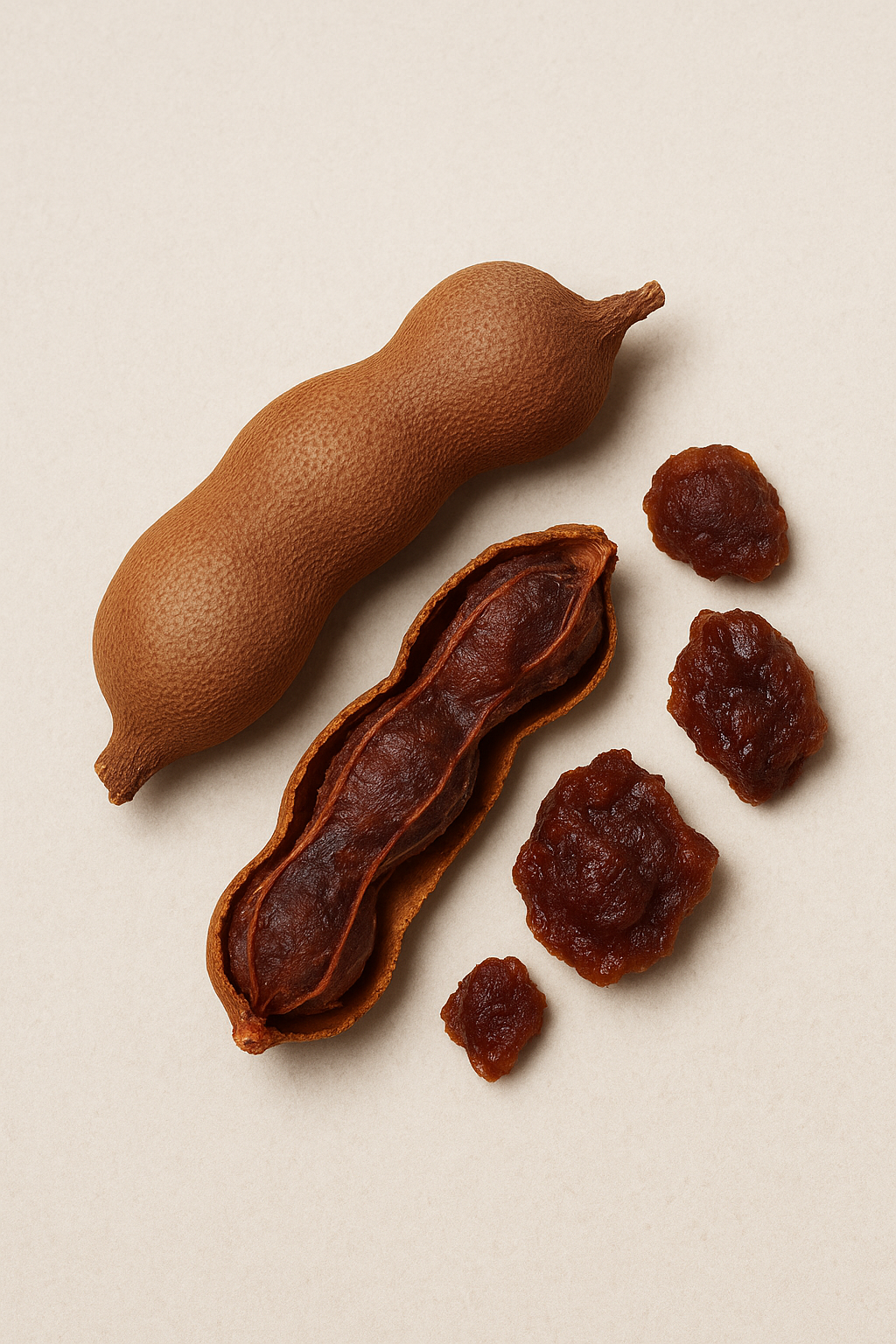
Some important things to know about it:
- Pod: grows in a brown, oblong, hard-shelled pod, inside is a sticky, brown pulp.
- Taste: sour, slightly sweet, very intense, therefore it is excellently used to flavor sauces, chutneys, and drinks.
- Uses:
- In India and South Asia, it is used to make chutneys, curry, soups, and drinks (e.g. tamarind juice).
- In Thailand, it is one of the basic flavors of pad thai.
- In Latin America, it is also used for sweets, soft drinks, and sauces.
- Forms: available as whole pods, in pressed blocks (with or without seeds), or as a concentrate/paste in bottles.
This is the sour ingredient that gives brown chutney its special flavor.
Mushroom Mutter
After I had eaten the papad and a generous portion of the two chutneys, the main course was brought.
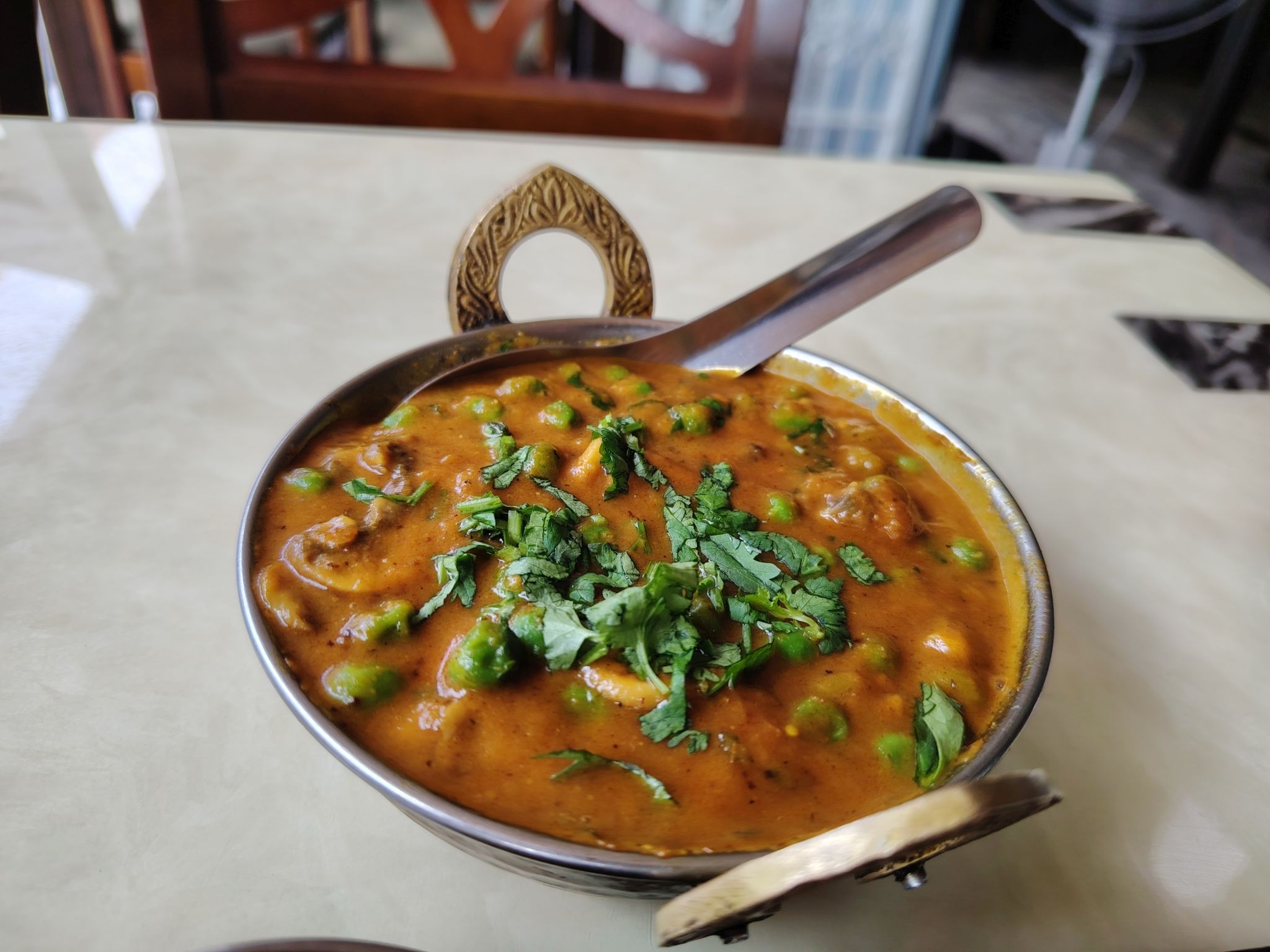
ate slowly and in small bites. I wasn’t in a hurry. This is where I first felt that I would write about this lunch. Because in these restaurants, the time spent here is not only about the food, but also about the kindness I received.
The kindness began when I sat down on the chair pulled out for me, the waiter turned on the fan, but asked if it was okay for me.
When I was choosing the food, he answered my questions kindly.
When the appetizer was brought out, he politely recommended that one sauce was spicy and the other was sweet.
Then, as I slowly ate my food, the waiter came over and politely asked if he could bring me some bread, because if I ate it with it, the flavors of the food would come out better. I didn’t think about whether this recommendation had an ulterior motive or not. I accepted the recommendation. Shortly after, I received a fresh loaf of bread.
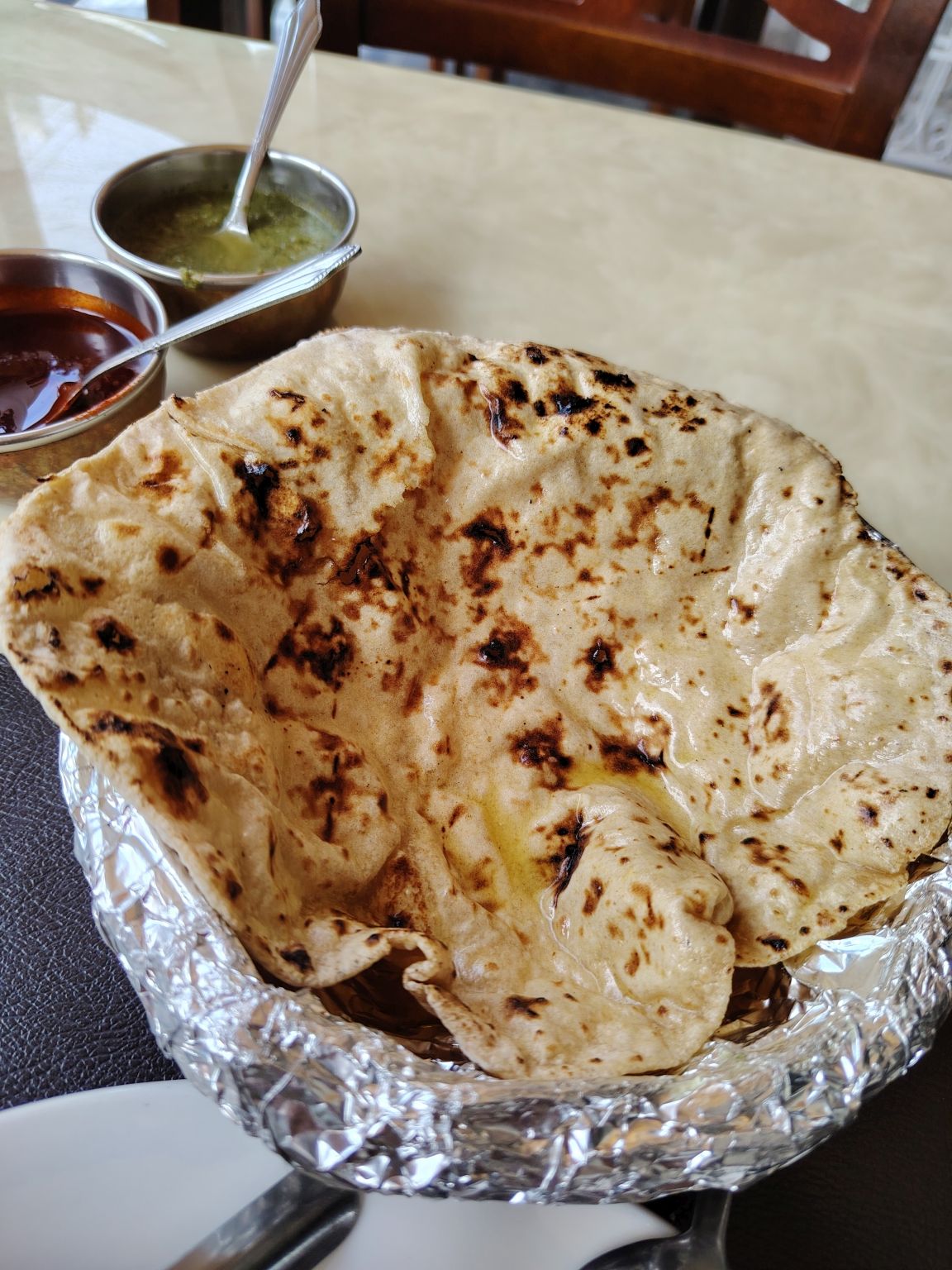
The smell and a little taste reminded me of pancakes, but they assured me that this was completely different. By the way, it was. And I really felt different flavors while munching on the mushrooms and peas. This bread was delicious on its own. And of course, I asked the AI what it said I was eating based on the picture.
The second picture is not a papadum, but a different type of Indian bread. It is more of a roti or naan type of bread:
- Roti is made from wholemeal flour, baked in a dry pan or tandoor, thinner but softer.
- Naan is made from white flour, often with yoghurt or sourdough, and baked in a tandoor, so it is a bit thicker, softer and has characteristic brown spots on top from the heat. It is often spread with butter (ghee), as in the picture.
The photo probably shows a naan spread with butter, due to the shiny surface.
How interesting that I already know ghee. I first encountered this dish in Wales this year.
After lunch, I chatted with the waiter for a bit. I thanked him for his recommendation. He politely asked where I was from. I told him where I came from and why I was here. All he knew about Hungary was that not every place is without problems. We agreed on that. I told him that that was why I was curious about other countries. He said that he thought I should visit countries where I could have many new experiences.
For example, India…Uncalculated dangers
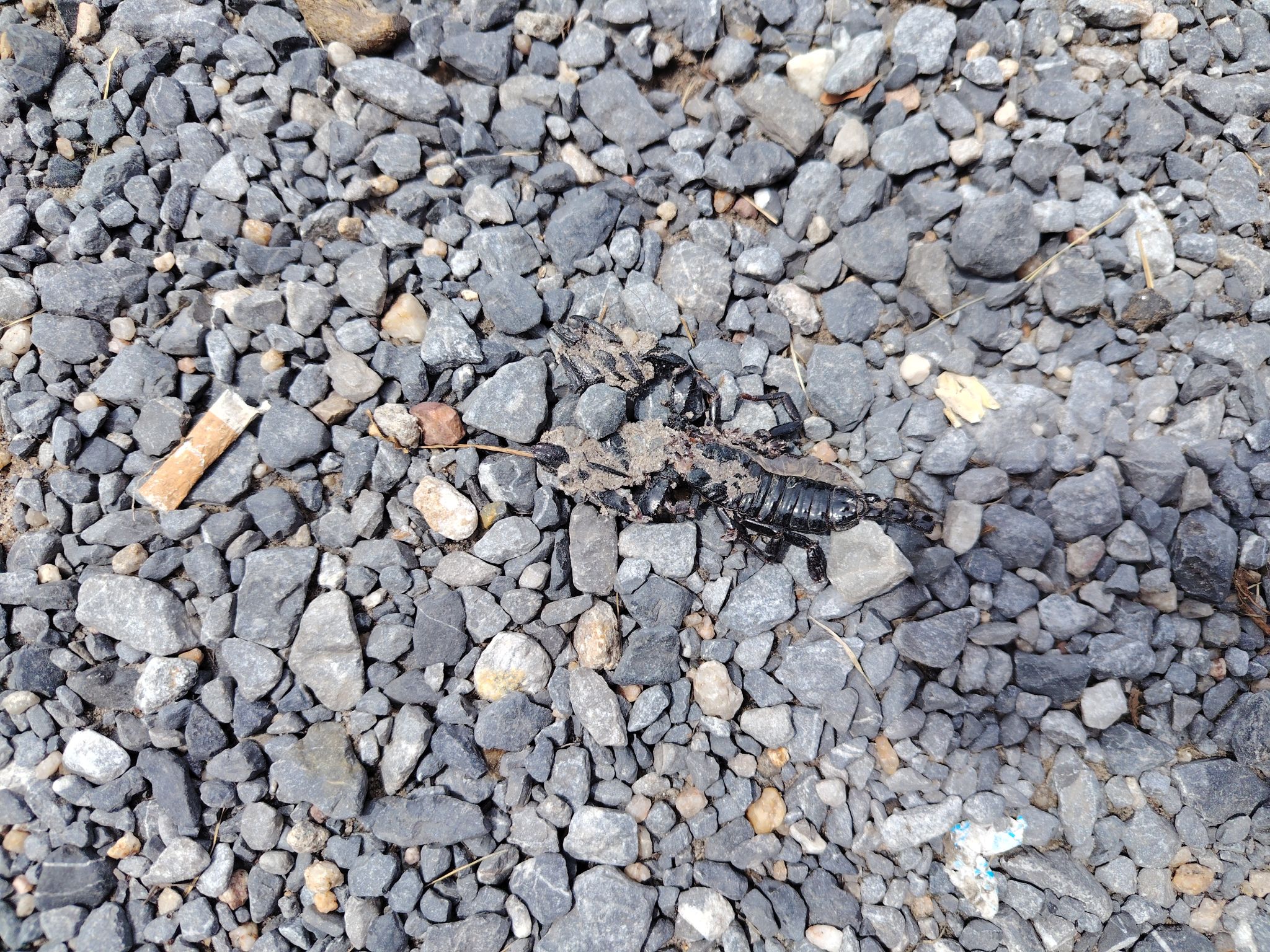
I’m only writing this here because I had another unexpected experience on my way home. Last night – although it was the first time this had happened – I went barefoot to the pool. Well, after taking these two photos 50 meters from the house next to the road, I’ll have to reconsider driving barefoot in the dark at night.

Buy me a coffee?

If you enjoyed this story, you can buy me a coffee. You don’t have to – but it means a lot and I always turn it into a new adventure.
Buy a coffee for Steve
 Linktree
 Short introduction