

If you’re hungry, be careful with this post!
Last week, while browsing the menu at a small restaurant – well, I haven’t been to a big one yet! – I found myself flipping through the menu and not knowing what some food categories meant, so I didn’t even think about ordering from that section. So I ordered a stir fried noodle.
But, I don’t want to get ahead of myself. This post is a little summary of the dishes I’ve discovered here, or delved into here. Spoiler alert: I haven’t eaten anything bad yet.
I’m getting a little lost in the world of food, even if “The gastronomic revolution eluded me“. I’m not the type to take pictures of food, but since I knew I was going to write a post like this, I took pictures of most of my food here. That’s how the galleries for this post came about.
Pad Thai
I knew this from before, we also ate it occasionally in Hungary, it was a big favorite even then. What is pad thai?
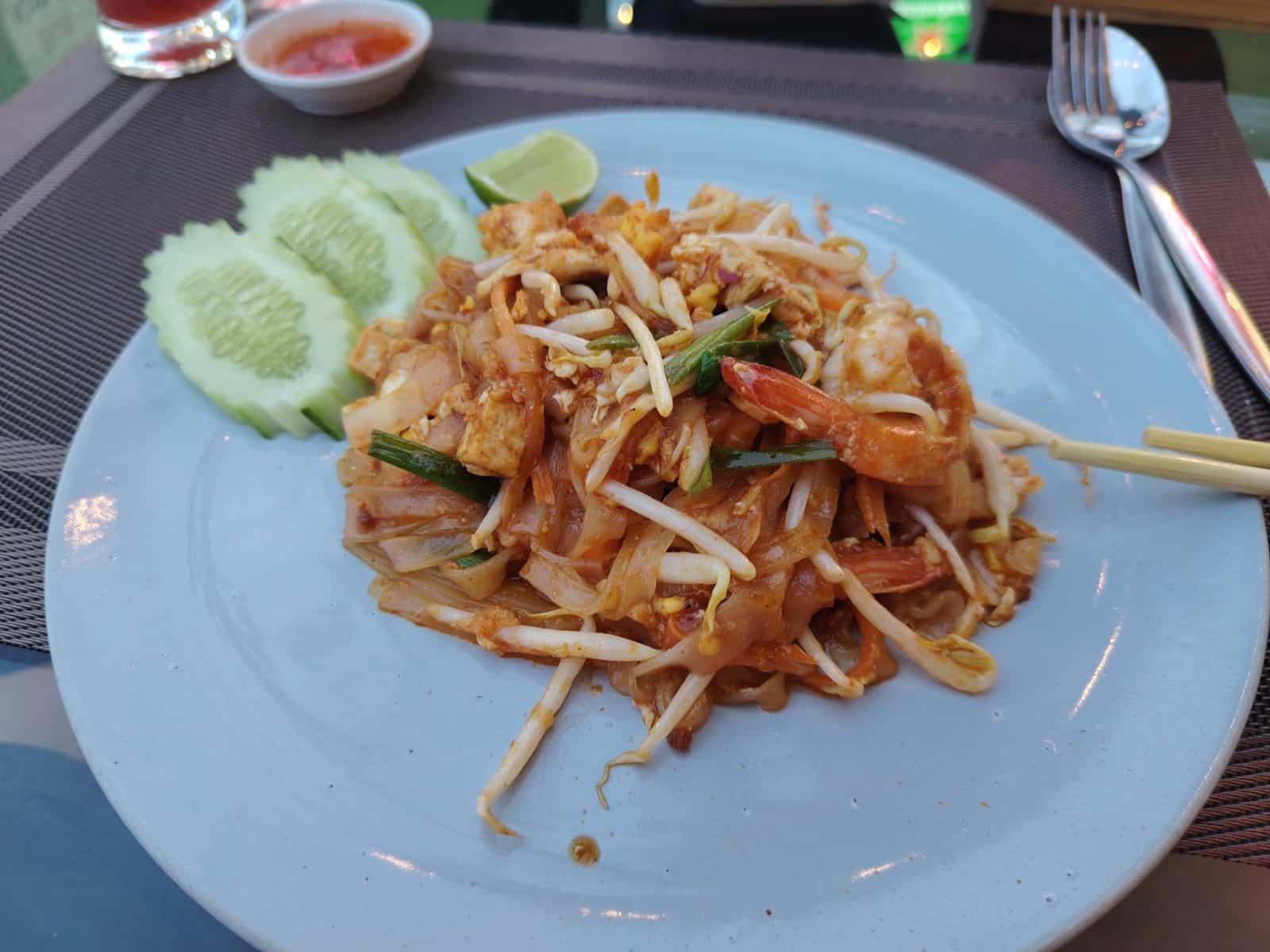
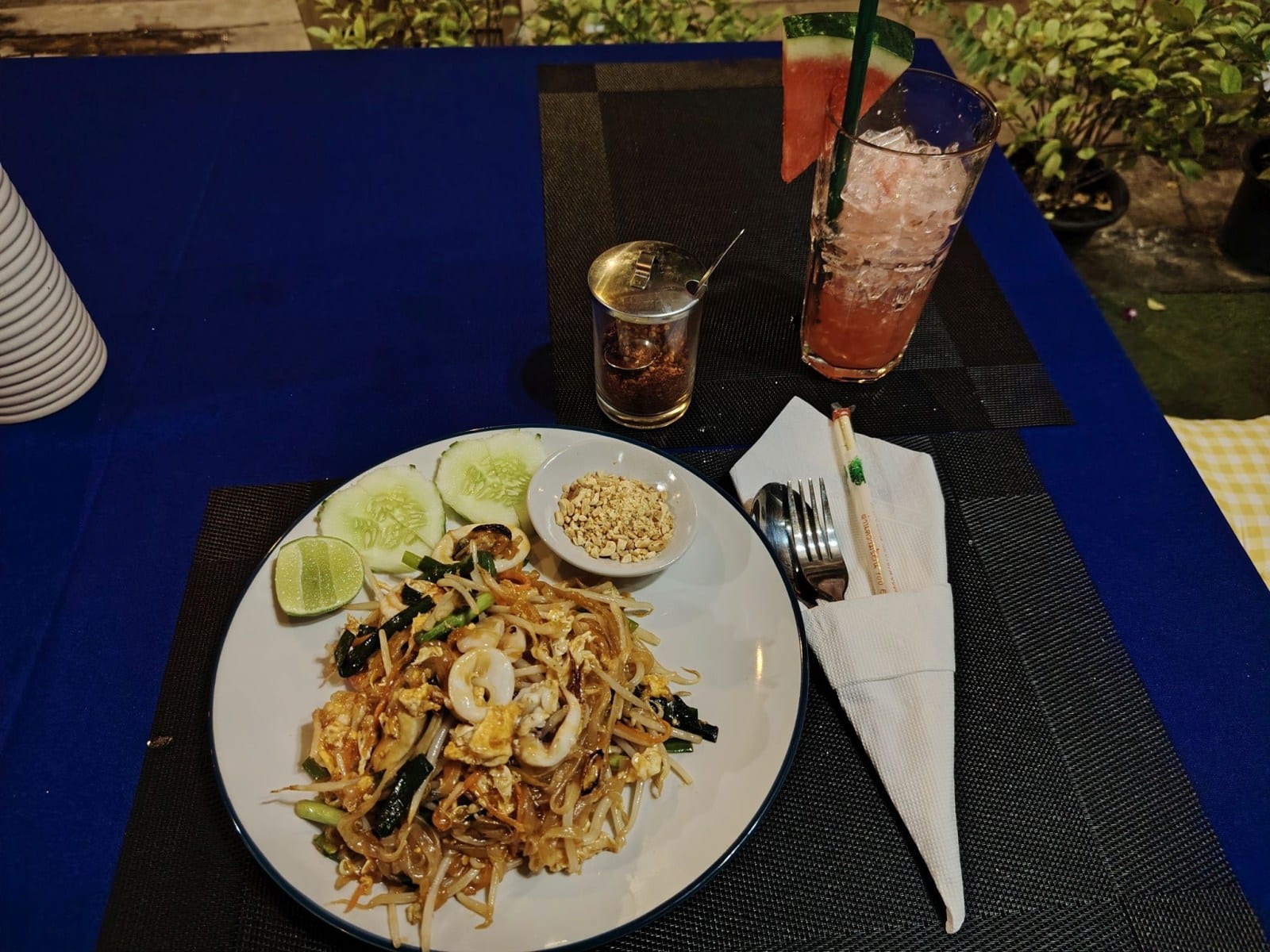
A dish that everyone knows, but it always shows a new face. The rice noodles sizzling in the wok are sweet, sour and salty at the same time. The tangy freshness of the lime, the crunch of the peanuts, the meatiness of the shrimp or chicken – it’s as if you’re tasting the essence of Thai cuisine.
Pad Thai is the most famous Thai noodle dish, also referred to as one of Thailand’s national dishes. It is a stir-fried rice noodle dish made with eggs, vegetables, tofu and often shrimp or chicken. The flavor is given by tamarind paste, fish sauce, palm sugar and lime, and crunchy peanuts are usually sprinkled on top.
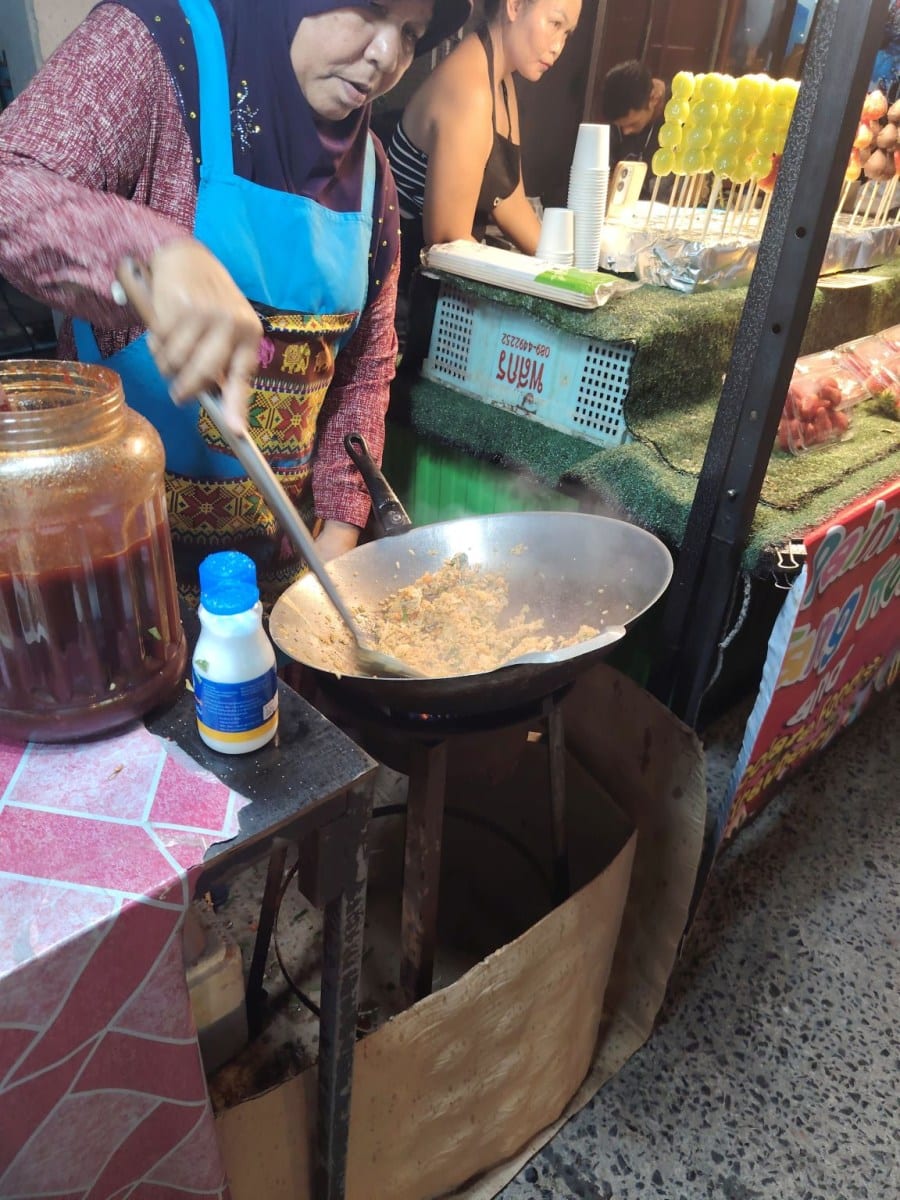
When I ate at Fisherman’s Village, I had the chance to watch a few dishes being prepared on two occasions, as they were being prepared almost in front of my eyes. The wok is always in the mood for a meal, as soon as one dish is ready, they clean it up with a spoon and the ingredients for the next dish arrive. Where I ate, you can also order all kinds of other dishes, so the wok is sure to add a lot of flavor to the previous dishes.
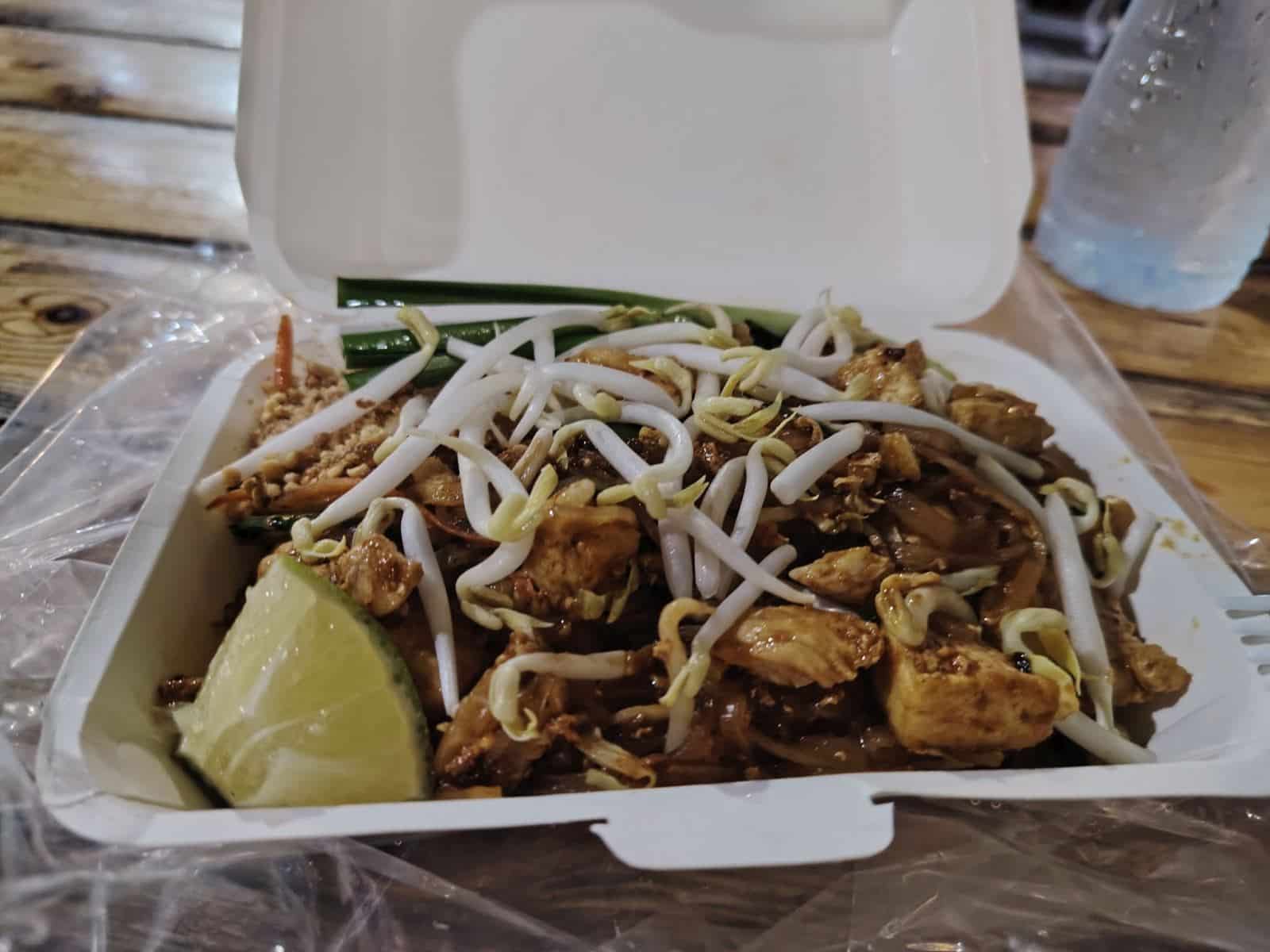
A little oil, add the rice noodles, some sprouts, beat an egg, drizzle with three sauces, a little sugar, add the meat and shake and stir. It’s ready very quickly. To be honest, I’ve always felt that the chicken could have been cooked a little more. But at least the experience is authentic.
For the second time – like the first time – I ordered and paid for crab noodles, but when I saw that instead of crab, the lady was throwing tofu and chicken into the wok, I didn’t have the heart to complain. While I was eating the tofu, I imagined that it was crab…
Pad Thai is sweet, sour, salty and a little spicy at the same time. And it’s iconic.
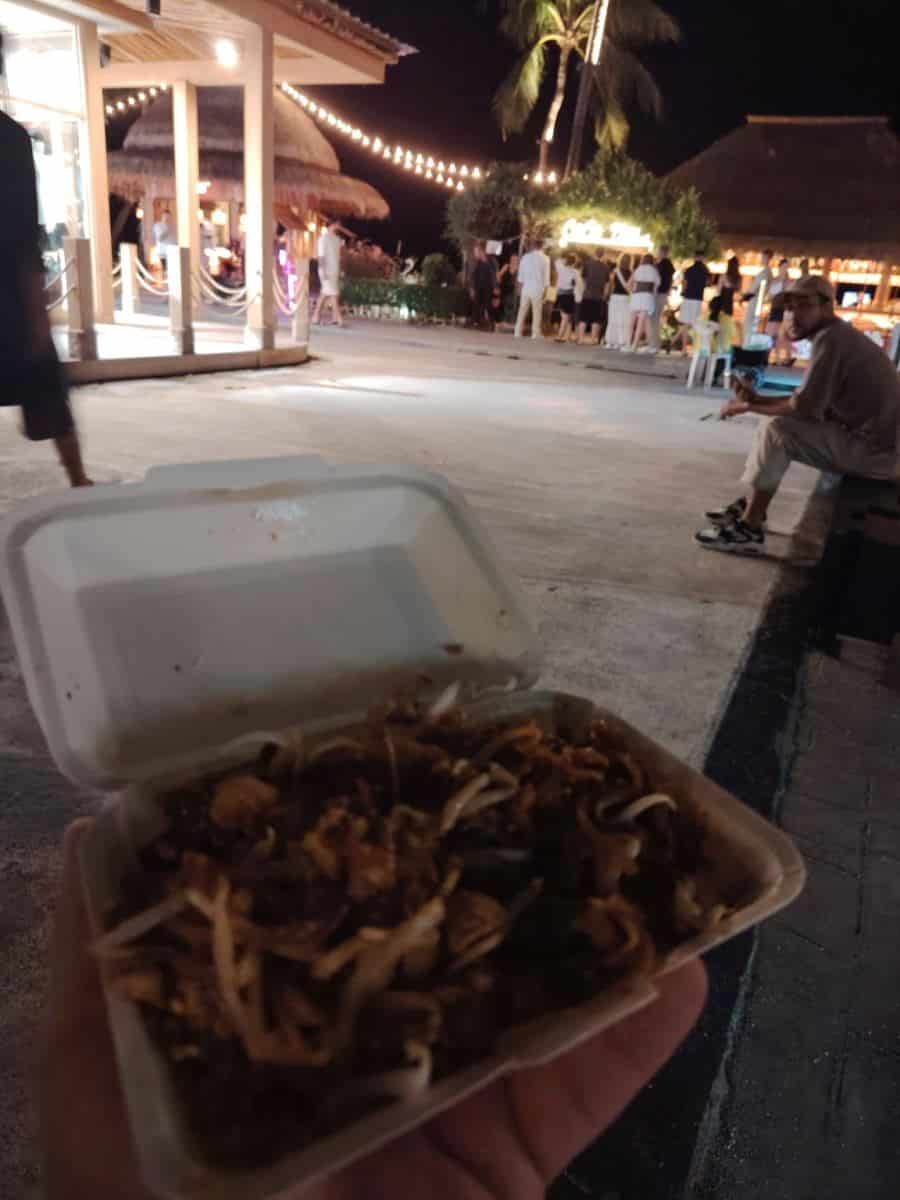
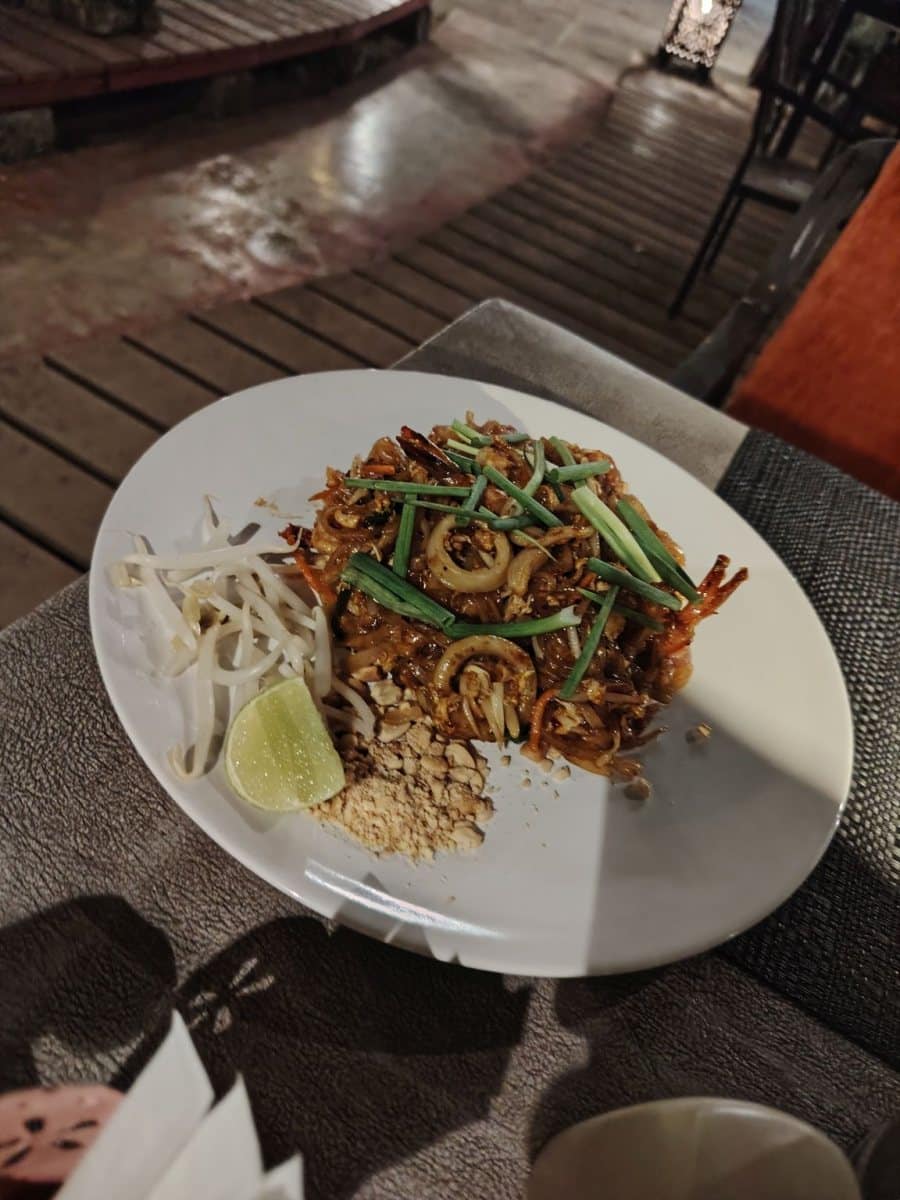
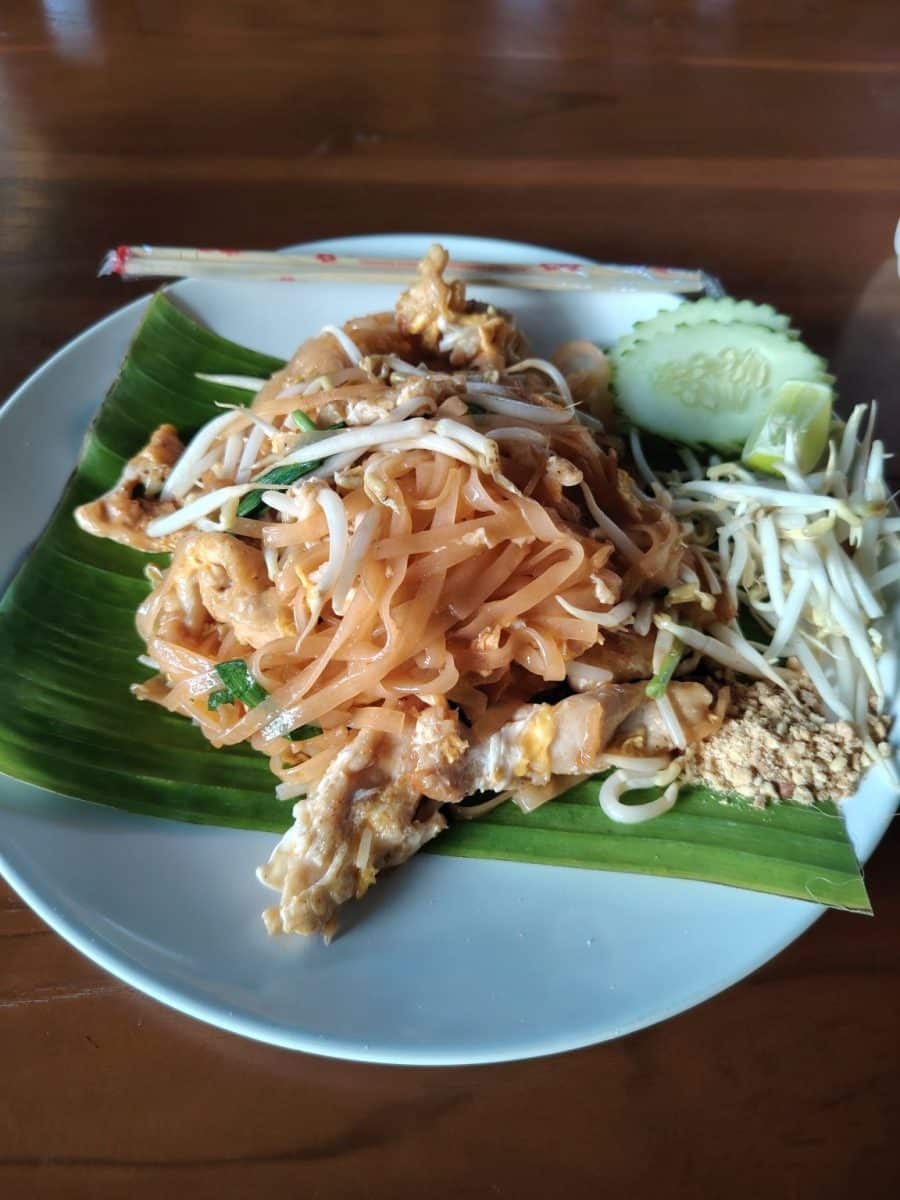
I had my first Thai Pad Thai on my first night. Since then, I’ve tried it in several places. Even in the same places, this dish showed different sides. Sometimes the noodles stick together into a big ball that I can barely untangle, sometimes the strands separate nicely from each other. Sometimes they sprinkle peanuts on it, sometimes they put it in the corner of the plate, sometimes they bring it in a separate bowl. The lime is never left out. And neither is the cacophony of flavors.
Curry
I ate this as a soup. The first two times – as is the Hungarian custom – I also asked for a Pad Thai with the soup. Then I had to realize that this amount of food is a lot. The first time they asked if I wanted boiled rice with the curry, and with the incomprehension of the ignorant, I thought that rice with soup is something that even my grandmother would not understand.
After a few occasions, I thought that I use curry as a spice at home. Here, I ate it as a soup in my confusion, but it is a main course. So, what is curry then?
The word “curry” is often confusing because it has several meanings.
Origin of the word: The word “curry” spread from the English language during British colonial times. It actually comes from the South Indian word “kari”, which originally meant “sauce” or “spicy food”.
In India, they don’t really say “curry” – there are many different dishes with their own names (e.g. masala, korma, dal). However, the English called any sauced, spicy dish “curry”. That’s where the common usage came from.
In Thailand, “curry” means a sauced dish made with spice paste and coconut milk. These are not soups in the classic sense, but thick, sauce-like dishes eaten with rice. Bingo!
Curry powder: In Europe and Hungary, when people say “curry”, many people think of “curry powder” (a yellow spice mixture). This is a British invention, which is a simplified version of Indian spice mixtures. It has no uniform recipe, but often contains turmeric (which gives it the yellow color), coriander, cumin, ginger, cinnamon, chili.
So when you hear “curry”:
- In India = a spicy, saucy dish (but that’s not what they call it).
- In Thailand = a saucy dish made with coconut milk and spice paste.
- In the West = mostly a spice blend.
- In the English = any spicy, saucy dish
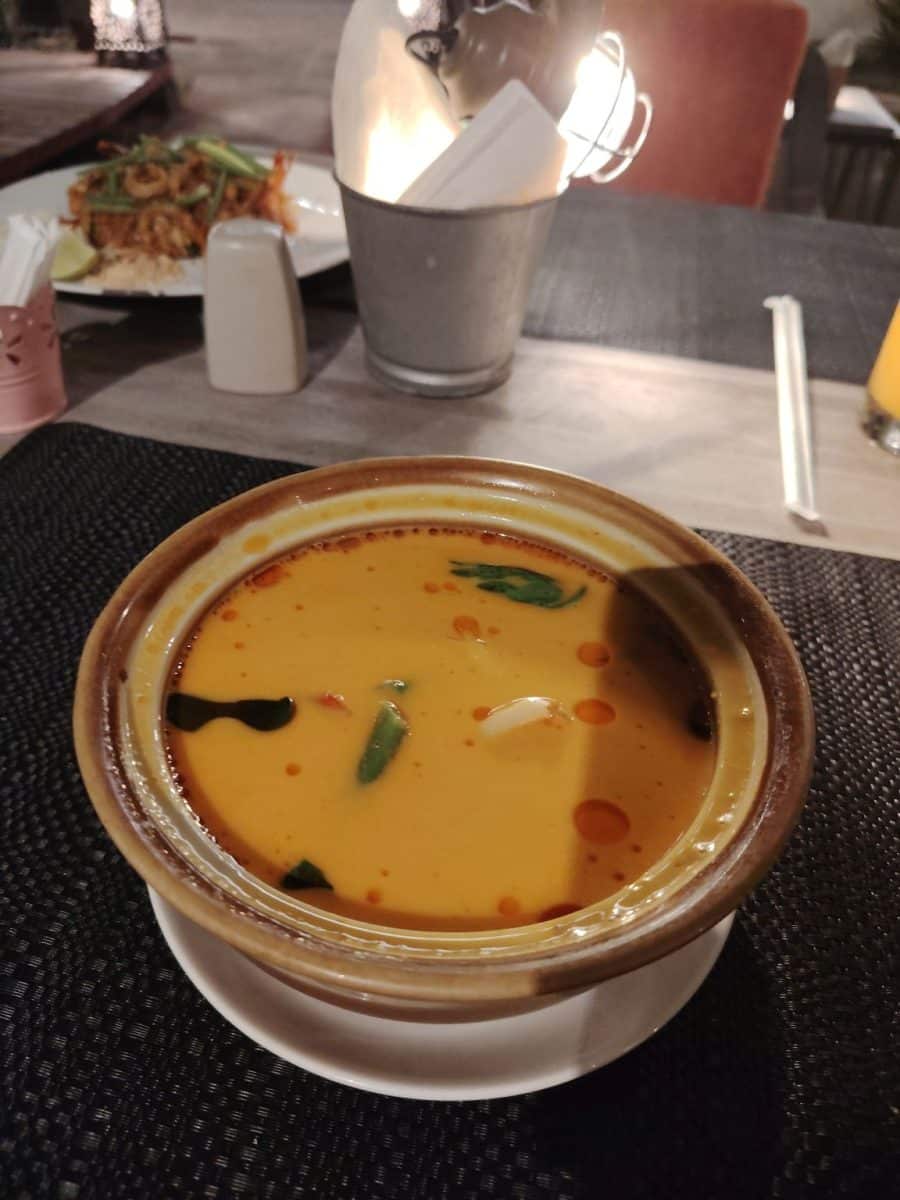
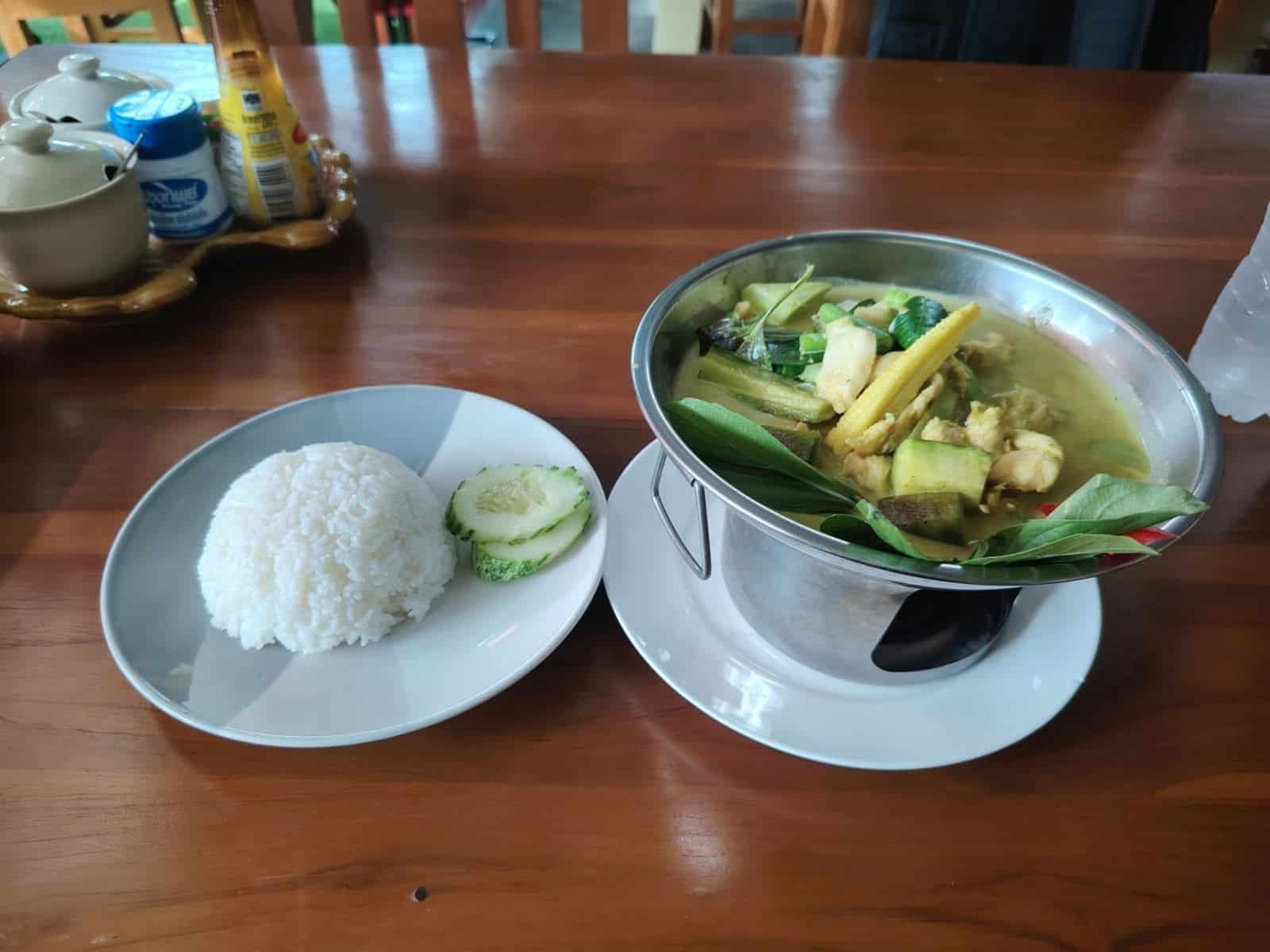
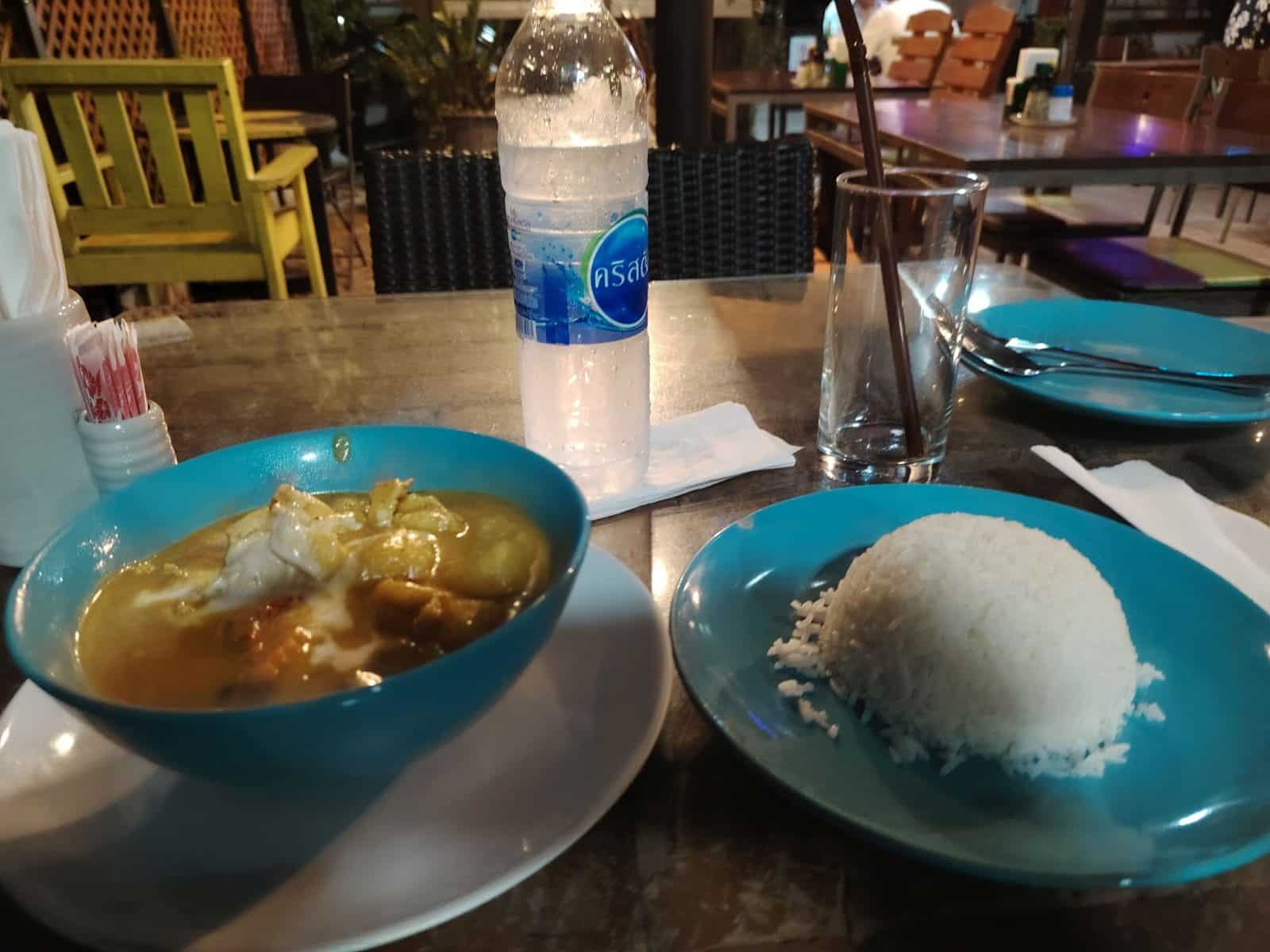
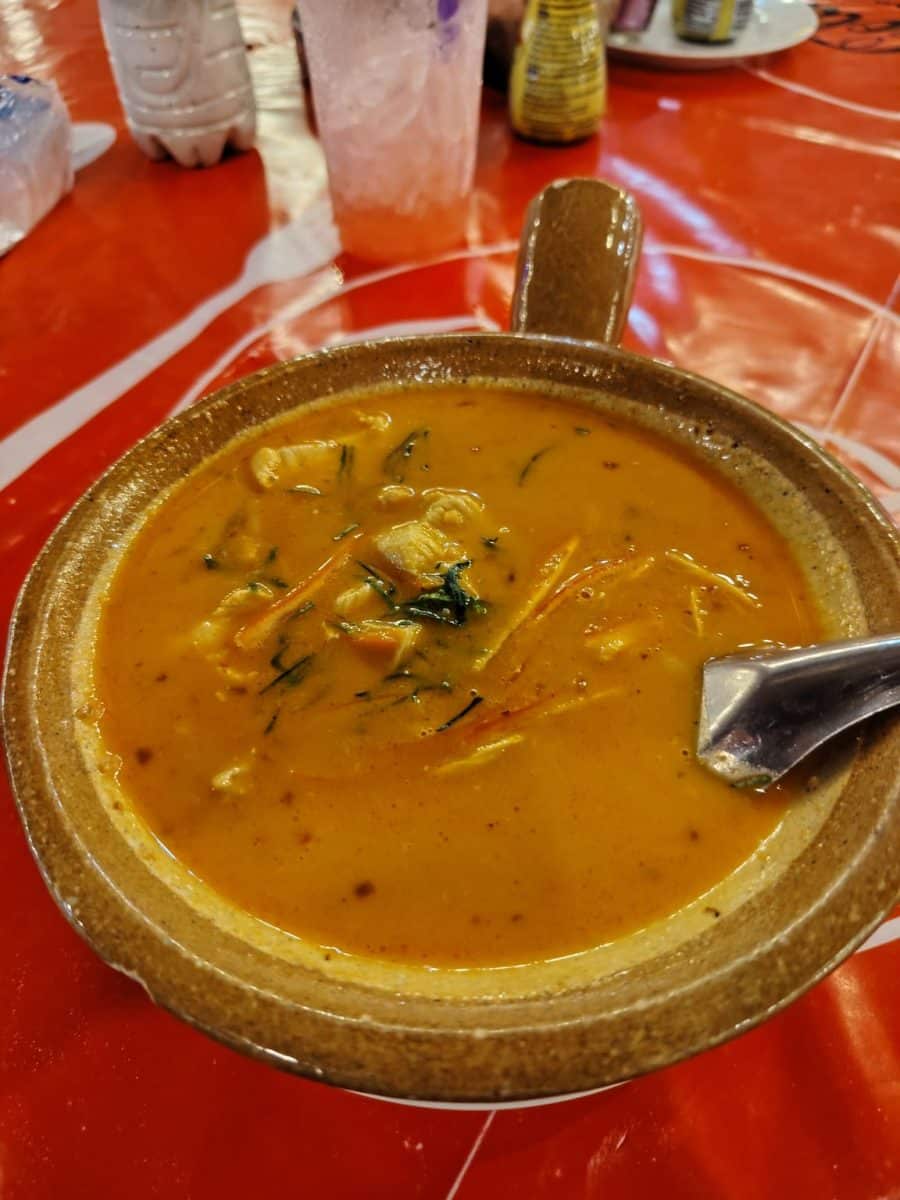
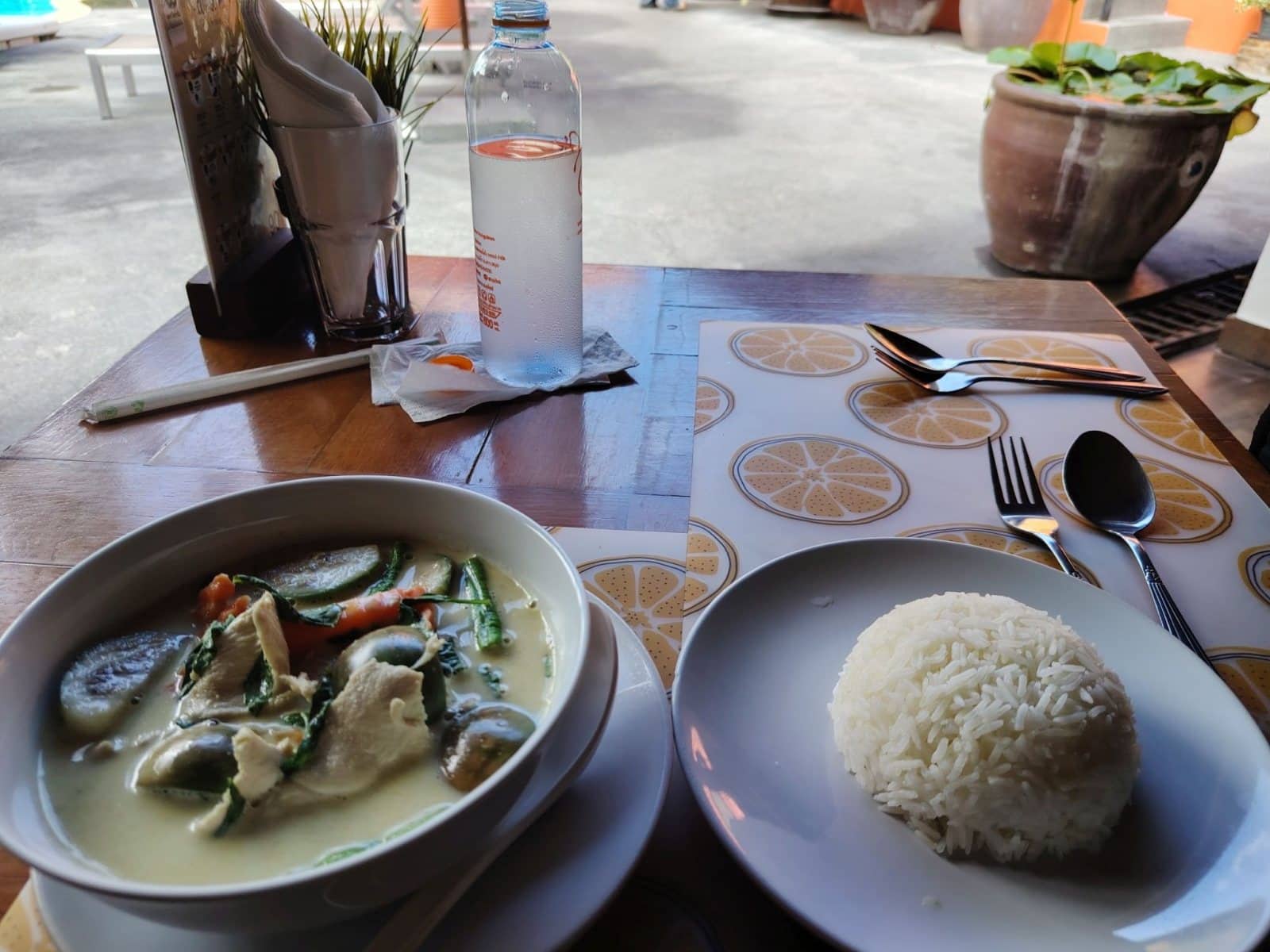
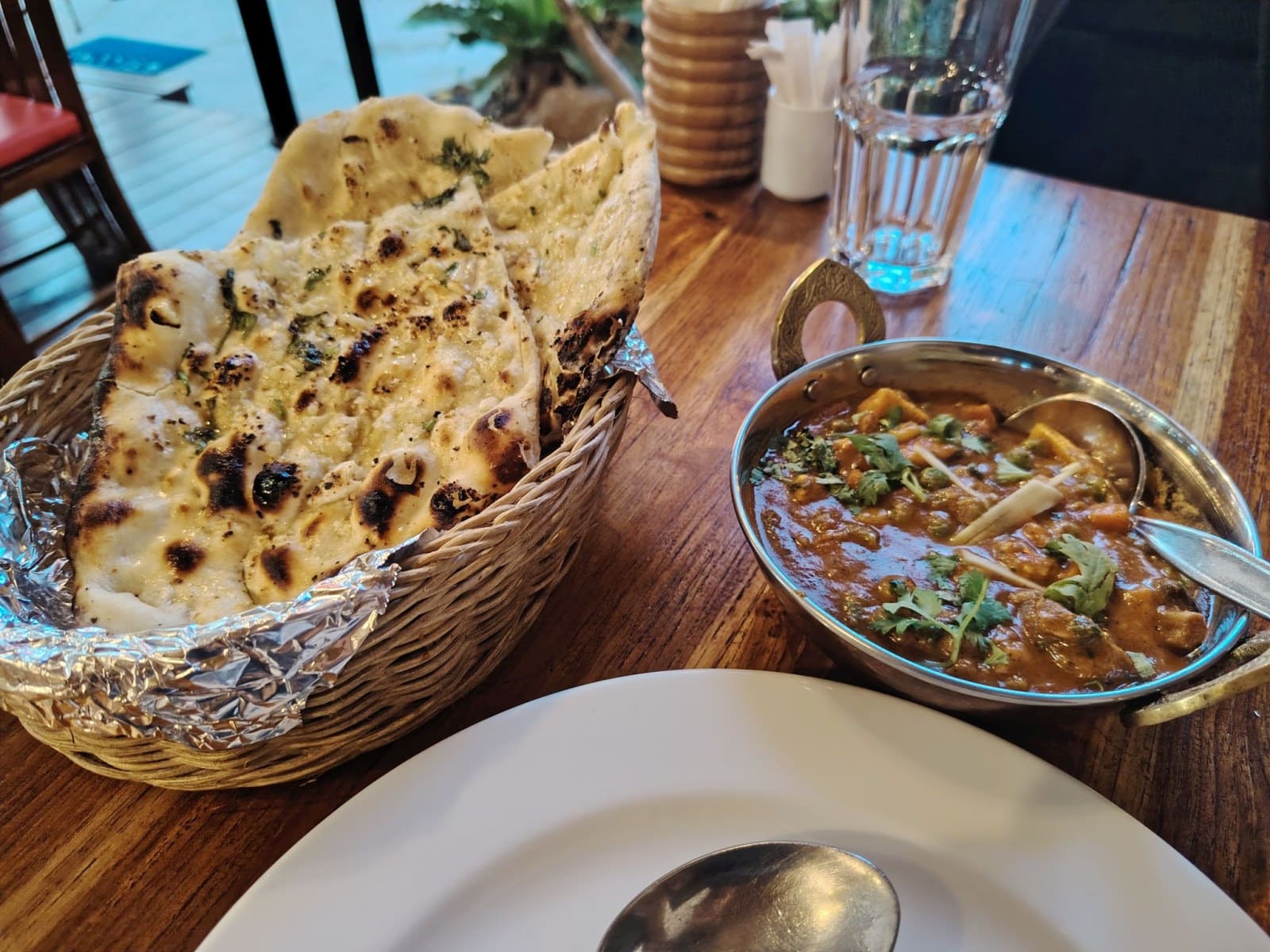
The point from the previous paragraph is that there are several types of curry in Thailand (red, green, yellow, massaman, panang). Each one starts with spice paste and coconut milk, with lots of fresh spices and chilies. The flavors range from very spicy to milder, sweeter.
My favorite is the yellow curry.
Khao Soi
An iconic soup from Northern Thailand: a coconut milk curry base, egg noodles, and crispy fried noodles on top. It’s often made with chicken or beef, and served with pickled mustard greens and lime.
I had a chance taste test for this dish. I was going to order Pad Thai, but I saw a poster of the dish on the wall, so I ate it.
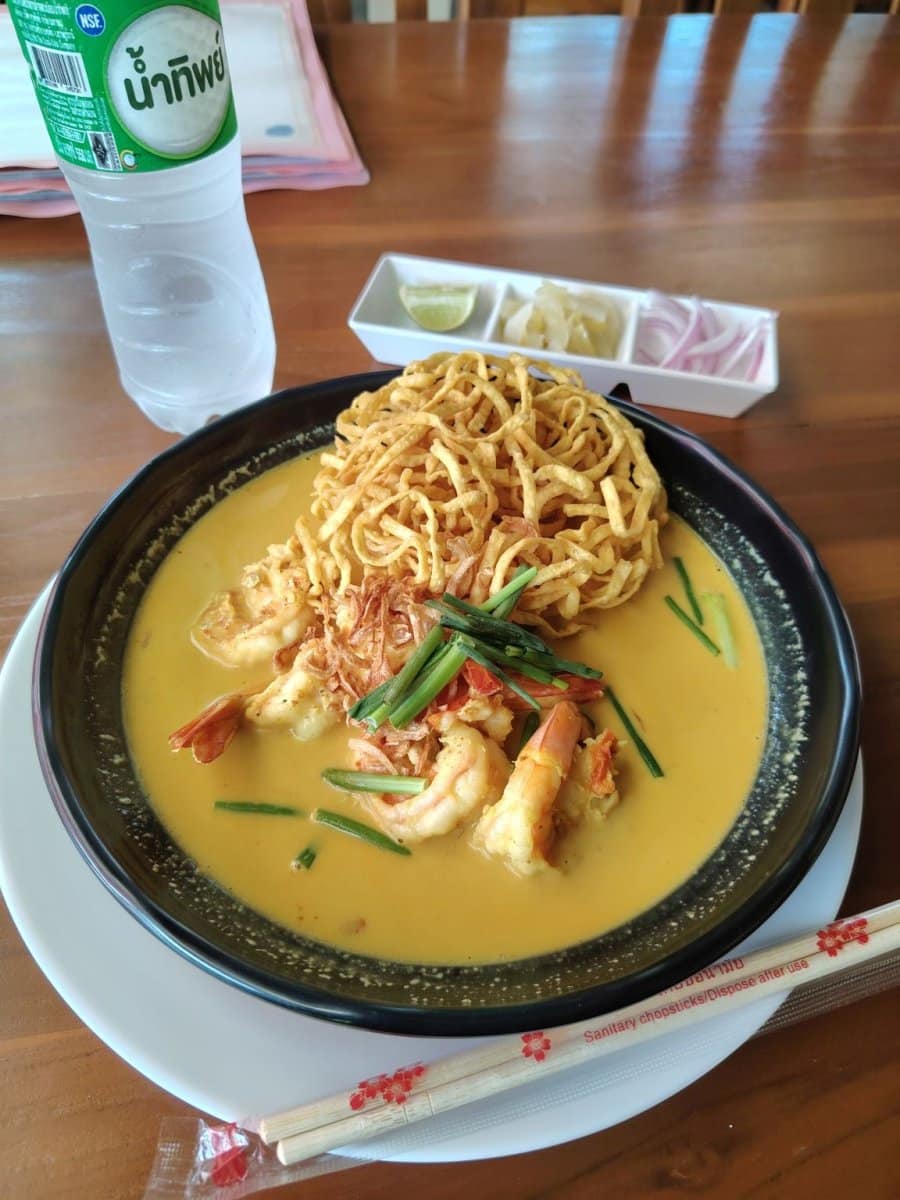
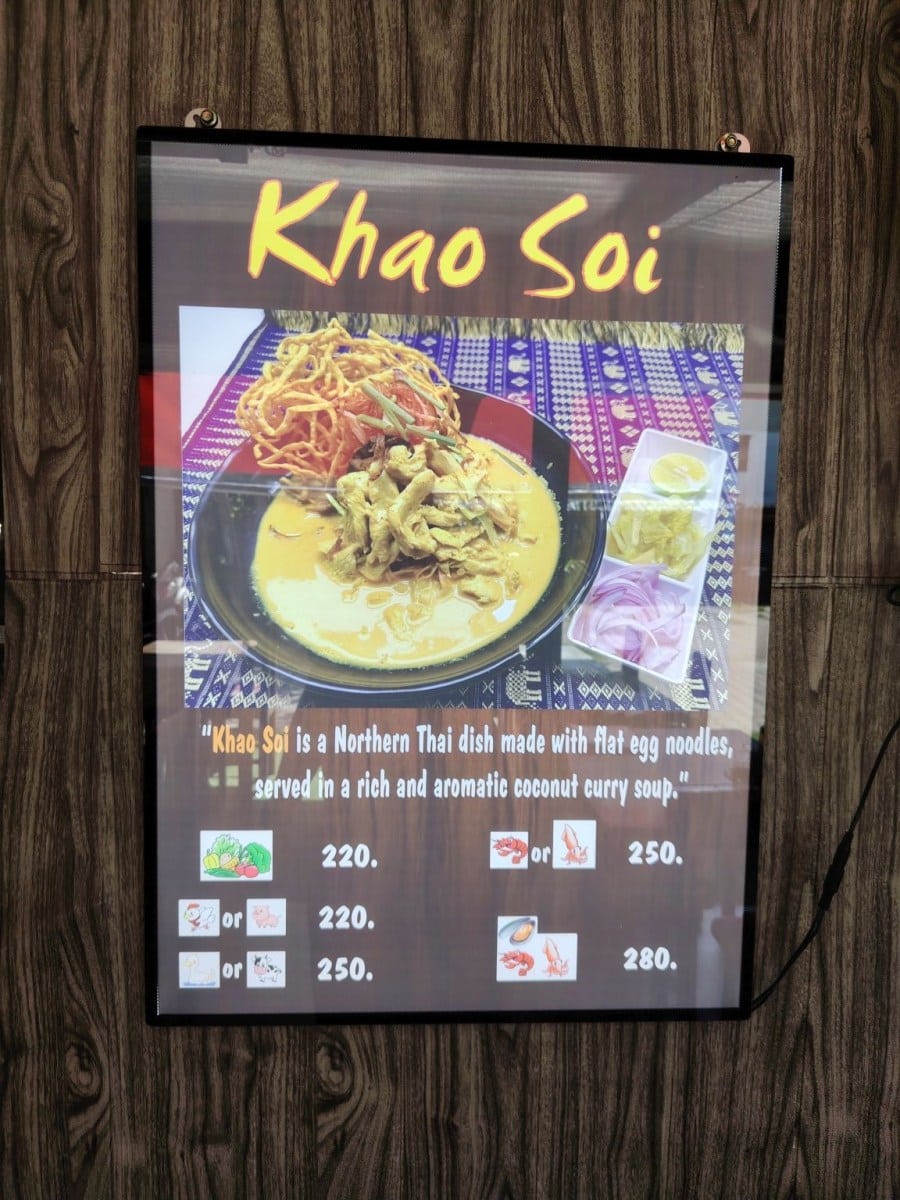
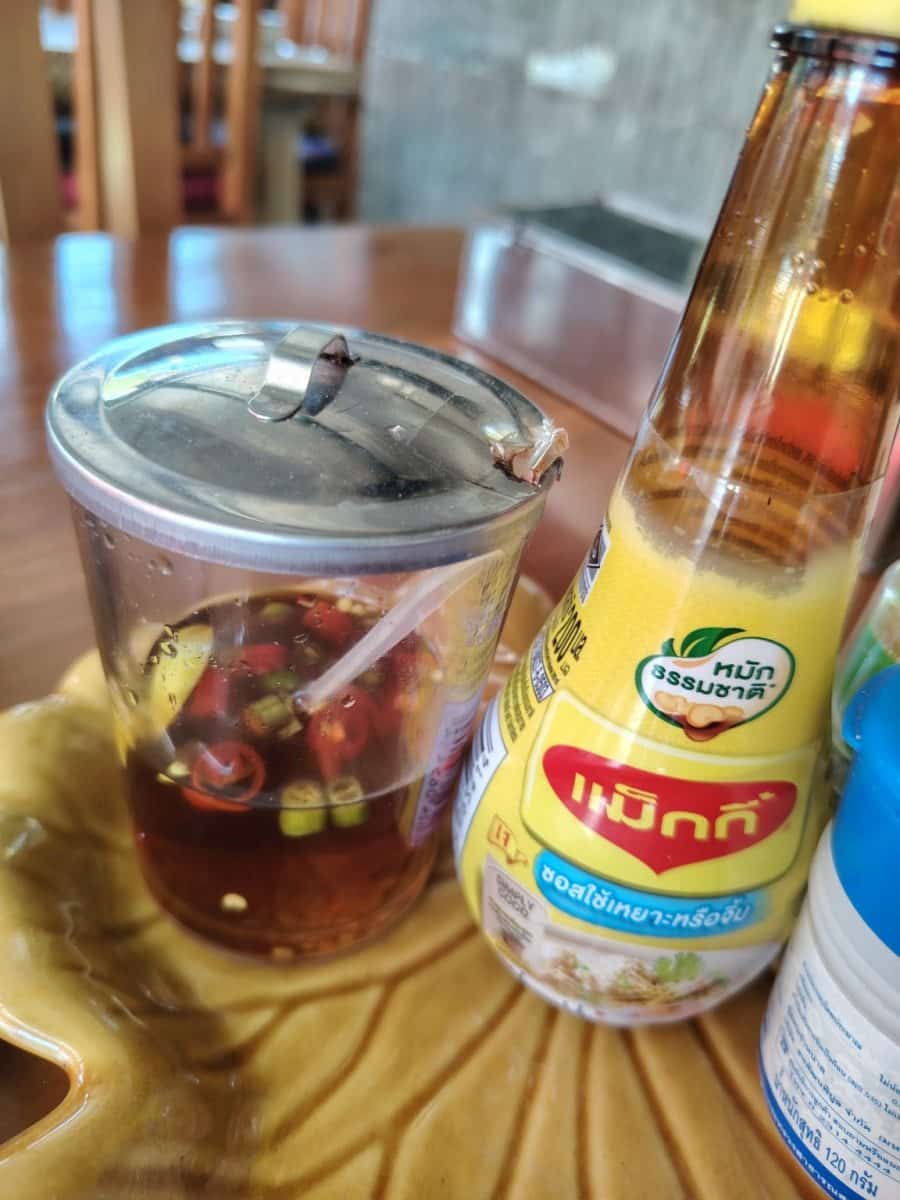
I’ve only had it once, so as BB said in Forrest Gump: that’s all I can say about Khao Soi.
Stir fried
This is not a food, but a cooking technique. I saw it a few times on menus that it was stir fried, stir fried, but I couldn’t decide from the expression whether it was an English word – as I suspected – or the English equivalent of a Thai word that sounds similar to English. I had the feeling from the word “fried” that it might mean frying, but you can’t be sure of anything.
Stir fried dishes are dishes that are quickly fried in a wok, with a little oil and at high heat. They can be meat, seafood or vegetable versions, and the seasoning is done with sauces (e.g. soy sauce, oyster sauce, fish sauce). This is one of the basic techniques of Asian “everyday cooking”. That’s why I wrote that Pad Thai is also made with this technique, to explain to myself why there is a Pad Thai and a stir fried section on the menus. Because if we were to group dishes based on technique, Pad Thai would be under stier fried and lost among the other dishes.
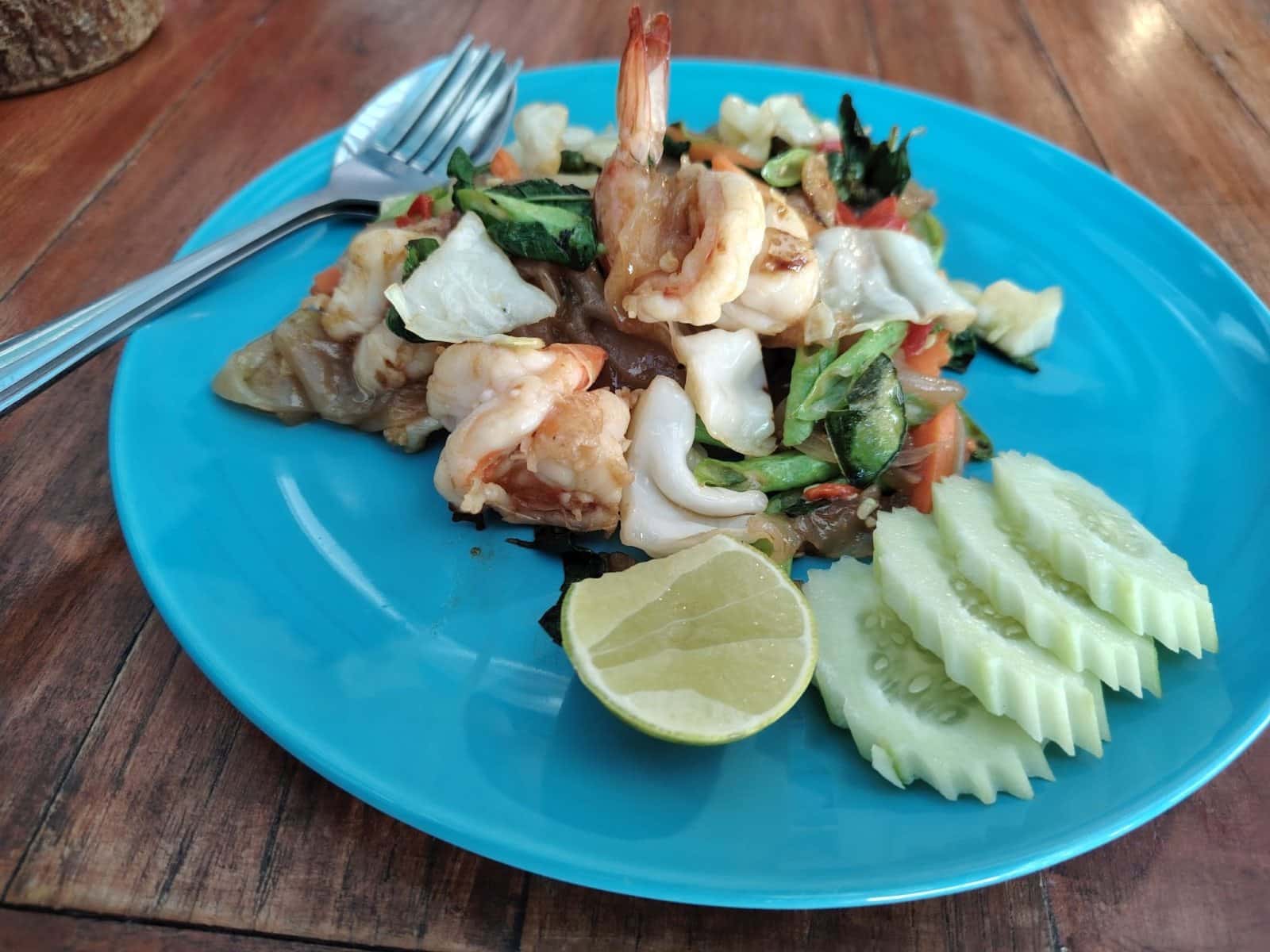
Here I will give a brief overview of basil.
There are several types of “Thai basil”:
- Thai sweet basil (horapha) – has a slightly anise-mint flavor, is common in green curries.
- Holy basil (kaphrao) – has a spicier, pepperier flavor, is a classic in Pad Kaphrao (fried meat with basil).
- Lemon basil (maenglak) – has a lemony aroma, is used in salads and soups.
The adjective “holy”:
- Holy basil (Ocimum tenuiflorum / tulsi) is truly a sacred plant in India and Thailand.
- In India, the plant (Tulsi) is revered in the Hindu religion and is also kept on altars.
- In Thailand, it is less of a religious and more of a gastronomic shrine: it is so central to the flavors that it could be the “soul” of Thai cuisine.
Esan
This is the cuisine of the northeastern region of Thailand, which is simple, rustic, with very strong flavors. Examples include som tam (papaya salad), larb (spicy meat salad) or sticky rice. They usually work with a lot of spicy and fermented ingredients.
There is no gallery about this, because I have not eaten it yet.
It is here because – although the experience is still waiting for me – I have often seen it on menus and I became familiar with the concept at the same time as the others.
Other foods
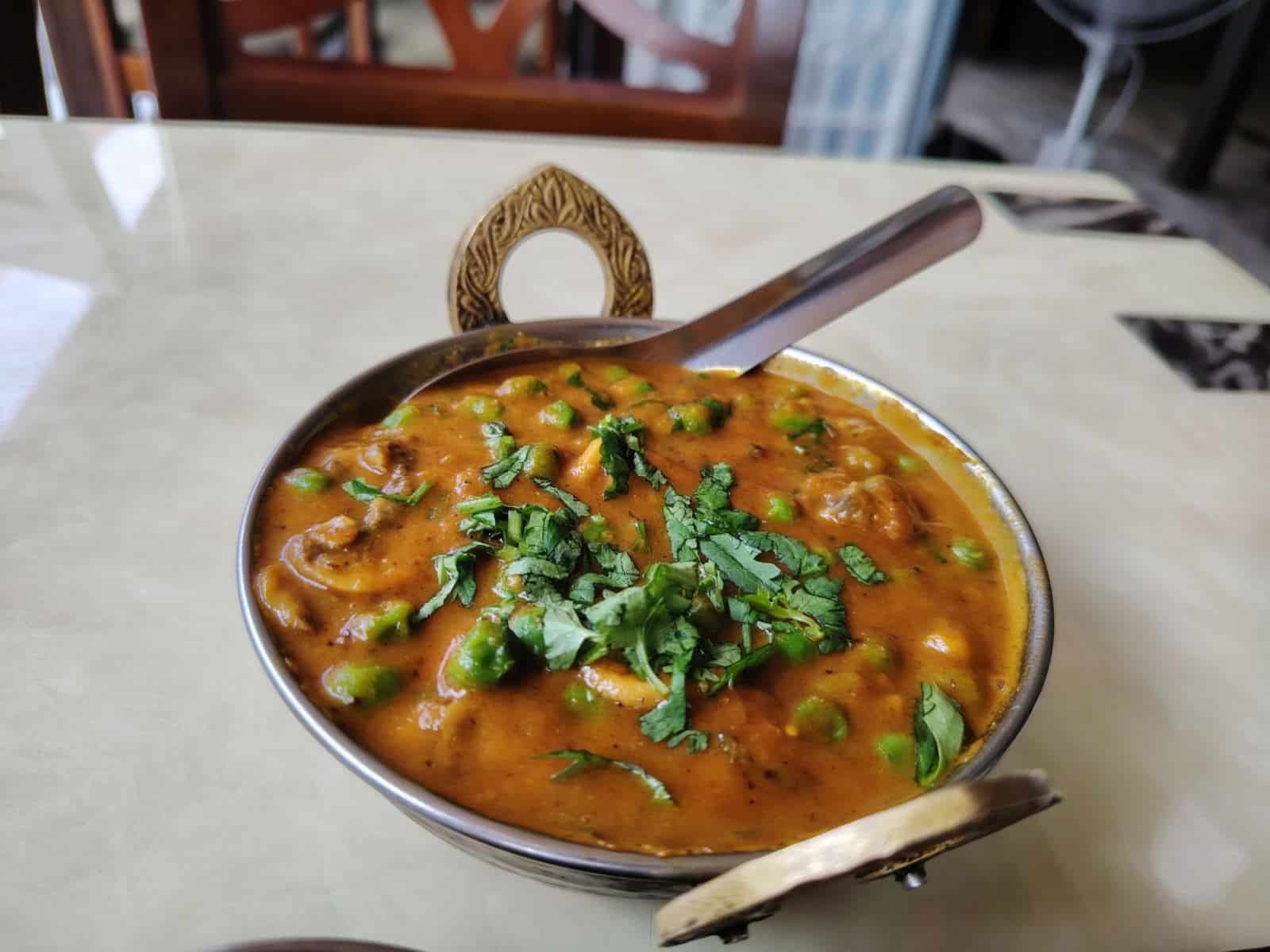
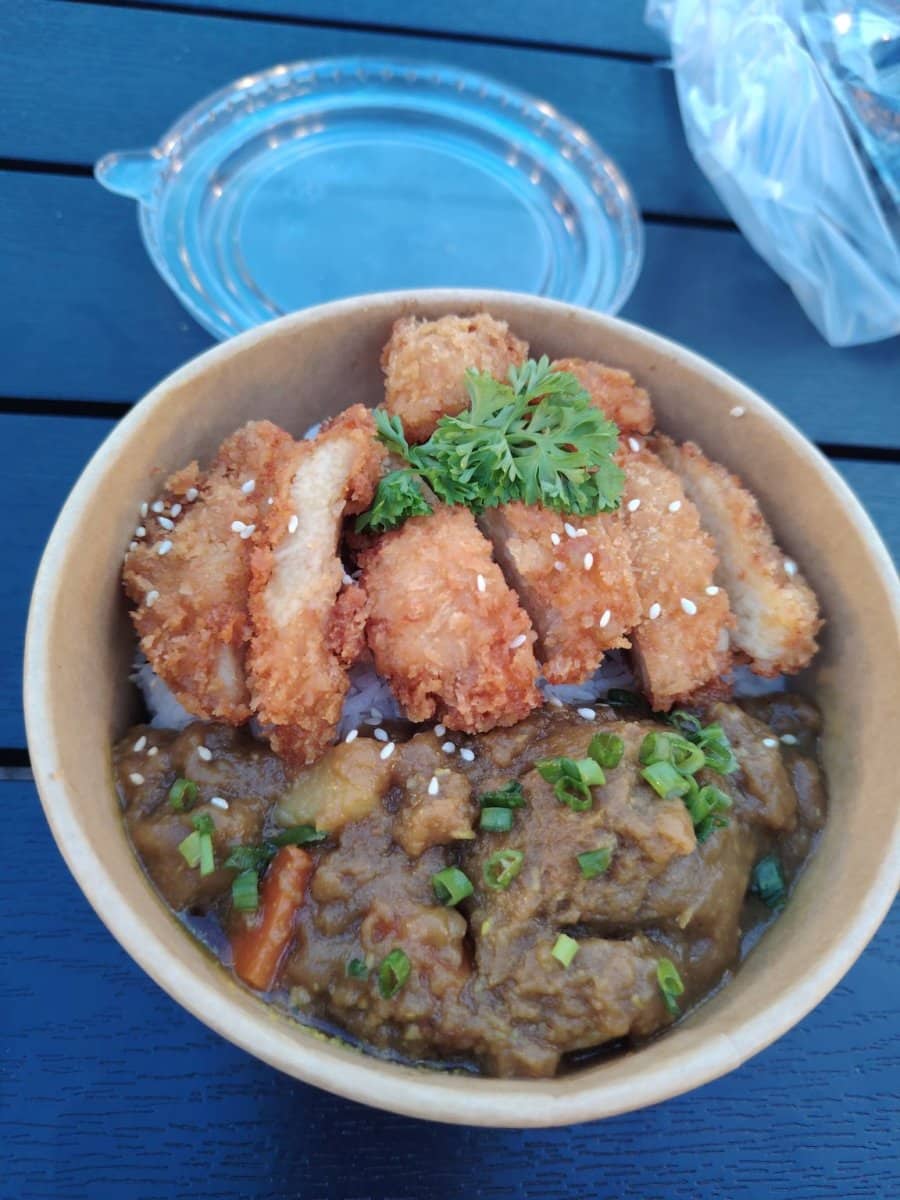
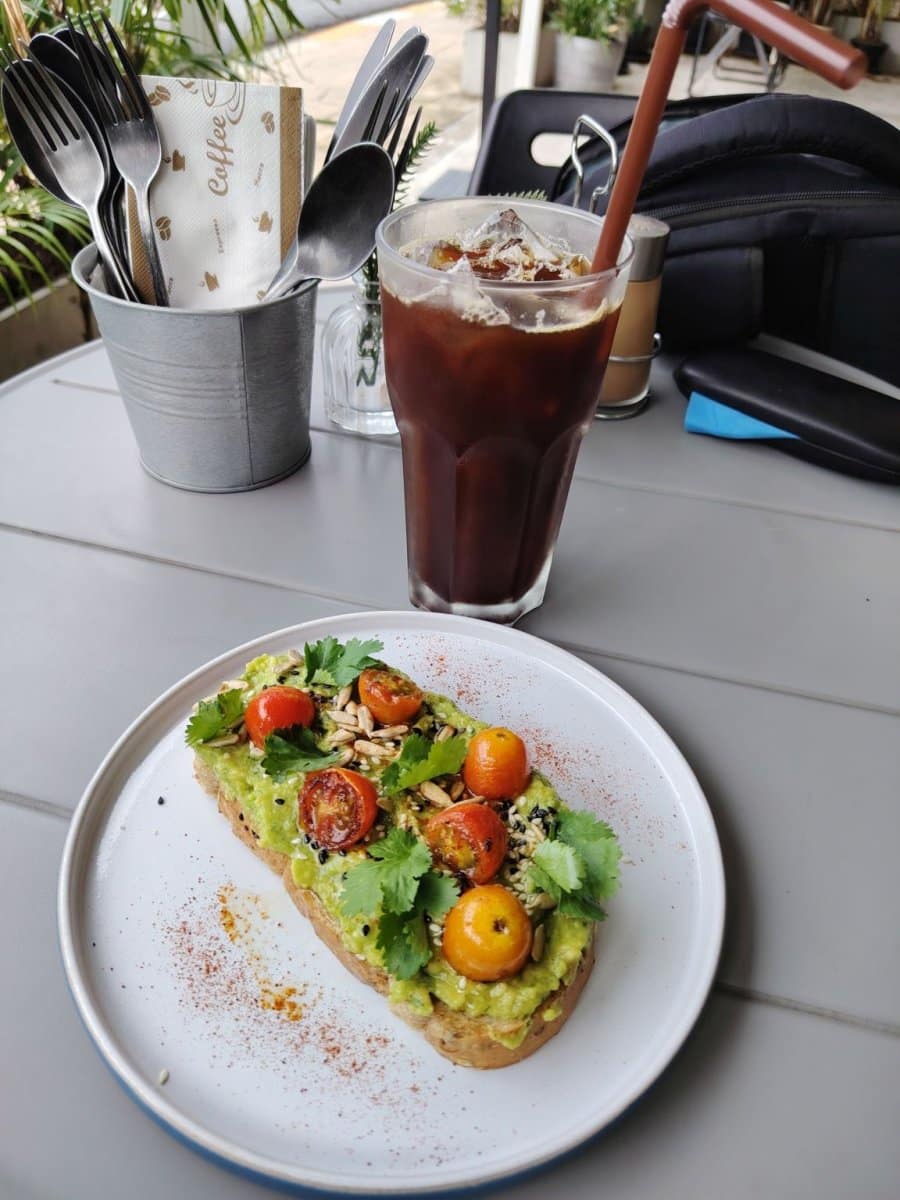
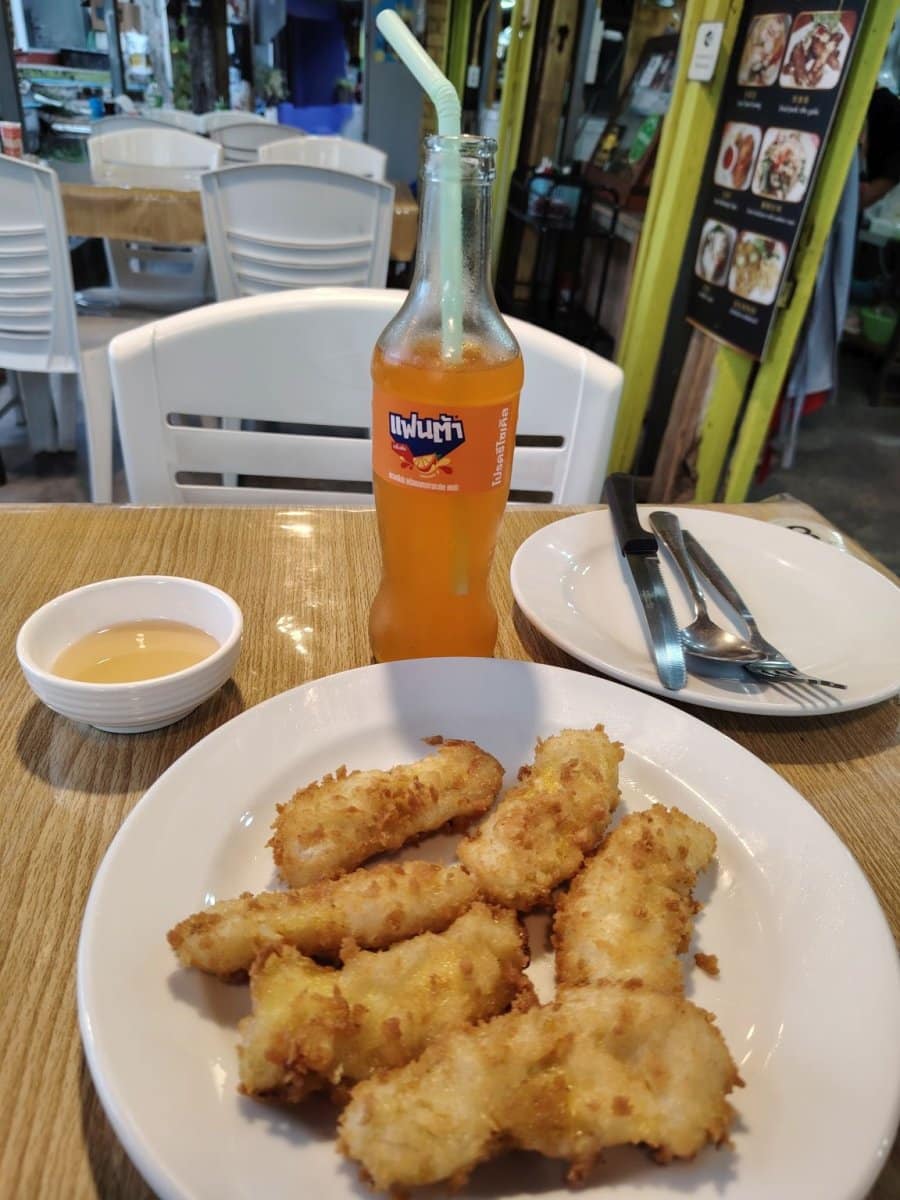
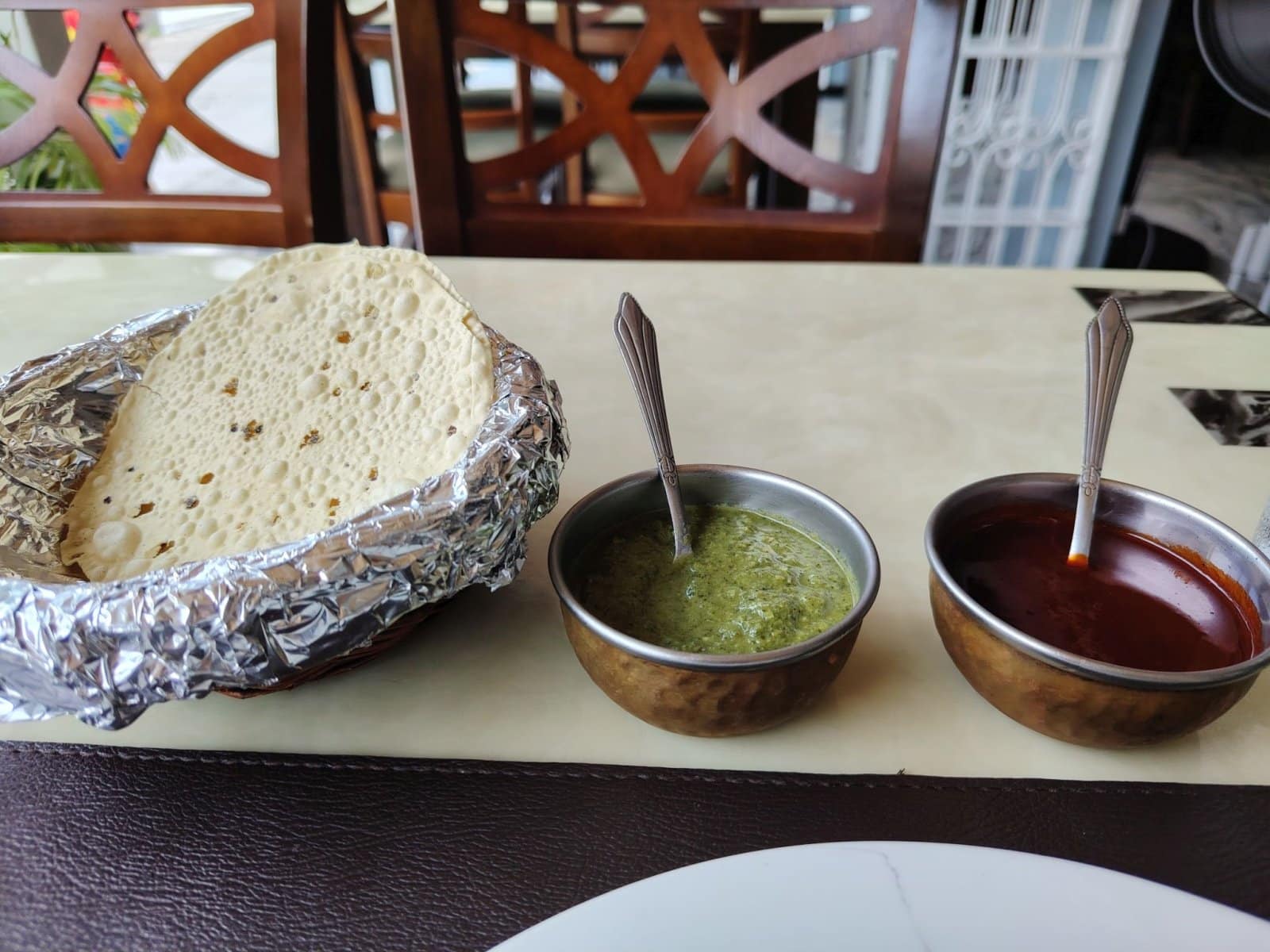
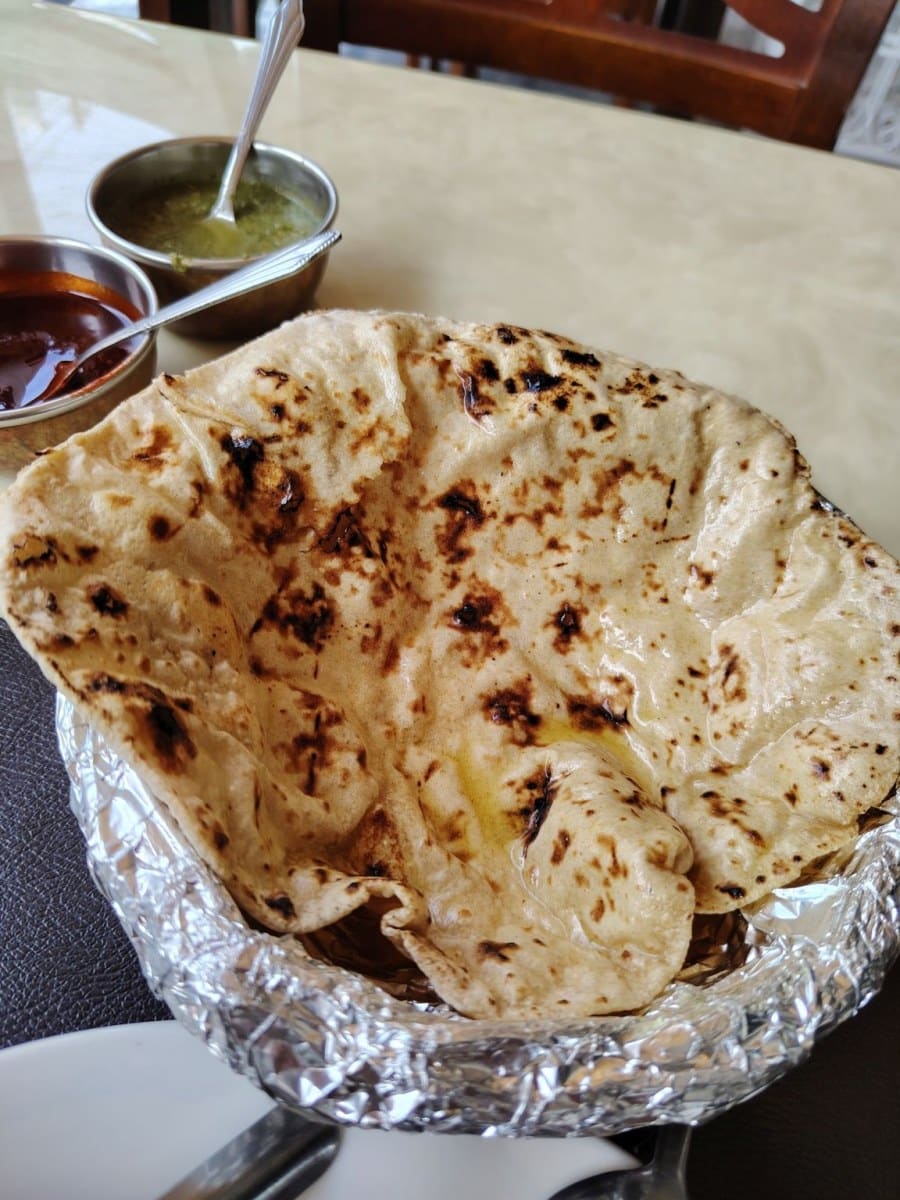
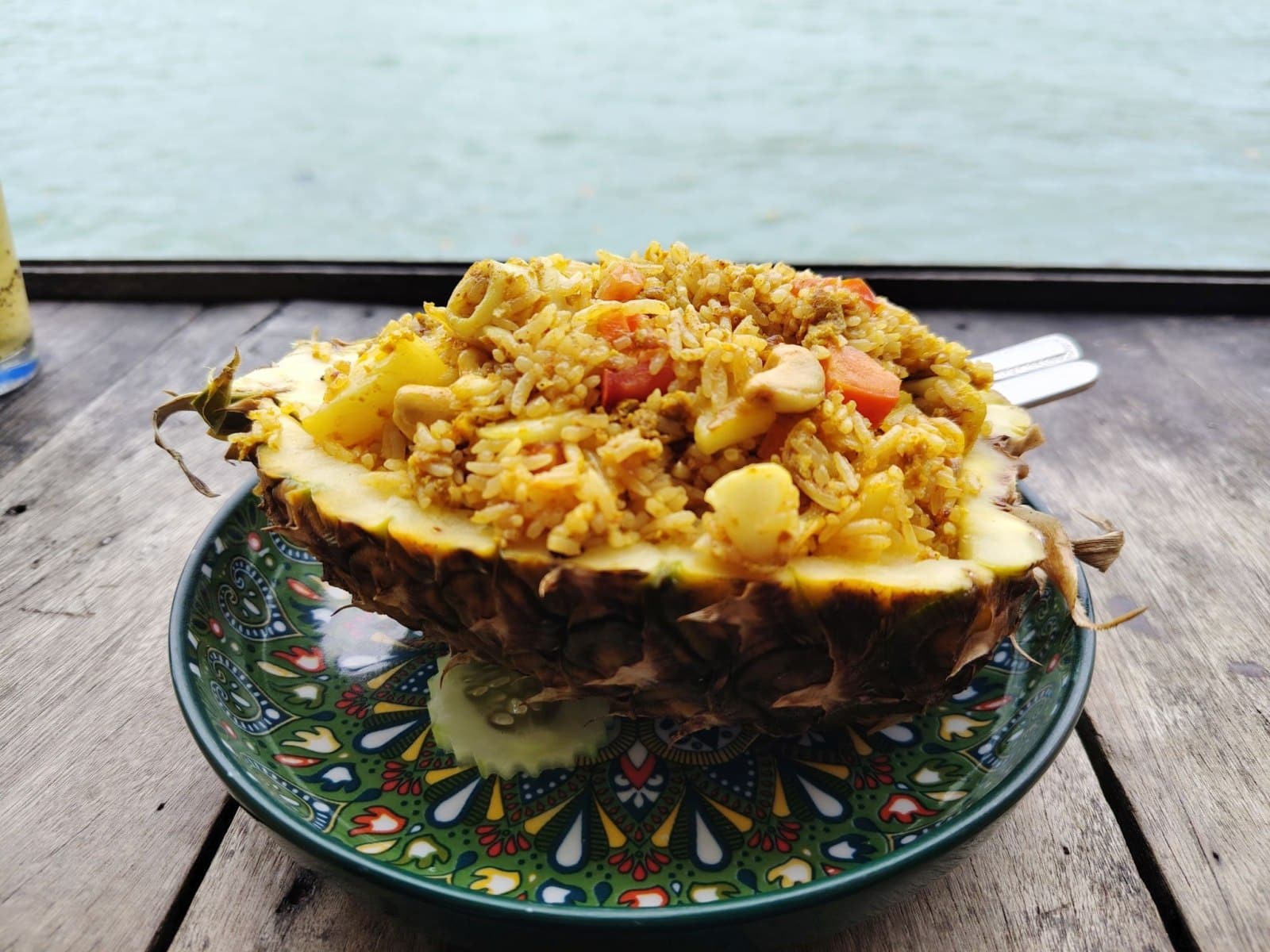
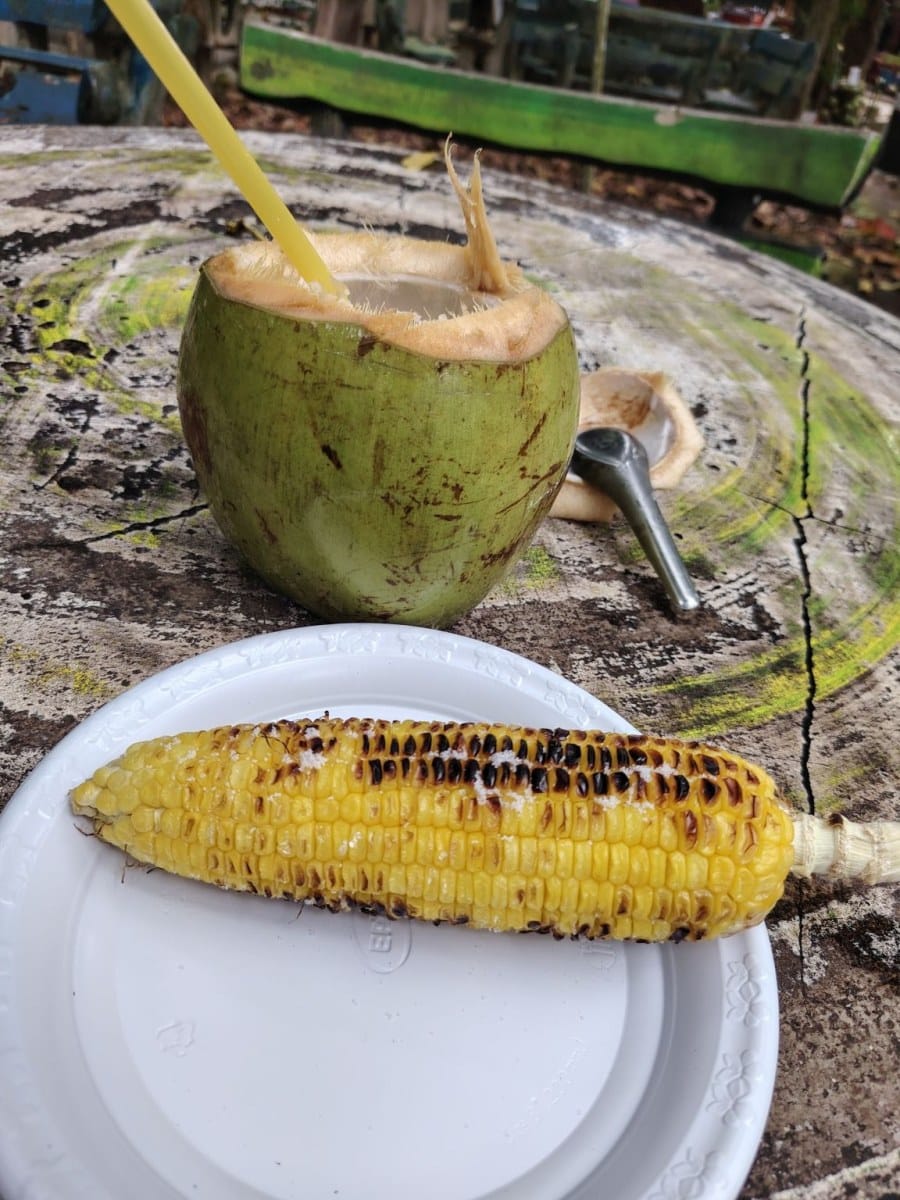
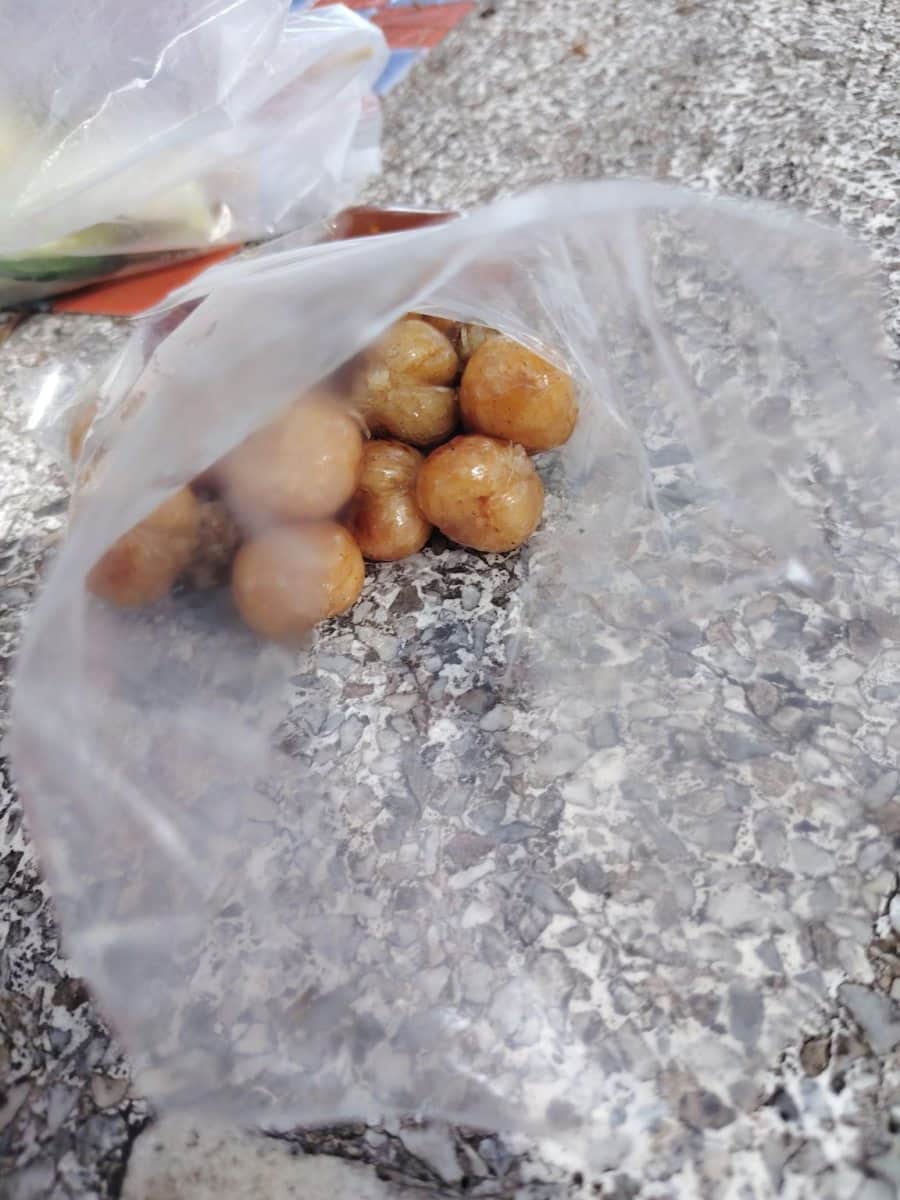
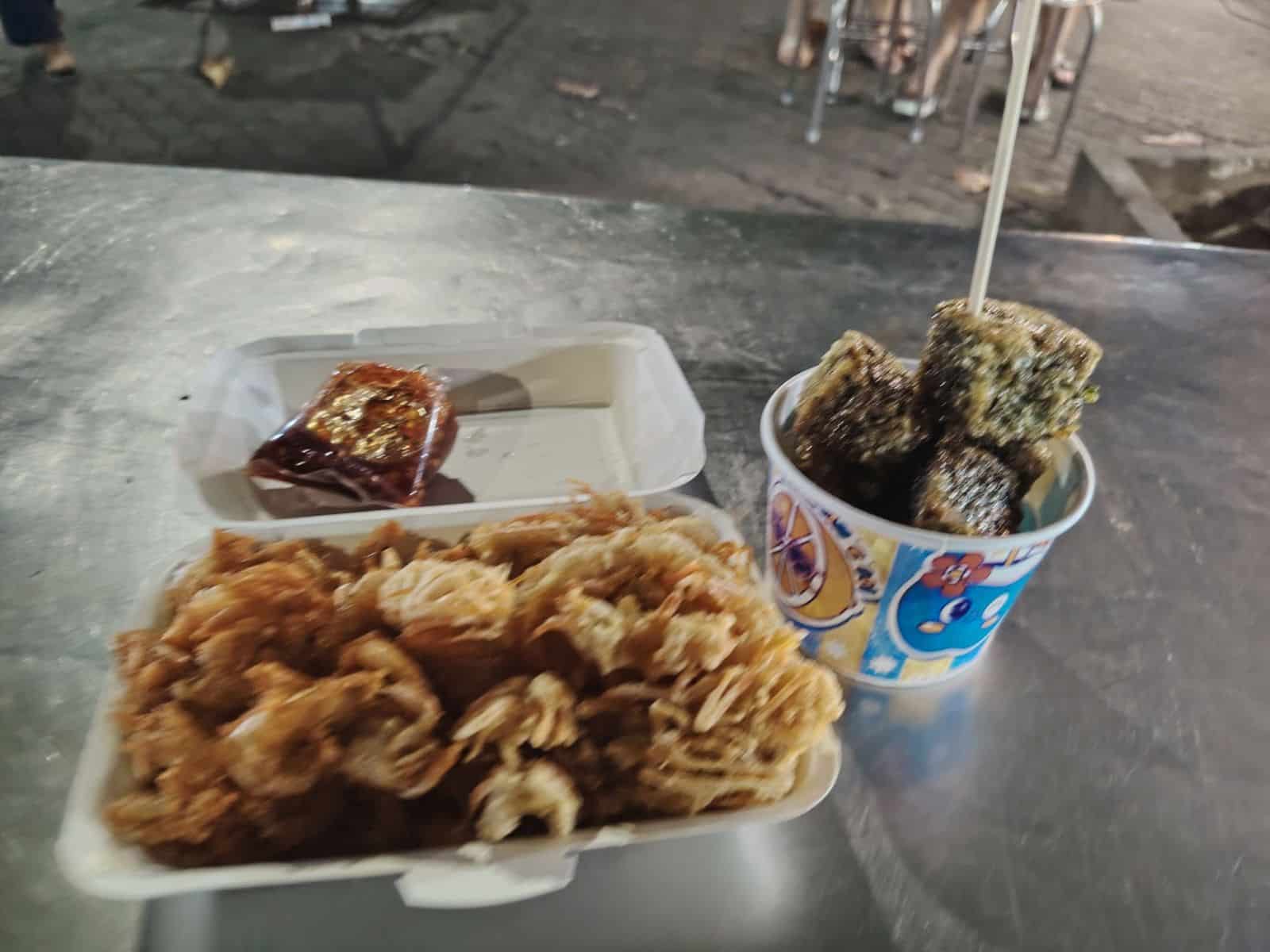
The gallery speaks for itself. What can we see in it?
- Japanese curry,
- tamarind chutney, green coriander-chili chutney,
- Mushroom Mutter,
- papadum (“The flavors and kindness of India”),
- avocado sandwich (with the only slice of bread I’ve eaten since August),
- fried banana,
- pineapple sticky rice (it’s like a sausage: it stuffs the subject back into itself),
- some kind of sausage-like balls (there was no menu, I didn’t ask what it was called, they were selling it from a tricycle and two dogs asked for the third of it),
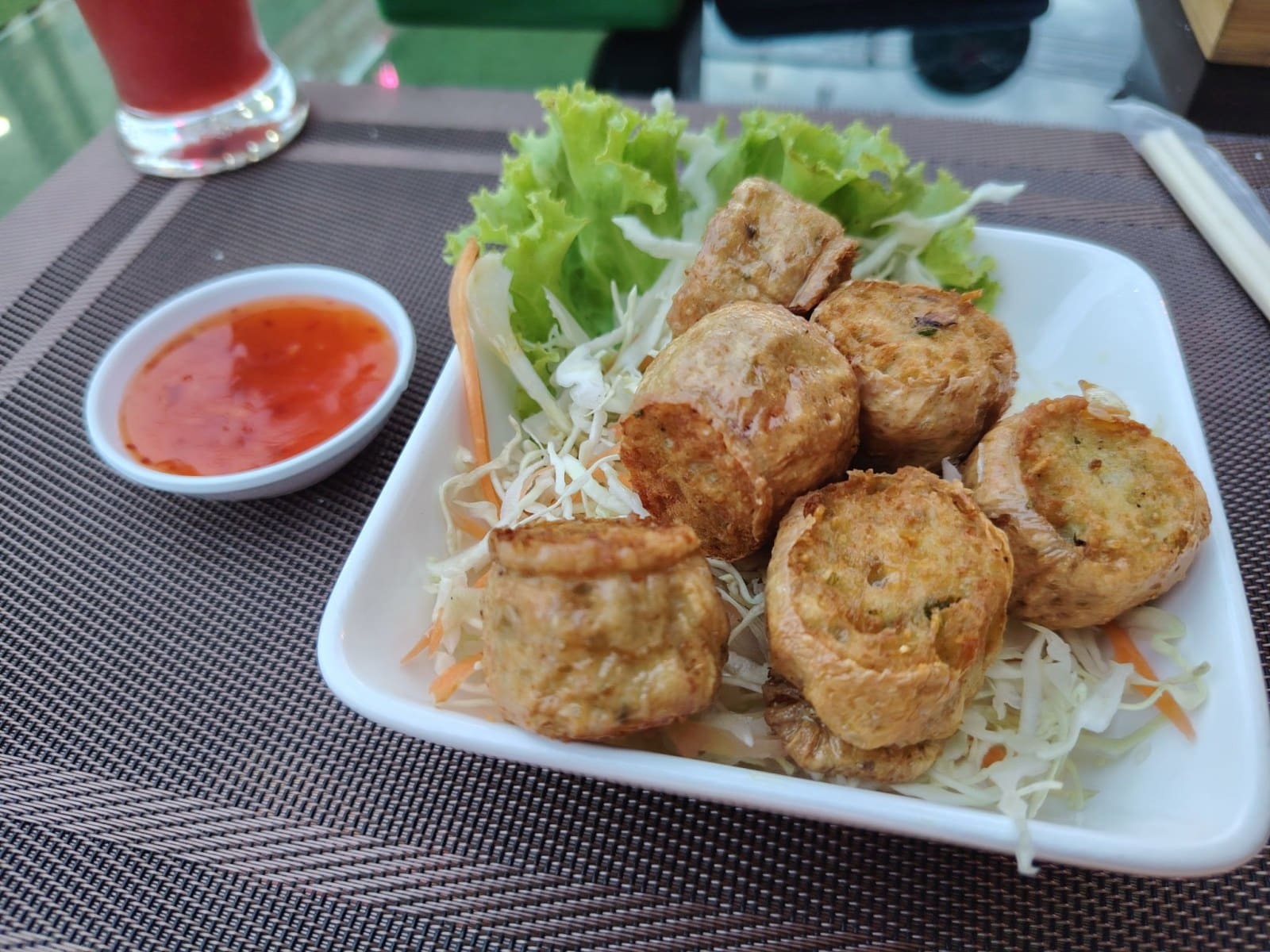
- furred crabs, with garlic cookies, a traditional Thai dish, its real name is fried tofu with garlic,
- grilled corn,
- crab rolls.
Fruit drinks
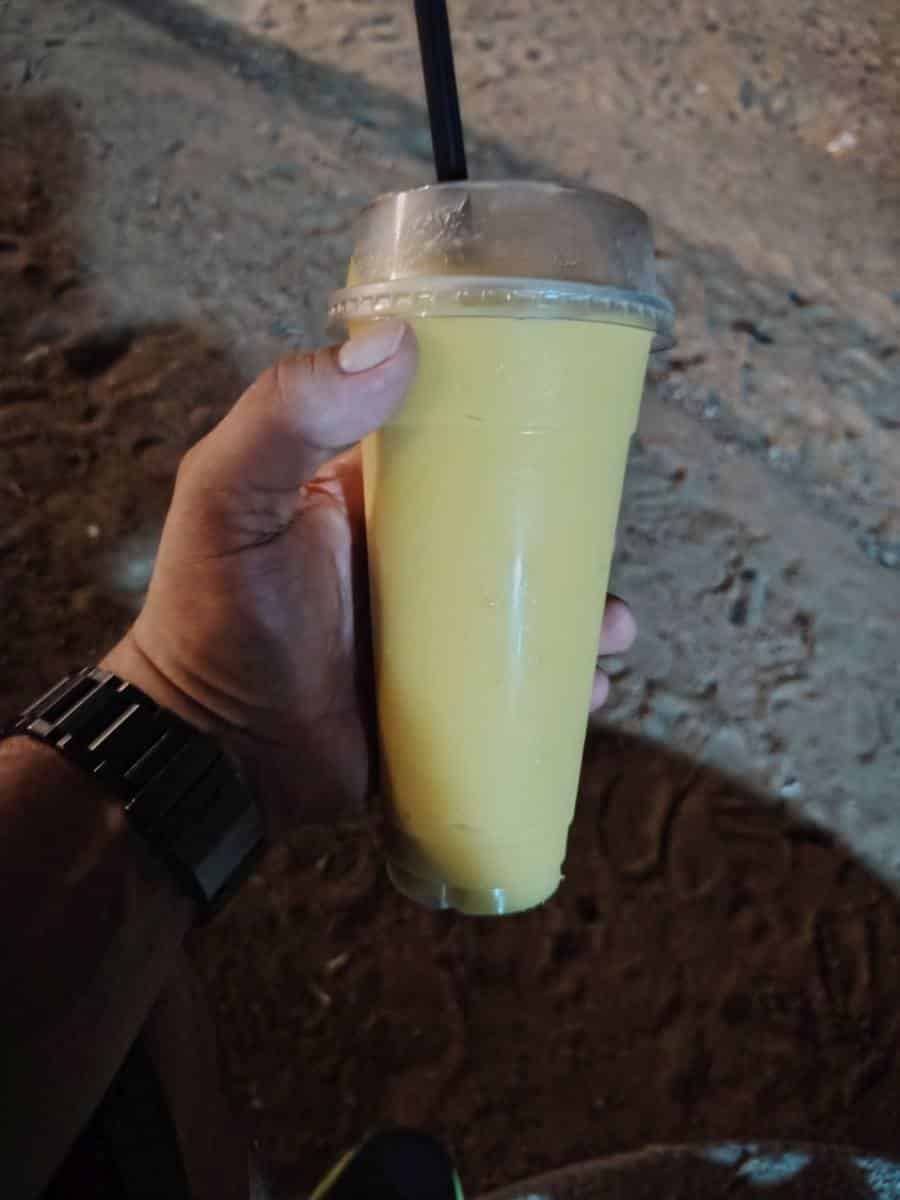
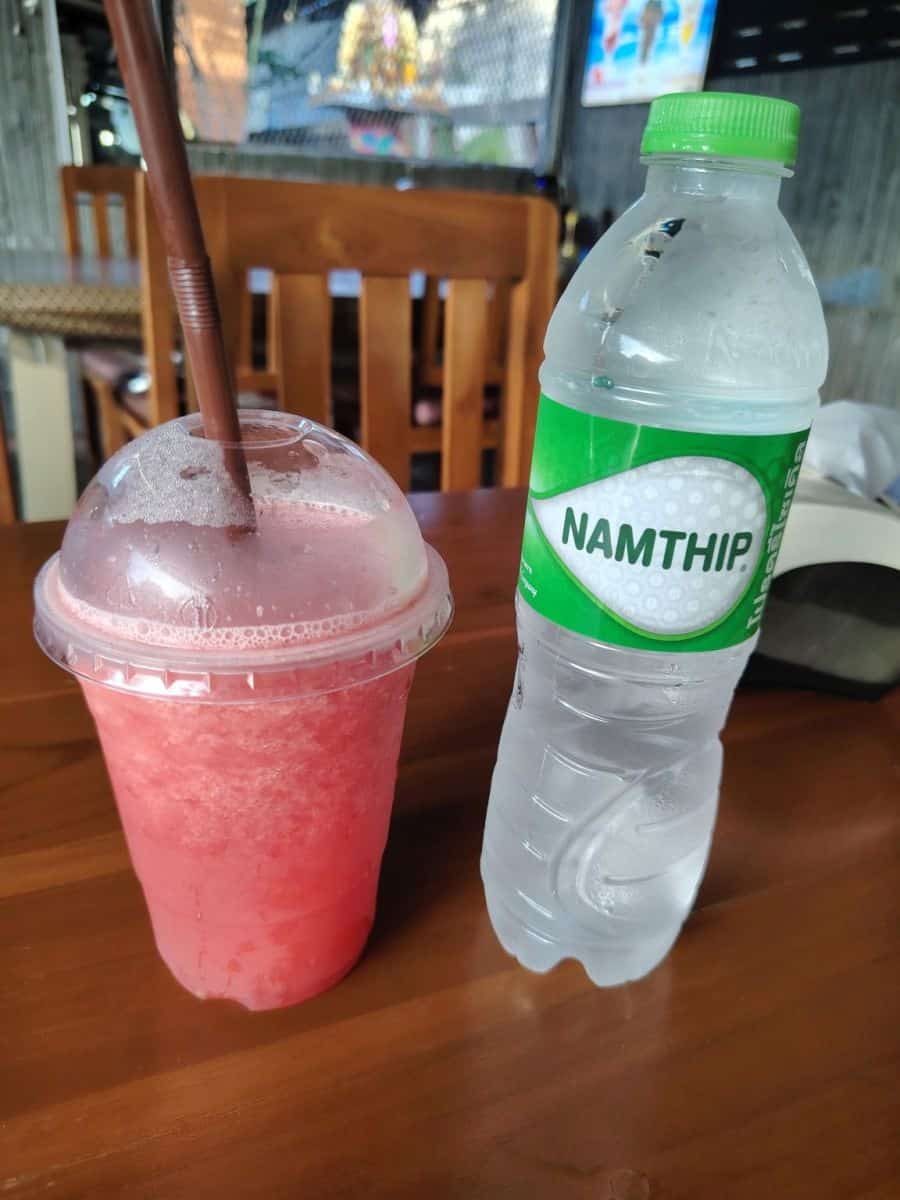
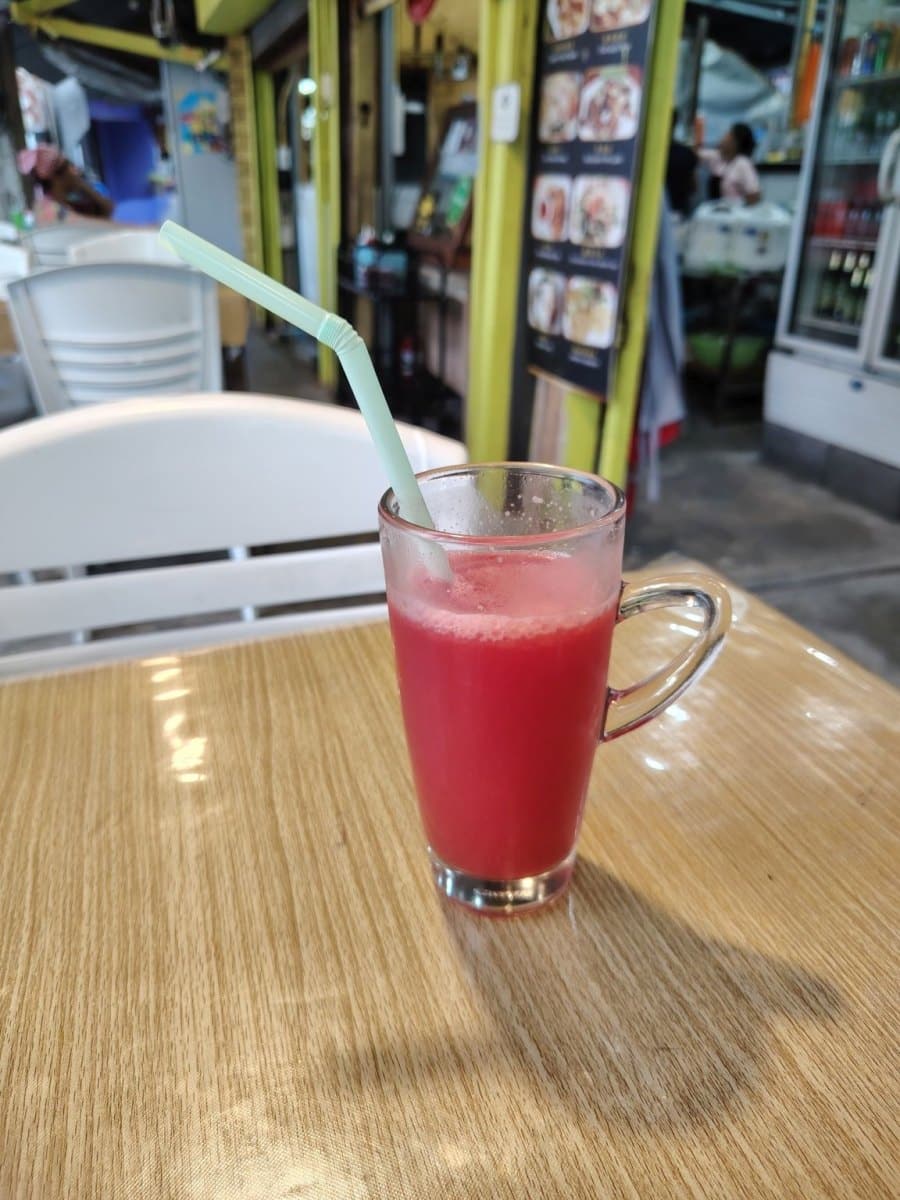
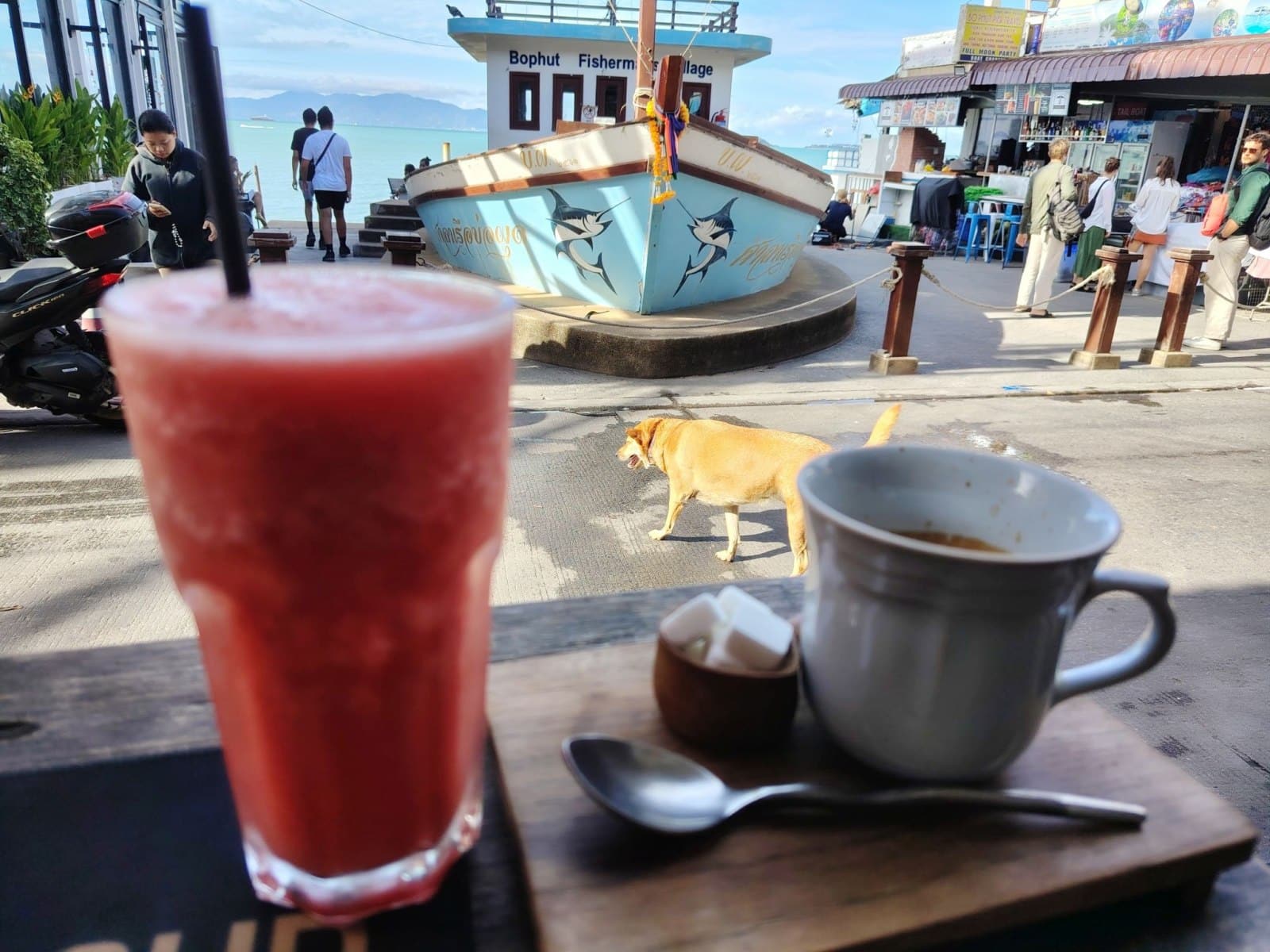
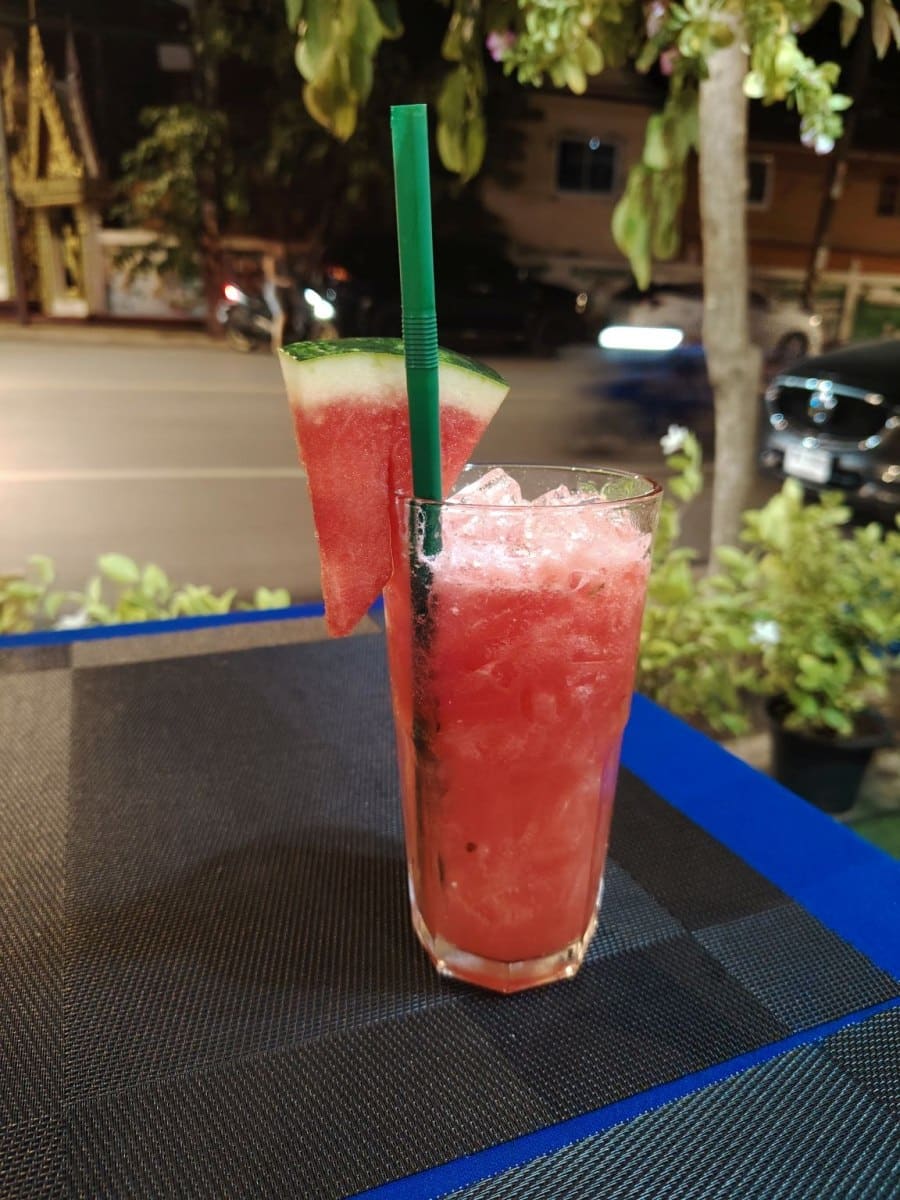
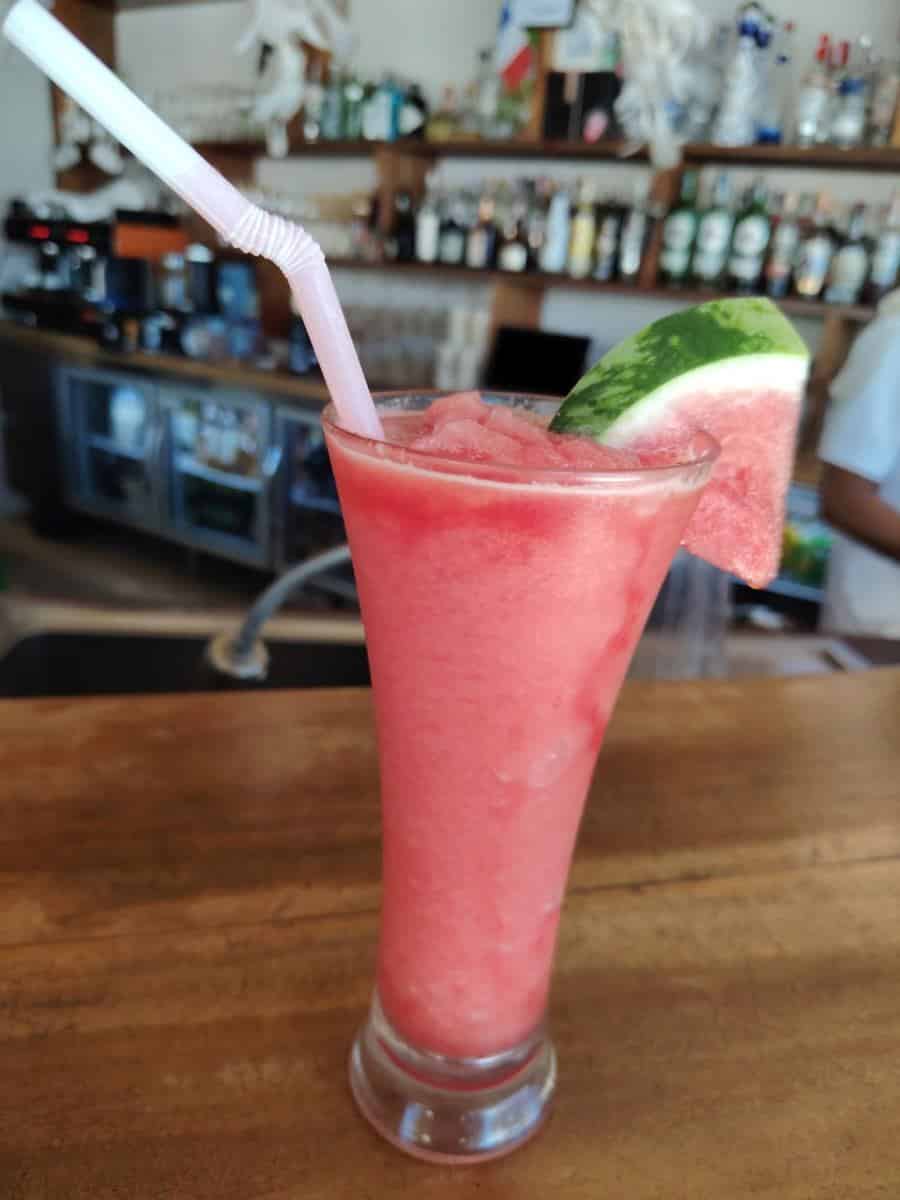
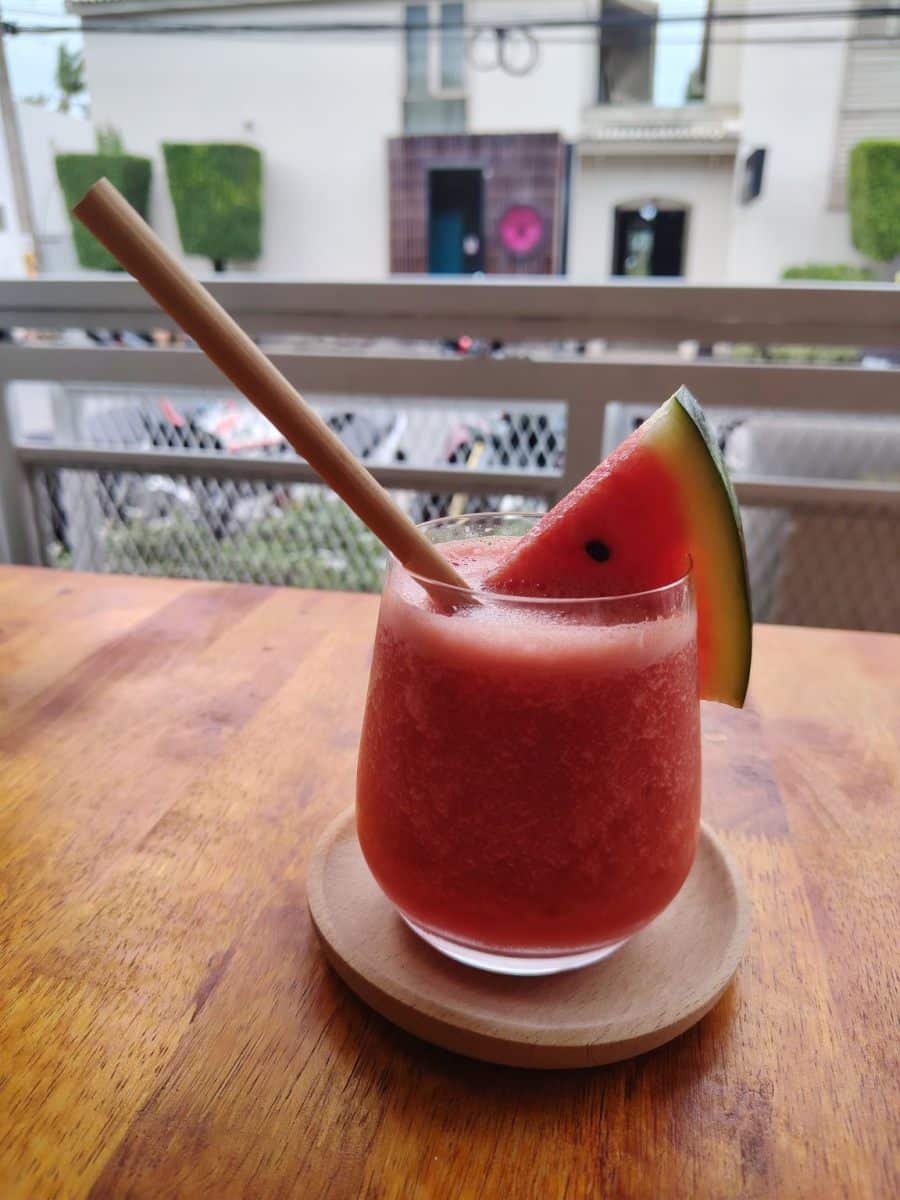
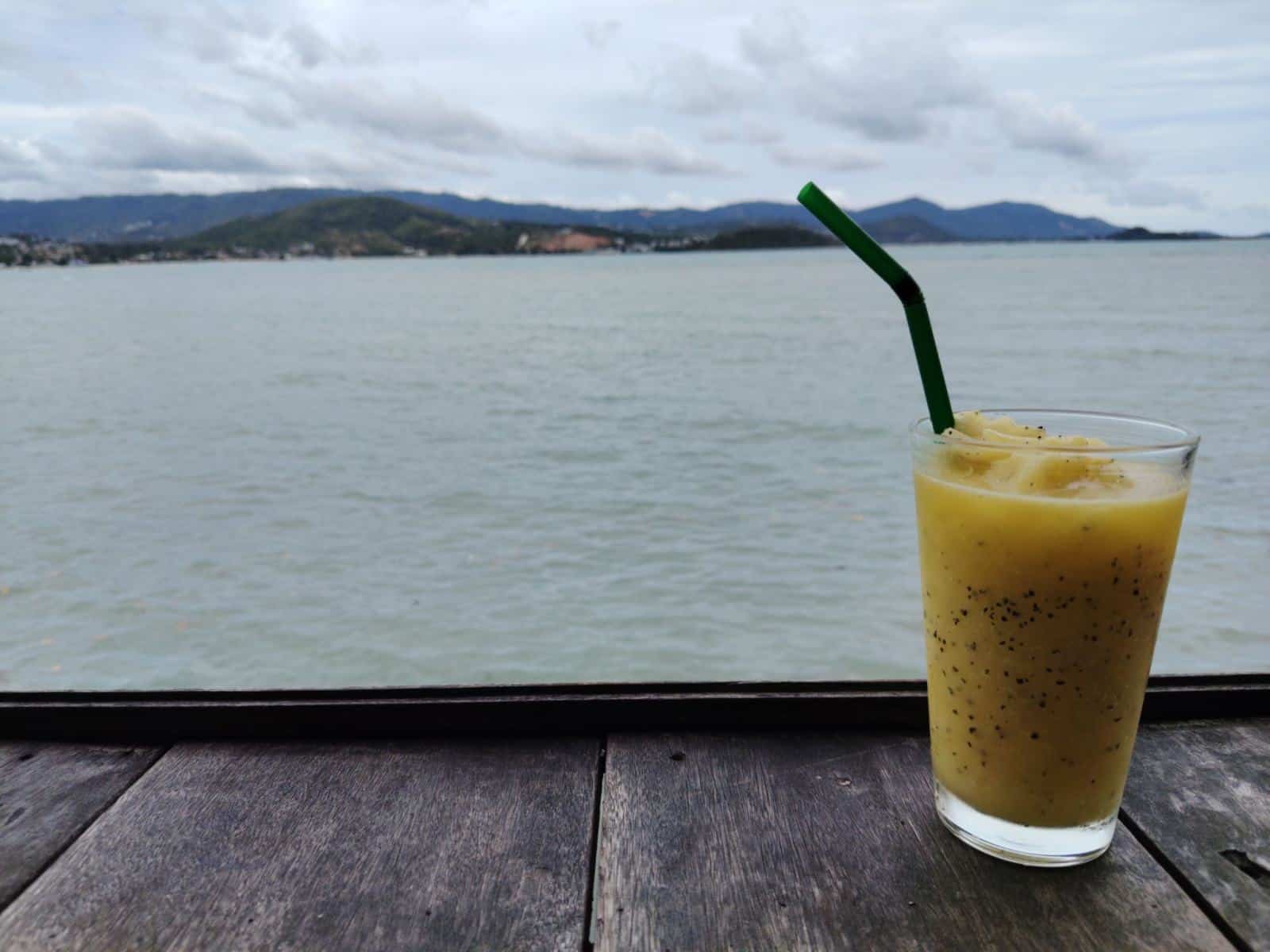
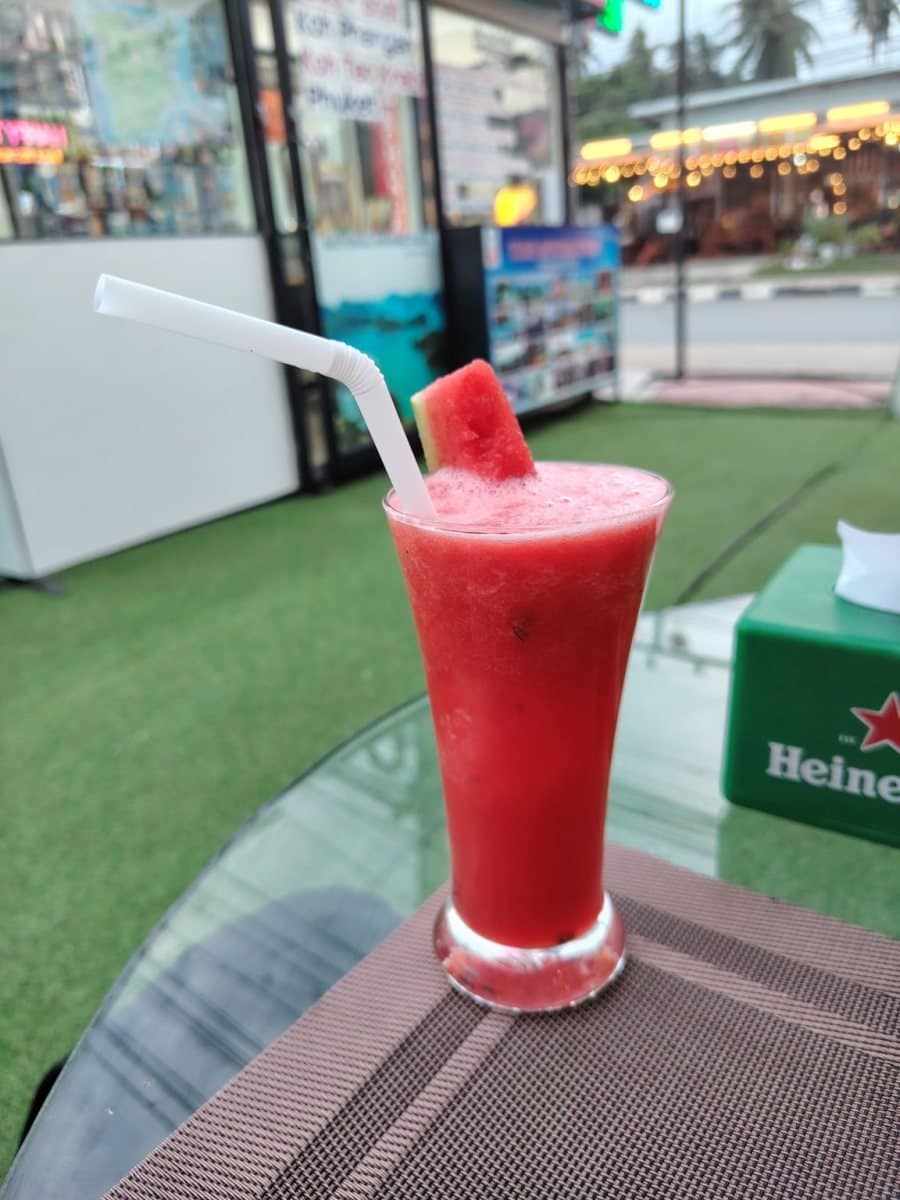
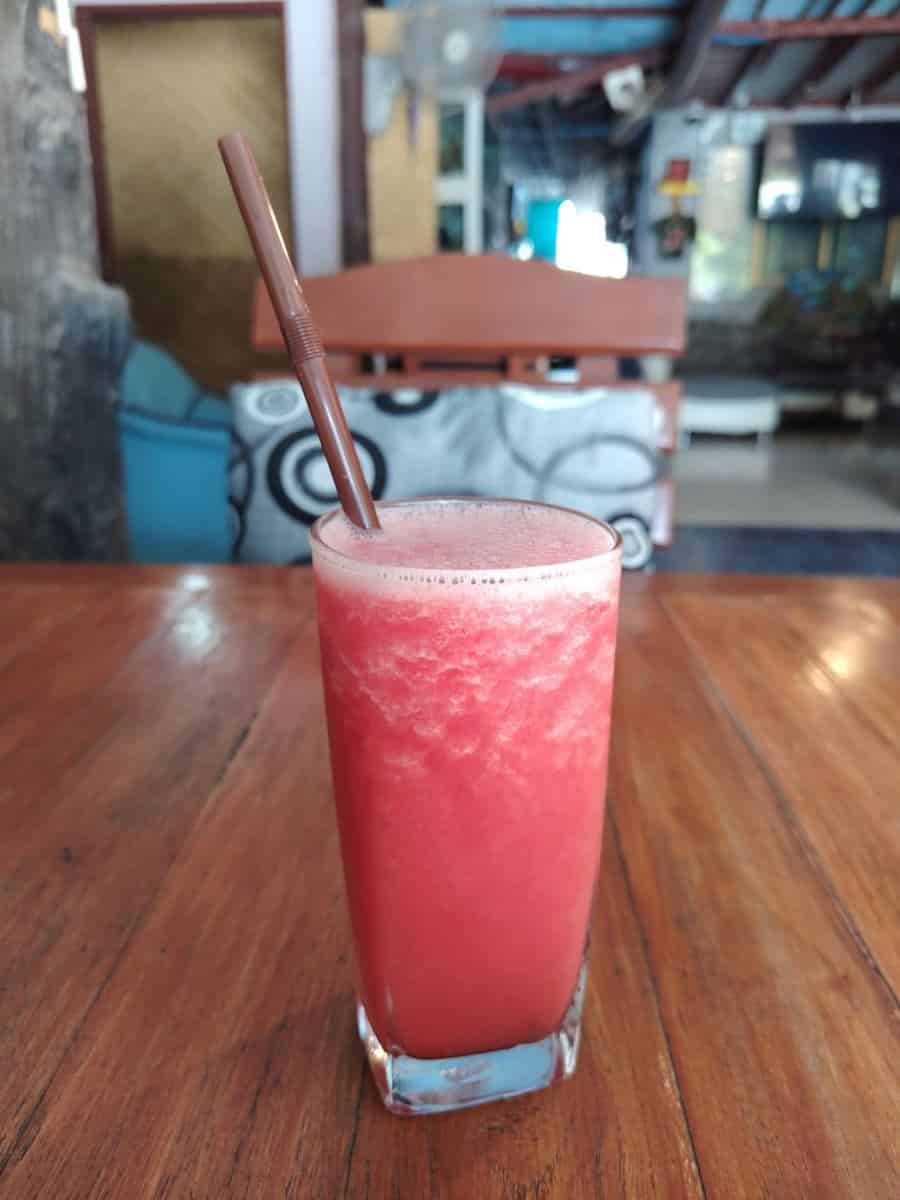
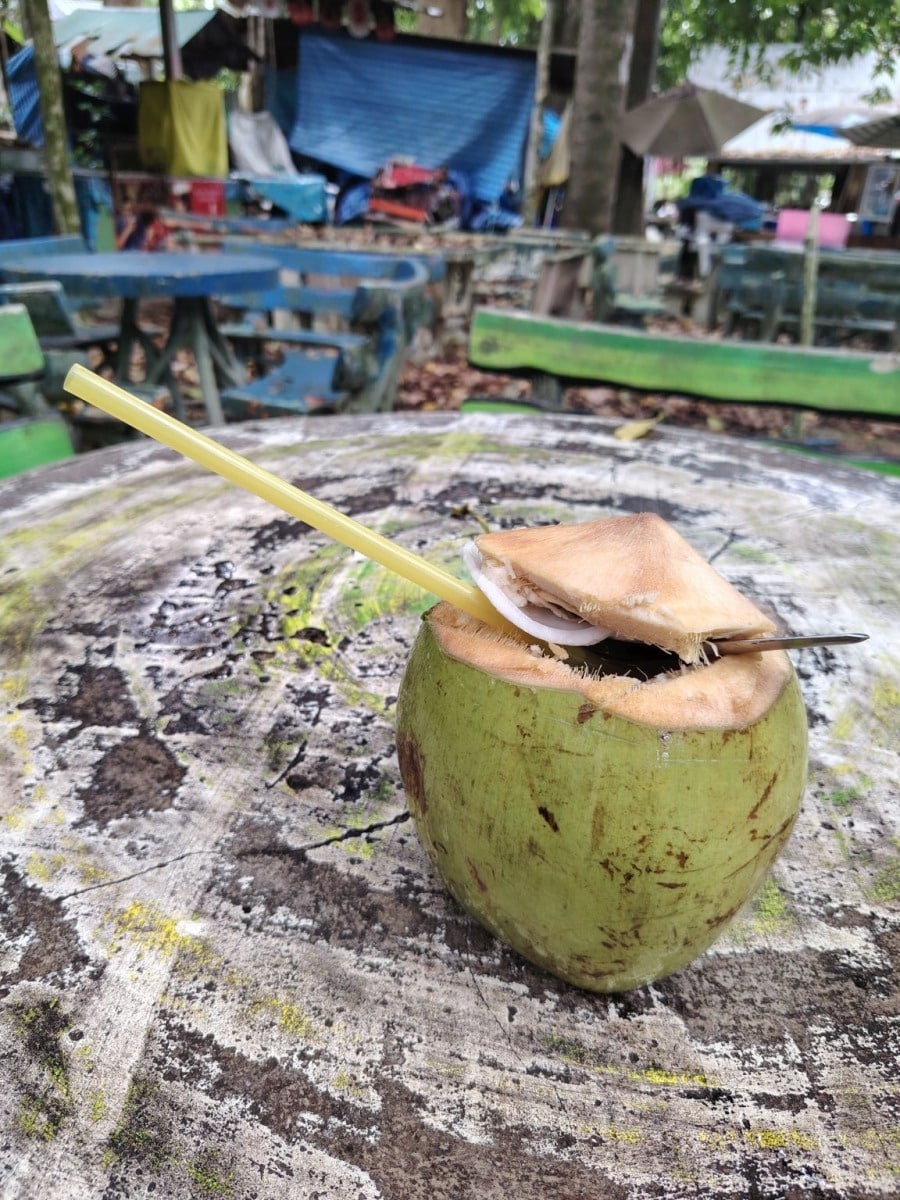
In one place it’s called smoothie, in another place it’s called juice. Some places just mix fresh fruit with ice, some add honey or sugar, and yogurt. The common feature in the drinks is real and fresh fruit, plus a magical orgy of flavors. If you look at the gallery, you have a chance to guess which one is my favorite.
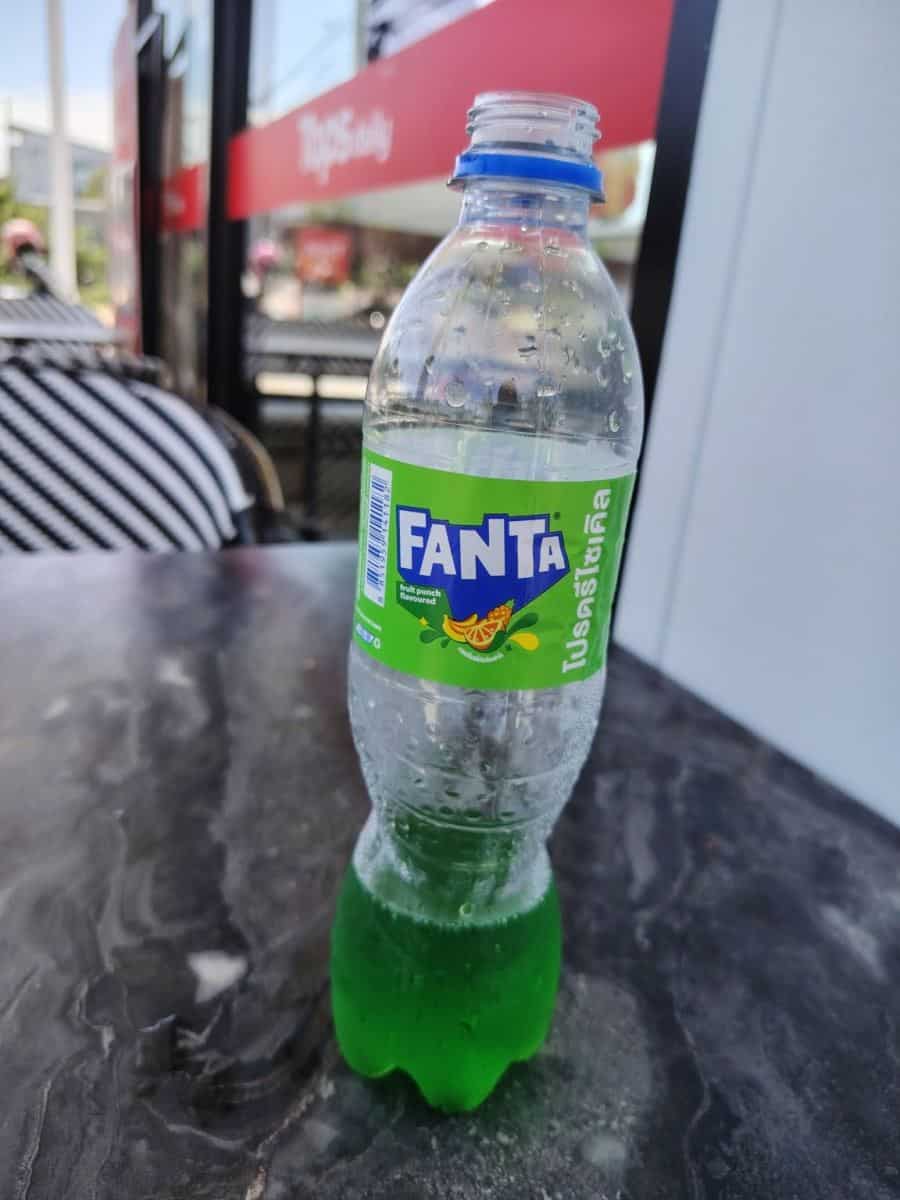
I also placed two cuckoo eggs among the drinks.
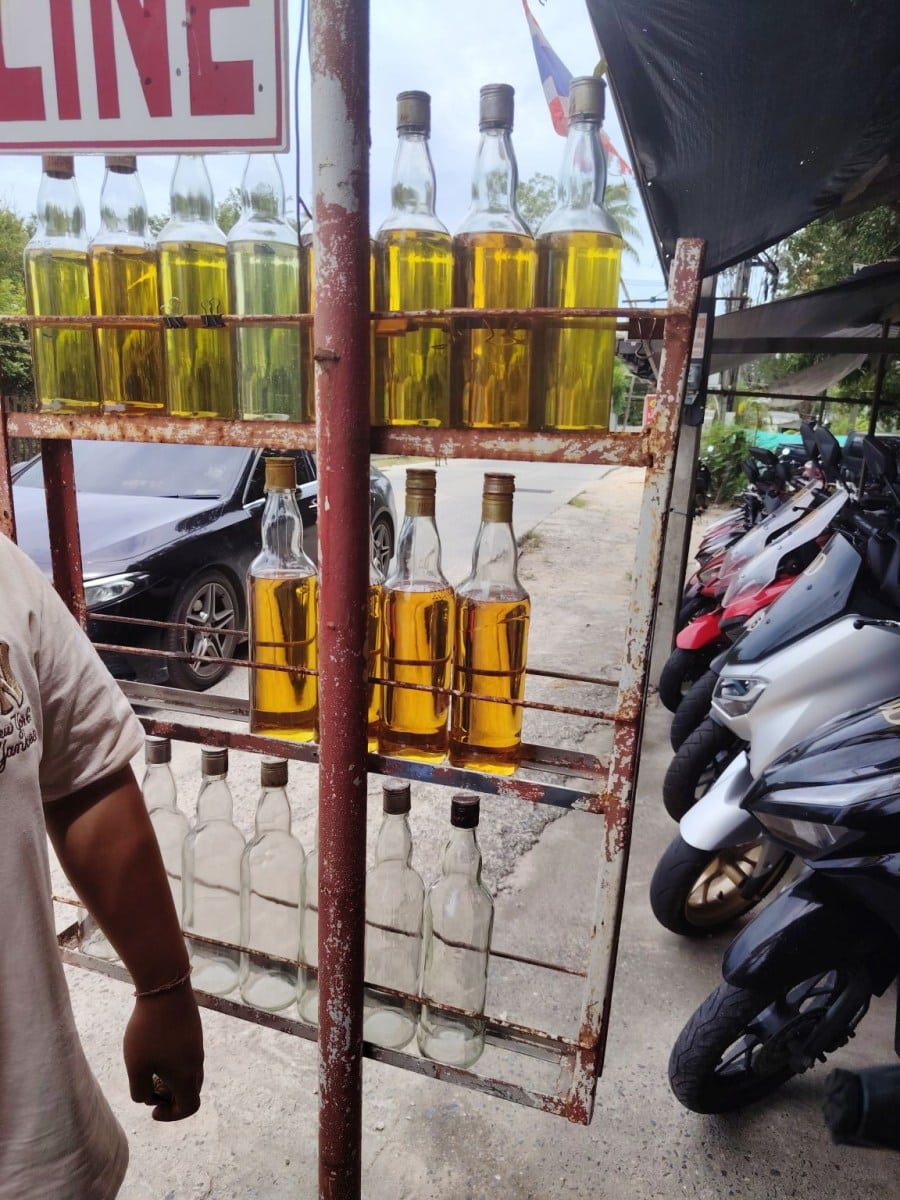
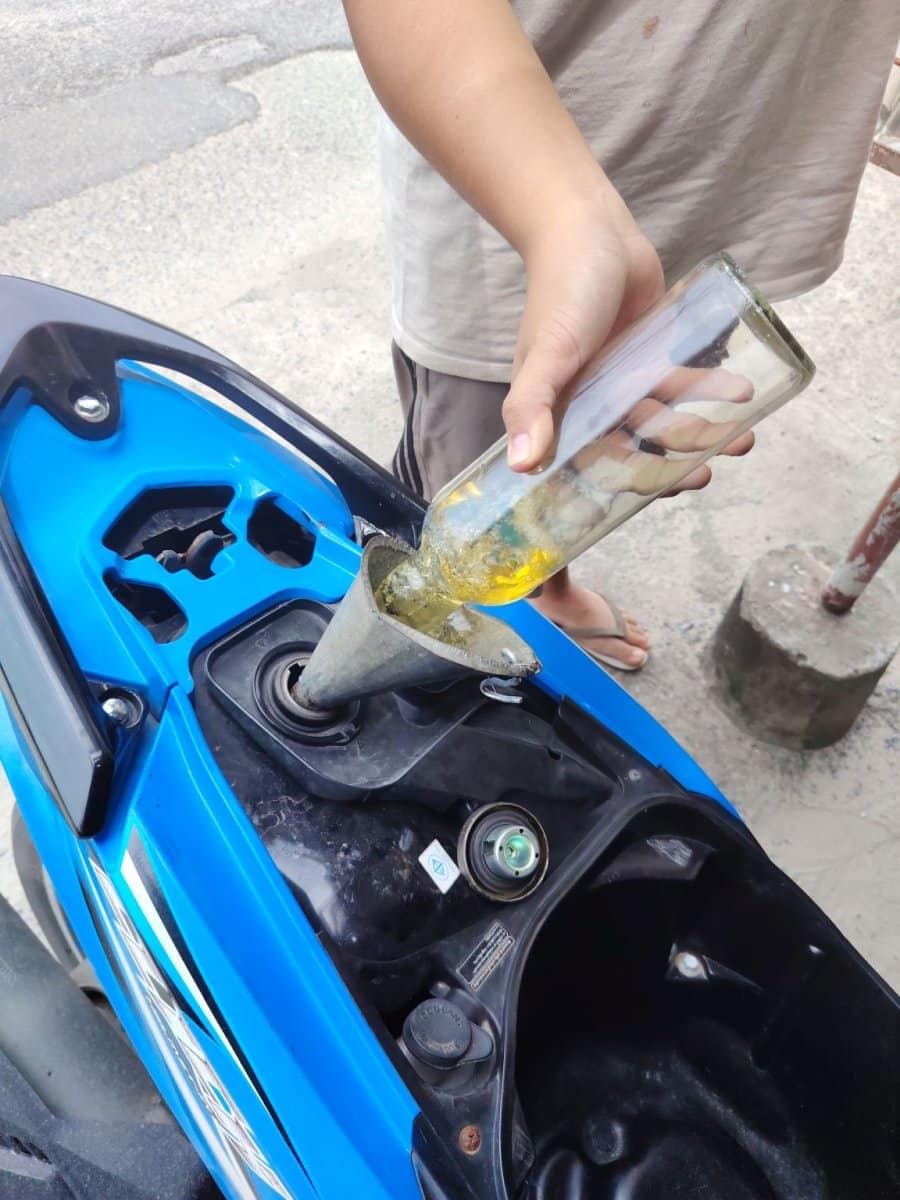
One is available in a drink bottle on a stand. At first I thought they sold elderberry syrup in so many places. Then it turned out that it could be used to water the scooter.
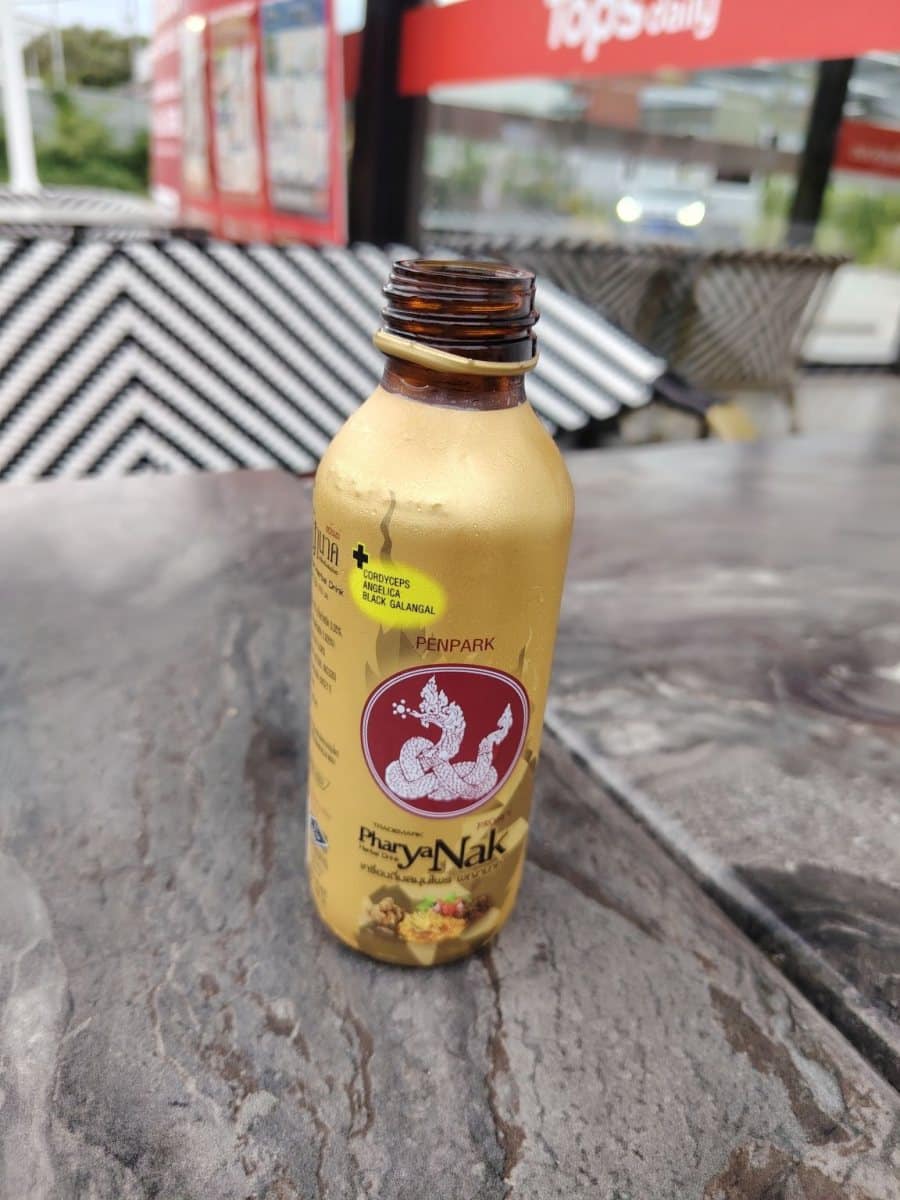
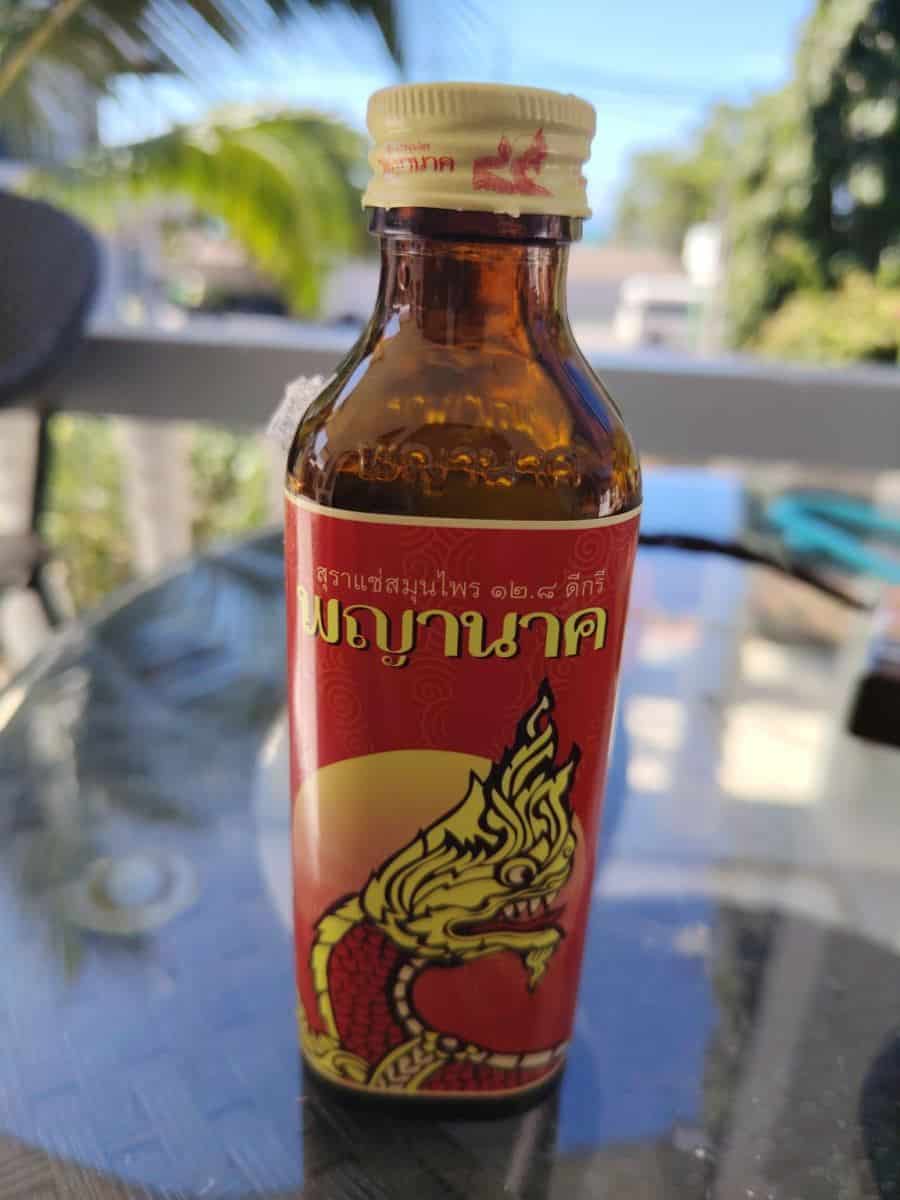
The other is the second of the two dragon bottles. The first one shows an energy drink with the inscription “PharyaNak”, in a yellow bottle. I bought this one day and it was really tasty. The next day I thought I’d try the other one right next to it. I opened it in front of the shop, on the street, licked it, and the taste gave me a strange feeling. I quickly took a picture and showed it to ChatGPT, saying, “Come on, tell me what the hell I’m drinking.” “The label says: Phaya Nak, “Naga King” (the legendary dragon/snake creature). The top line says: herbal distillate, 12.8 degrees alcohol content. This is not a soft drink, but a strong drink made with herbs. It is a traditional Thai drink, often steeped in various plants, roots, and barks that are considered medicinal. It is drunk in small quantities, usually like a medicinal drink, not in large quantities.” So that’s how I accidentally found the Thai Jagermaister…
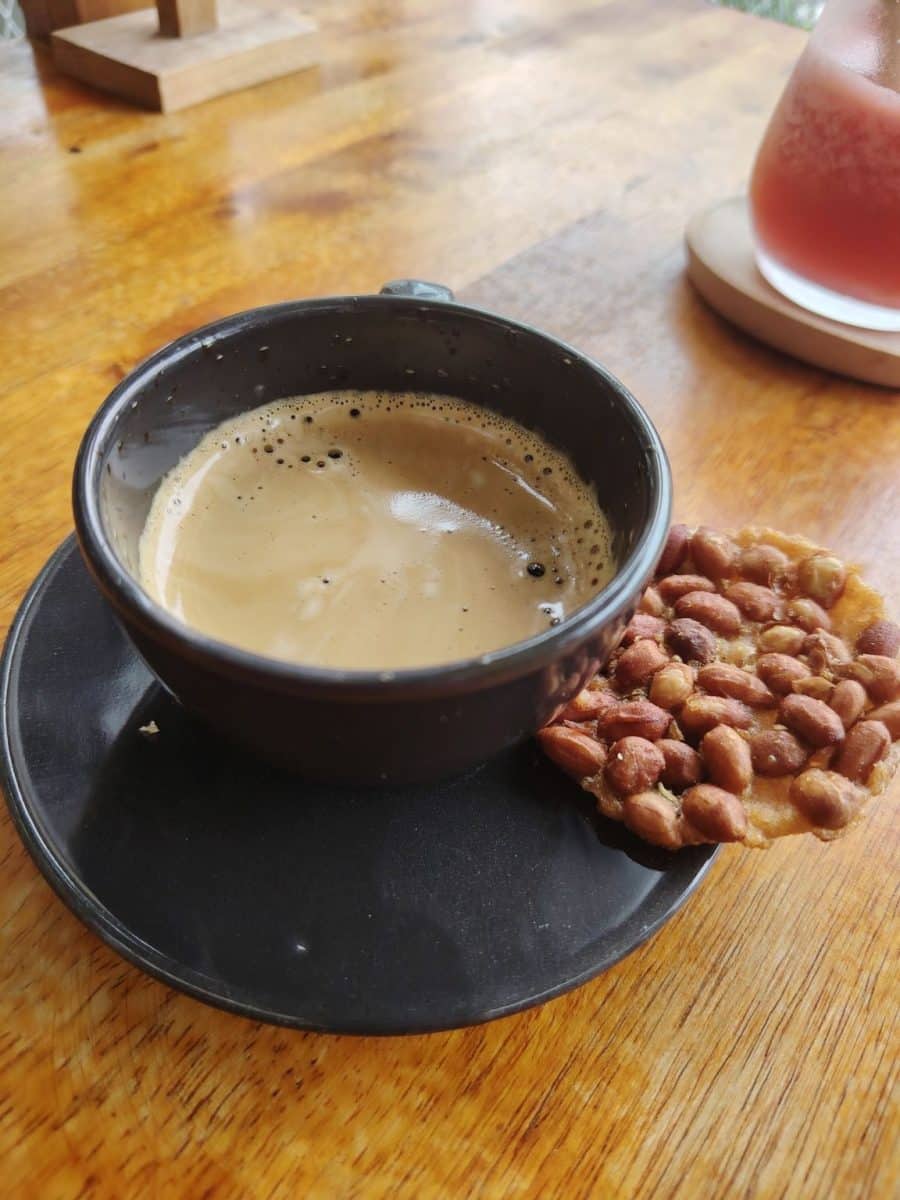
Buy me a coffee?

If you enjoyed this story, you can buy me a coffee. You don’t have to – but it means a lot and I always turn it into a new adventure.
Buy a coffee for Steve
 Linktree
 Short introduction