
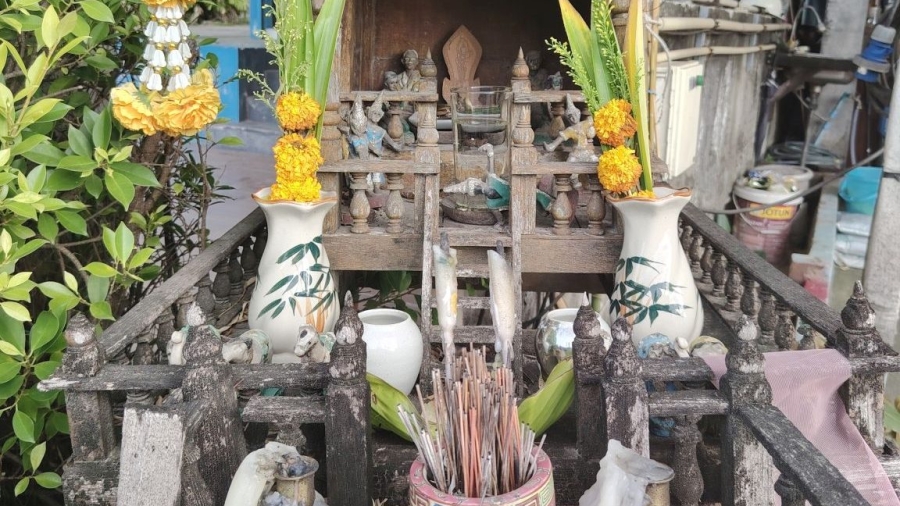
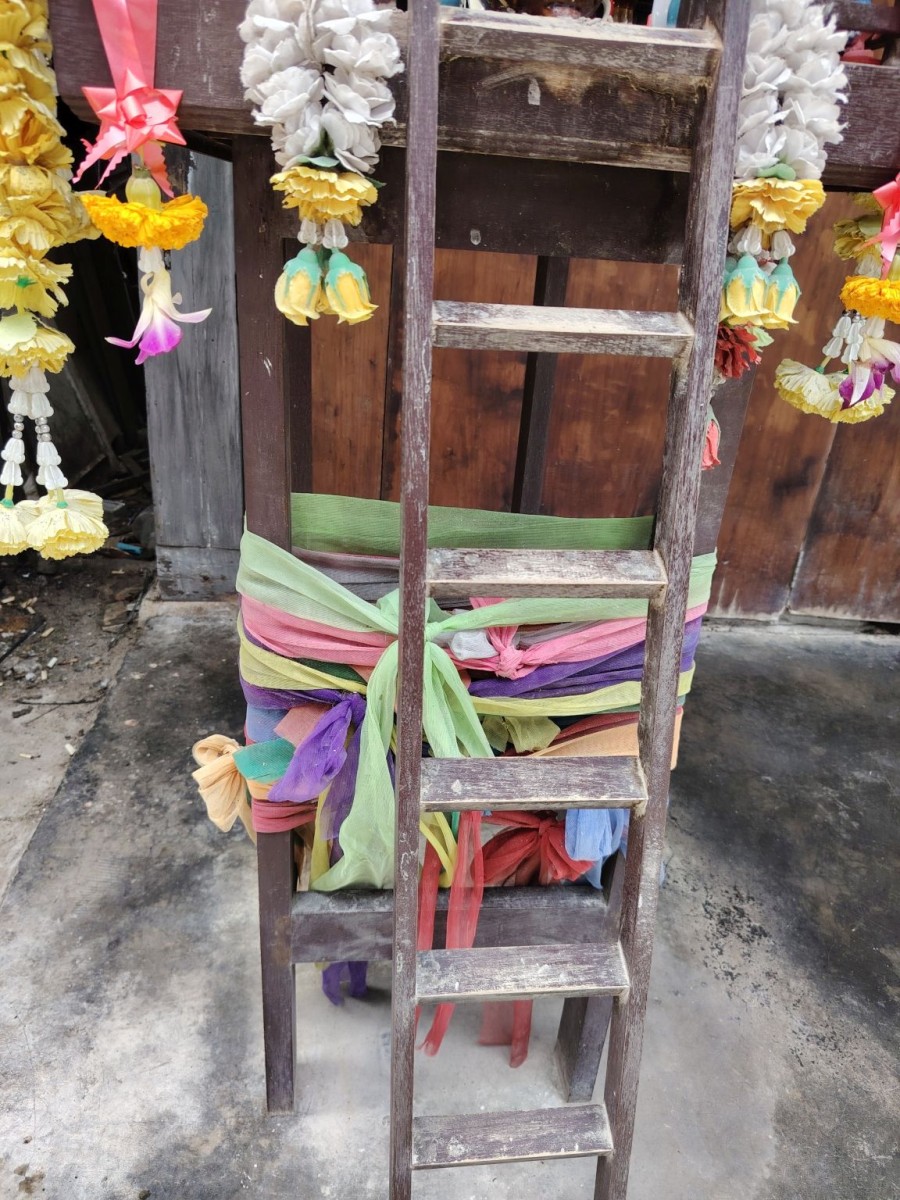
I see a lot of small street shrines in Koh Samui, which are built on small pillars, like a small model and sometimes have food/drinks inside. I also saw a ladder at one or two of them that leads up to them from the ground level. What are these little shrines called and what can I know about them?
This is how my conversation with ChatGPT started a few weeks ago.
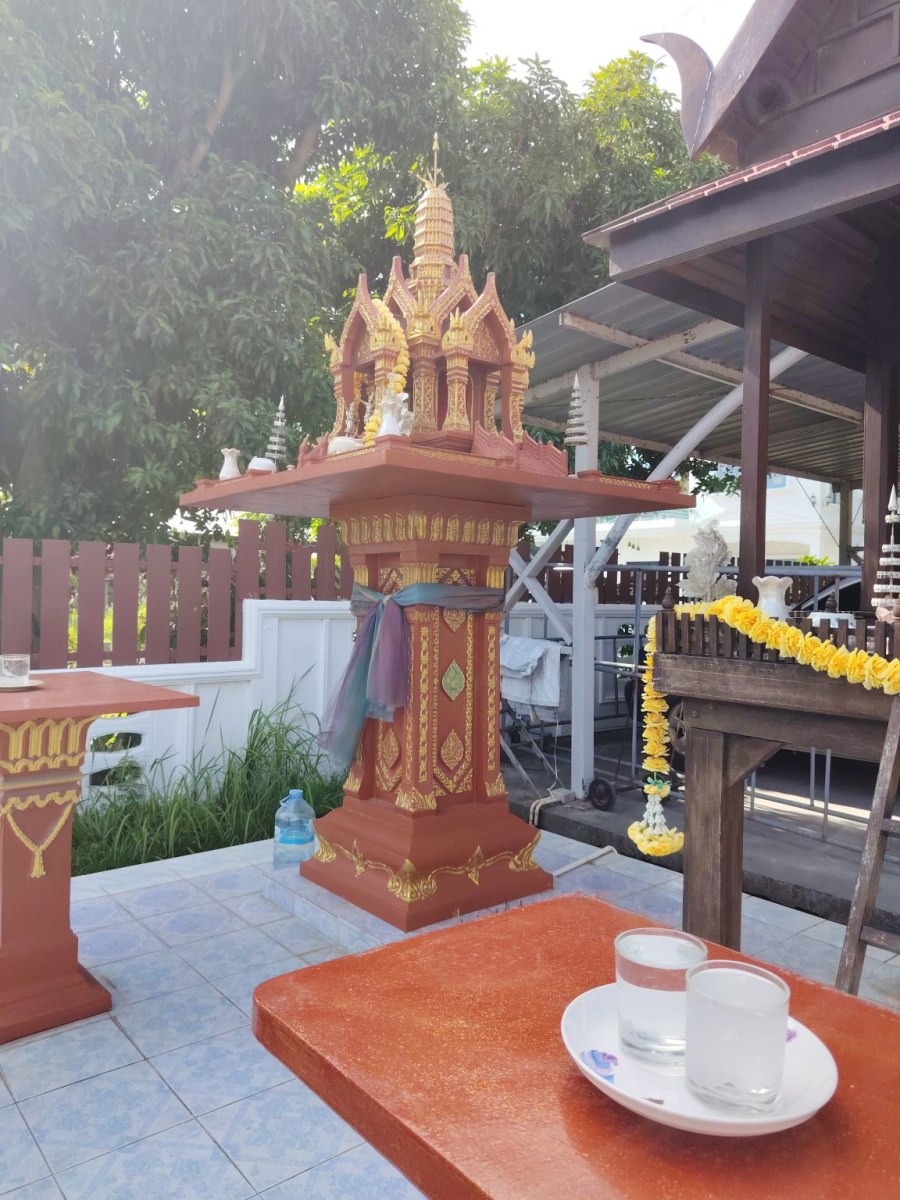
After the conversation, I decided to dedicate part of one of my mornings to going on a photo tour with this specific topic in mind. The topic was therefore to photograph ghost houses, one of the most spectacular elements of Thai religious-cultural practice. Today was the day I set off.
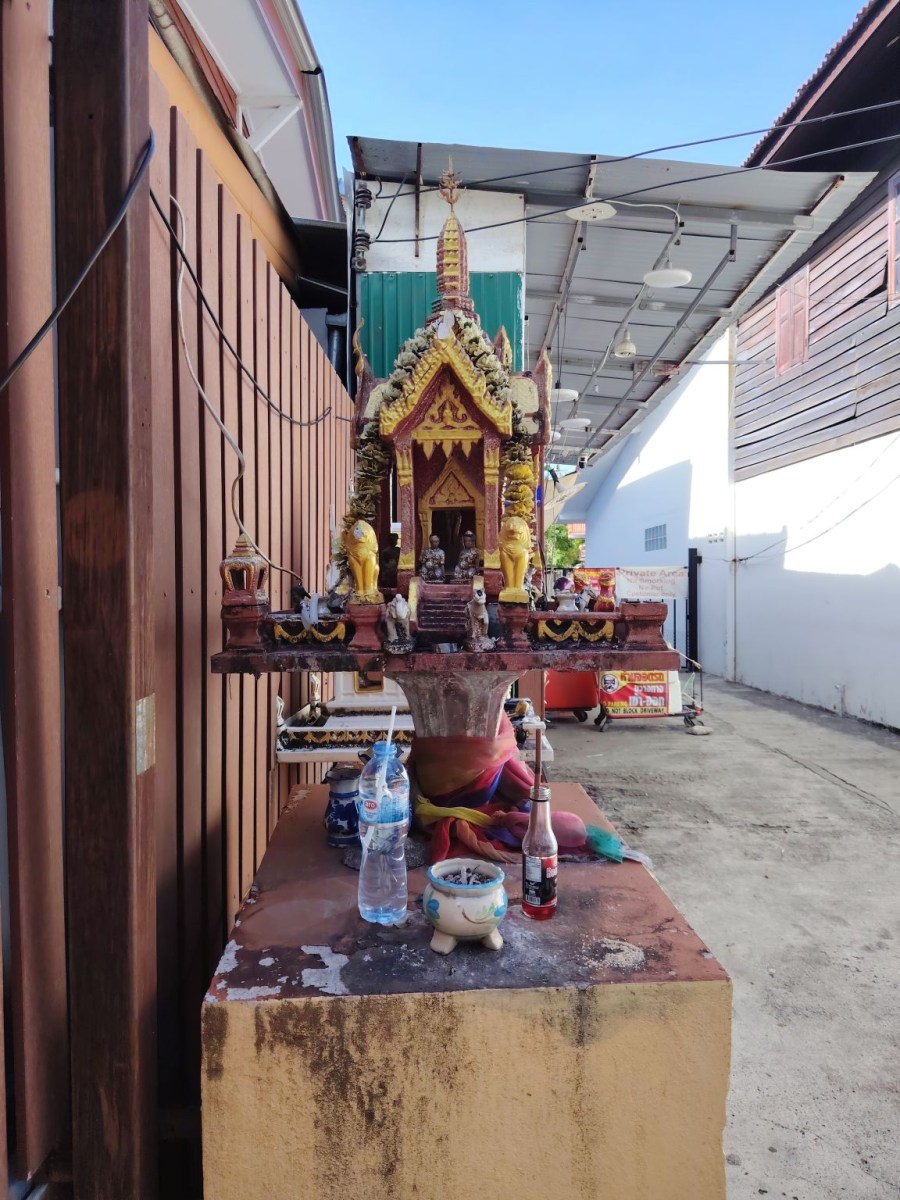
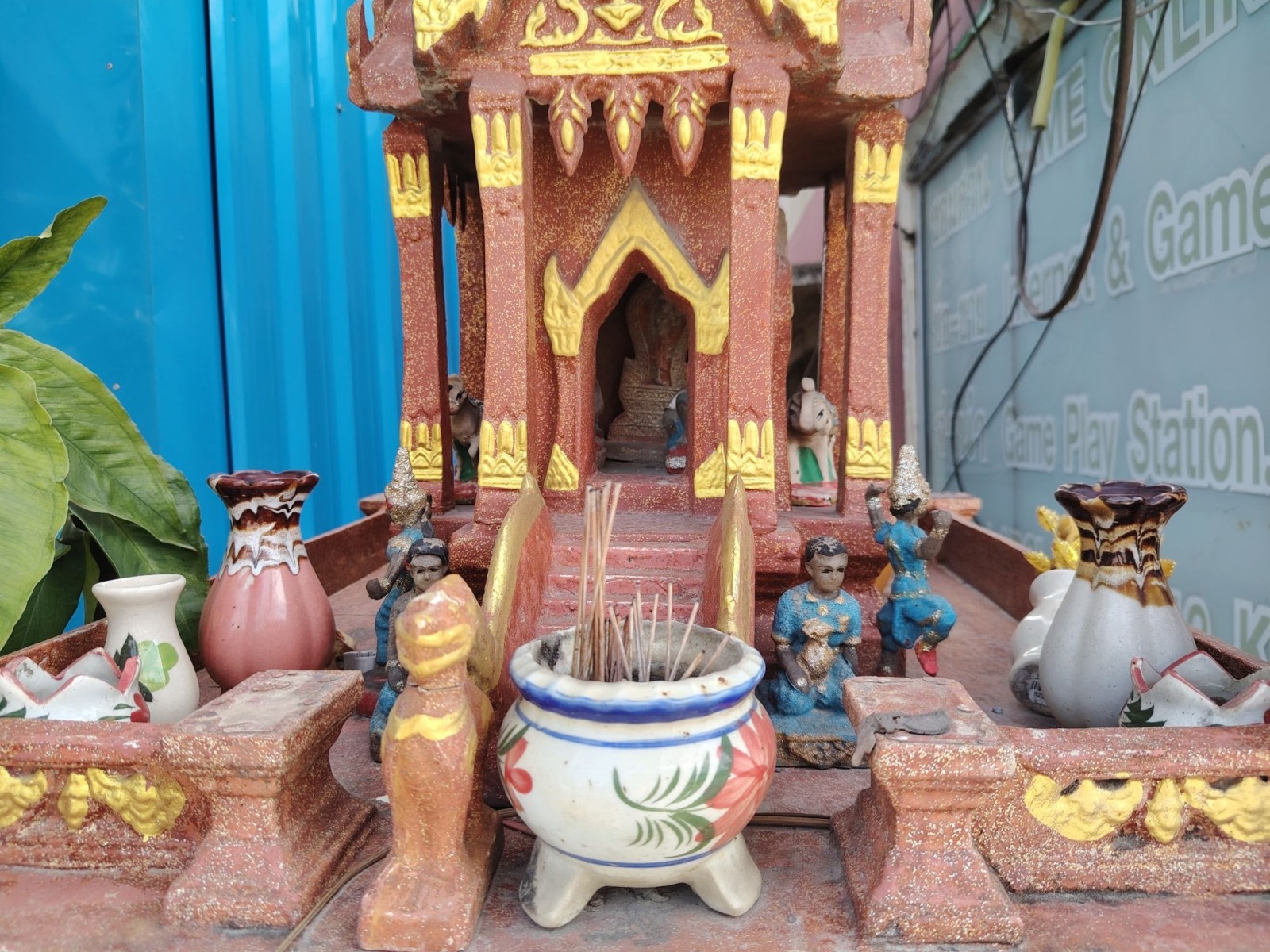
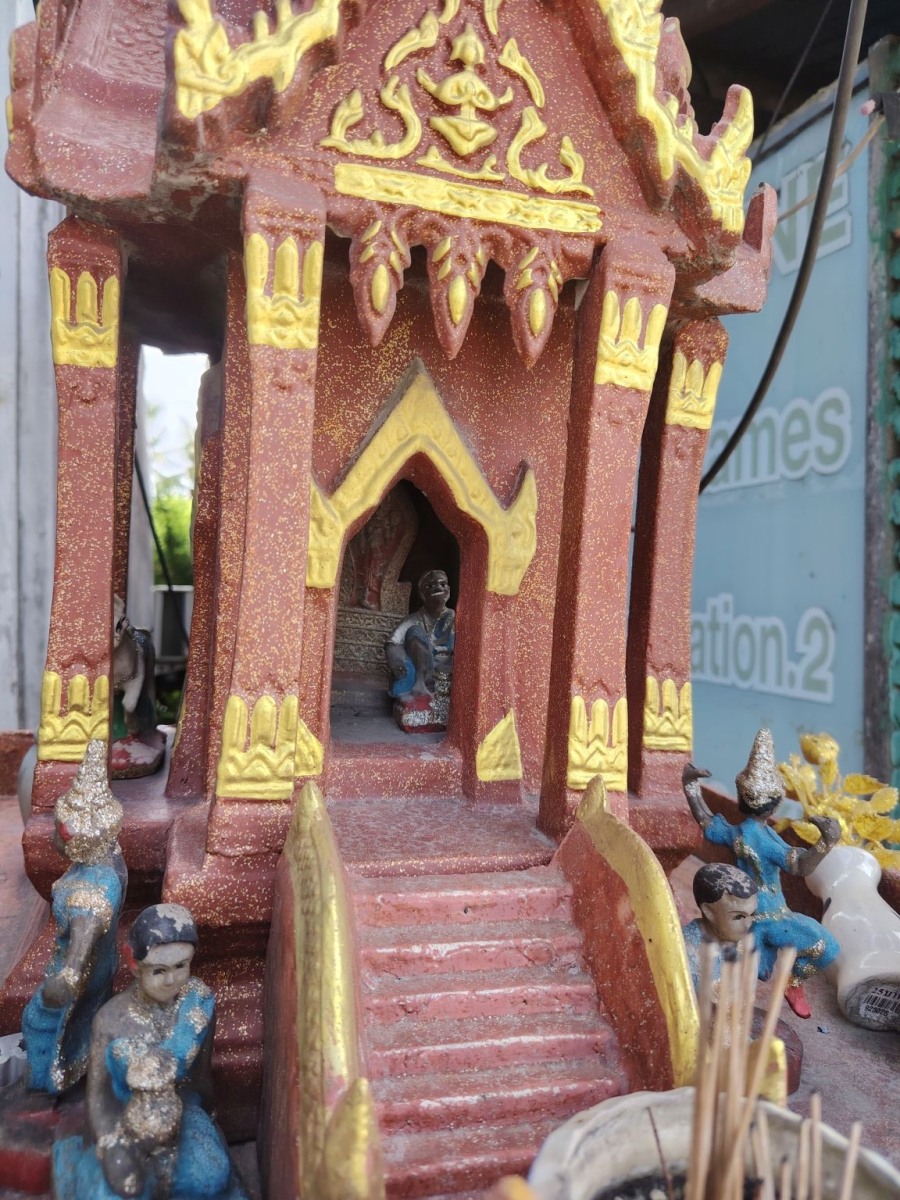
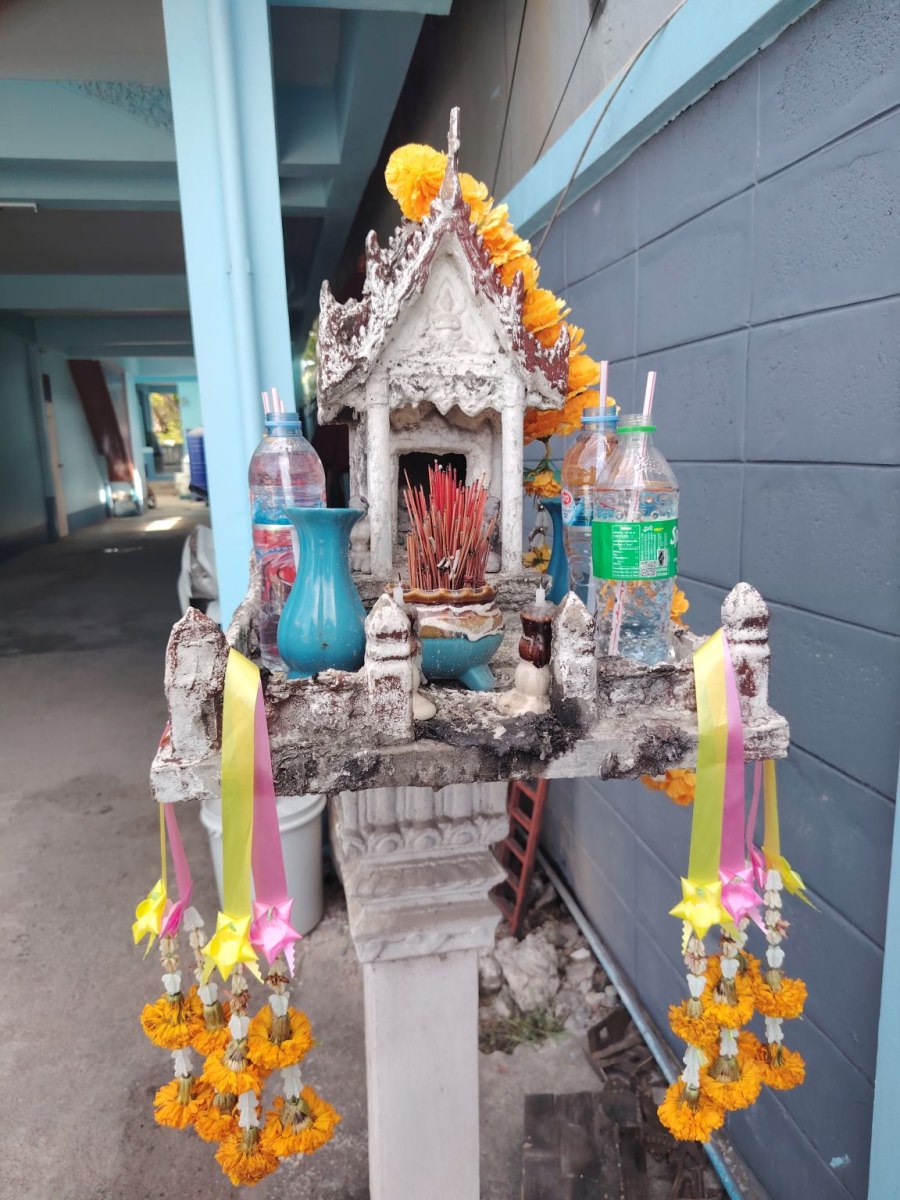
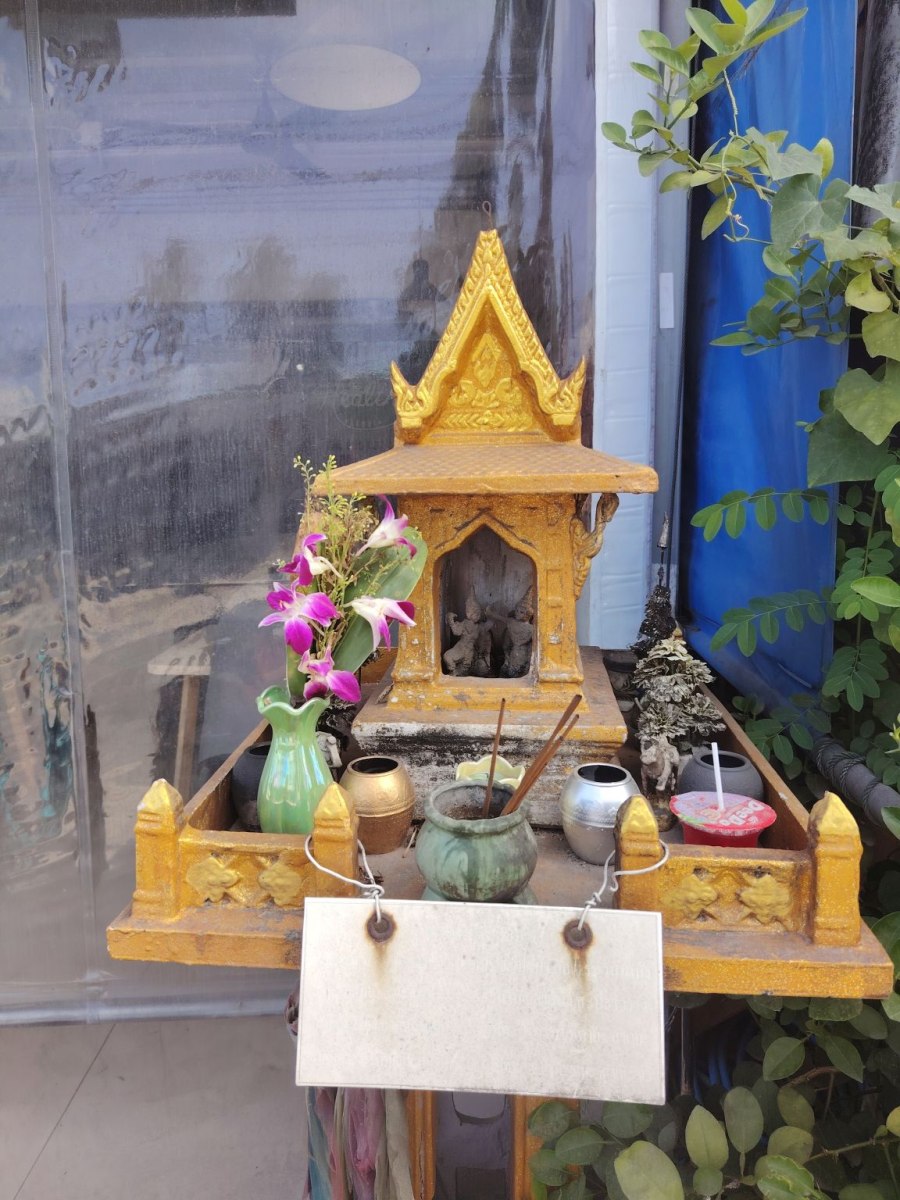
During the 5 km walk, I took 140 pictures, and in the end I photographed 38 ghost houses. It was a short walk in a small area, but the numbers may give you an idea of how common ghost houses are. The The gallery in the post was exceptionally long, containing 123 pictures, but I didn’t really know what to leave out of the photos, this mini-house living tradition is so detailed.
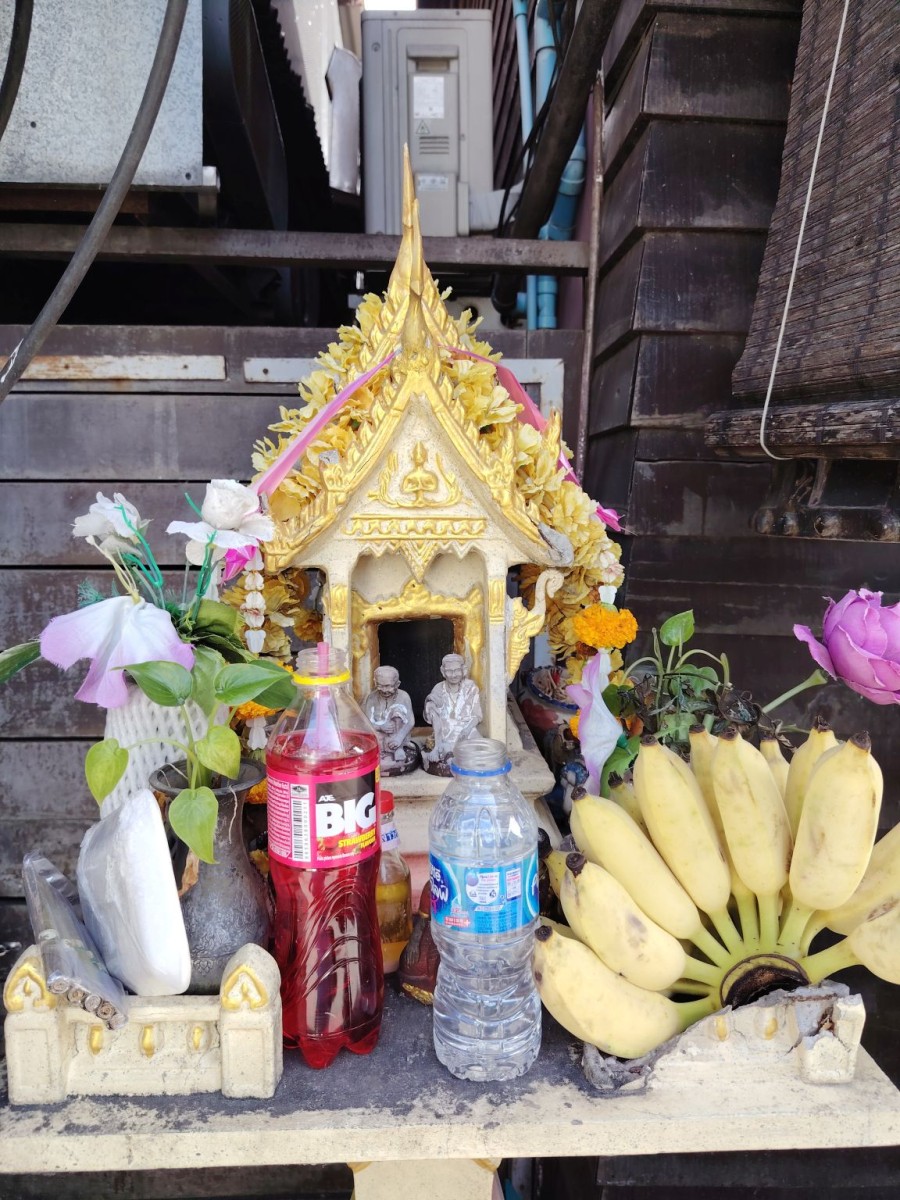
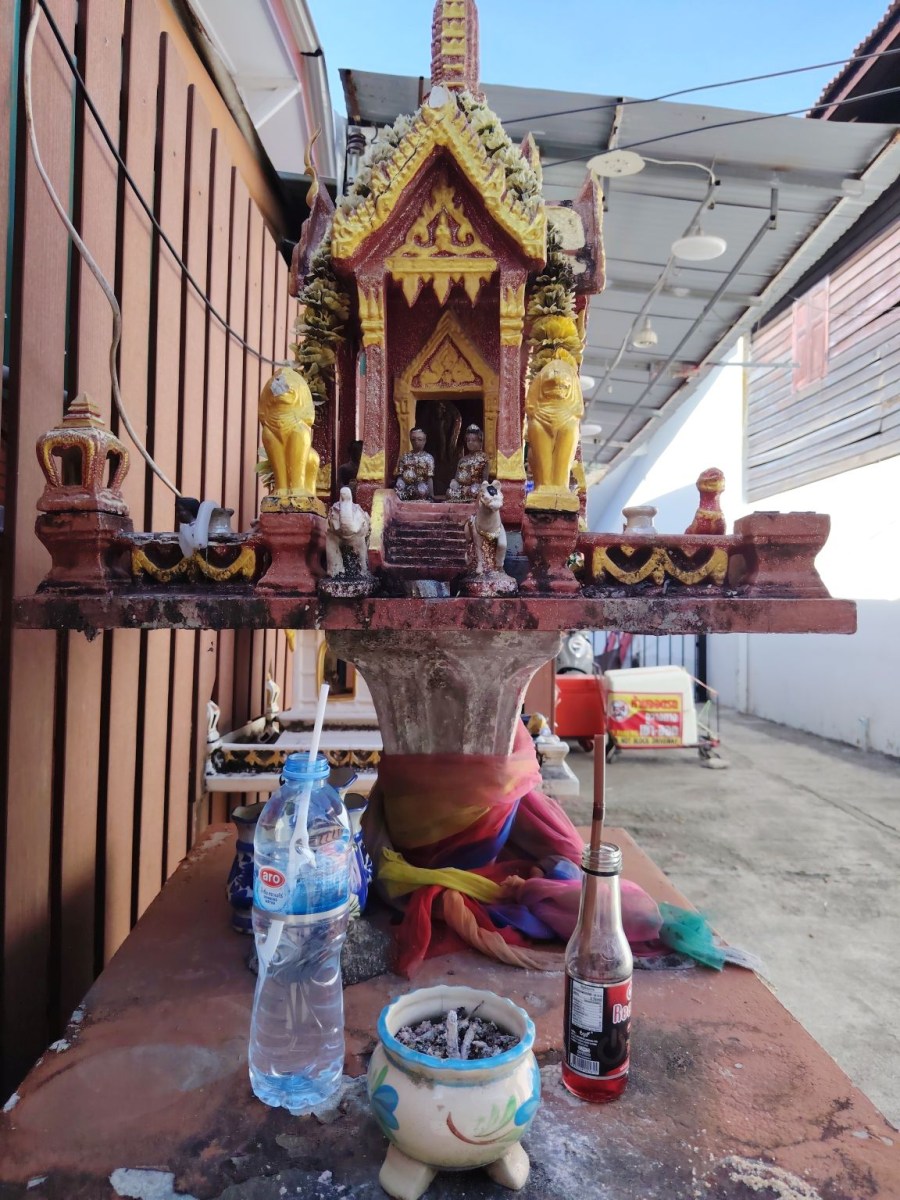
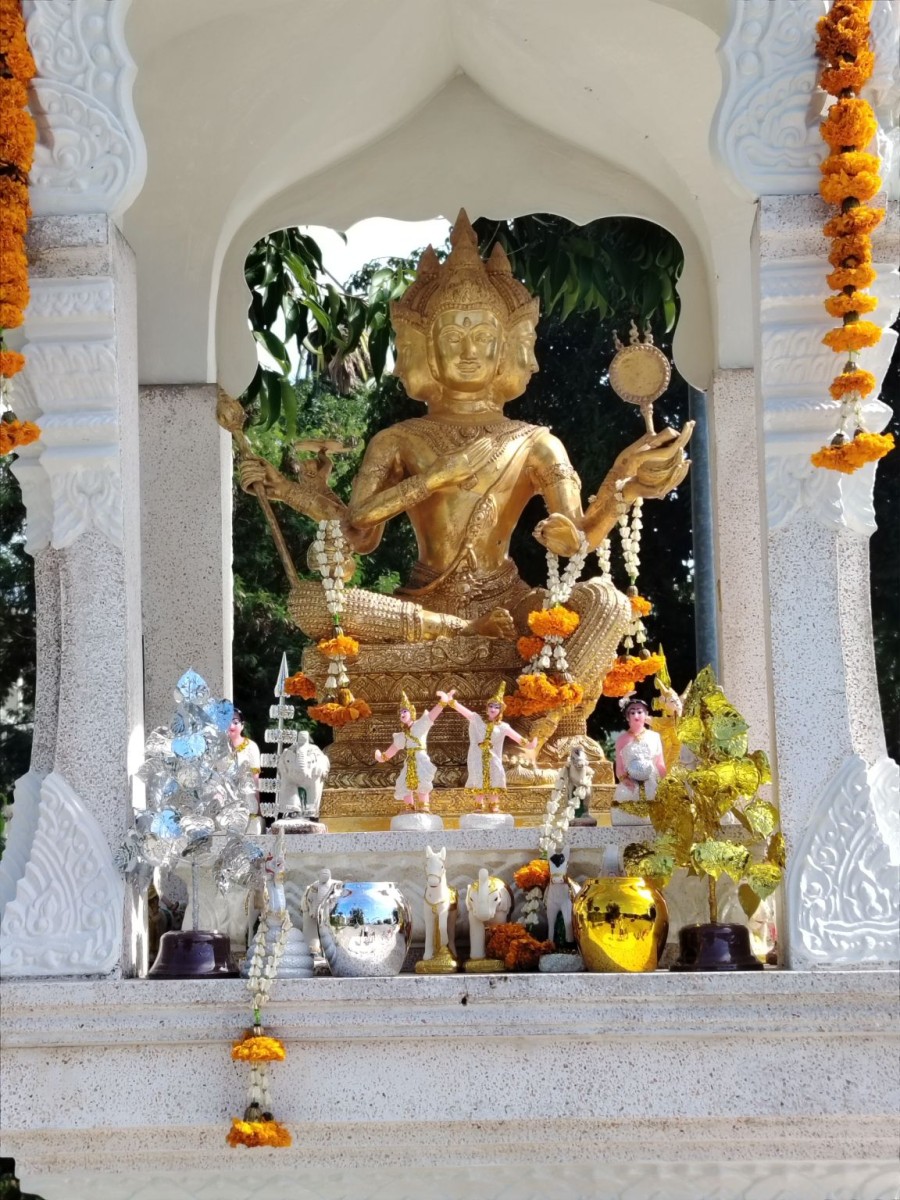
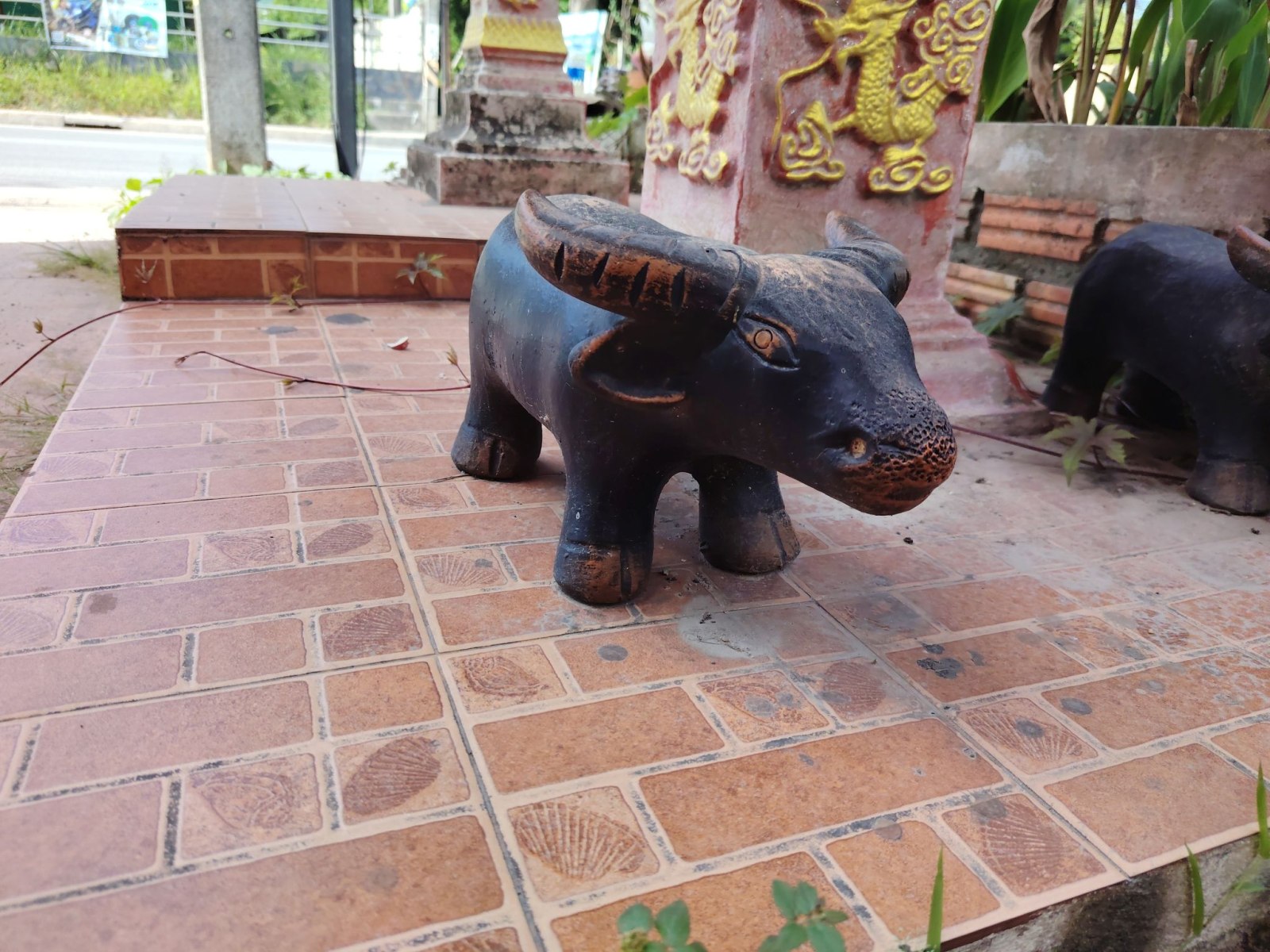
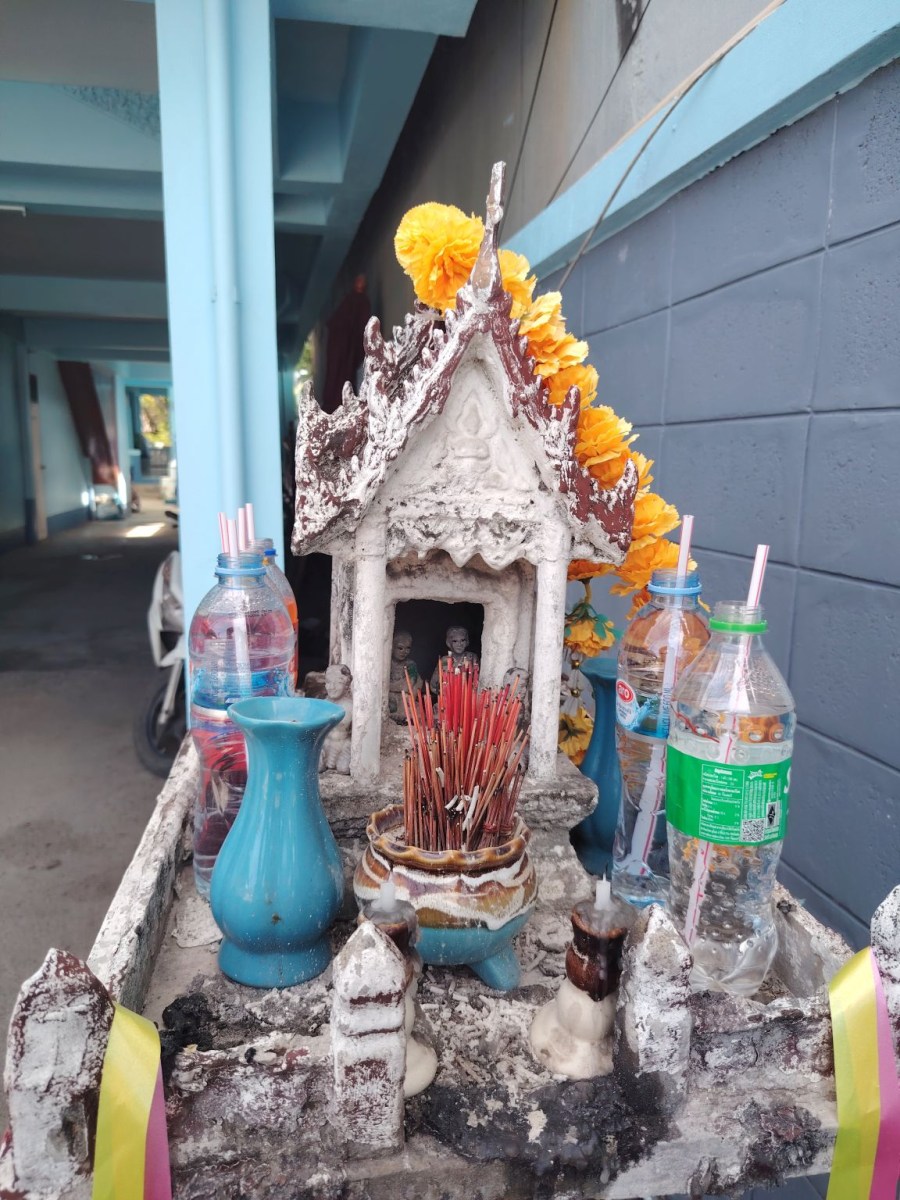
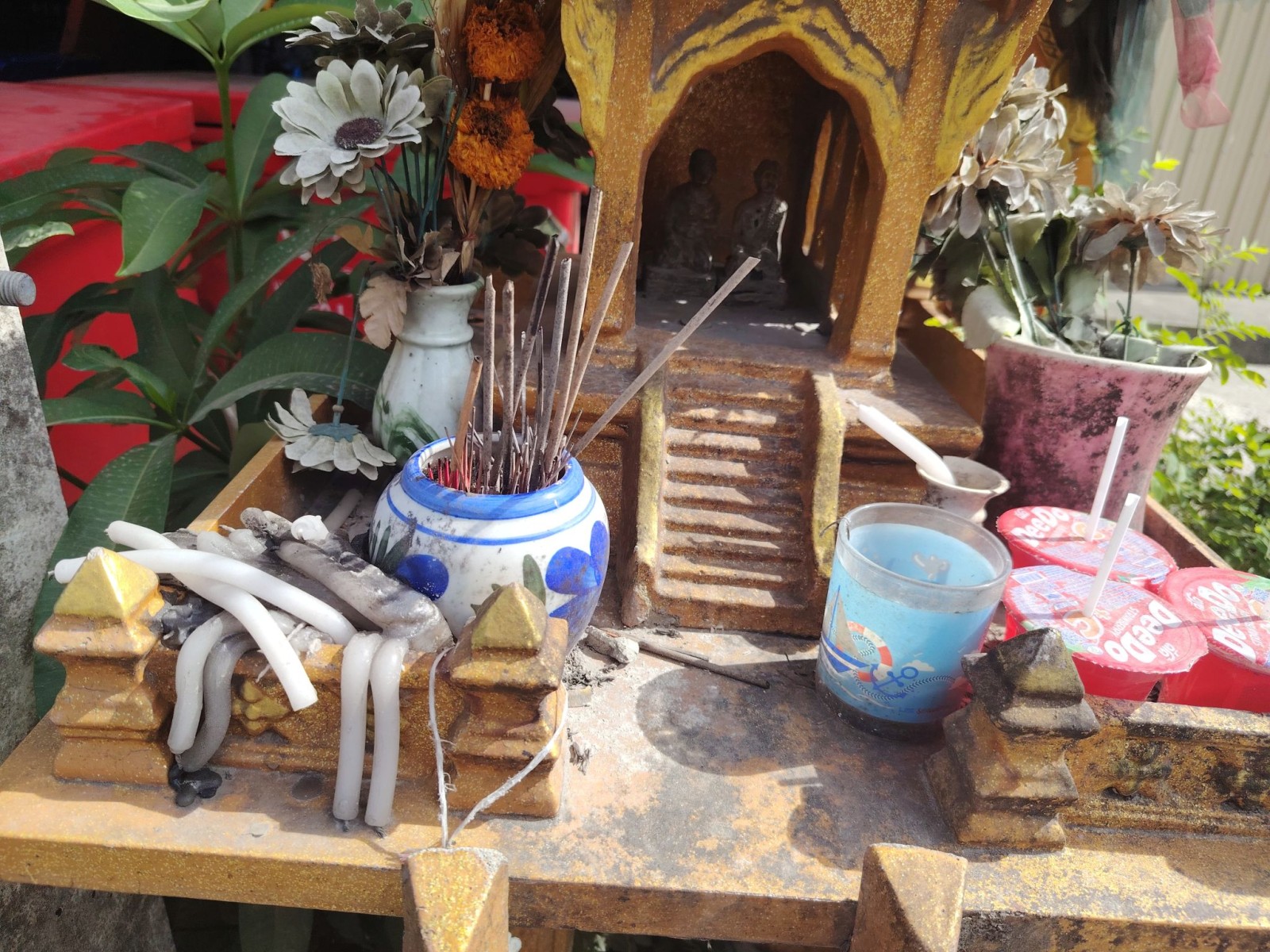
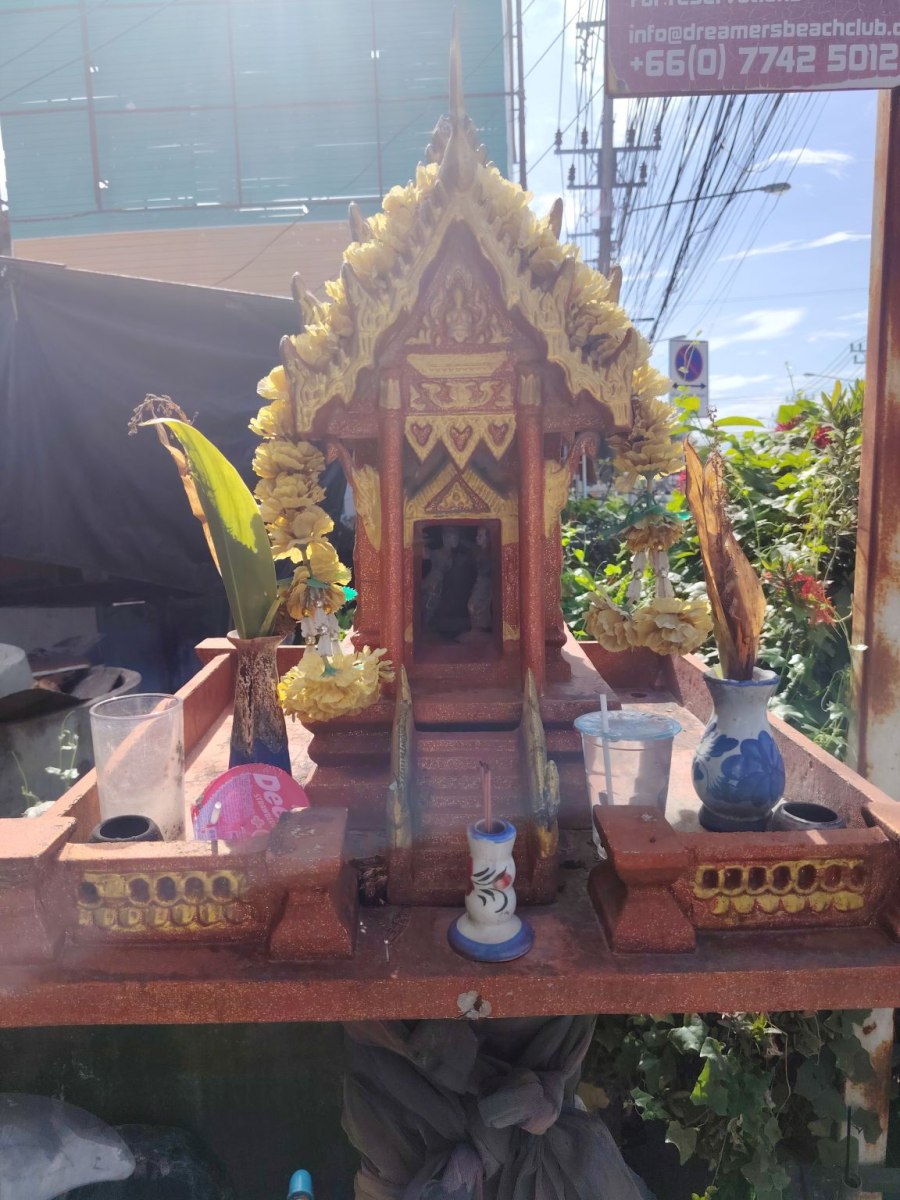
There are so many details to discover in the pictures. There was a house that didn’t have a statue. There was also one that was full crowded. I found one where one of the figures was facing the wall, the other was looking out the door. It’s worth looking for and discovering the mini statues inside the mini buildings! Sometimes I had the feeling that they were showing the family whose house the protective house belongs to. I saw animal figures, mainly elephants and horses.
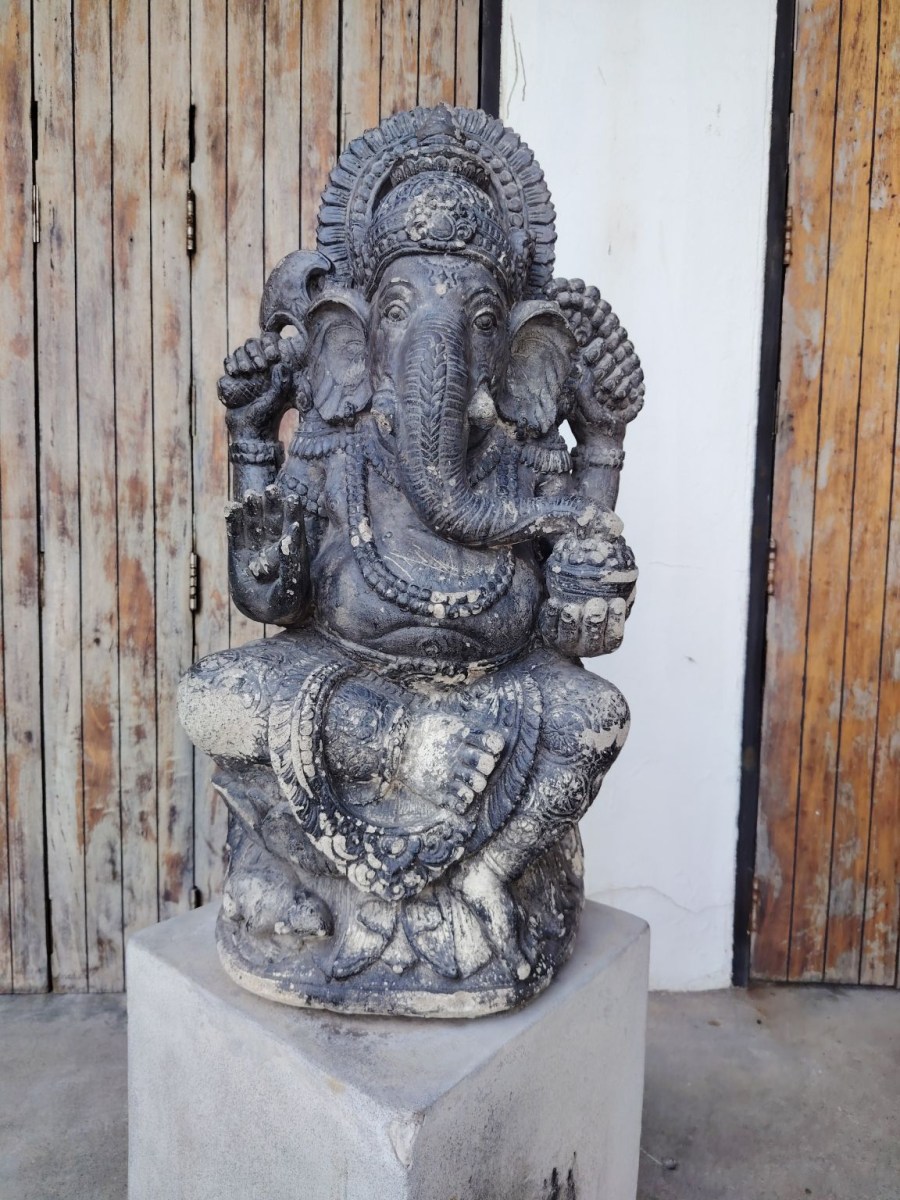
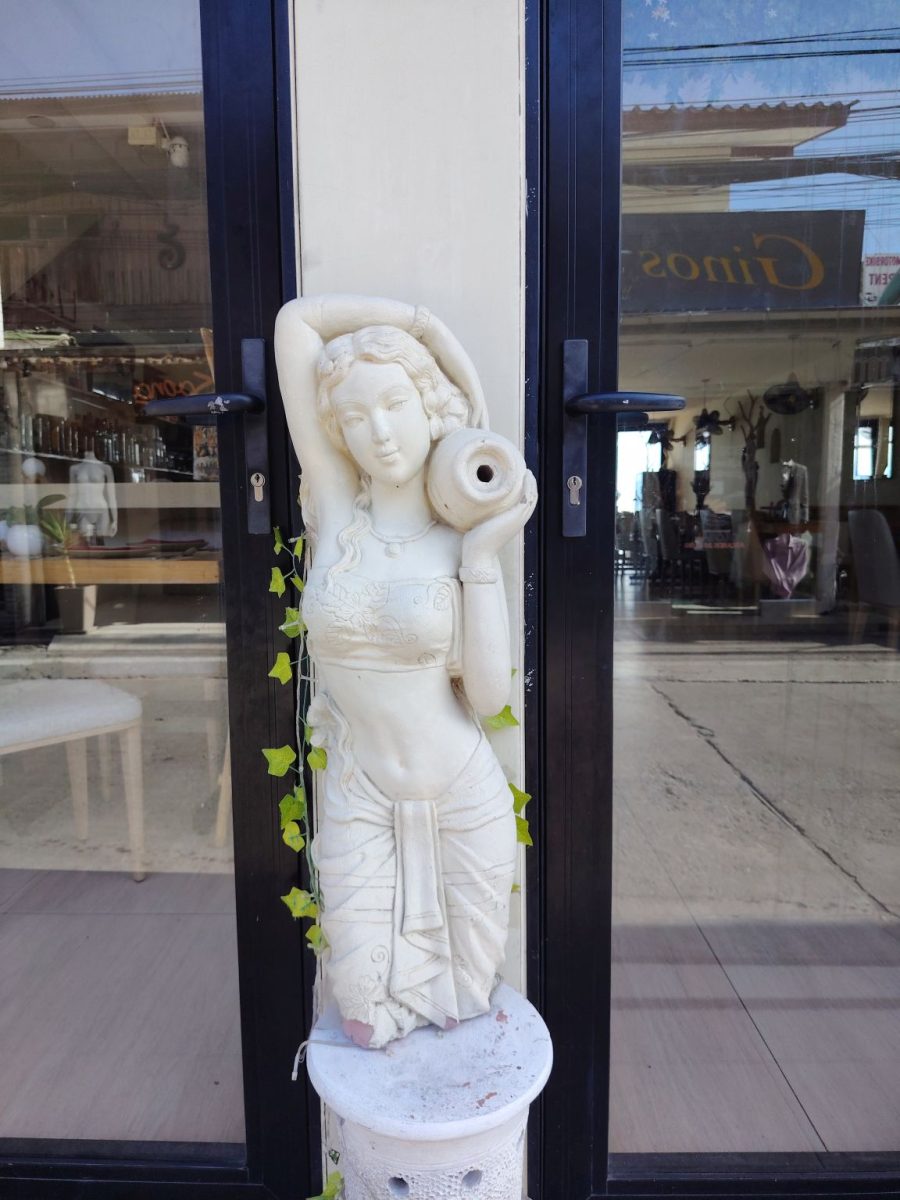
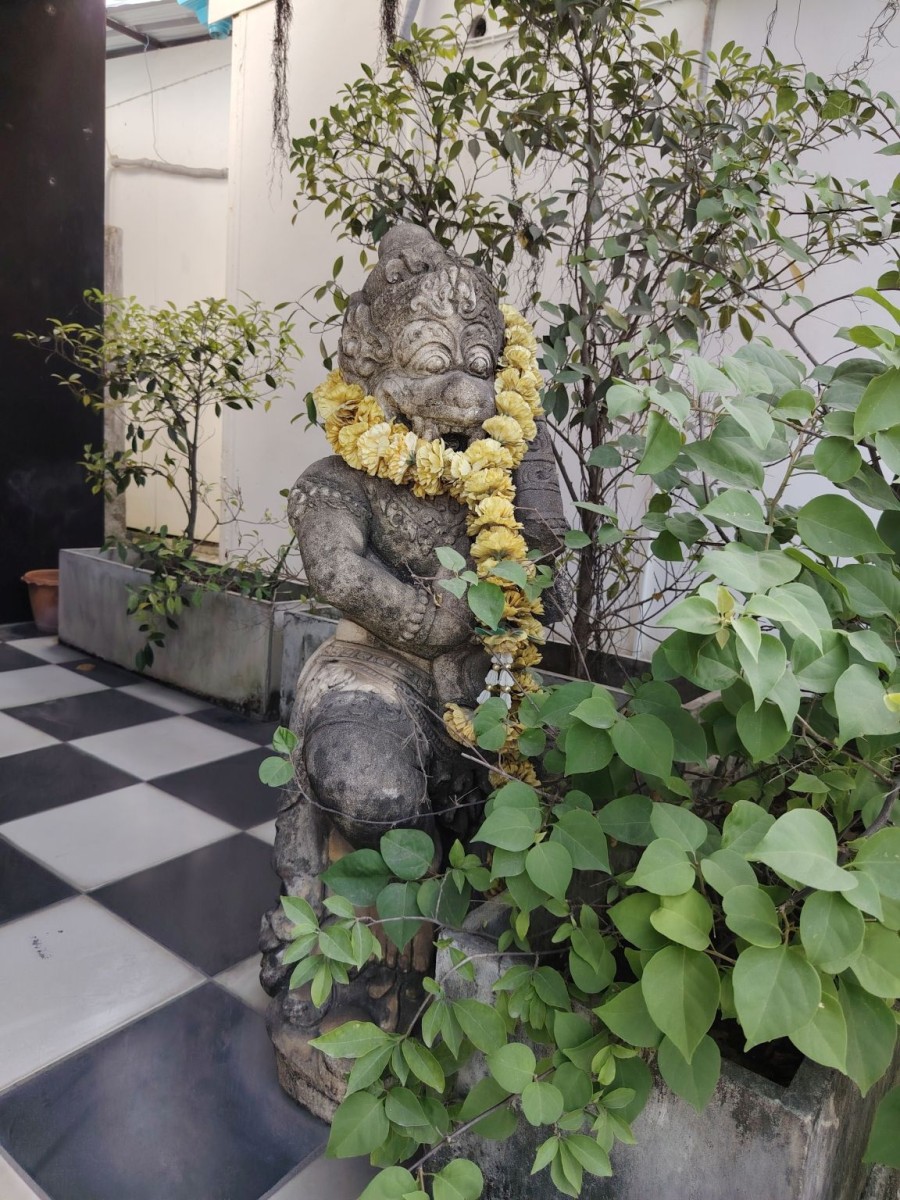
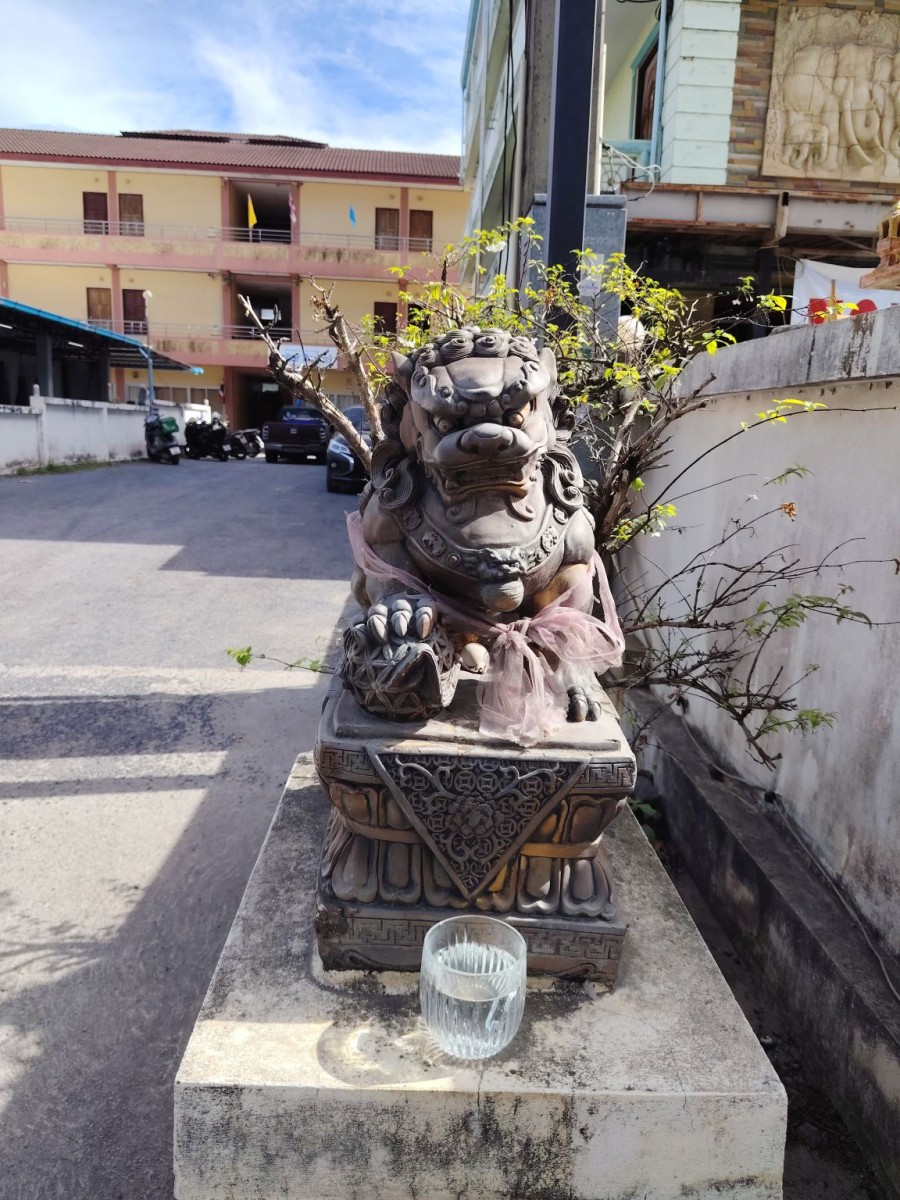
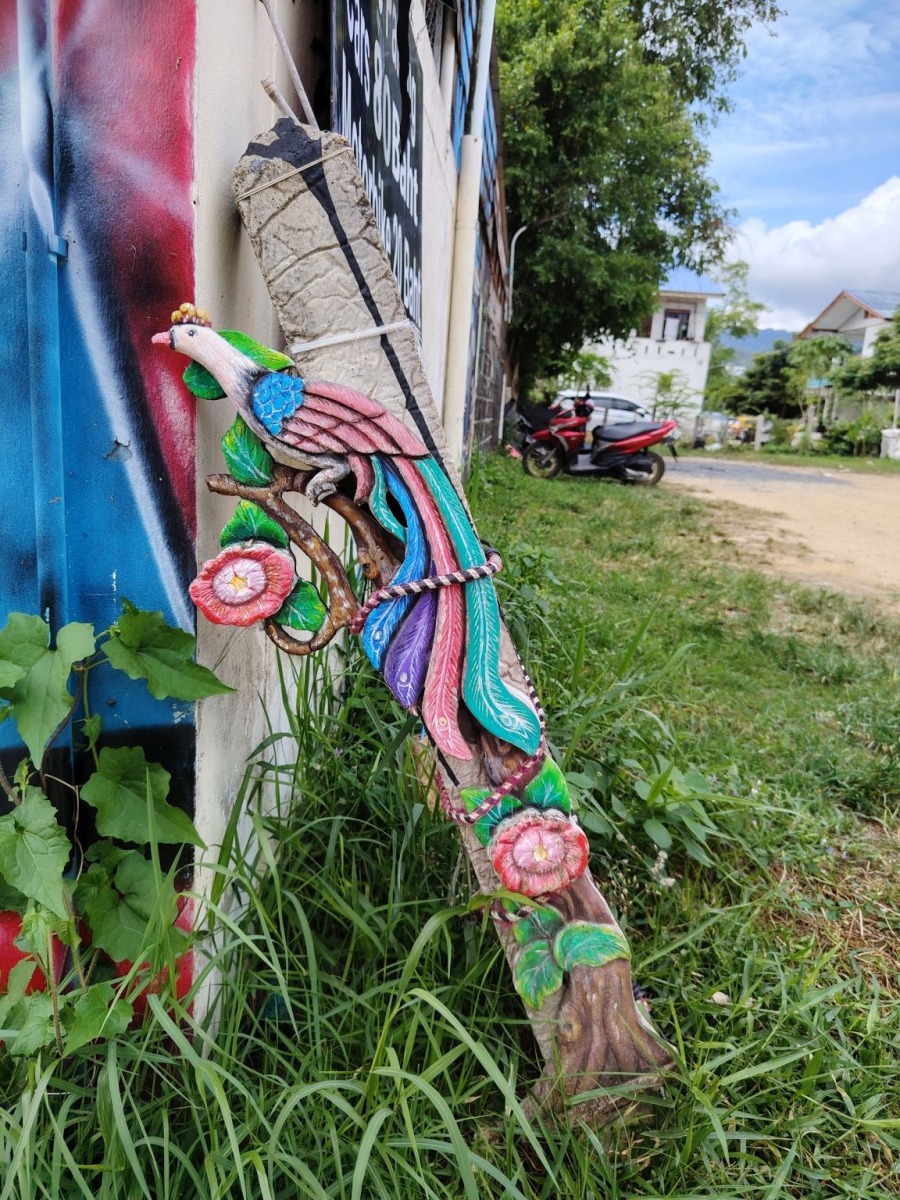
Some photos of statues were also included in the gallery, because I found it interesting to see a few other cultural manifestations during the walk.
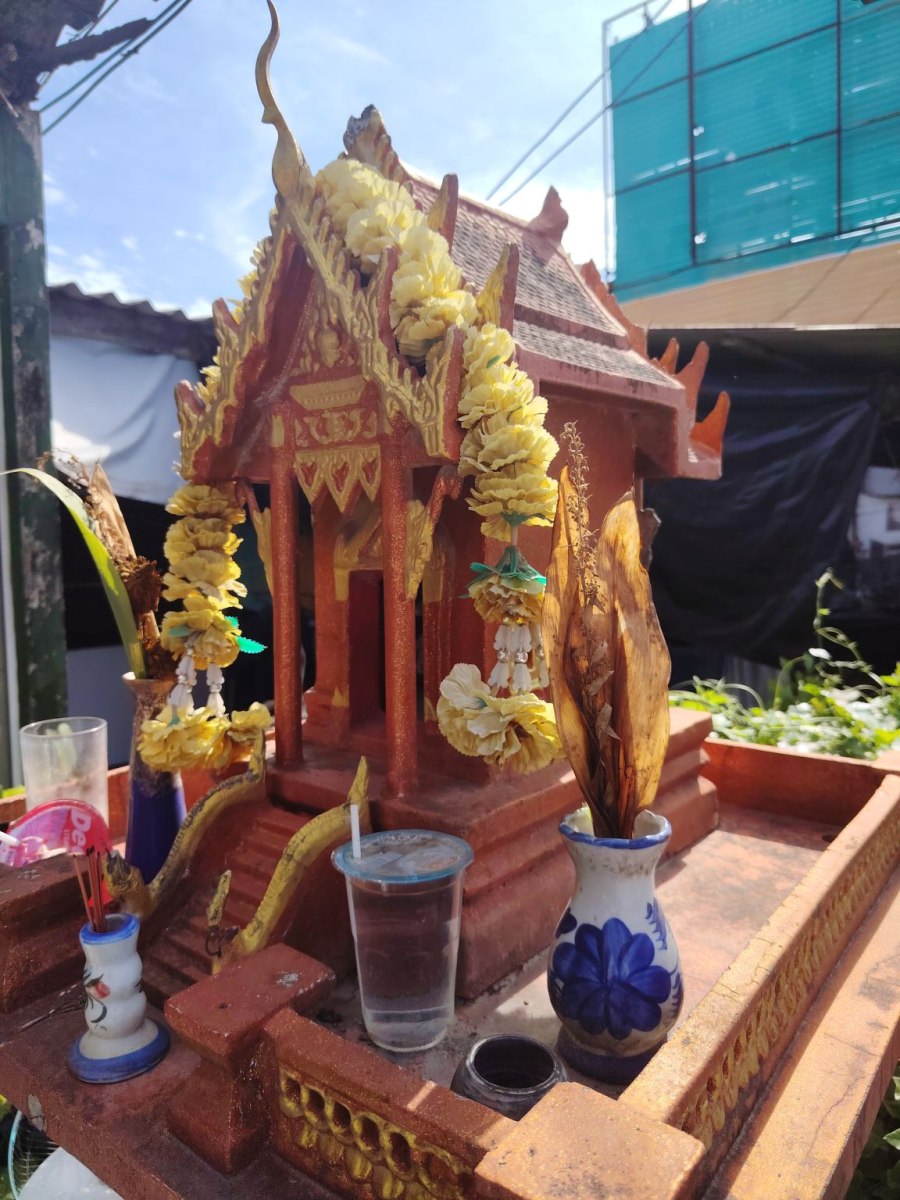
There were ghost houses that were body height, there were some that you had to look up at, or they were very tall, or because they were built “monumental”. Of course, I mean that they were much larger than average.
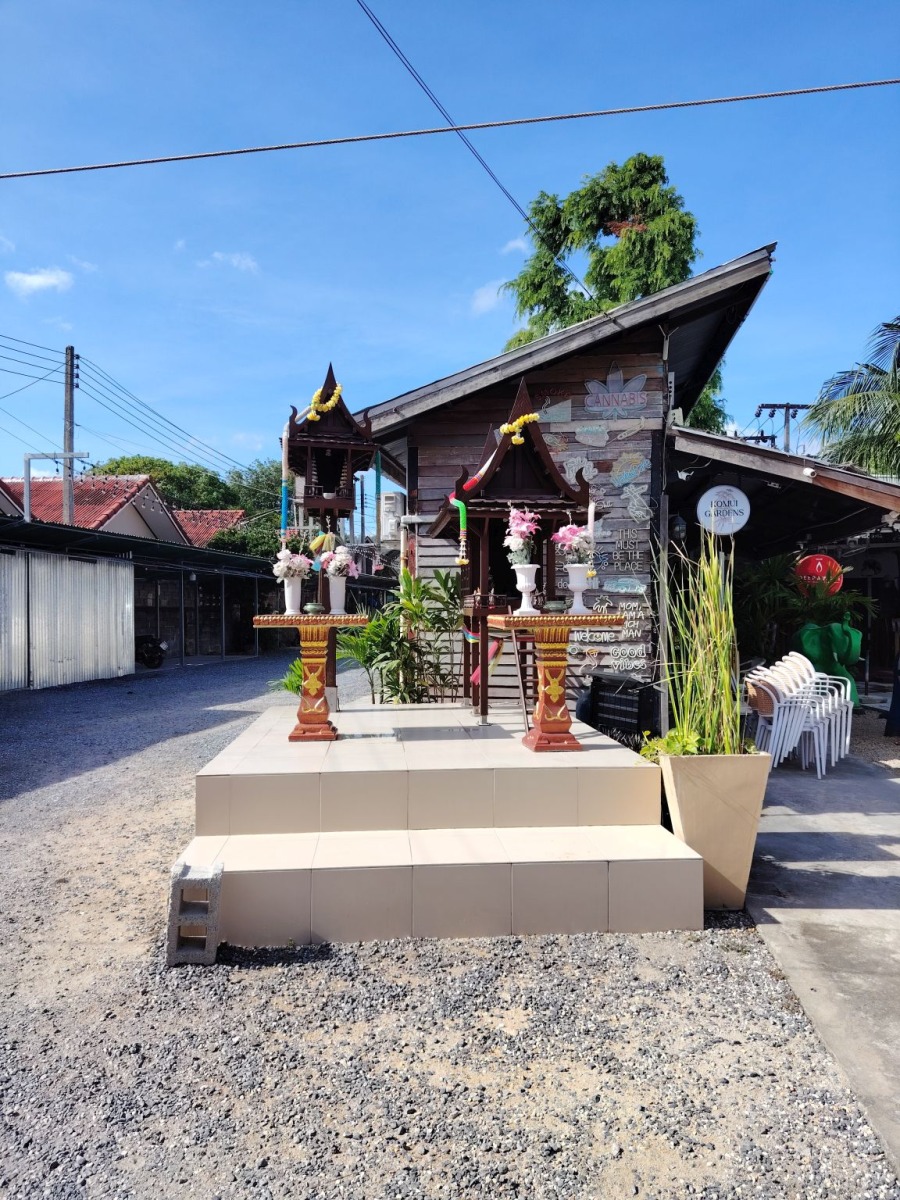
Their condition and location also vary. Most are freely accessible. I saw only one that was behind a fence. Private protection. Some were very well maintained, some were neglected. The last picture shows a custom-made structure, for me this was the most respectable, because all the other structures were purchased, this is the only one that I saw that someone built with their own two hands. It is worth looking at the roofs of the small buildings.
In terms of their material, most of the buildings are made of stone or concrete(?), wooden structures are rarer.
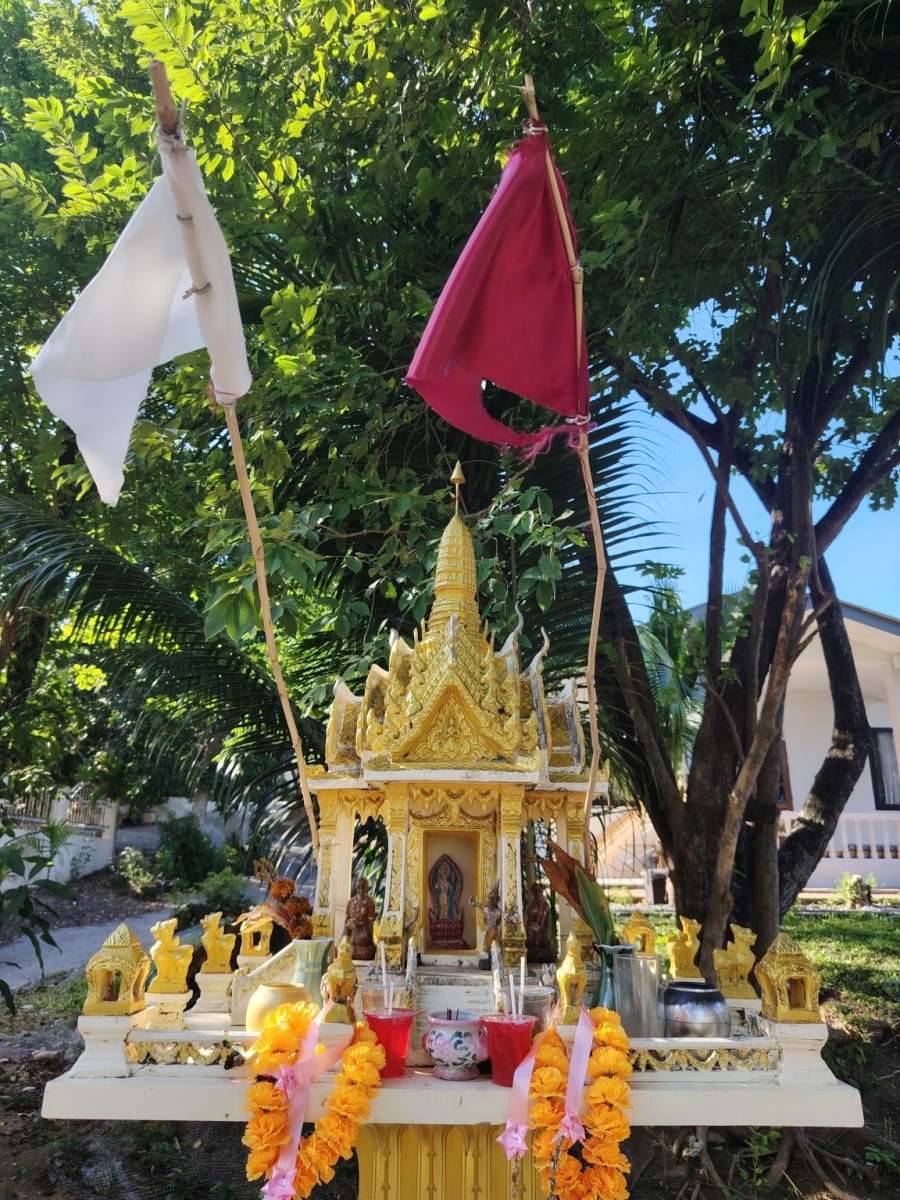
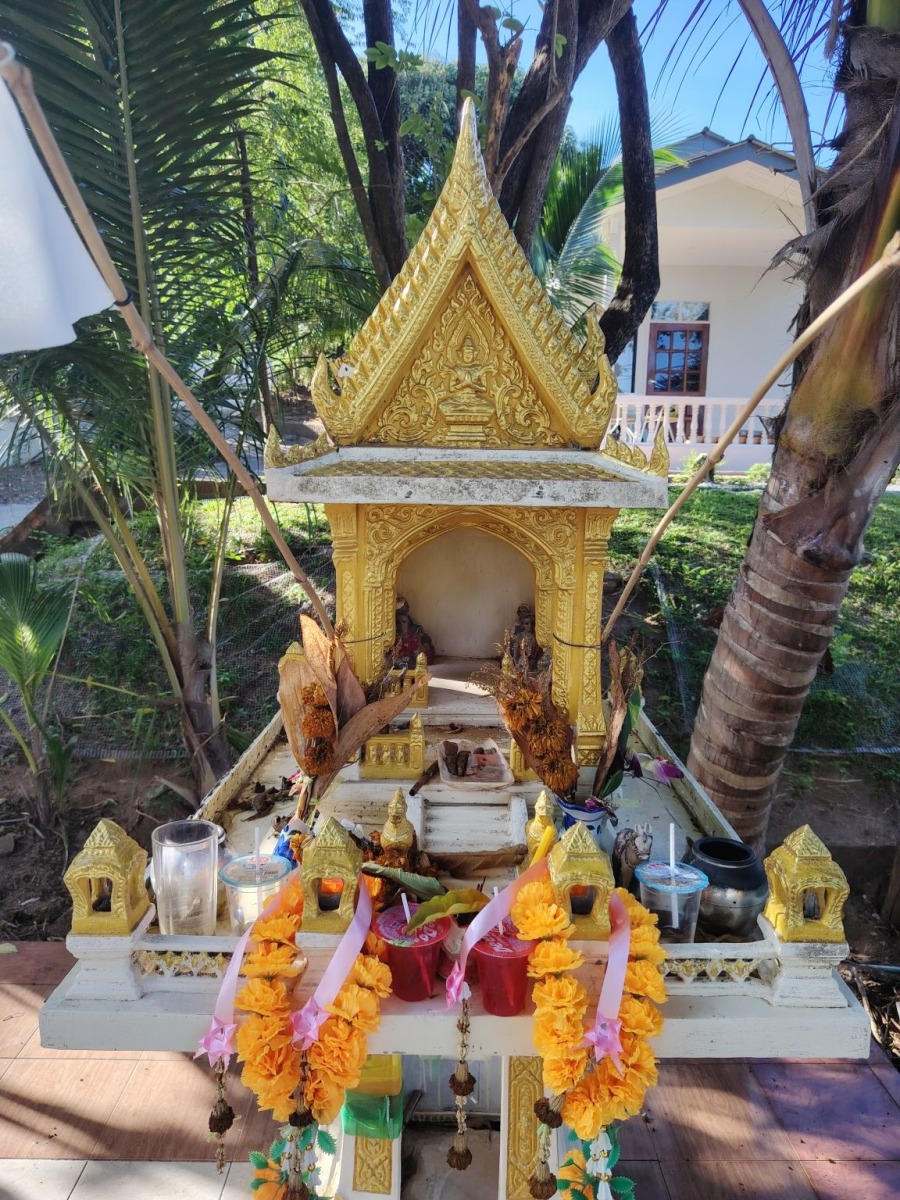
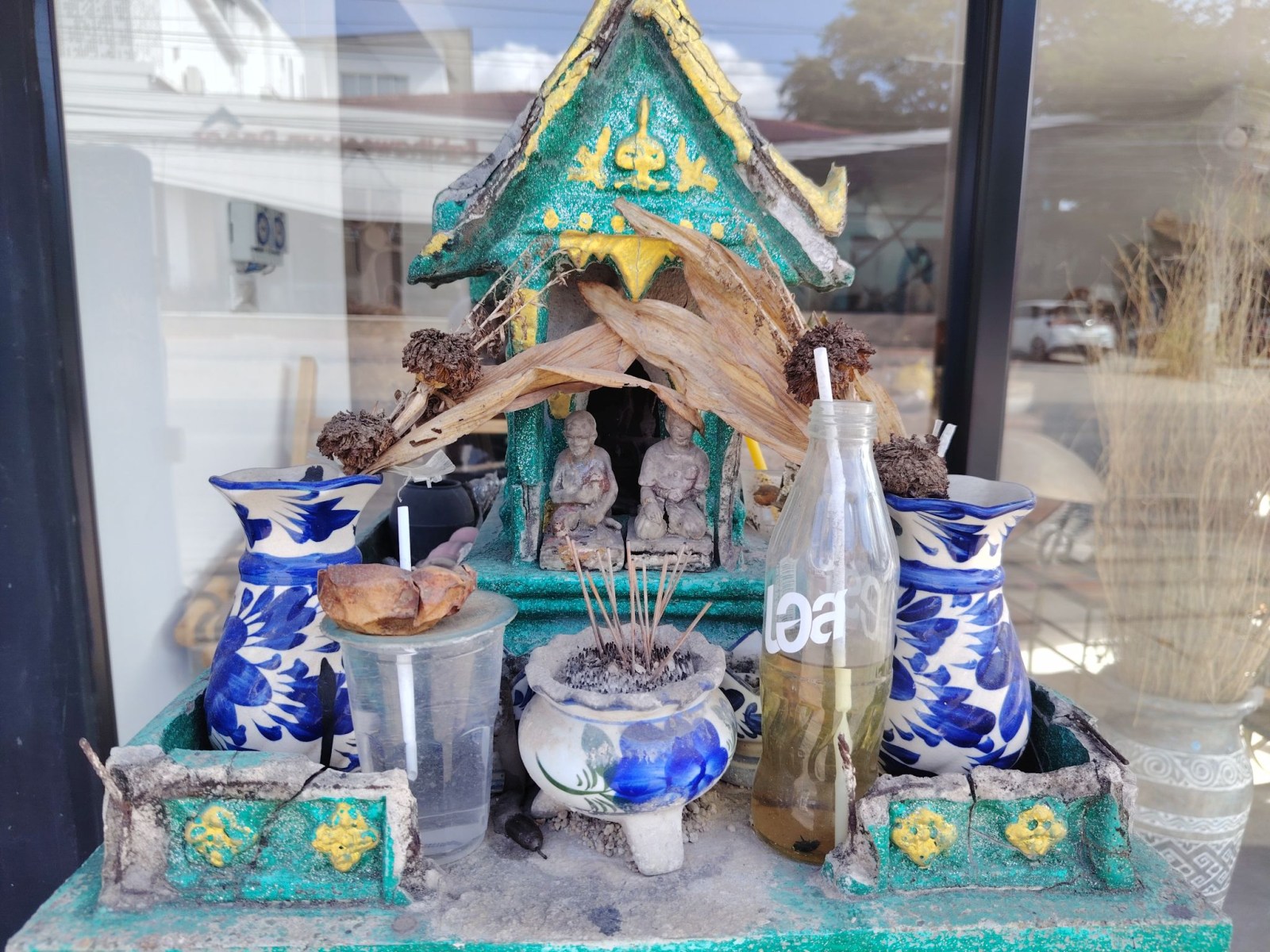
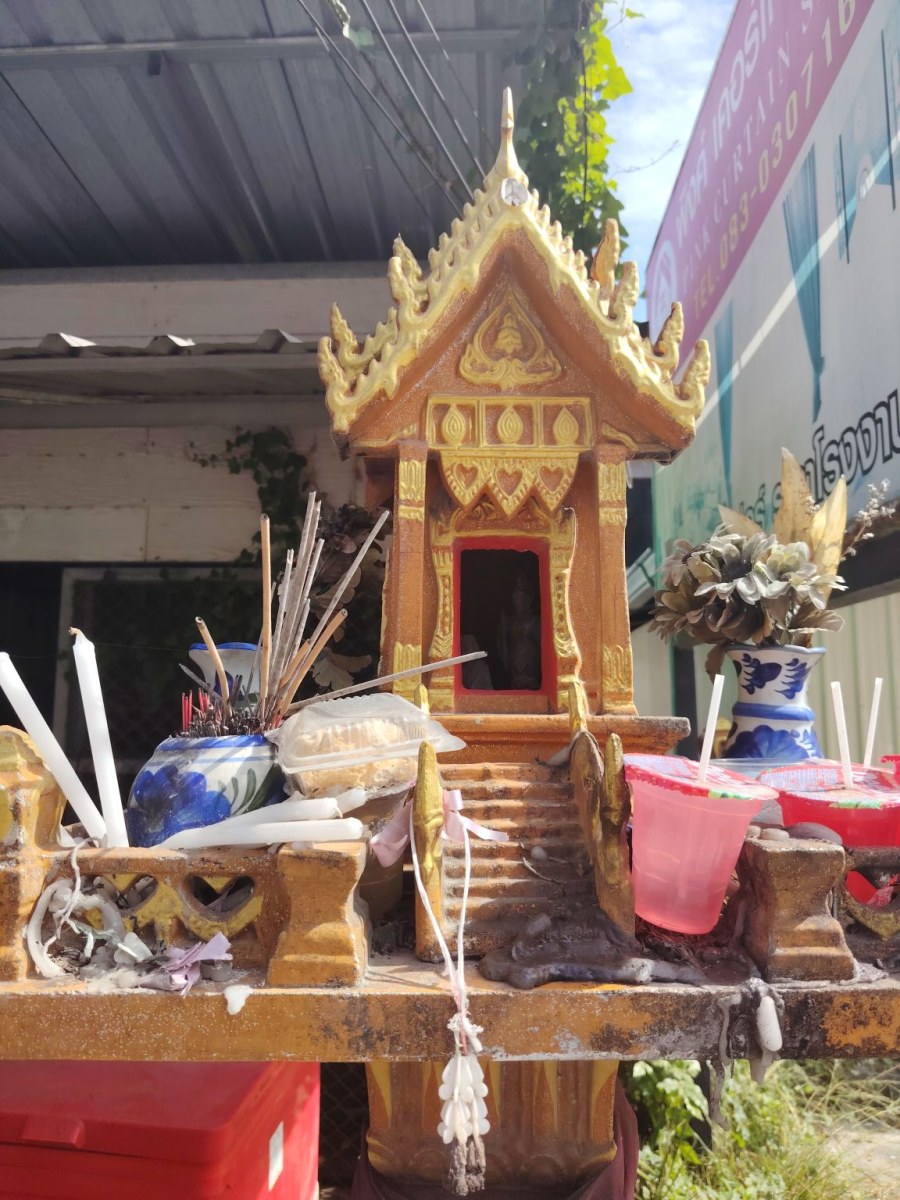
The colors are varied, you can read about their meanings below. On today’s tour, gold and white colors dominated, but for me, one of the very beautiful green ones was my favorite today.
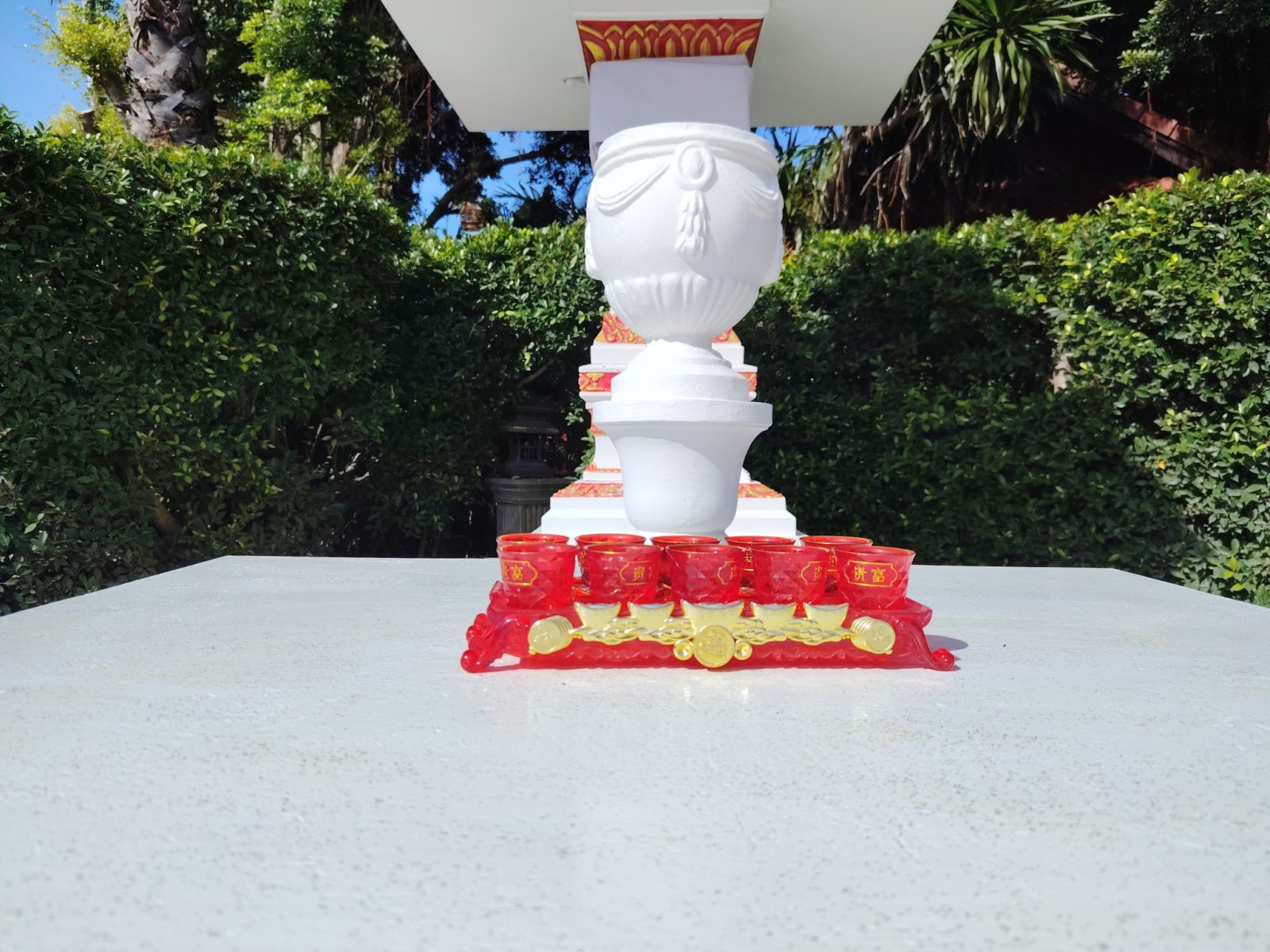
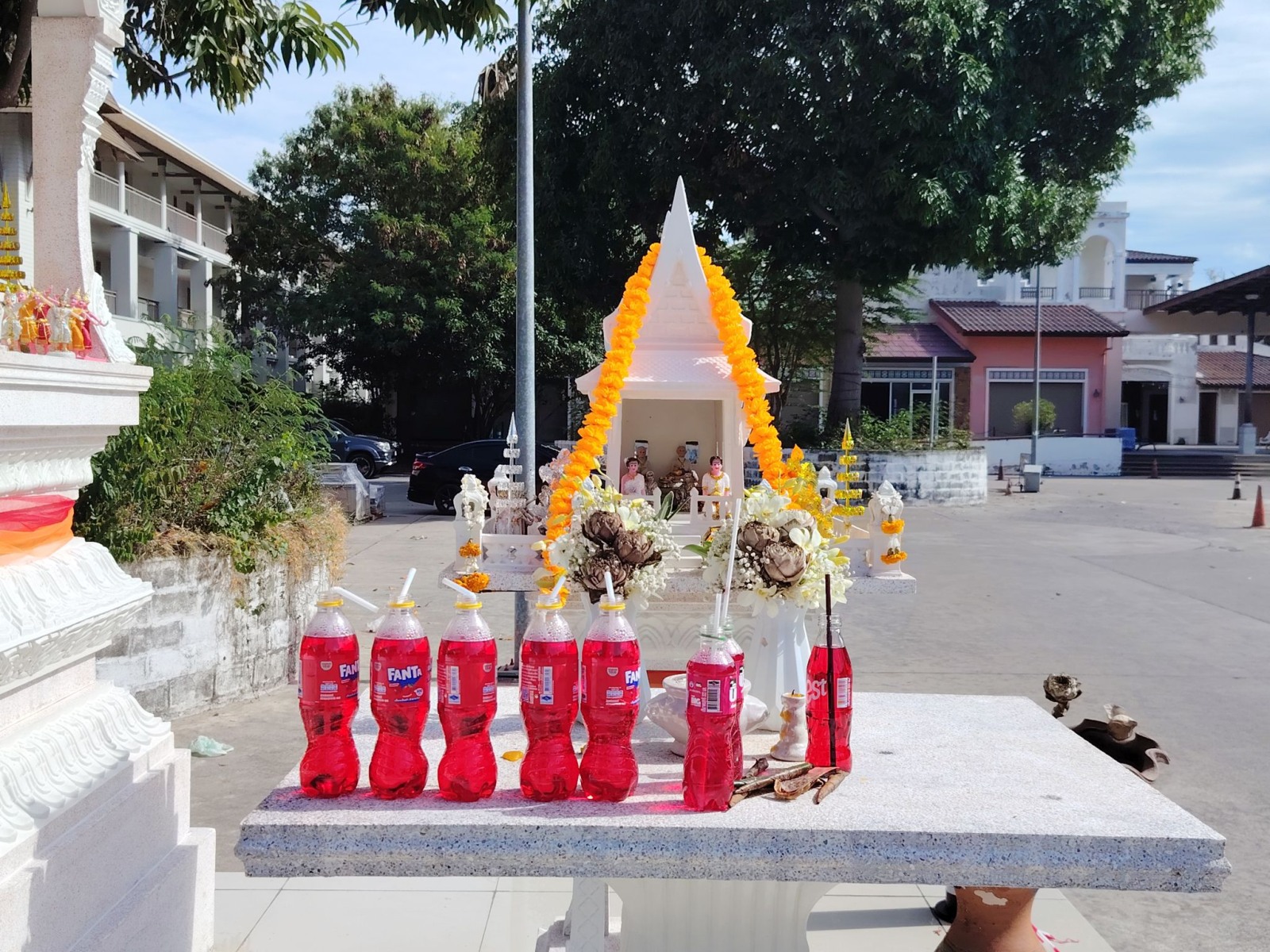
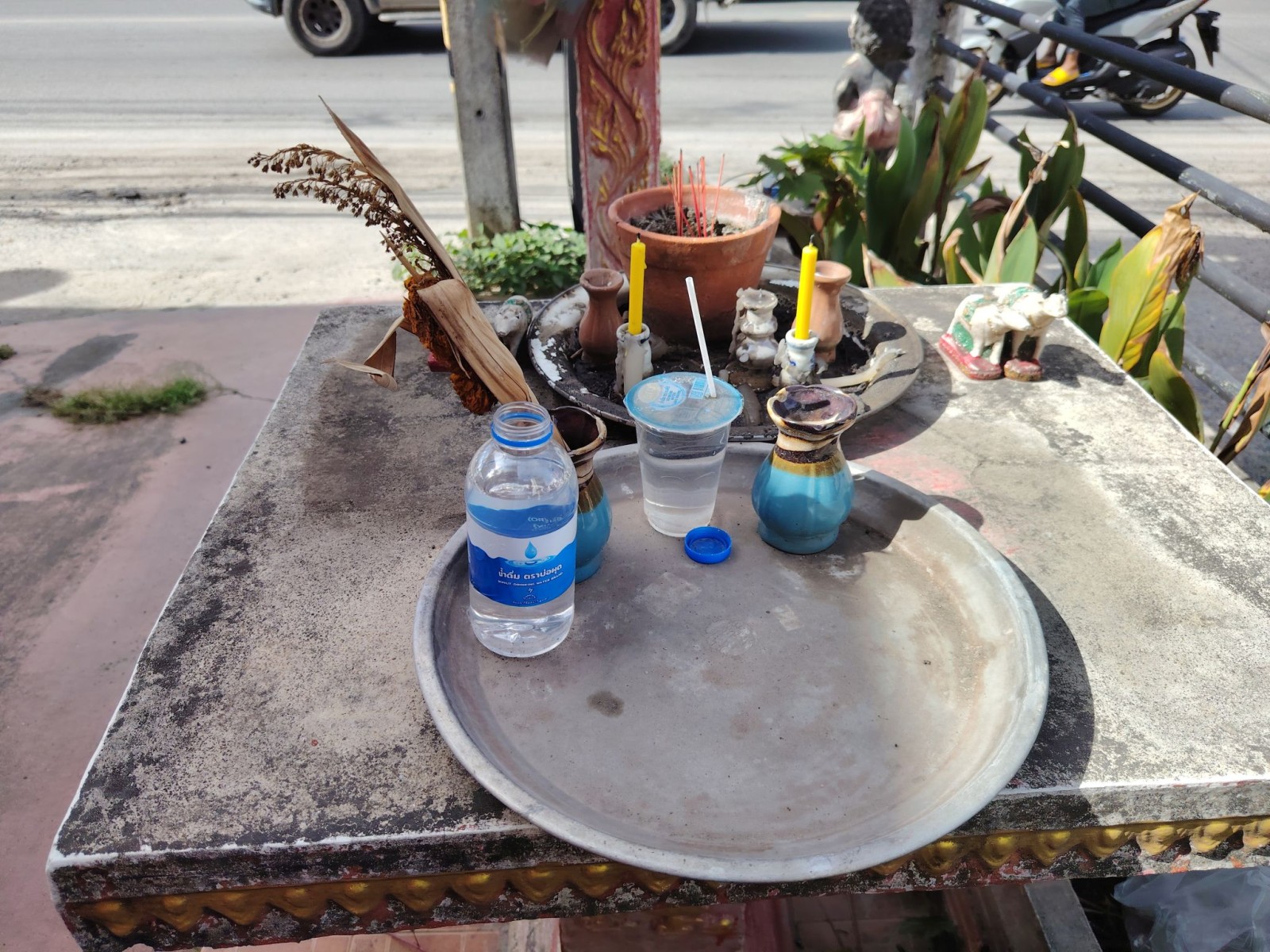
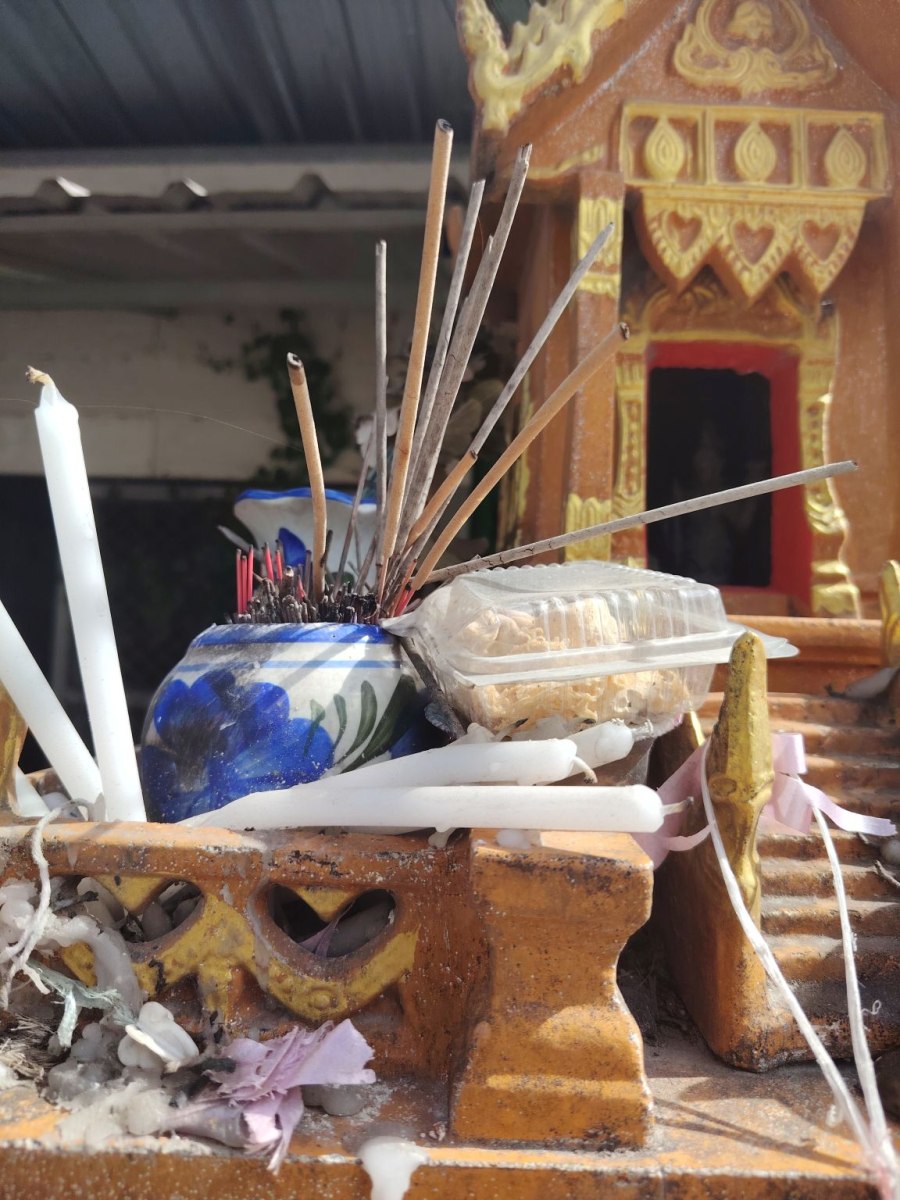
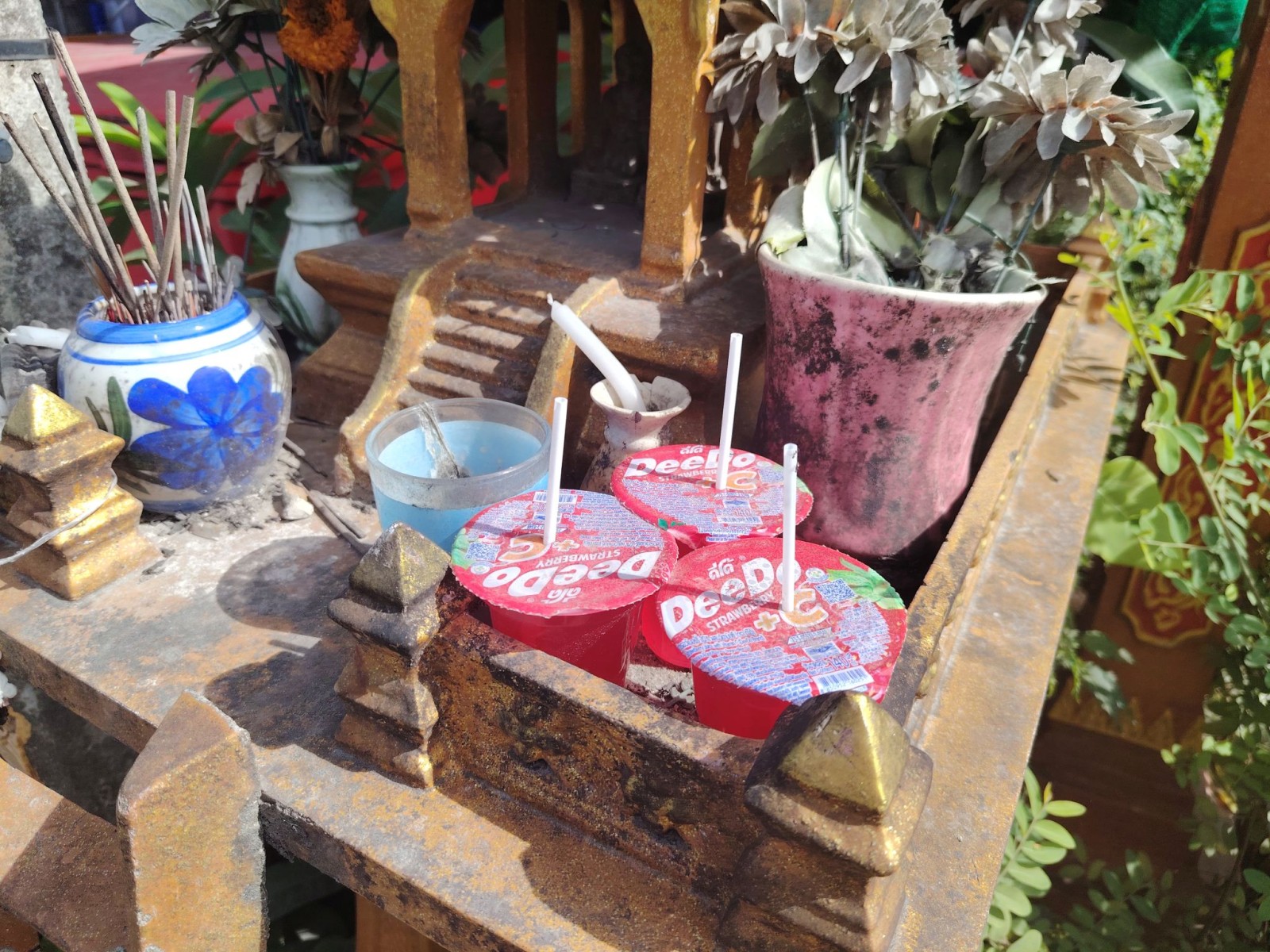
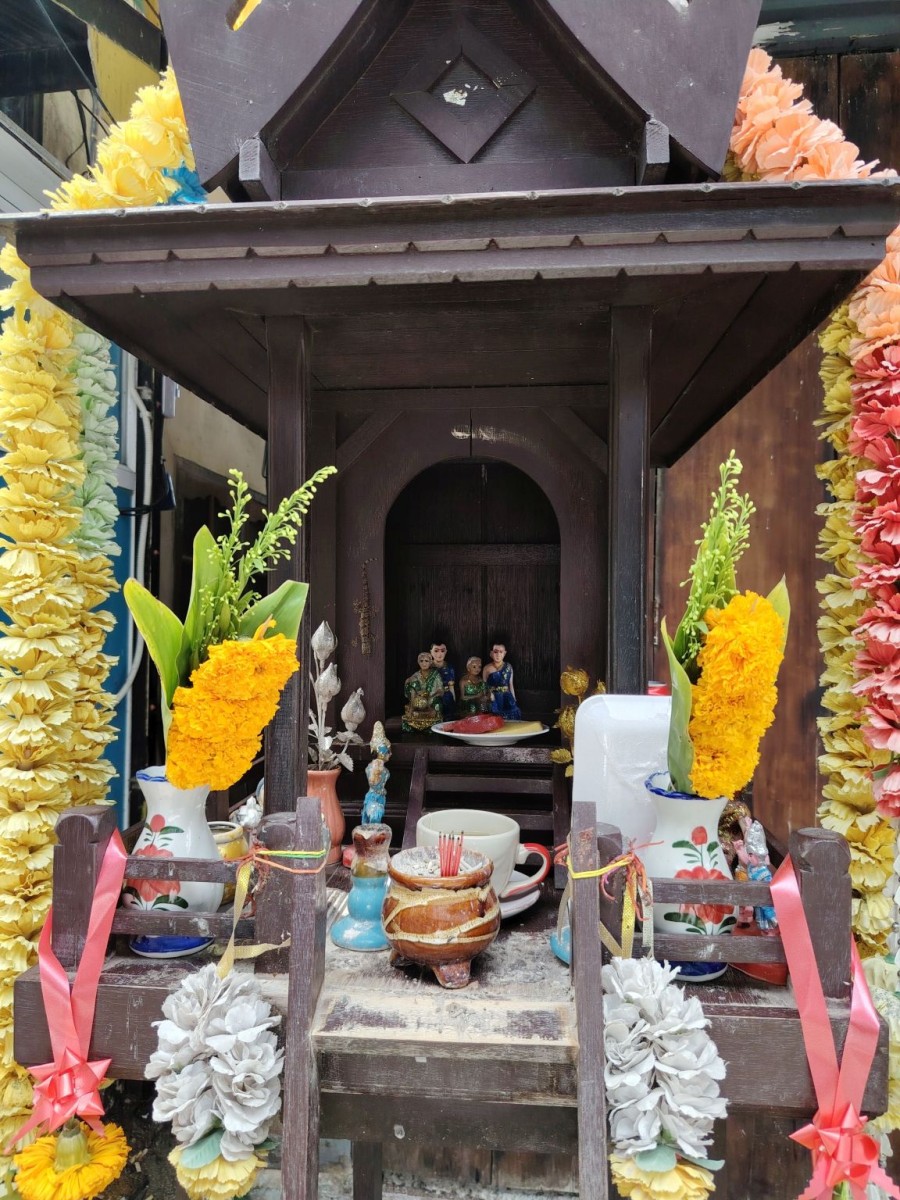
The food and drinks that are placed for the spirits are again very colorful. My personal favorite is the picture showing the Fanta color range. We can see a lot of straw-based soft drinks, water, biscuits, dates. I discovered money in a single house. It is in the last part of the gallery, and based on the condition of the small house and the real house that is not visible in the photo, it is really nice that the owners of the house even gave the spirits from the seemingly little money available. I also saw a whole banana garland, where the whole for me is the perfect adjective. It would be very disrespectful to touch the food that is placed, I think no sane person would even think of doing it. At least not here. In Hungary, there is a tradition of stealing flowers from cemeteries, so I suspect that such a banana garland at home would definitely be eaten by the house spirits by morning.
To take the first pictures of the gallery, I just had to put on my shoes and go down the steps in front of the terrace. This little ghost house is here at the moment of writing. About 5 meters from me. I think it serves to protect this residential community, where I also live.
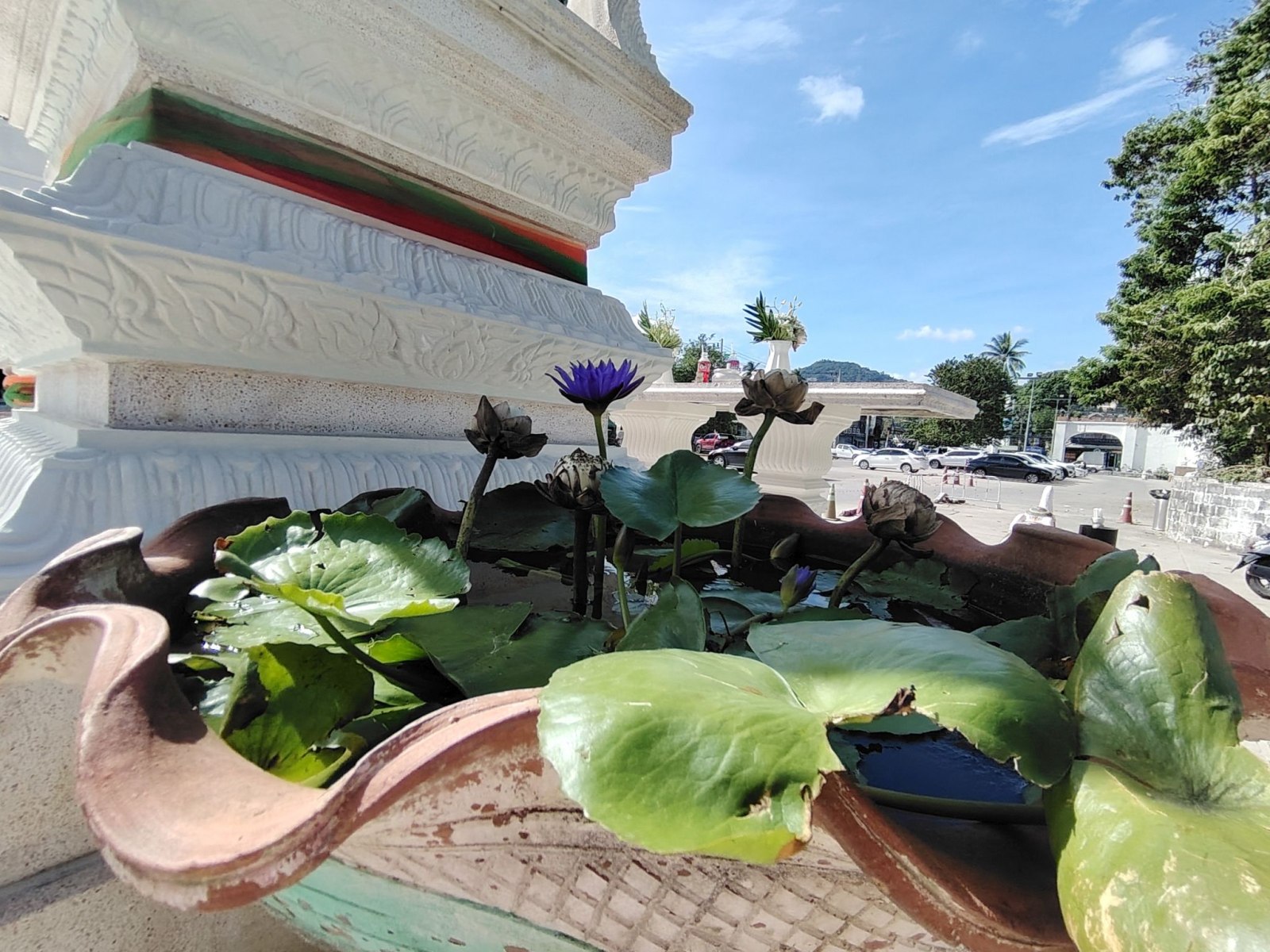
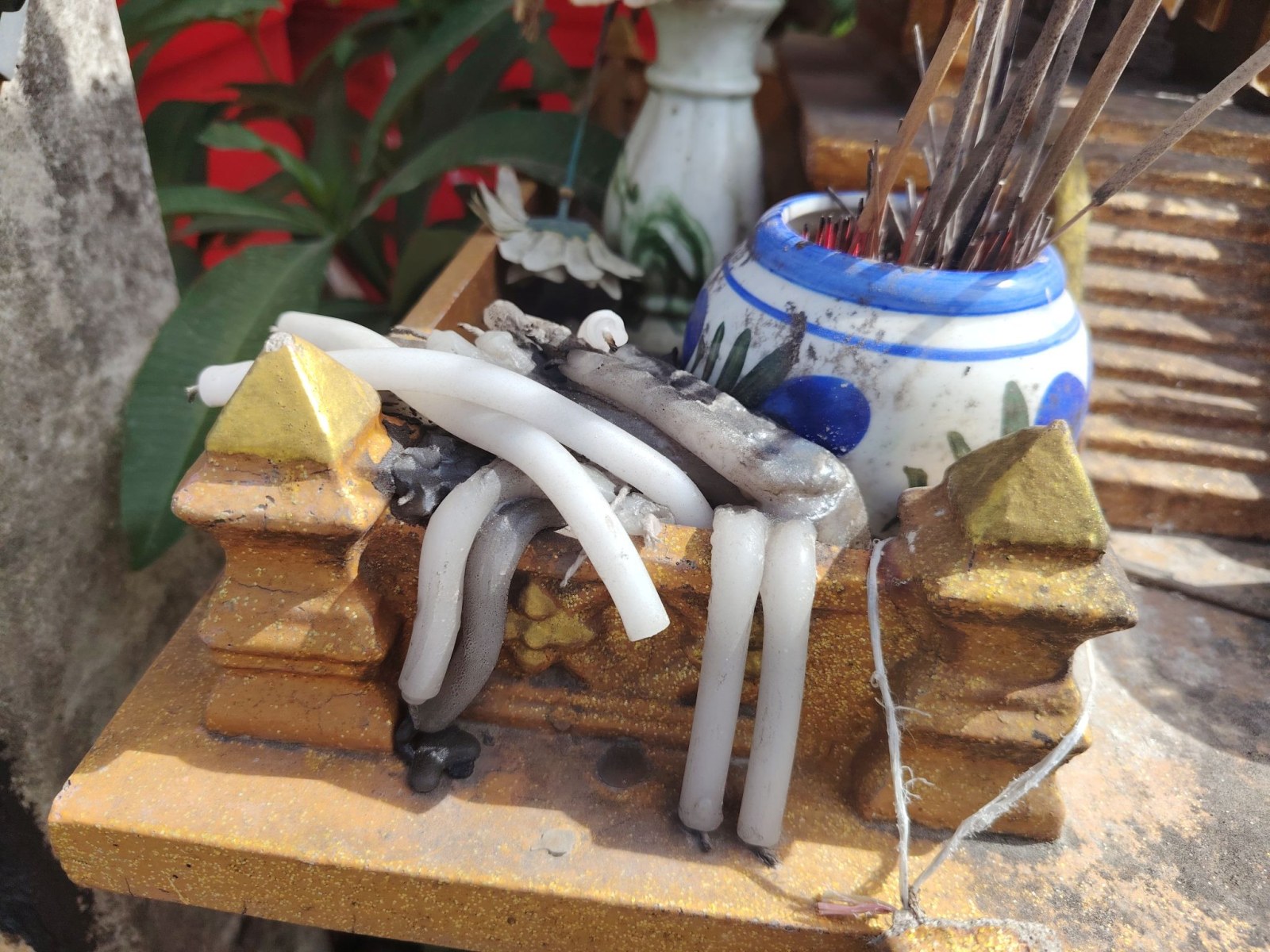
I also discovered incense and candles here and there. I note that putting candles out in the blazing sun in this climate doesn’t seem like a good idea to me, but it’s not my ghost house either. You can see a few candles bowing respectfully in the gallery.
I saw live plants, cut and artificial flowers. A very typical addition to the structures is that crepe-paper-like colorful logo. I couldn’t find out its name.
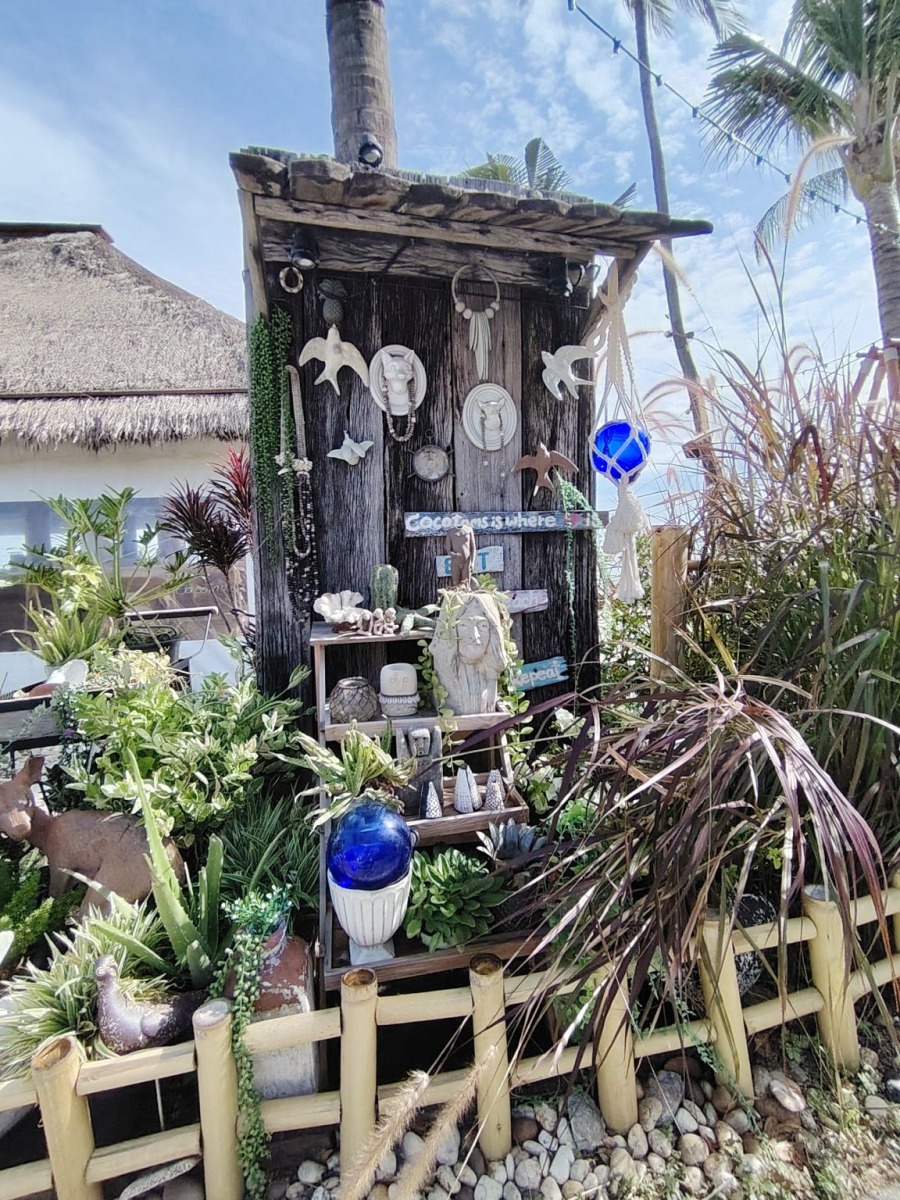
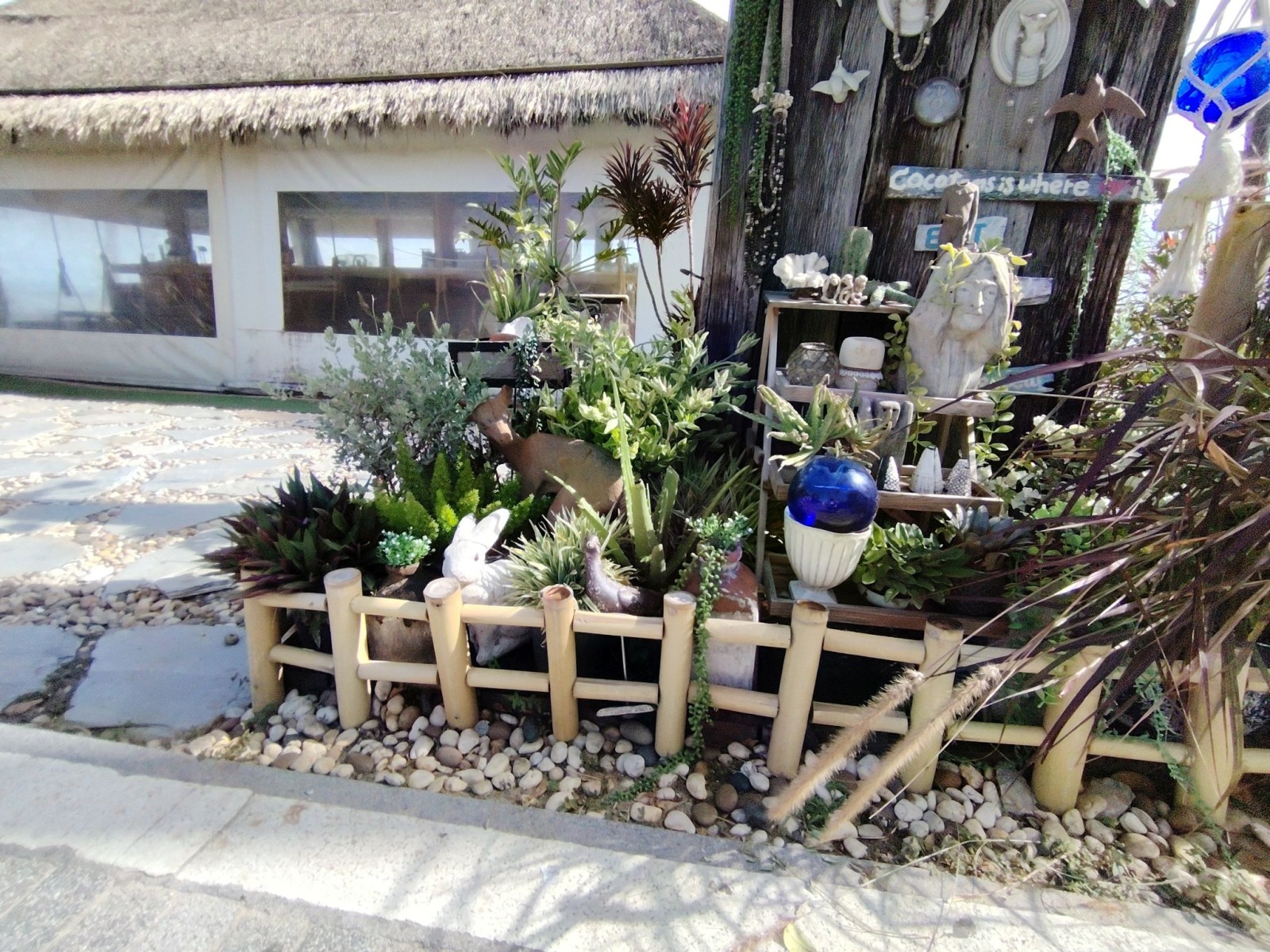
Right at the beginning of the walk, I also found the European equivalent of the structure that keeps evil spirits away. I placed it separately at the end of the post, outside the gallery.
Since I’ve known for days that this post will be the program for this morning, I looked for a black mini house, but I couldn’t find one. If I can take a photo of one someday, I’ll add it to the end of the post.
After the European solution…
After the pictures, I think it is worth getting acquainted with the tradition of ghost houses. I will publish what I learned from AI.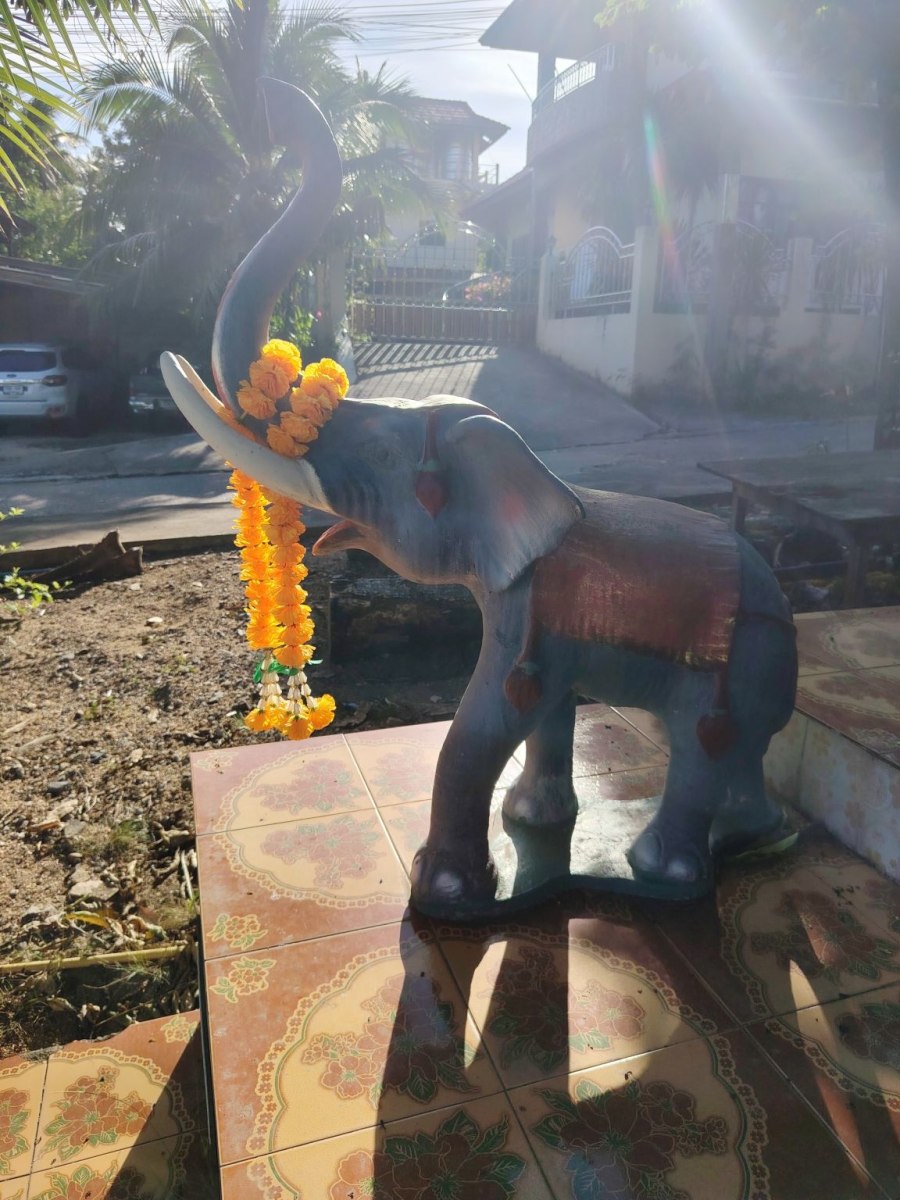
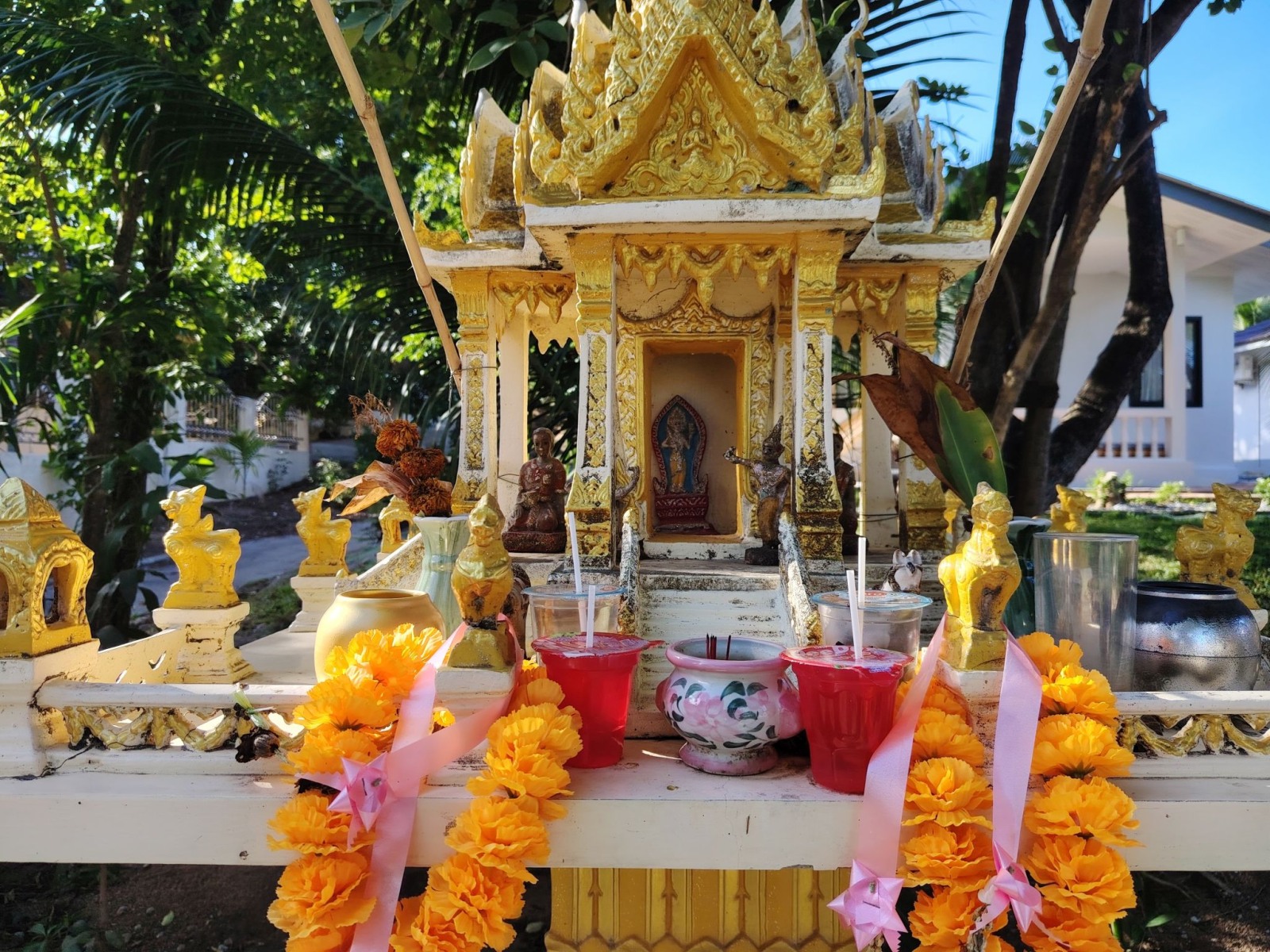
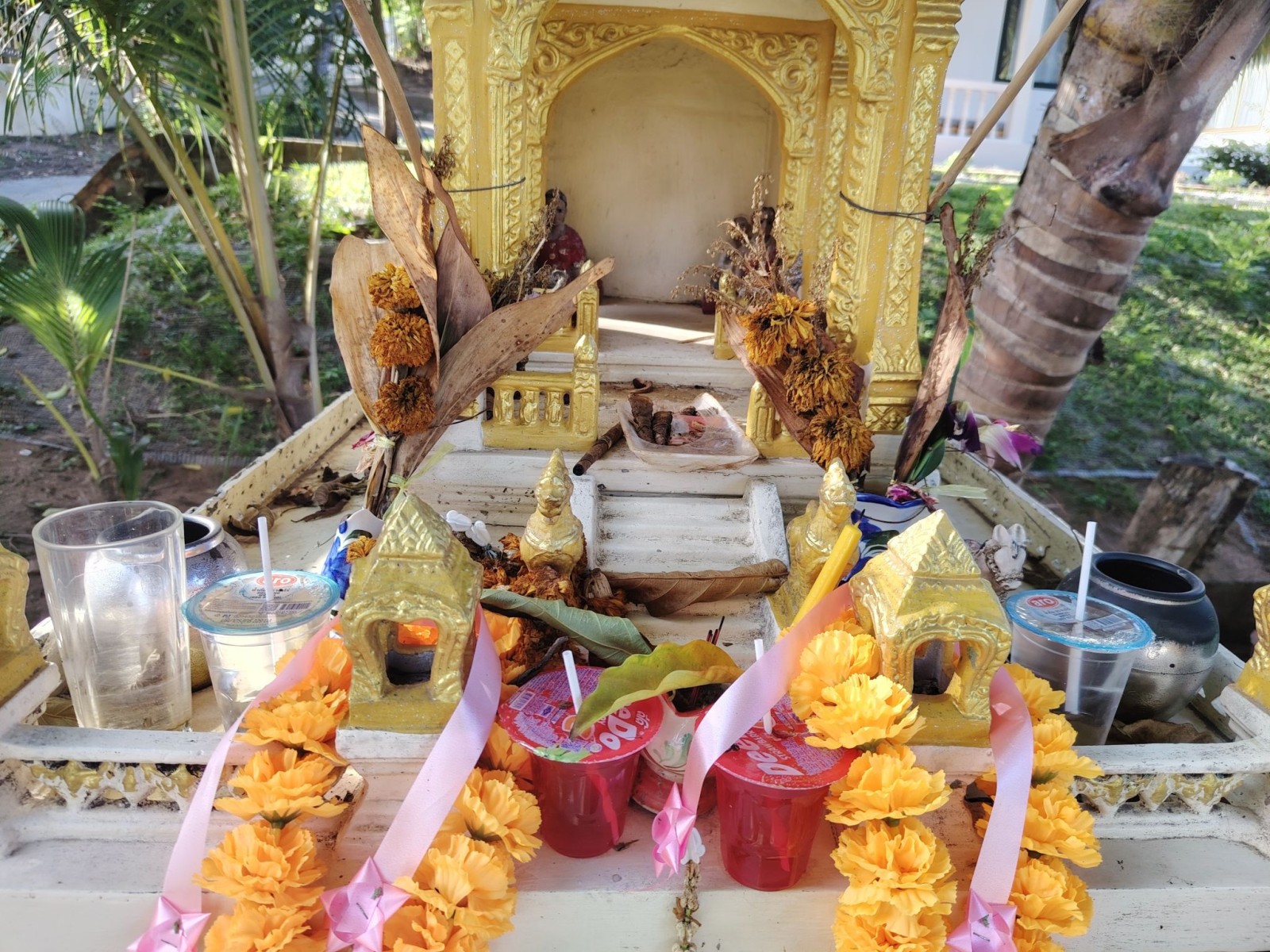
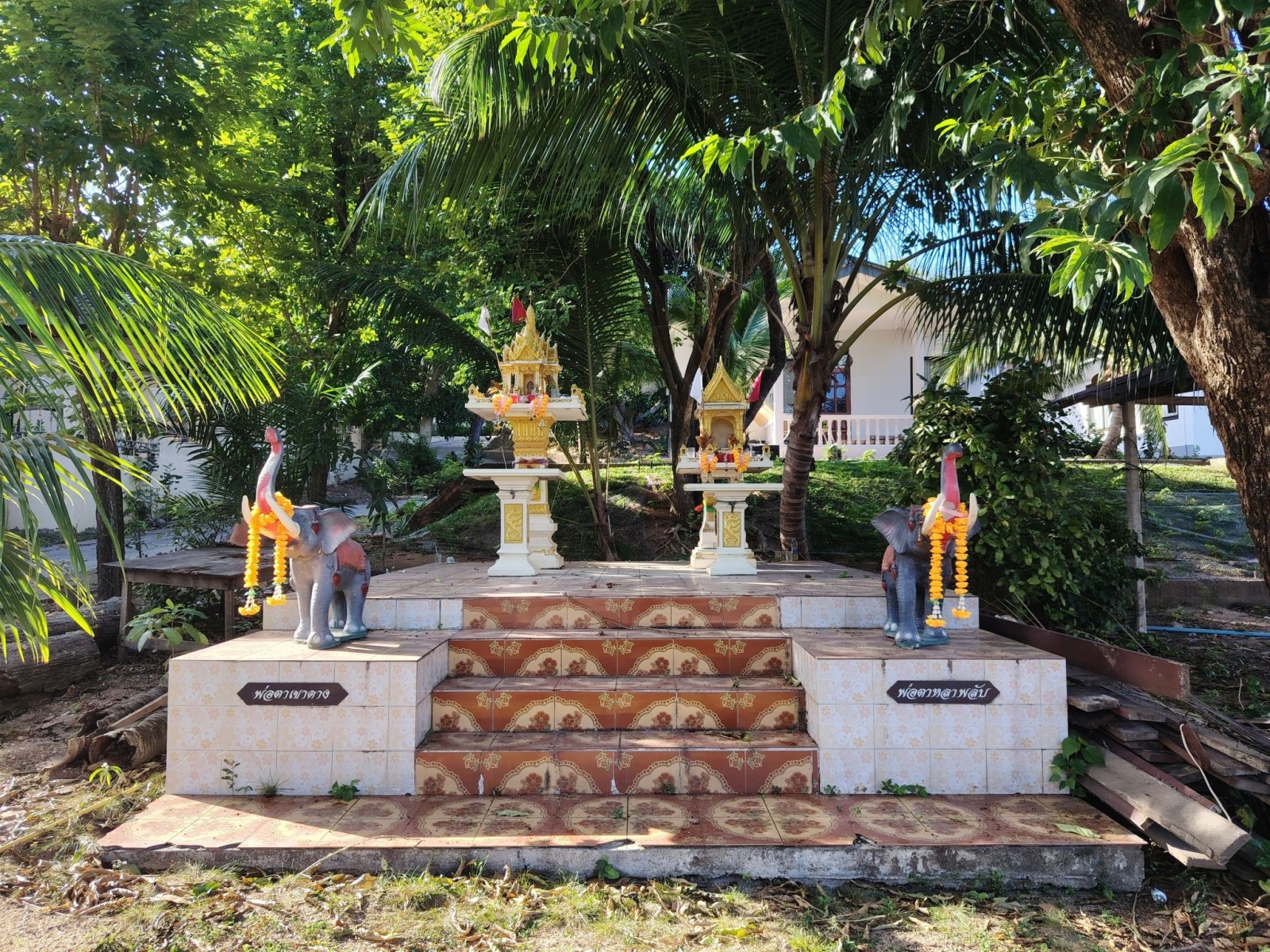
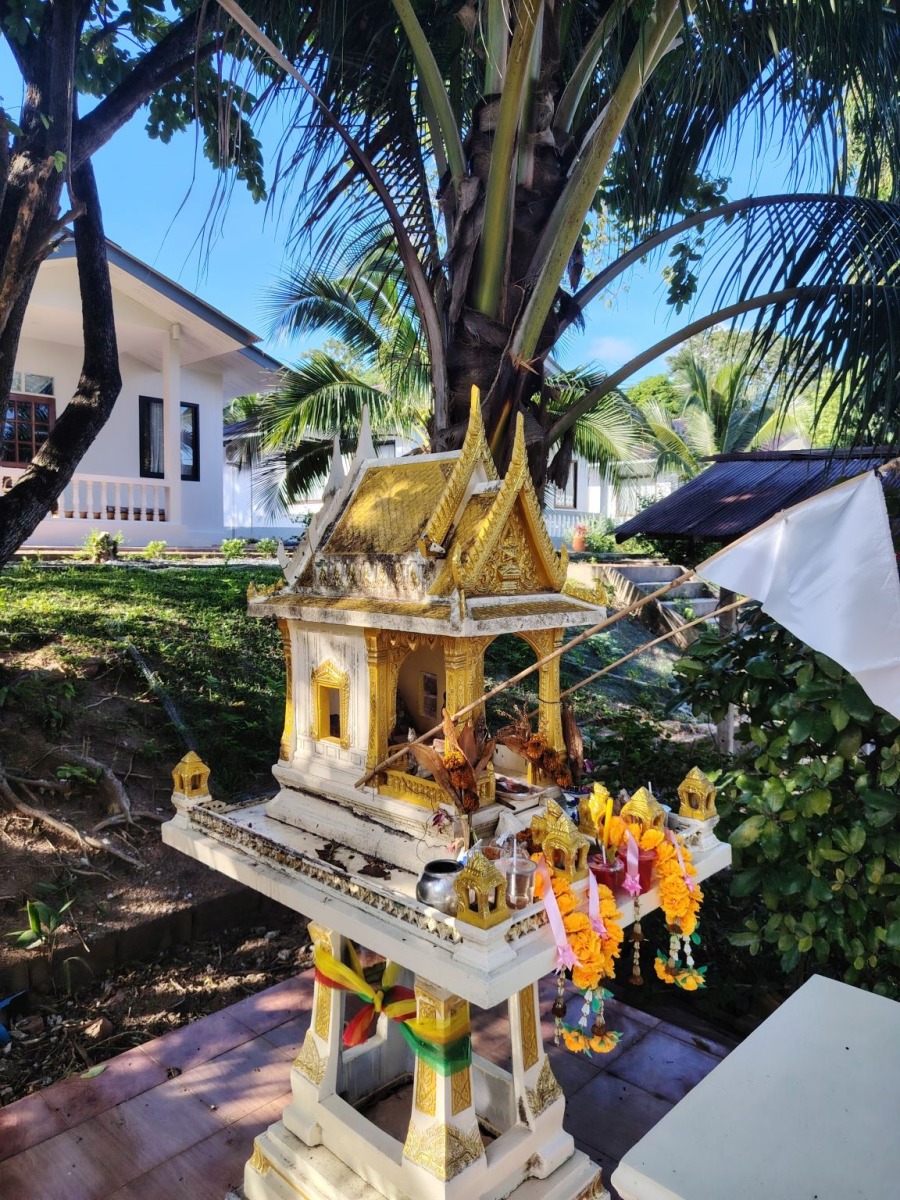
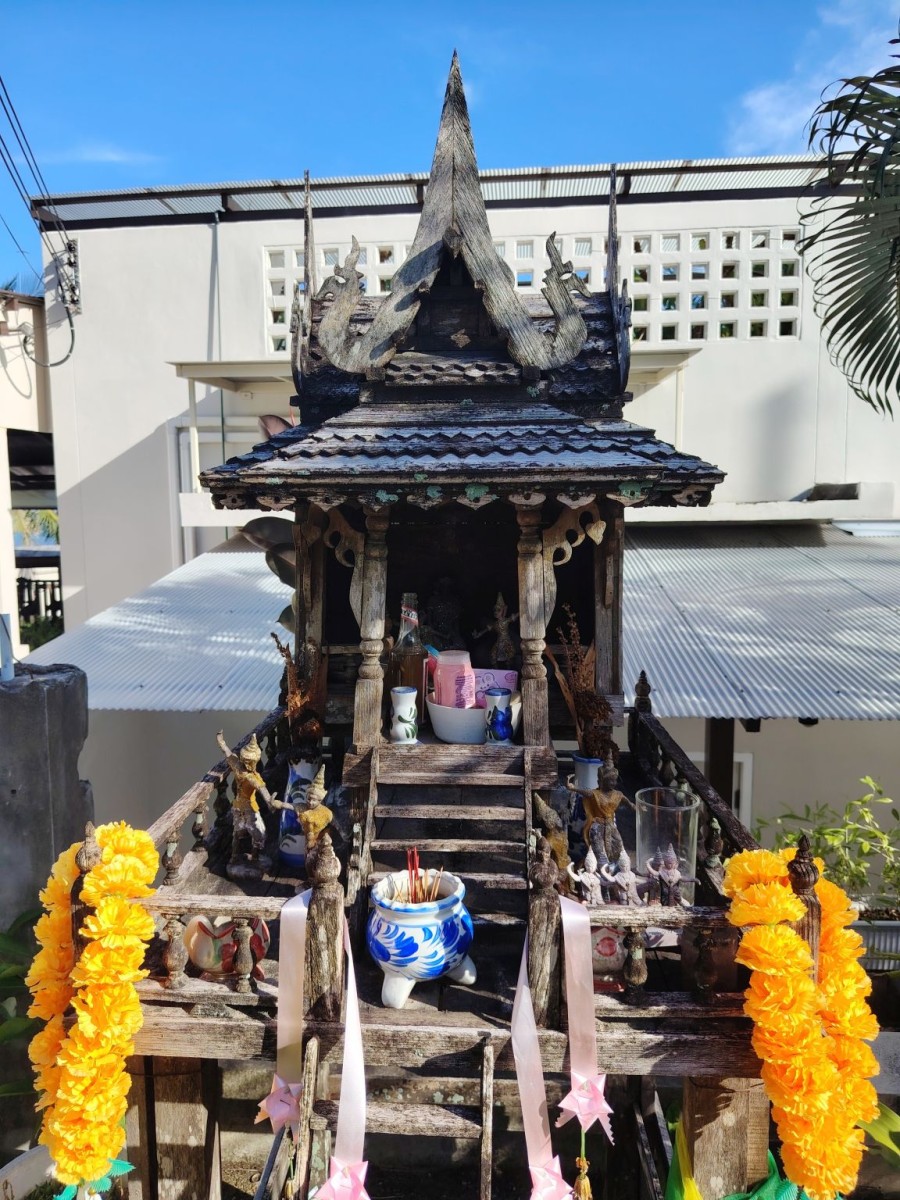
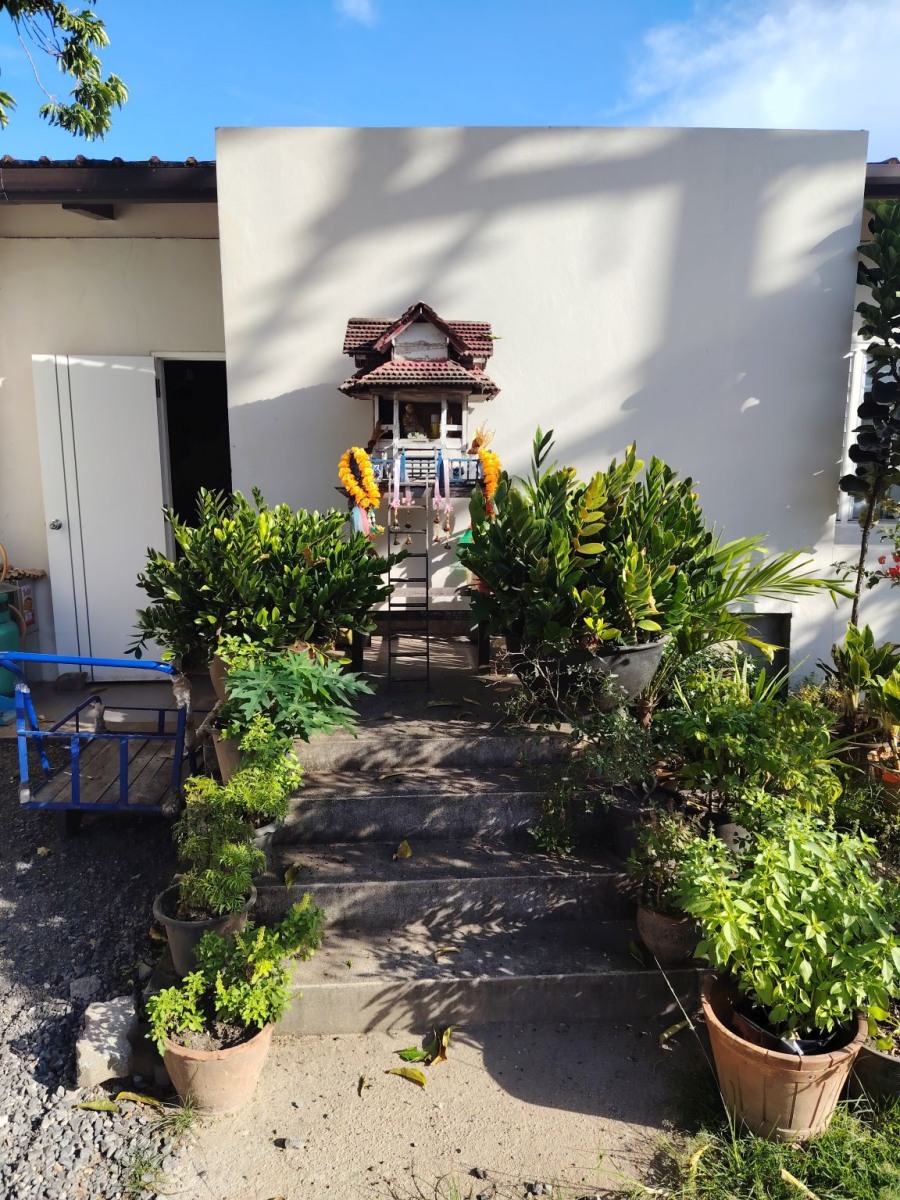
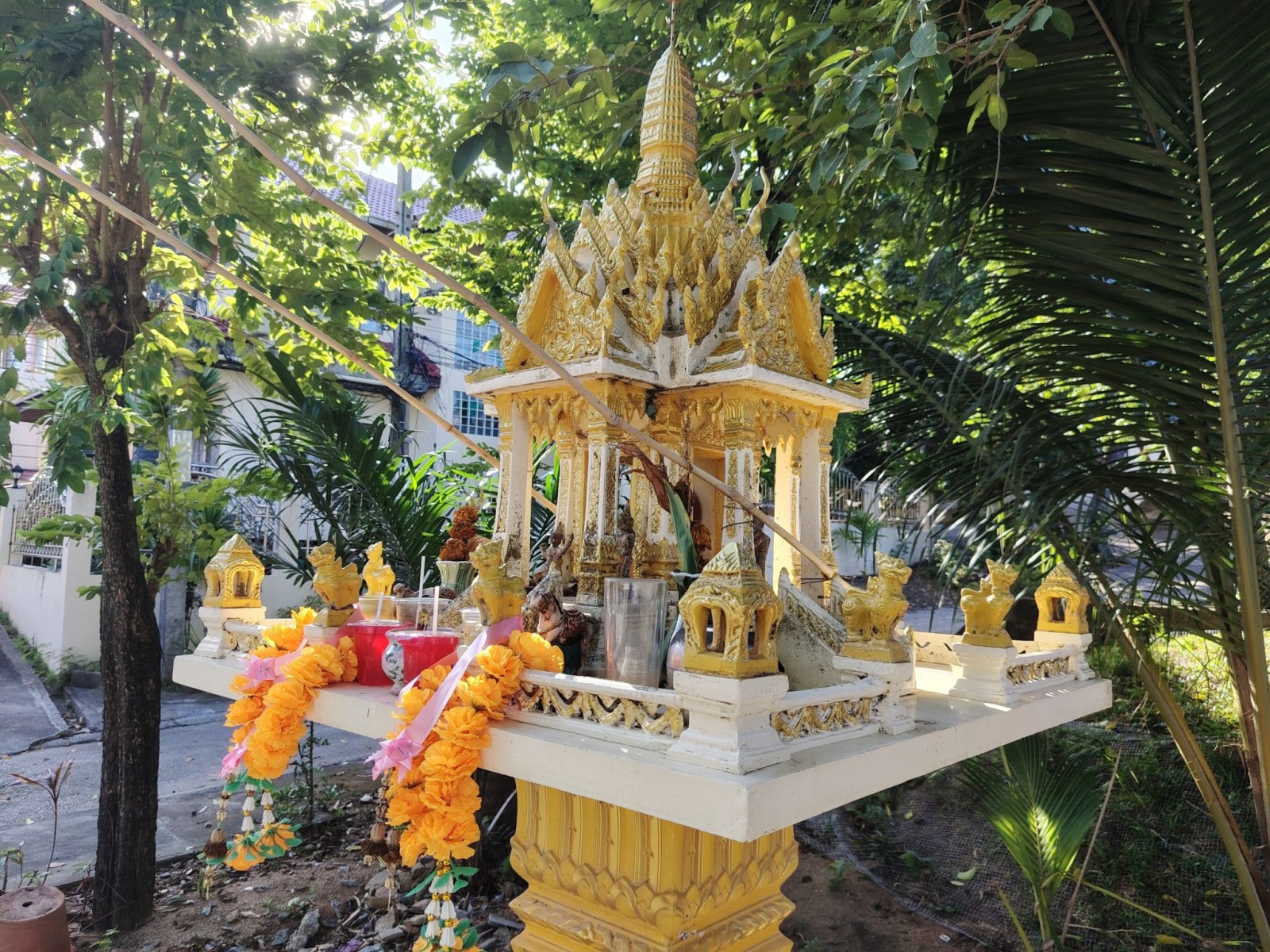
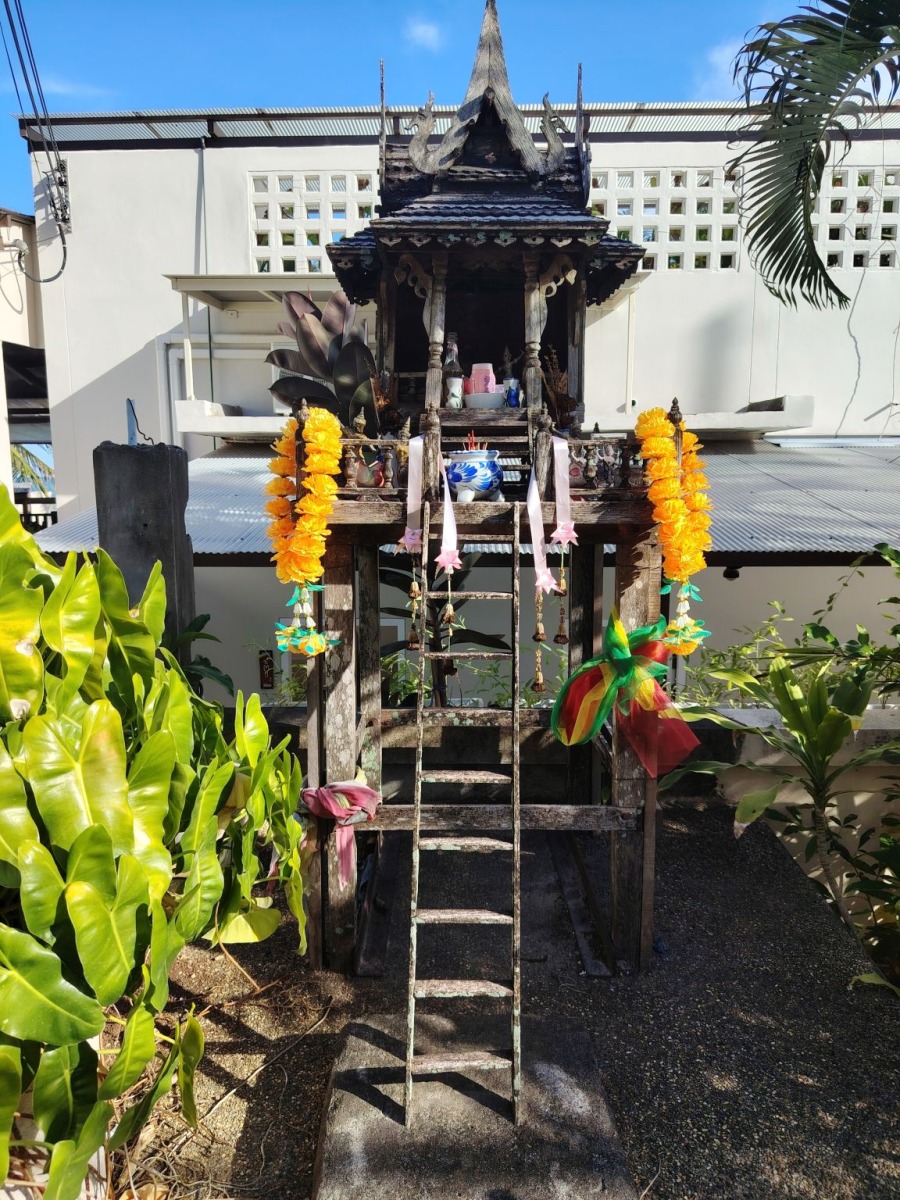
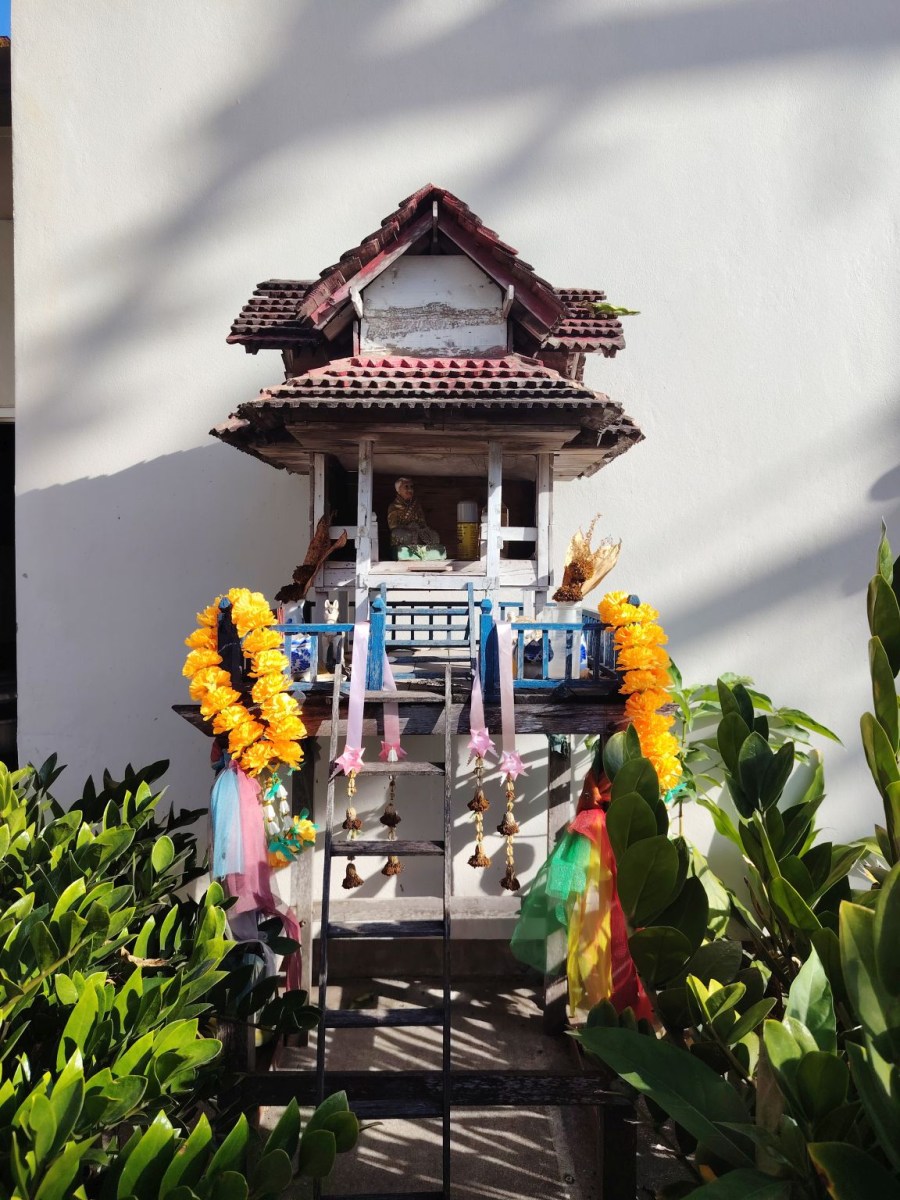
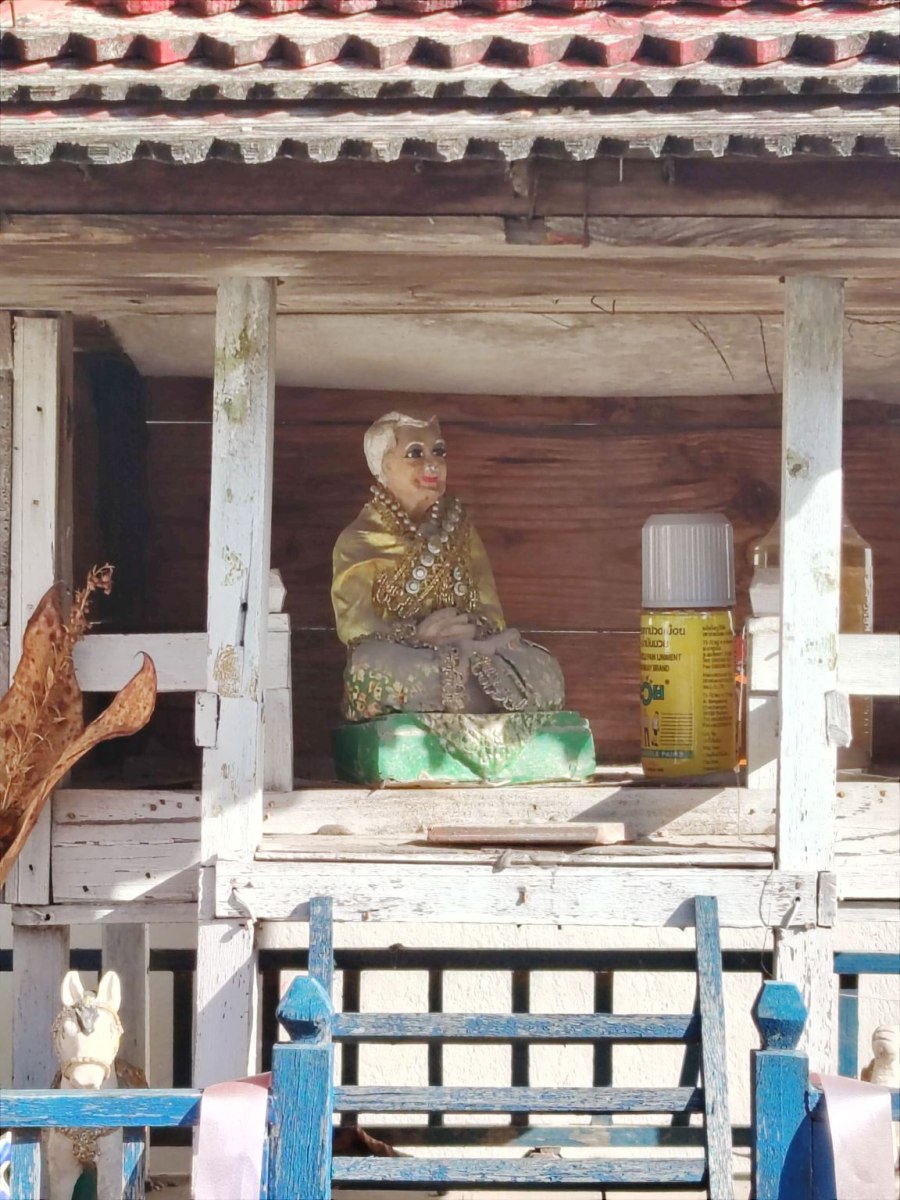
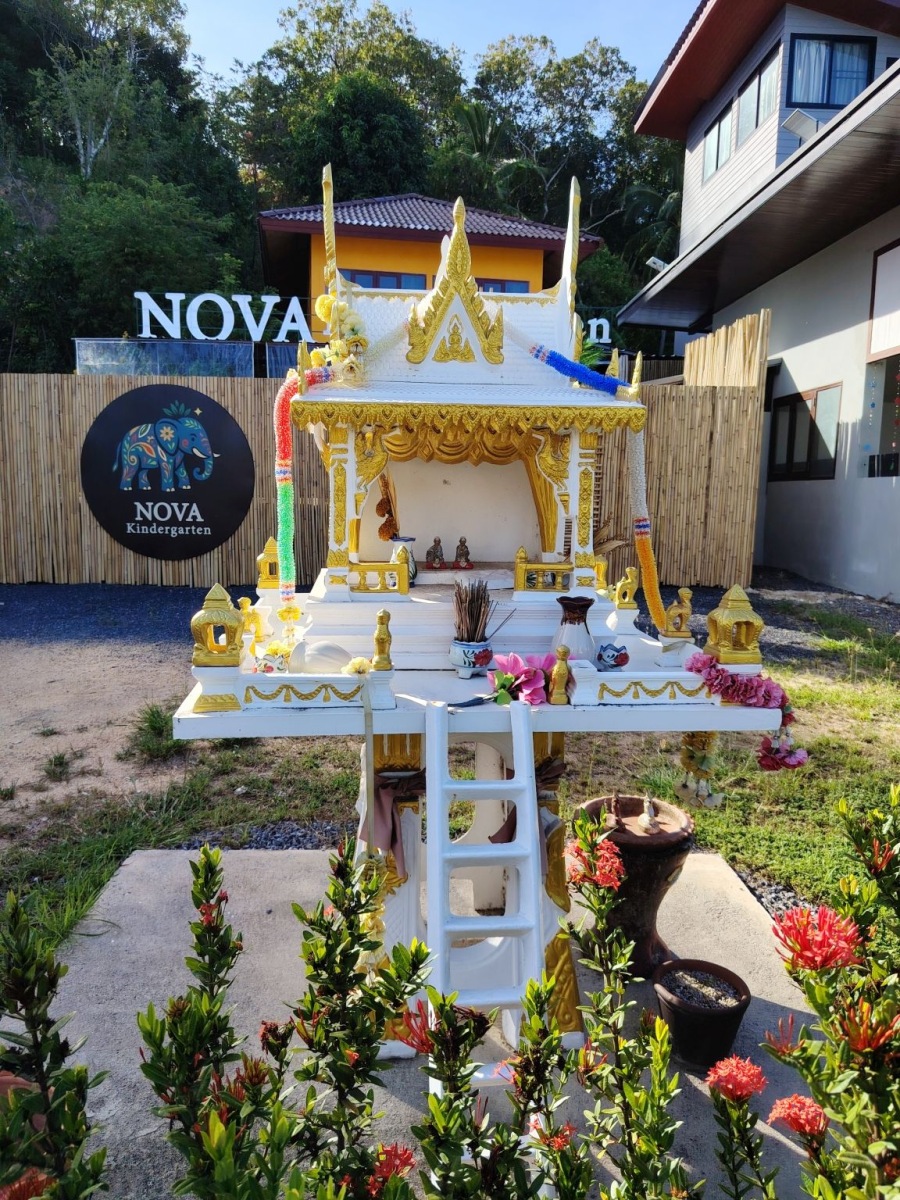
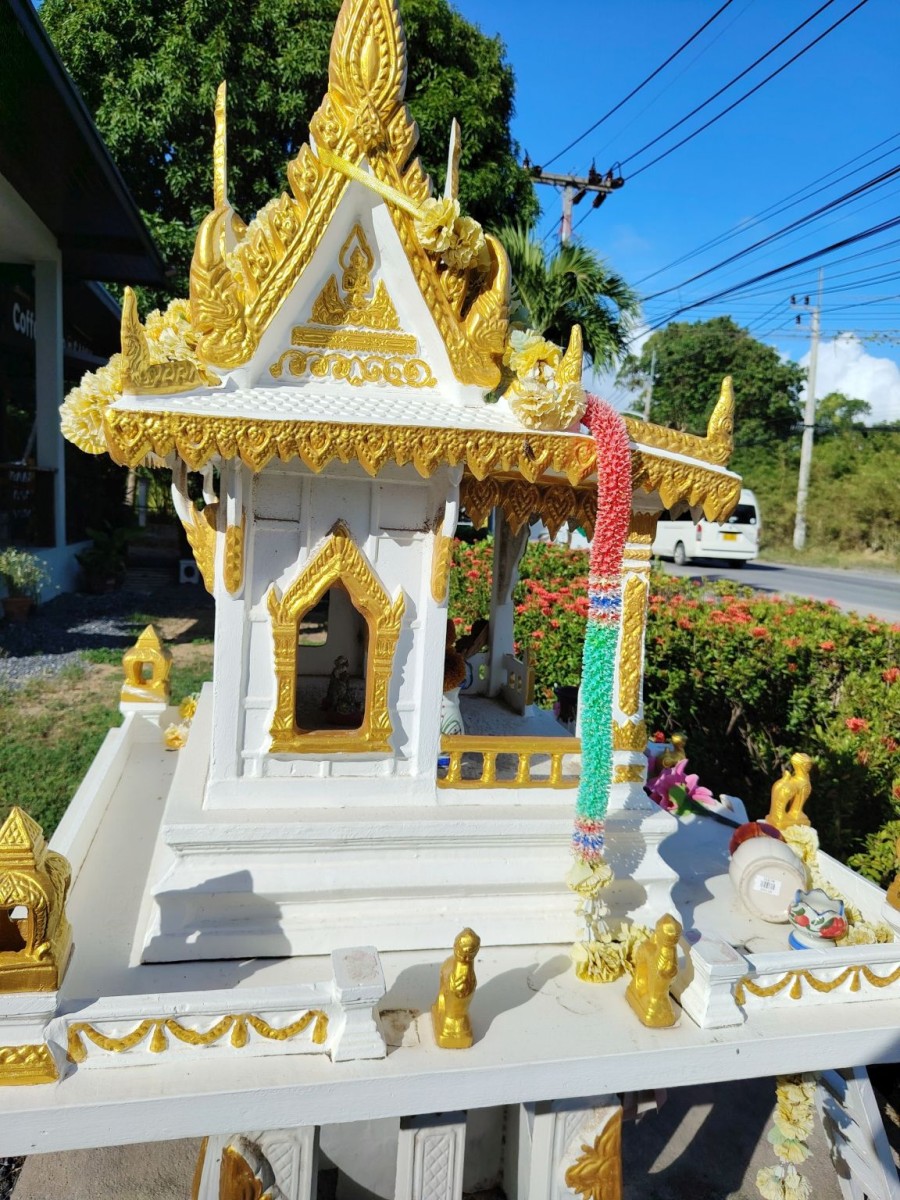
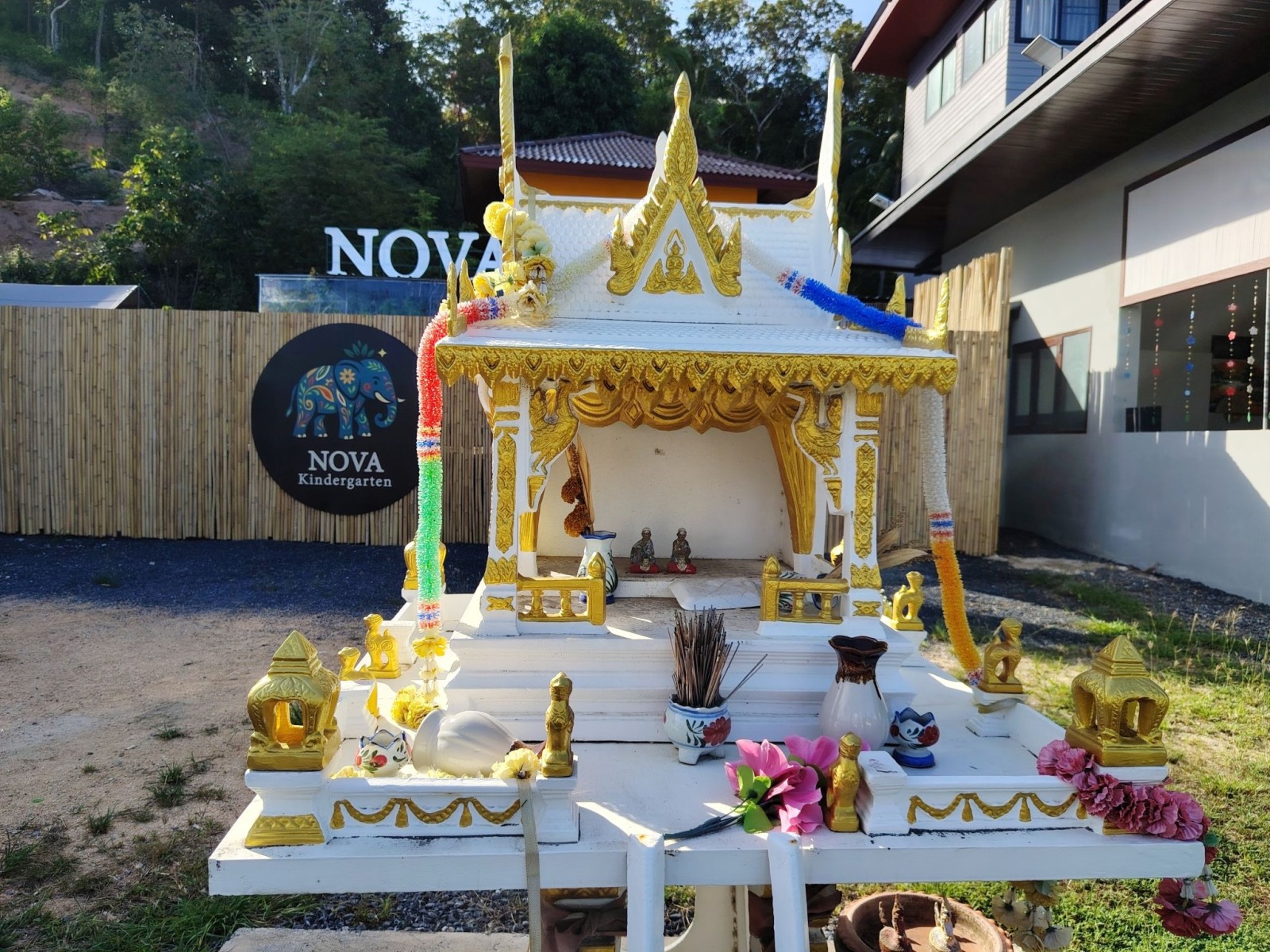
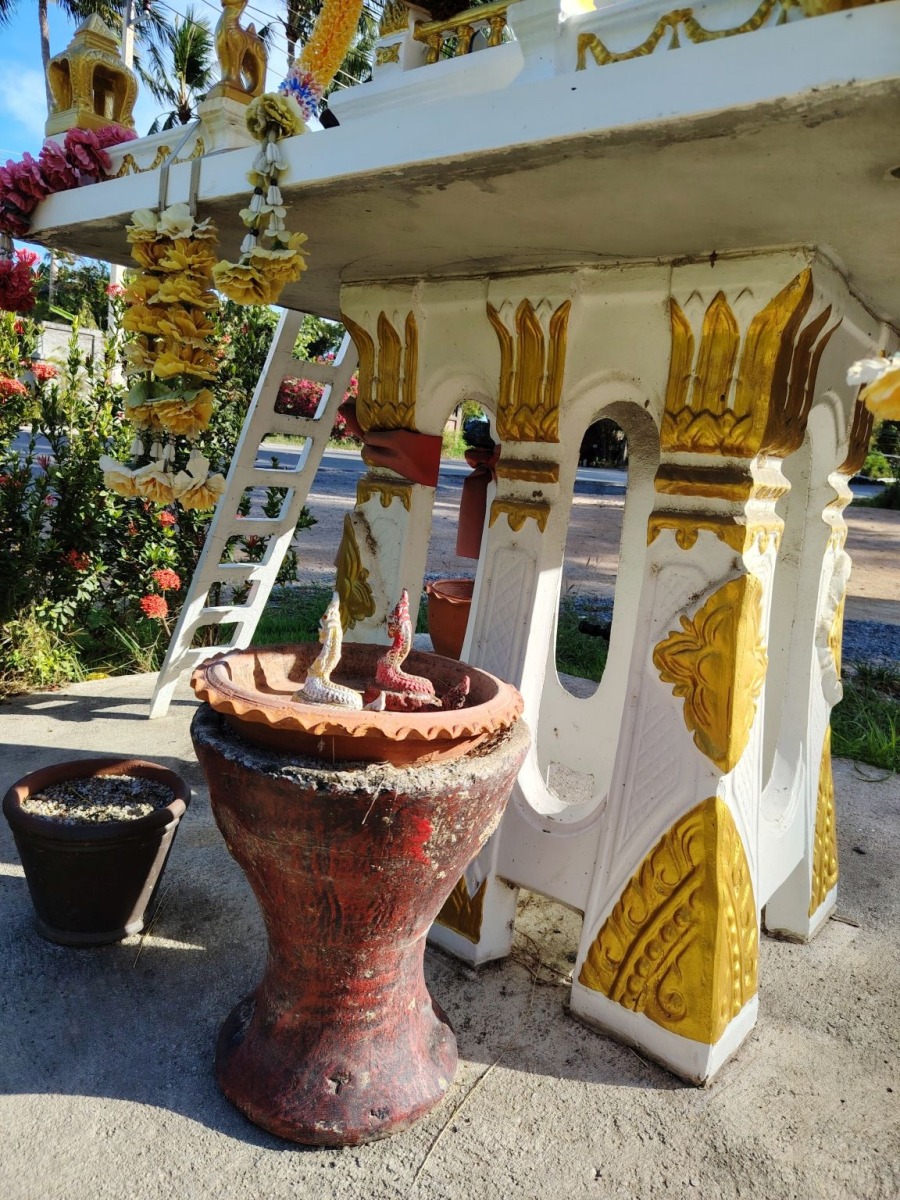
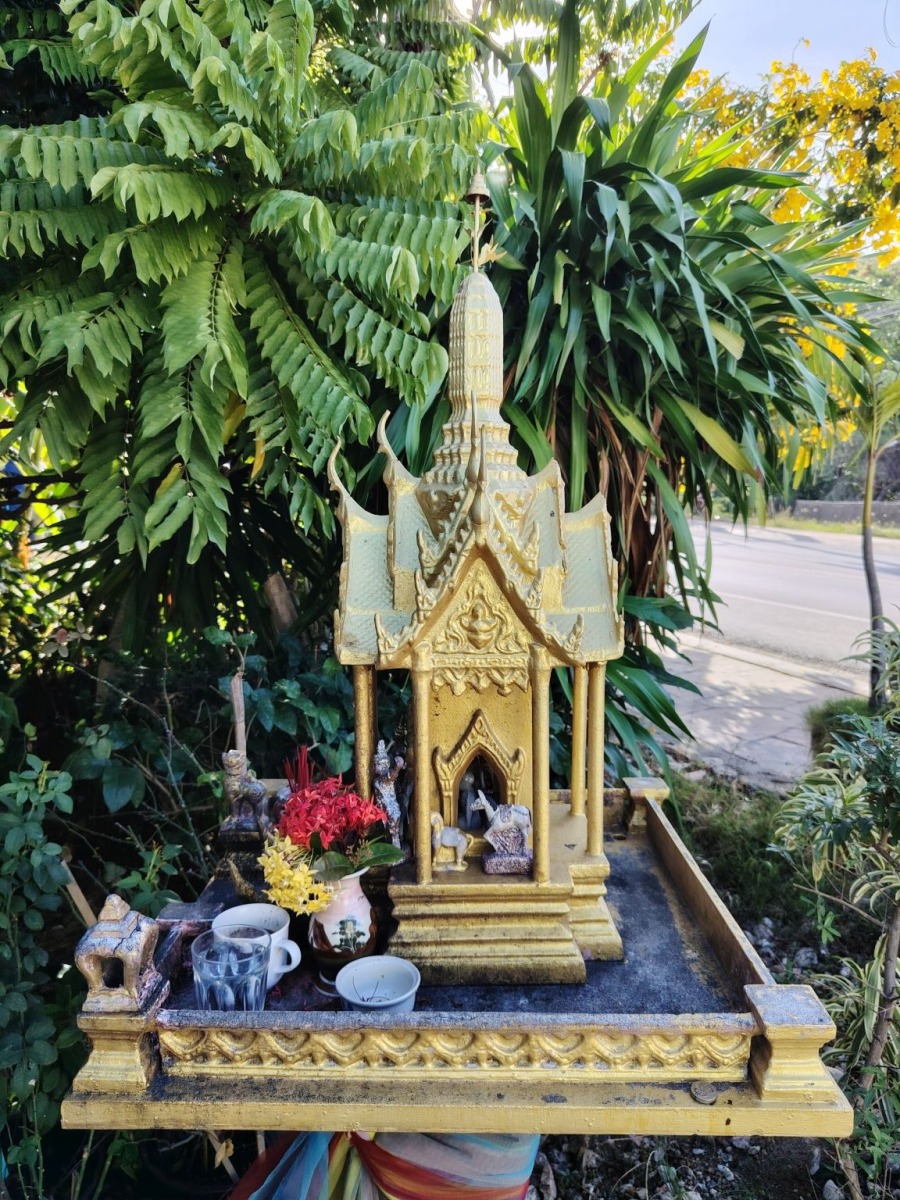
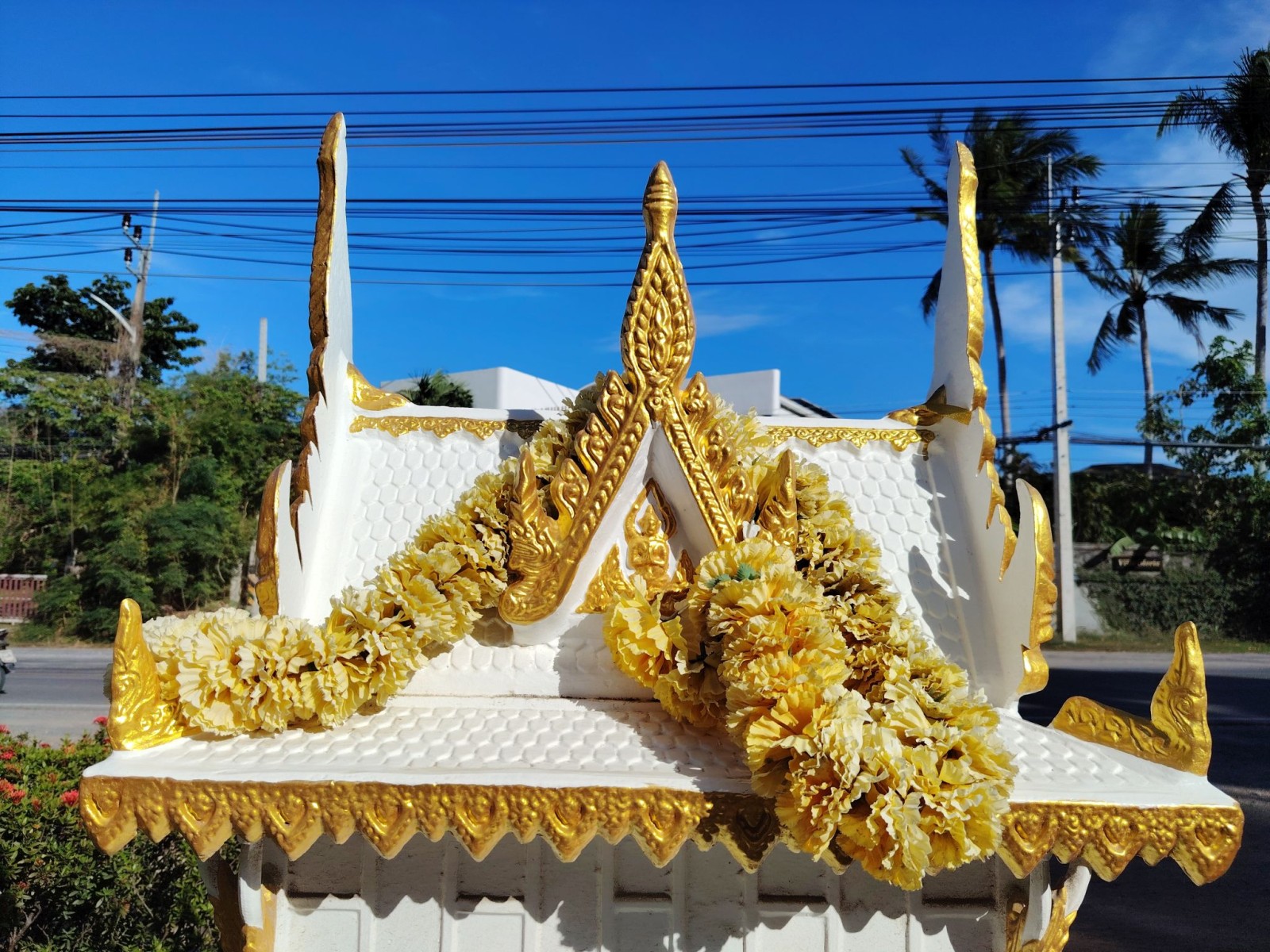
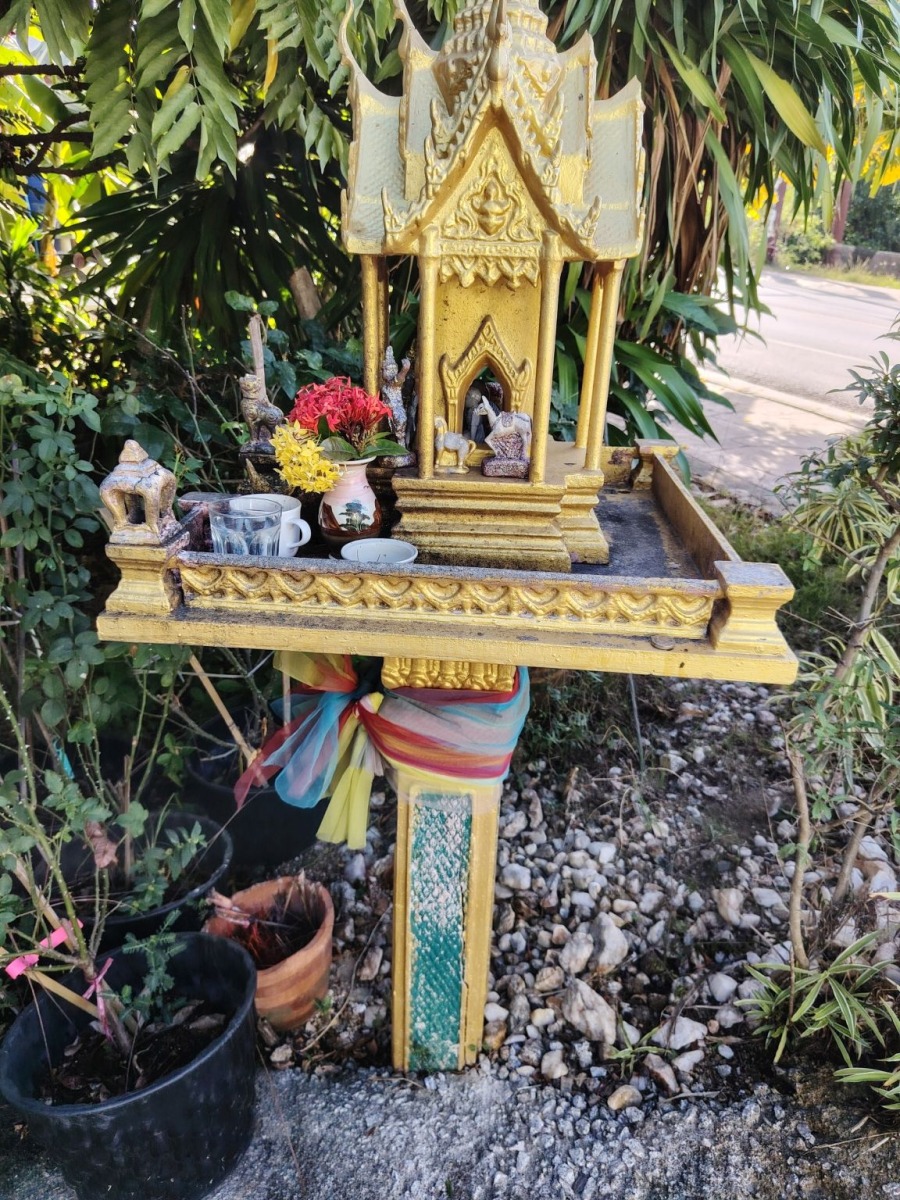
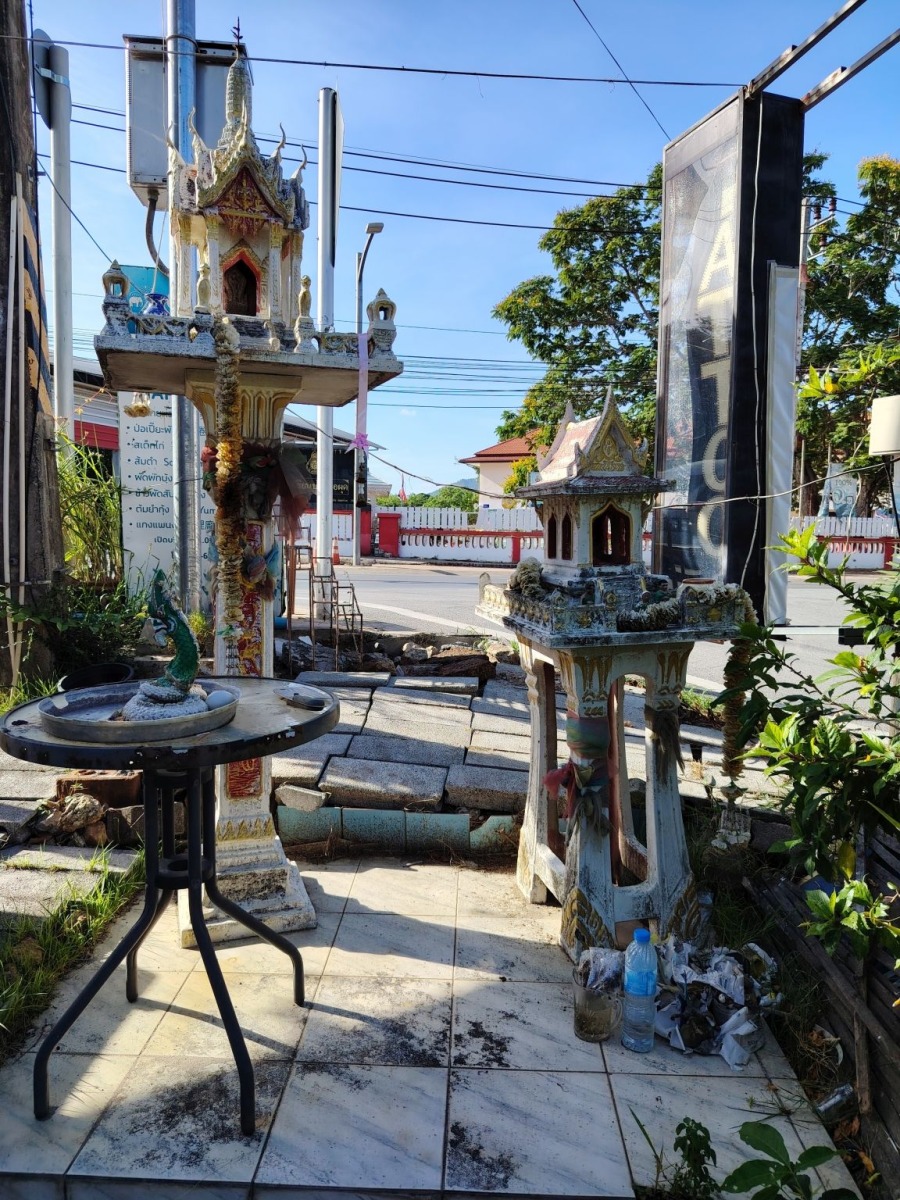
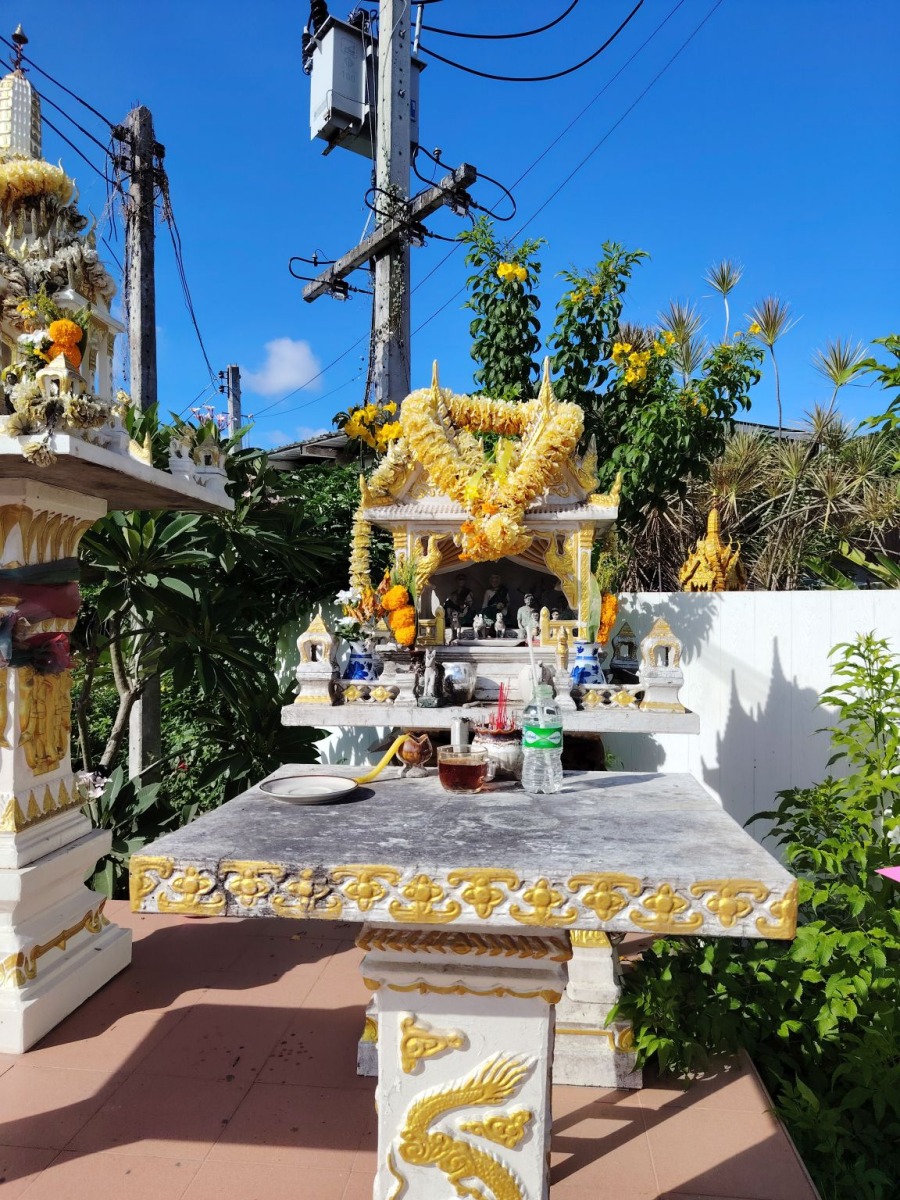
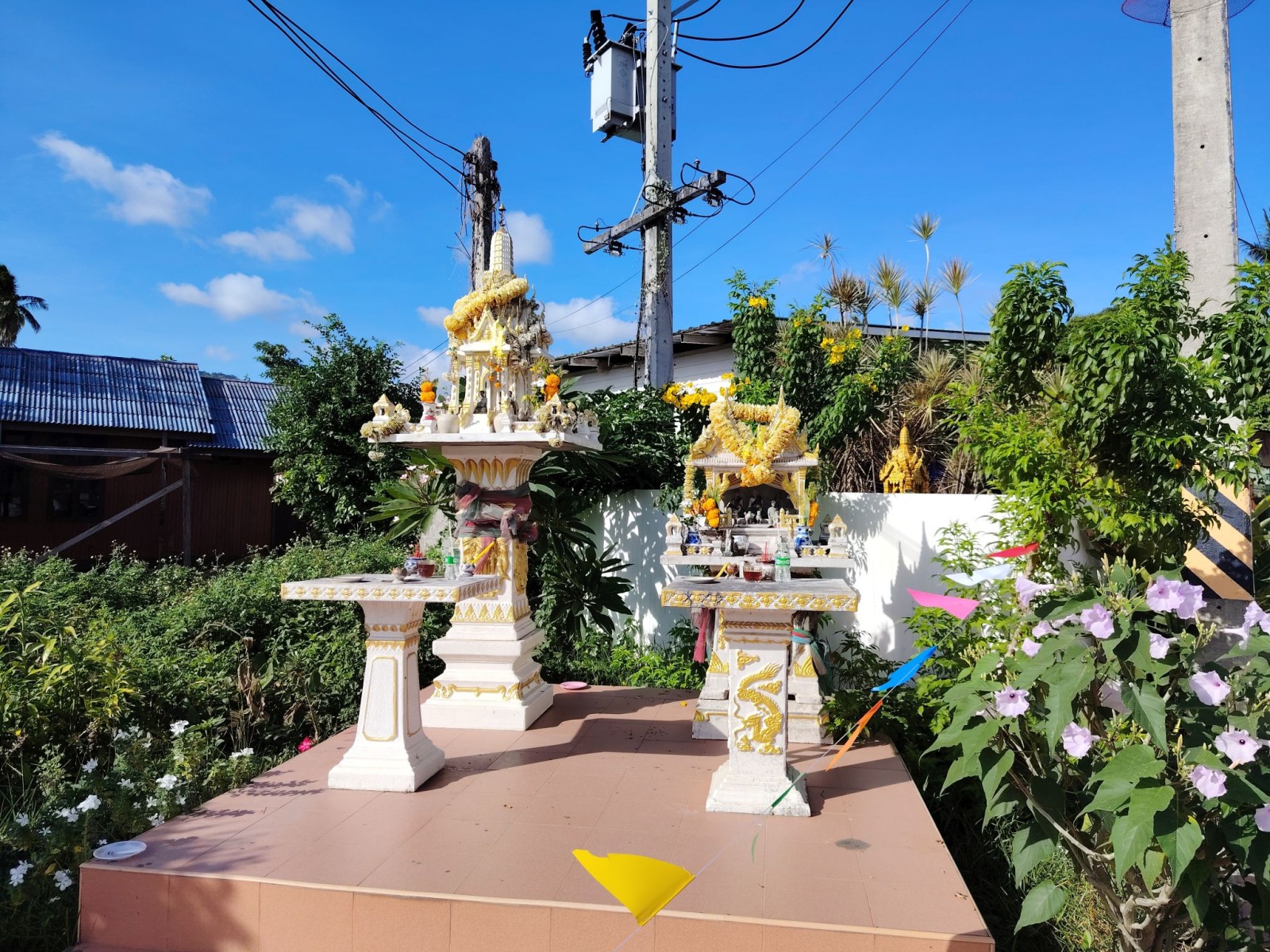
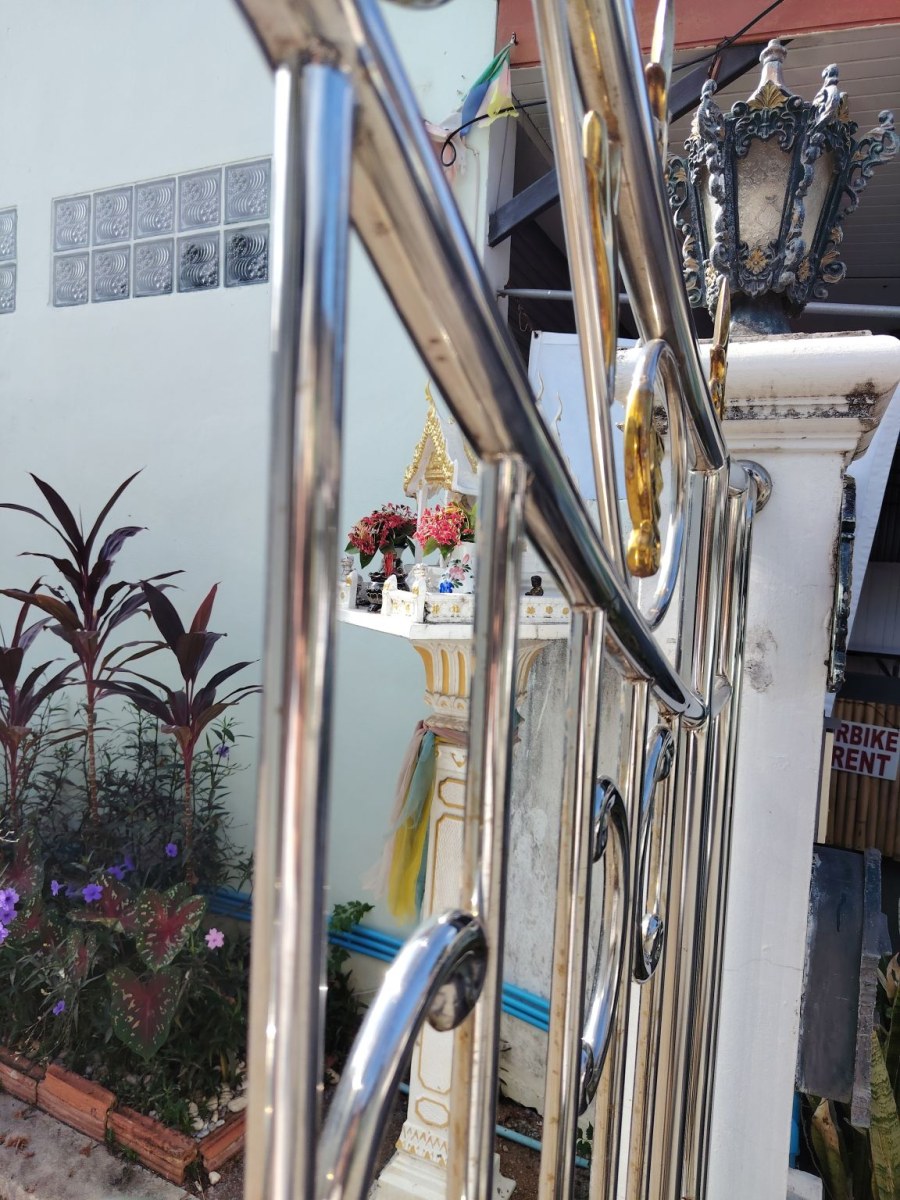
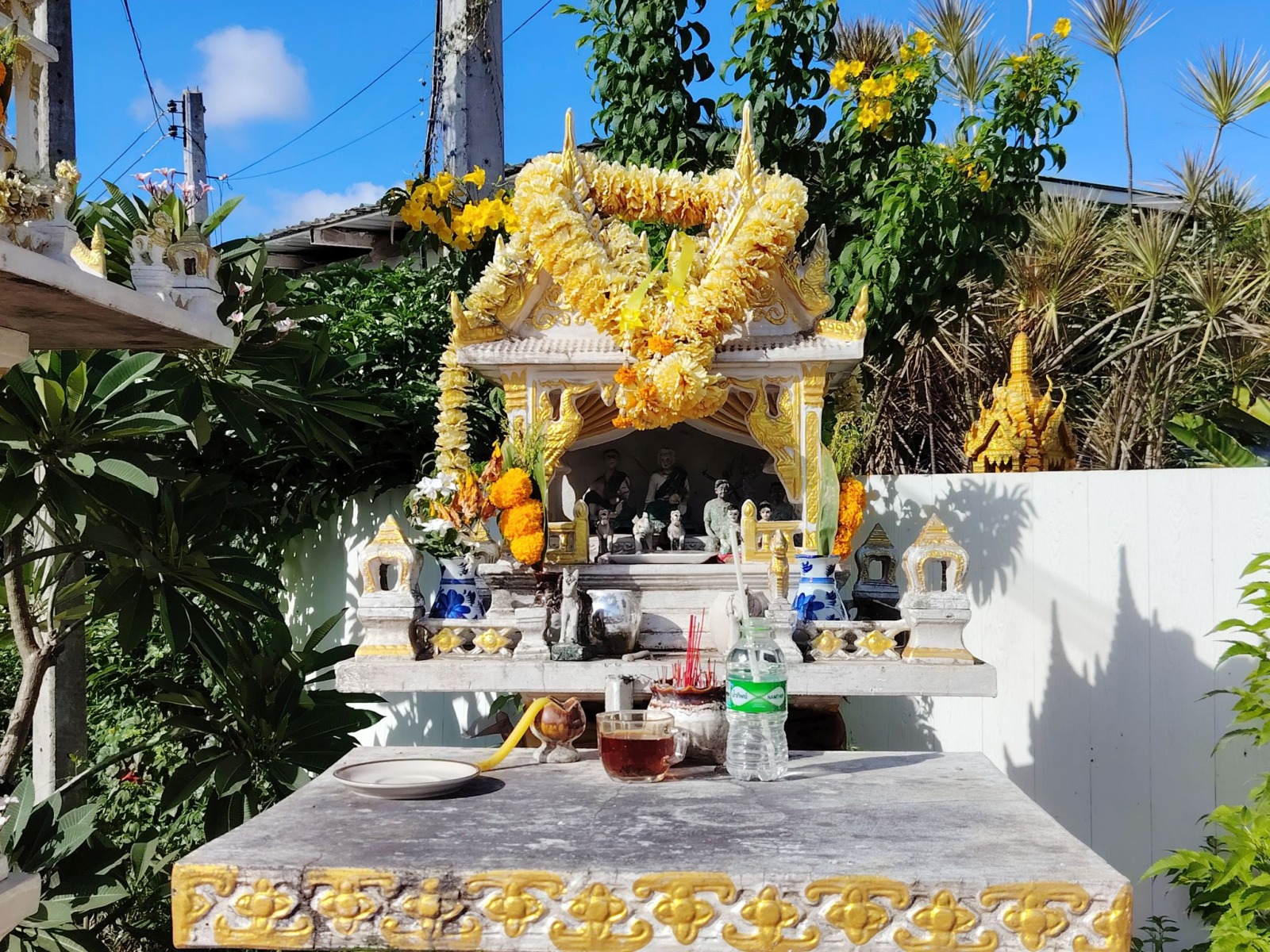
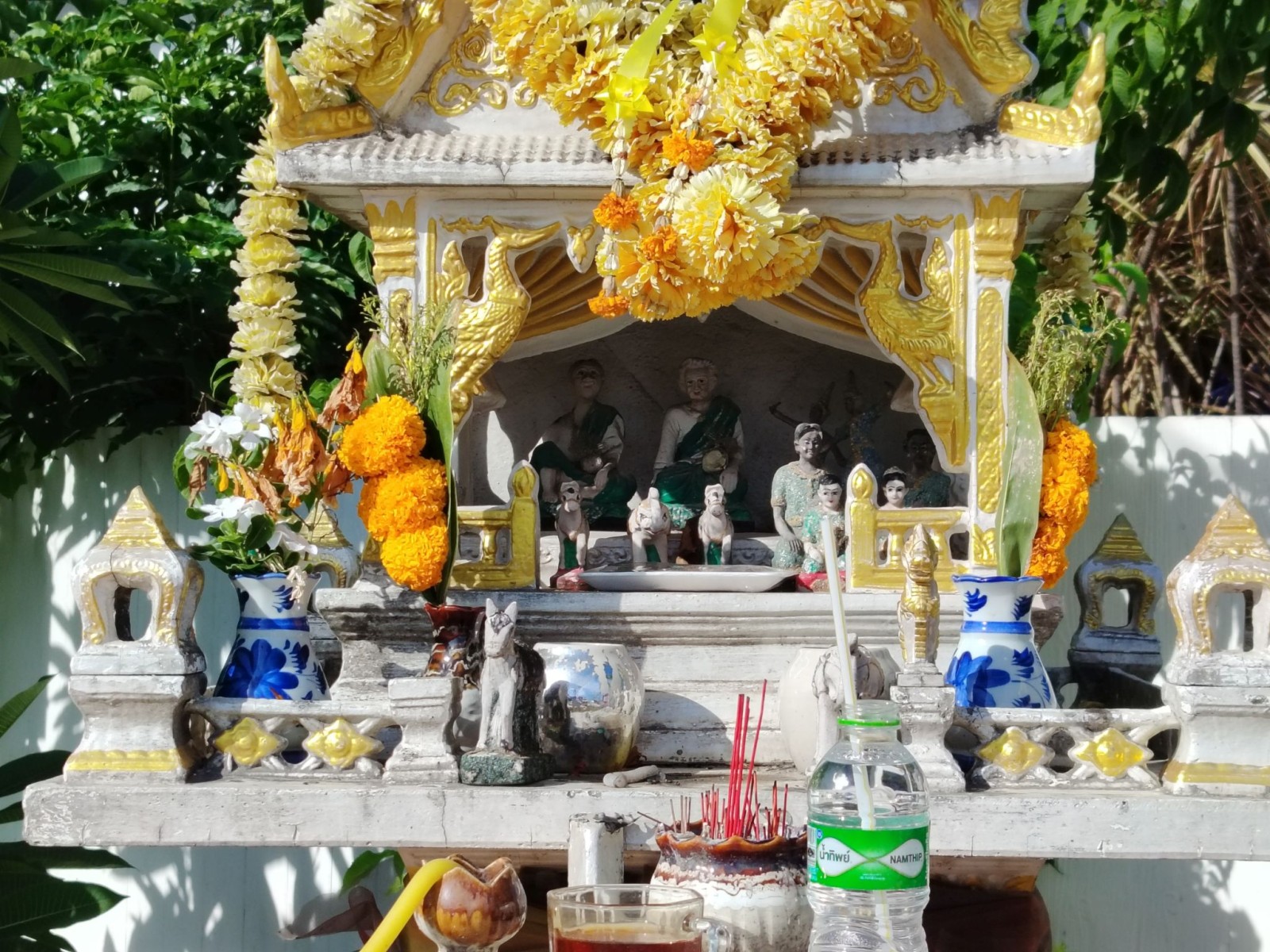
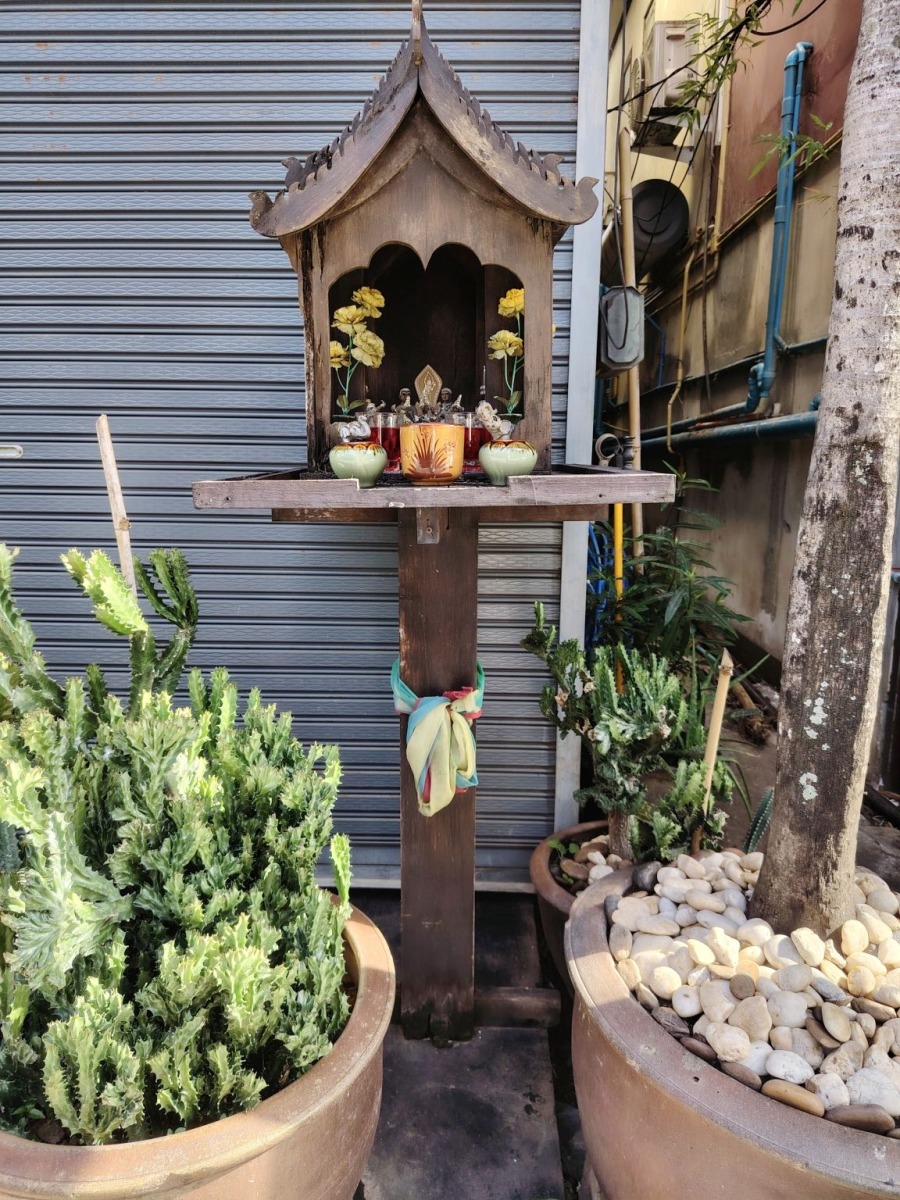
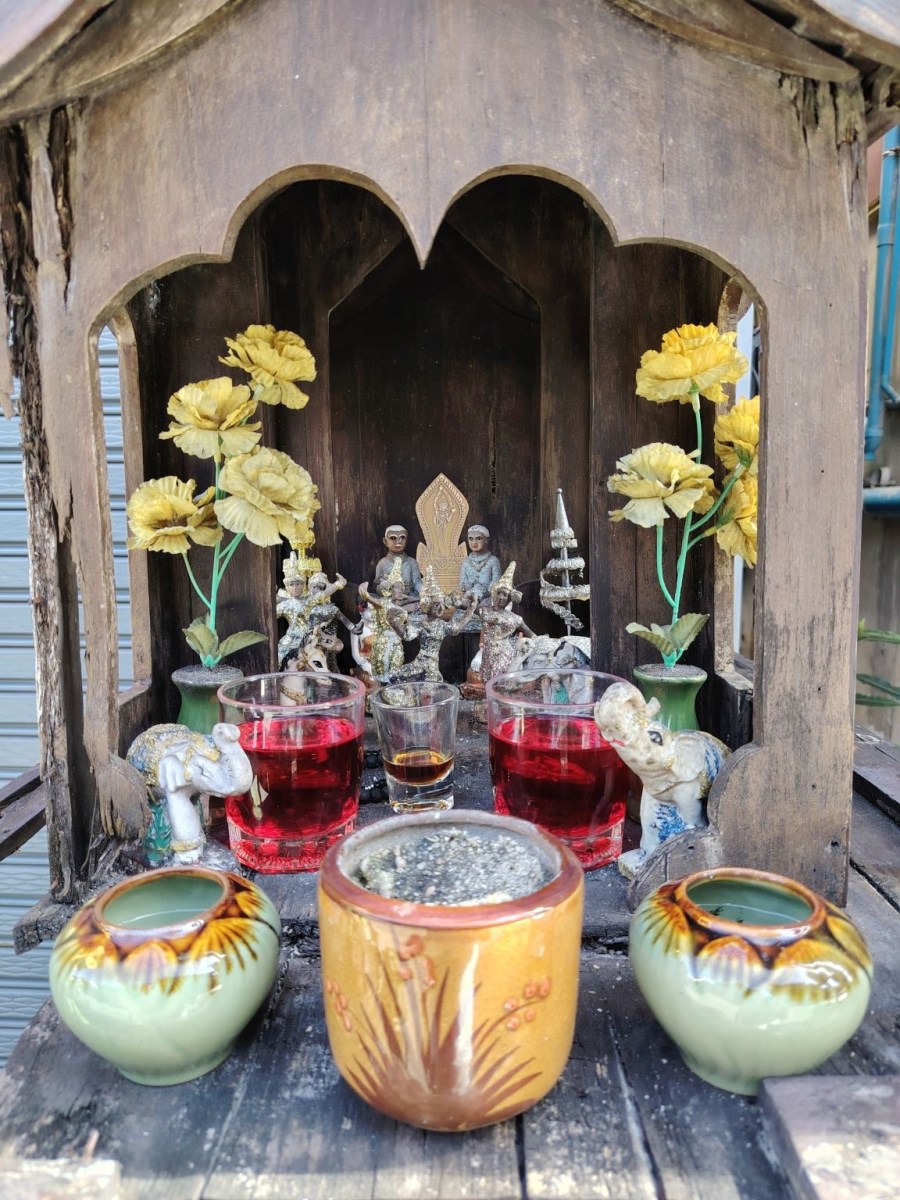
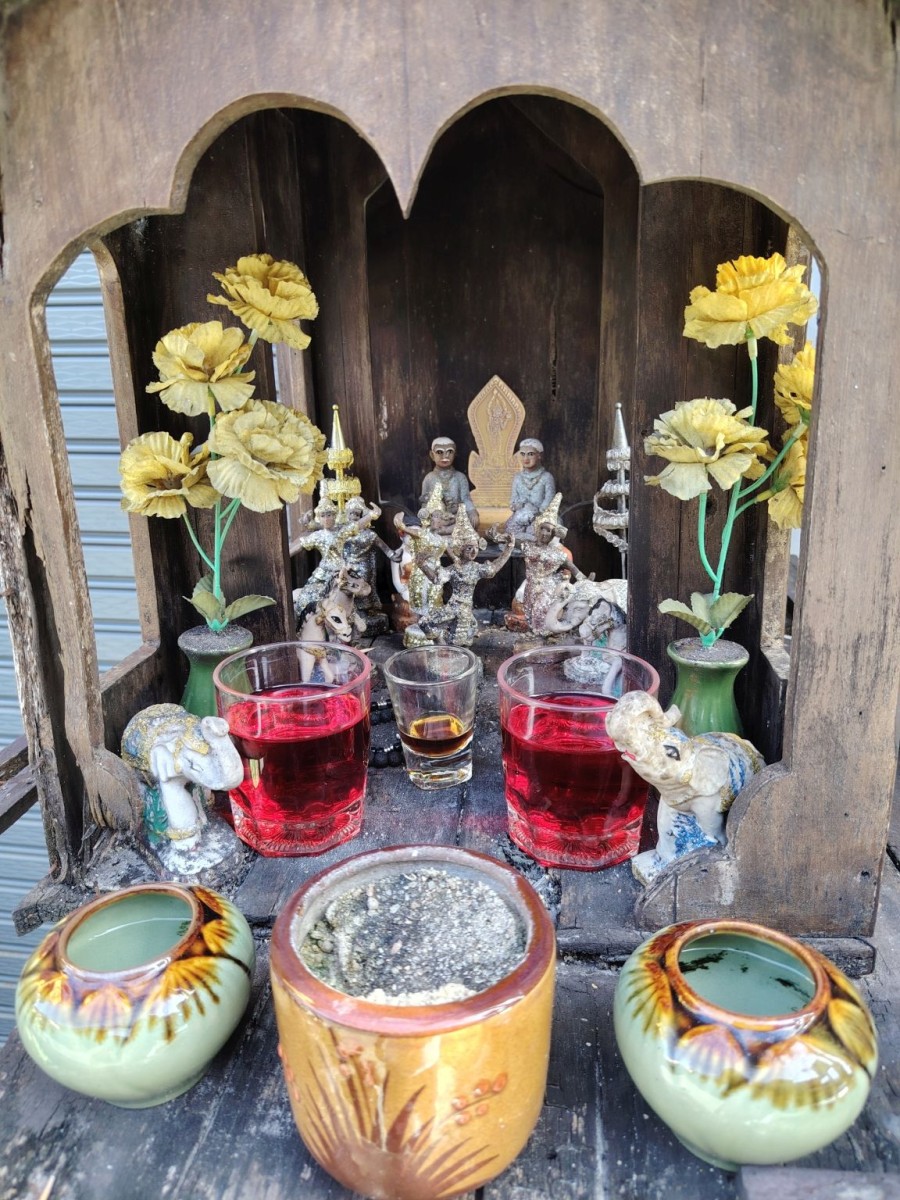
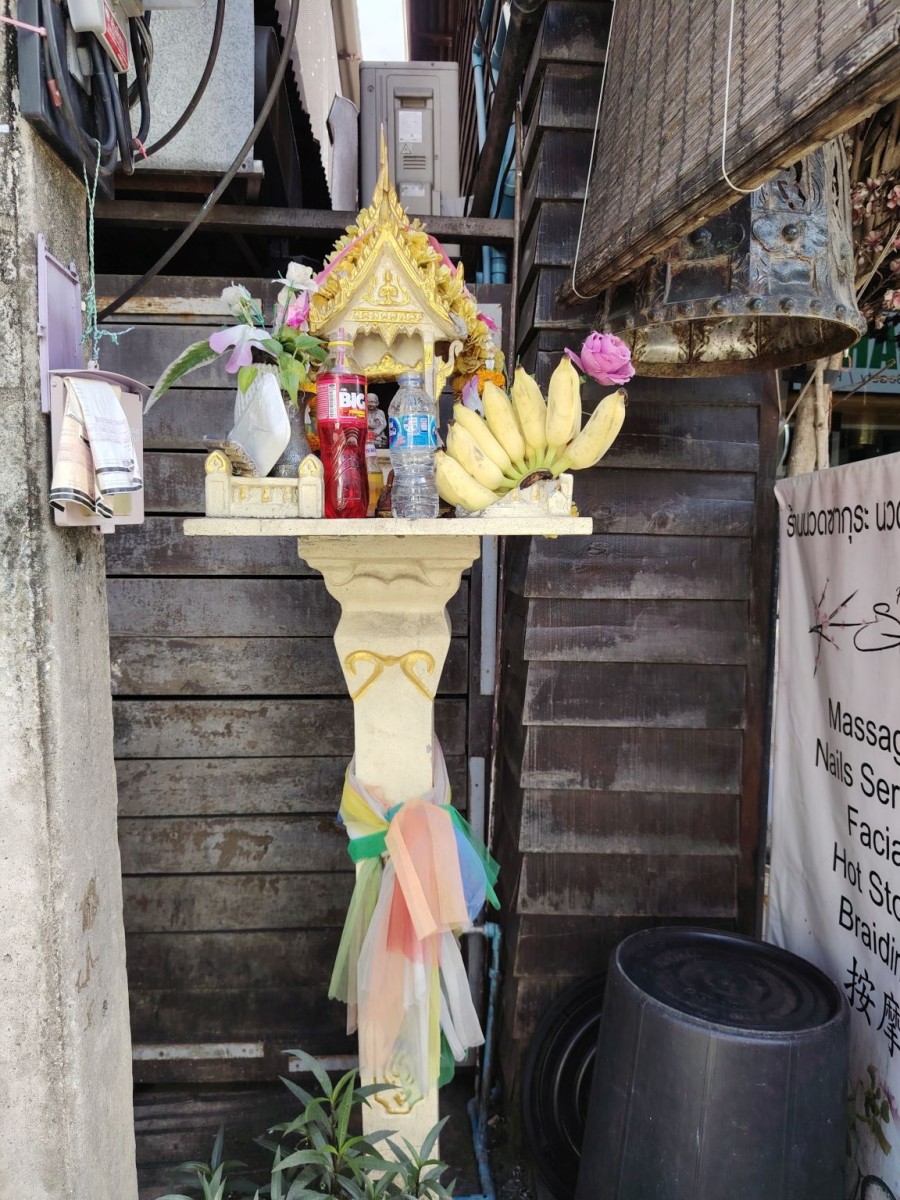
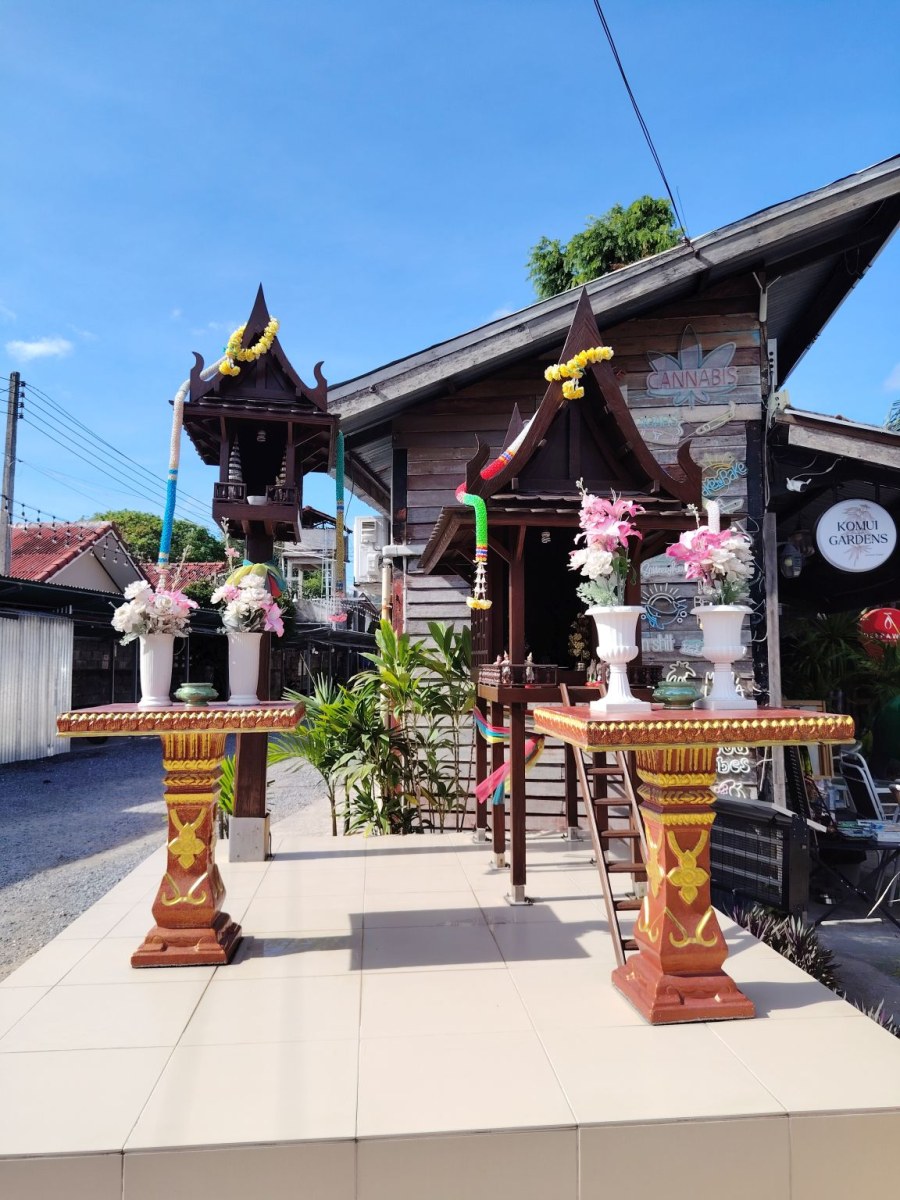
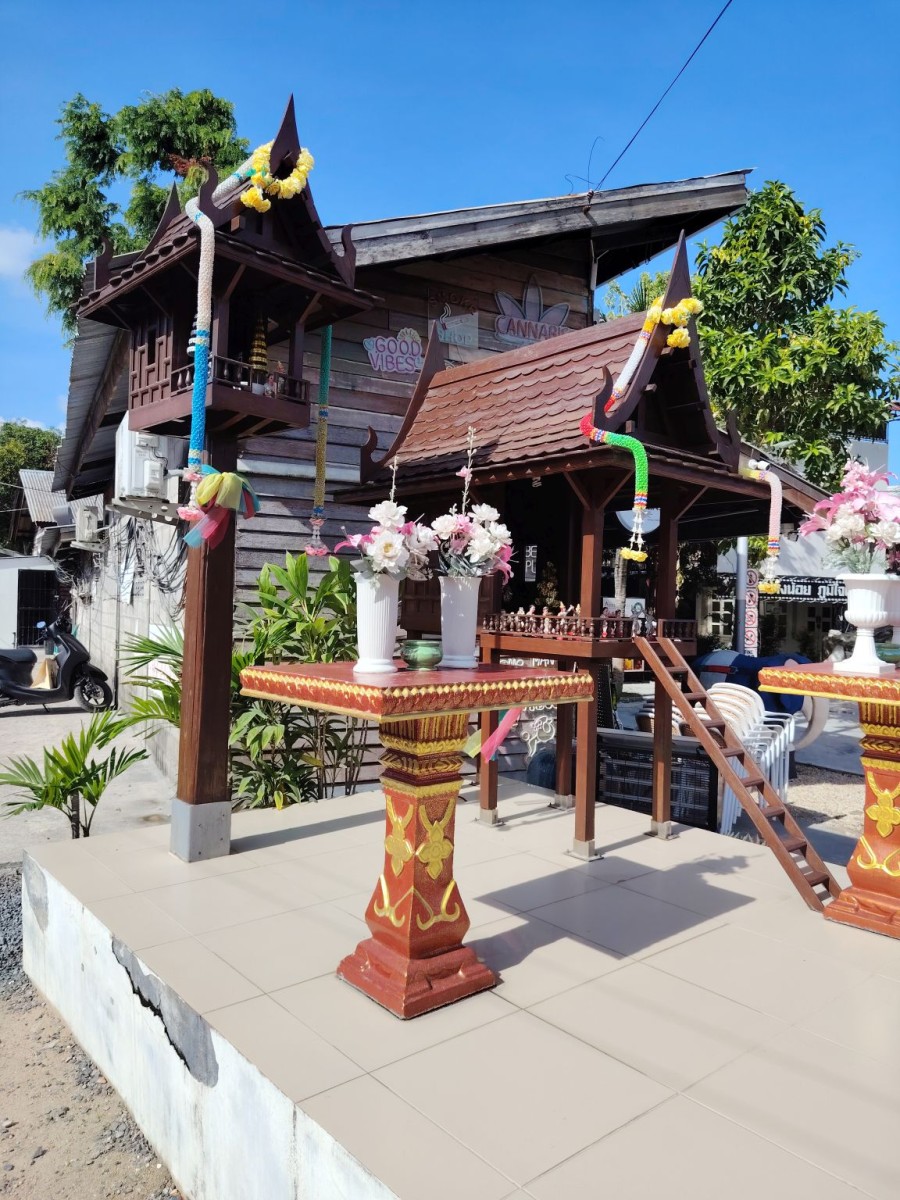
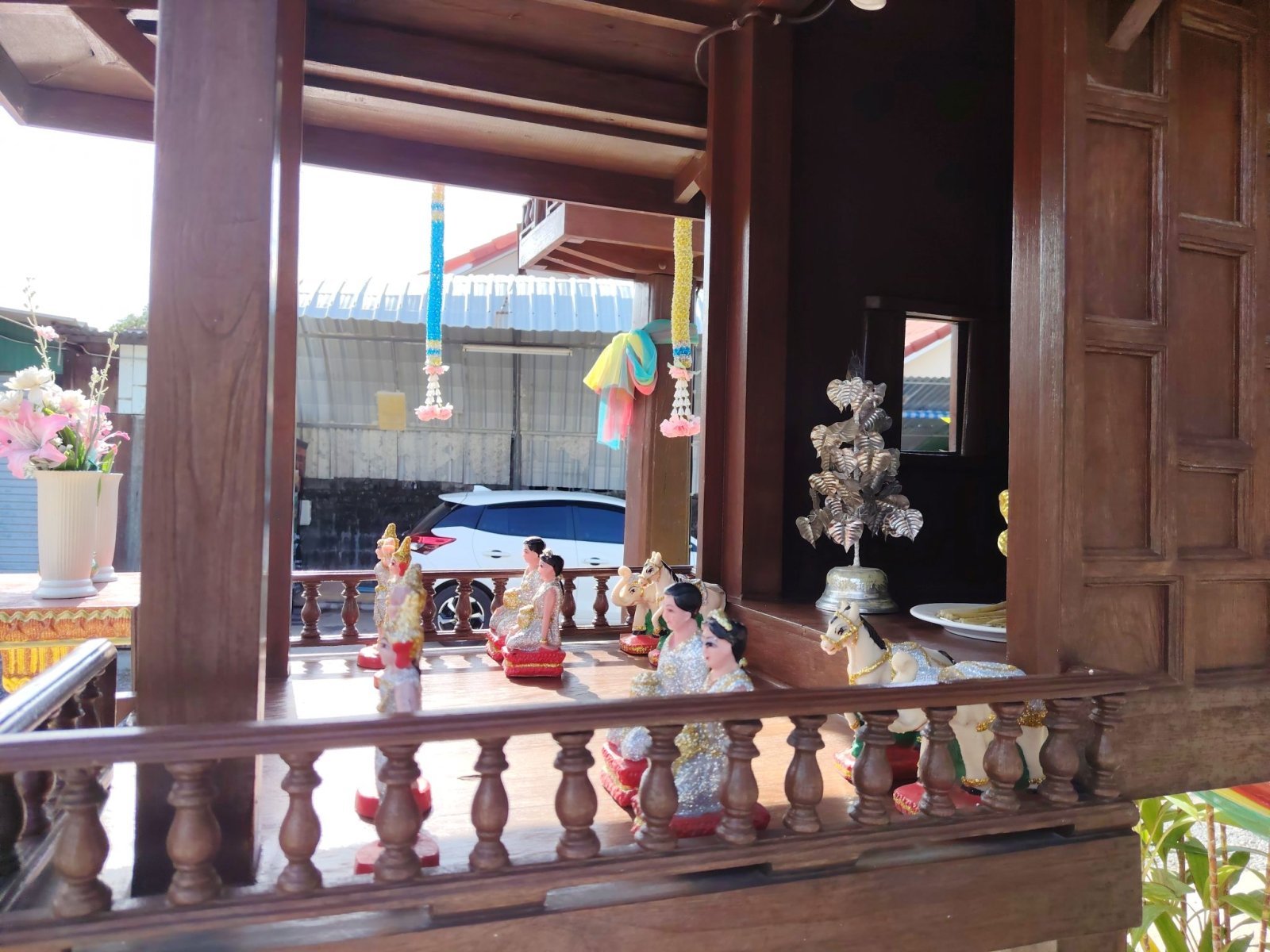
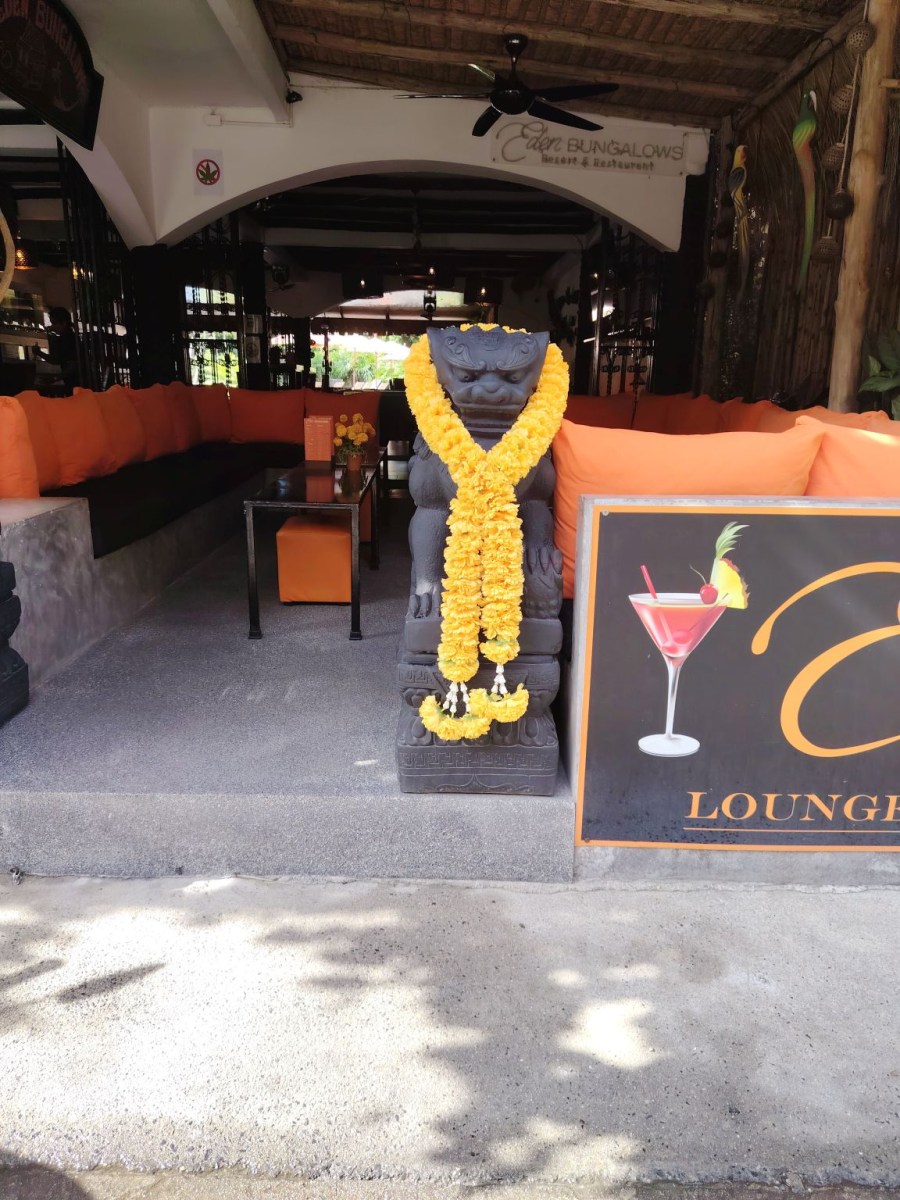
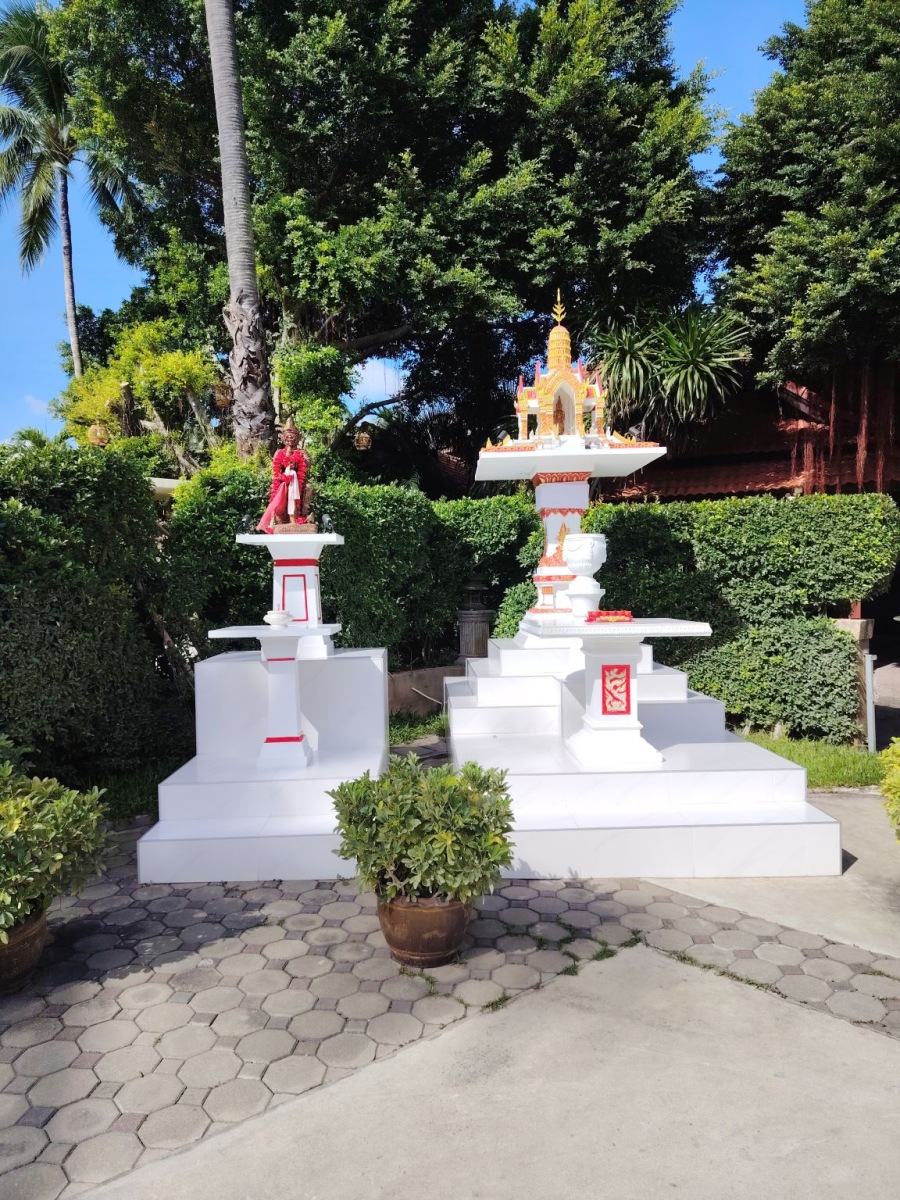
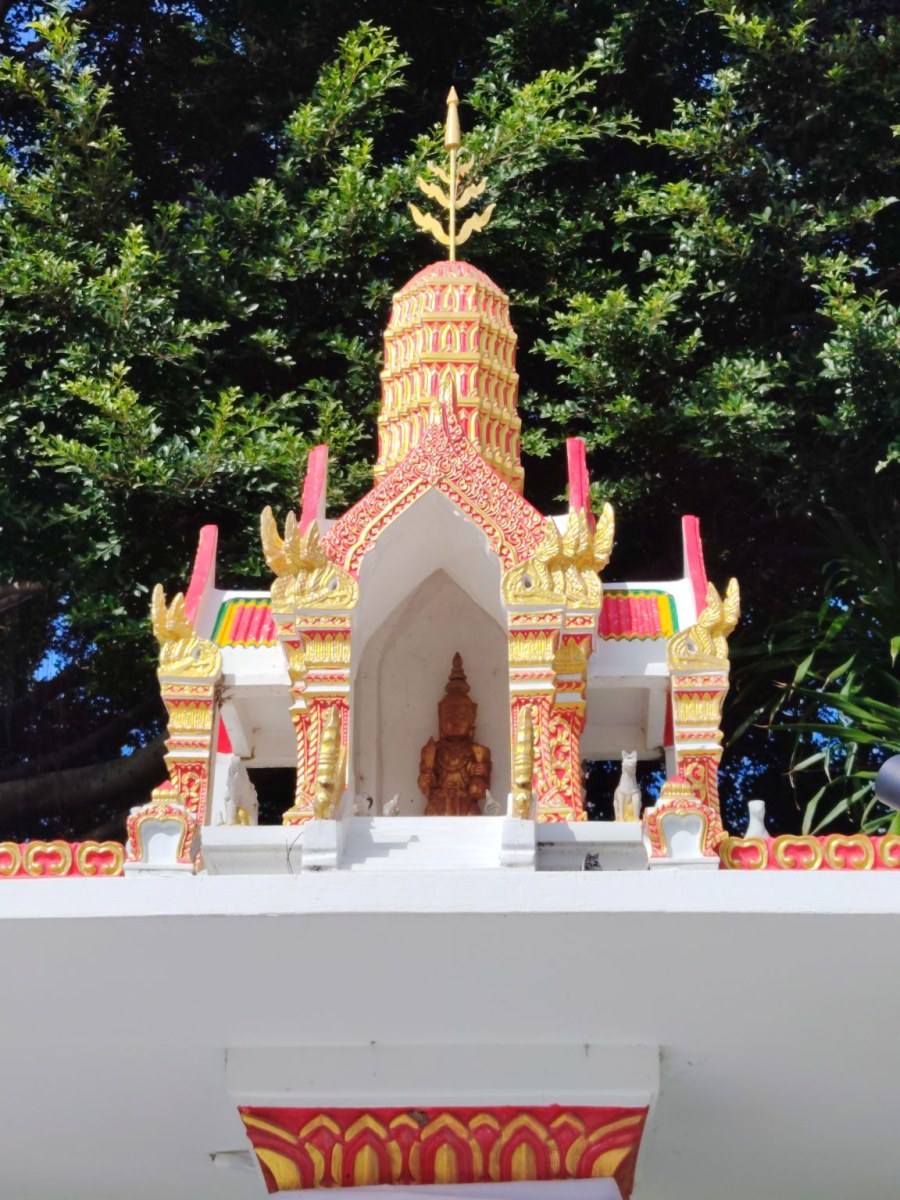
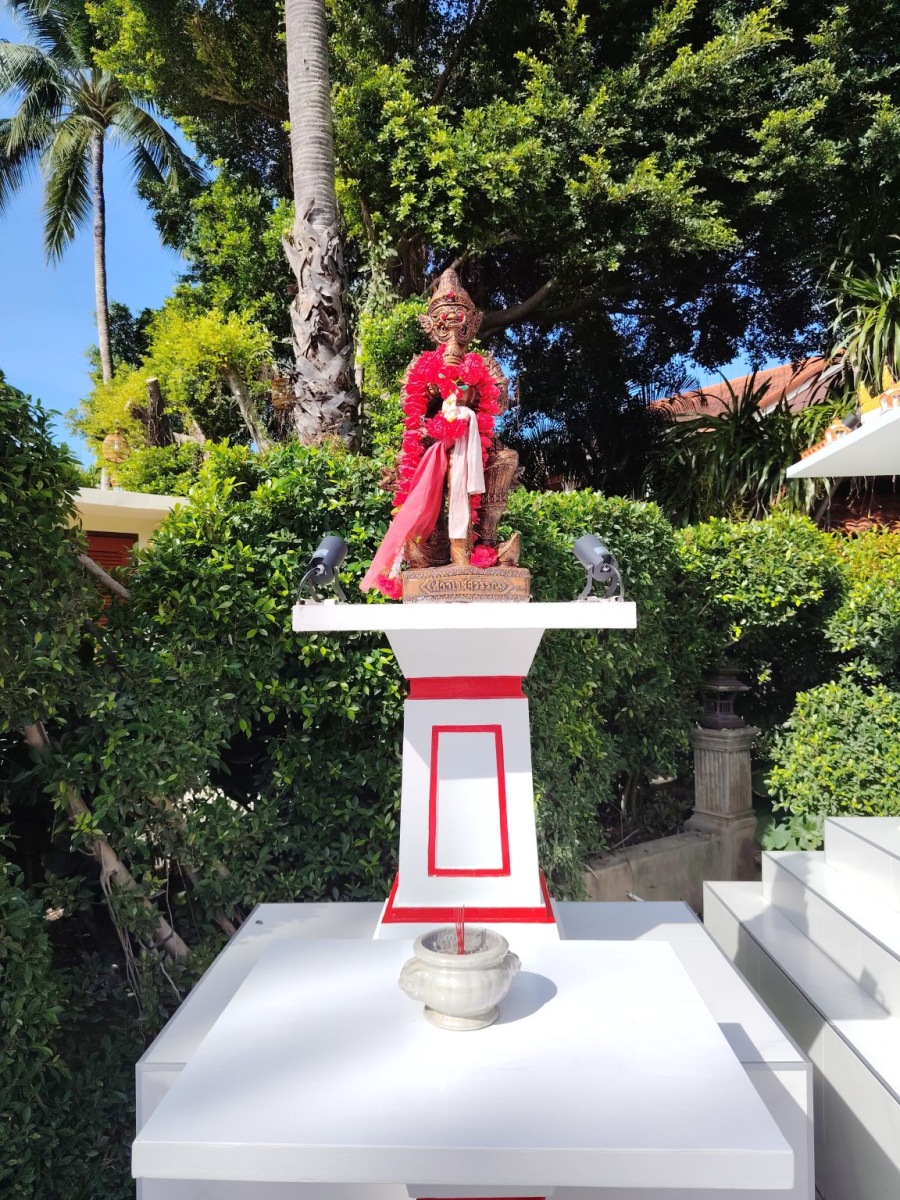
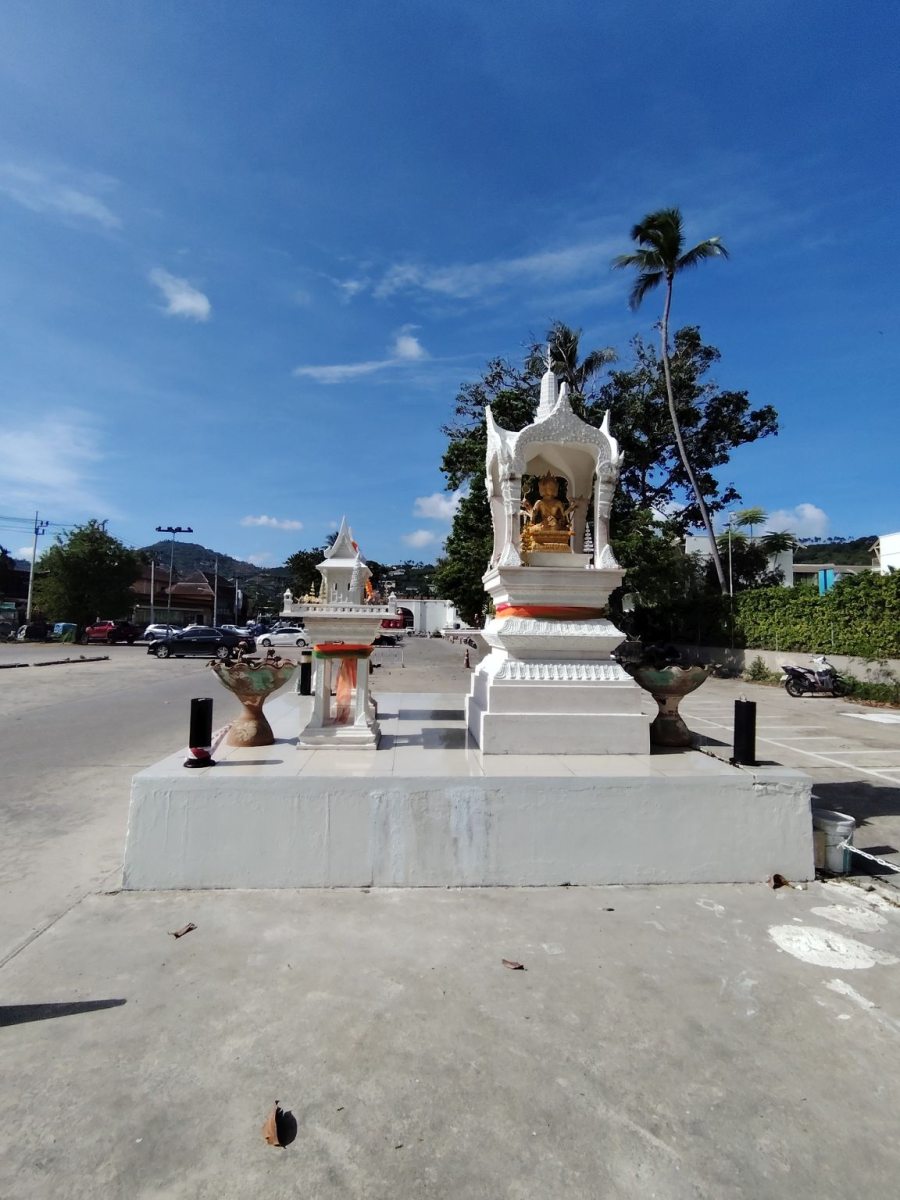
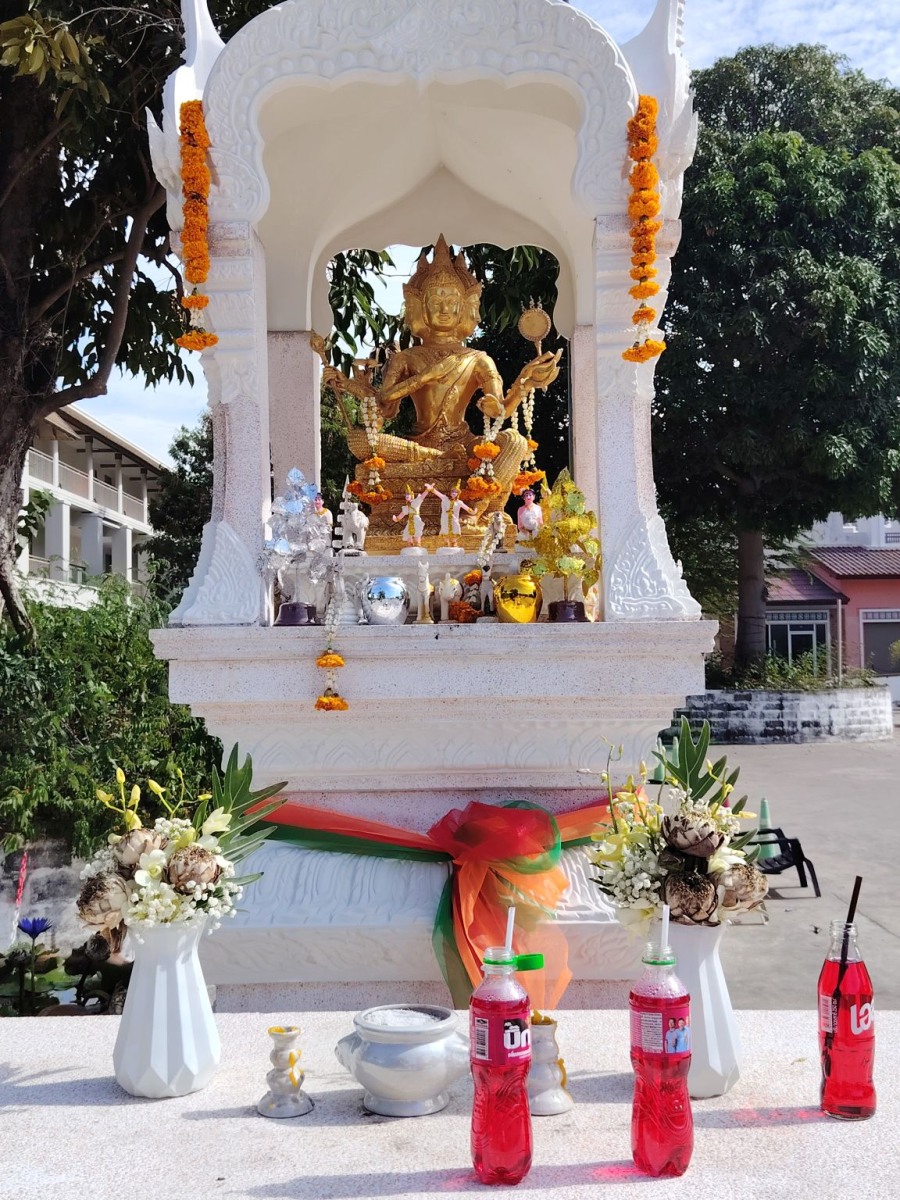
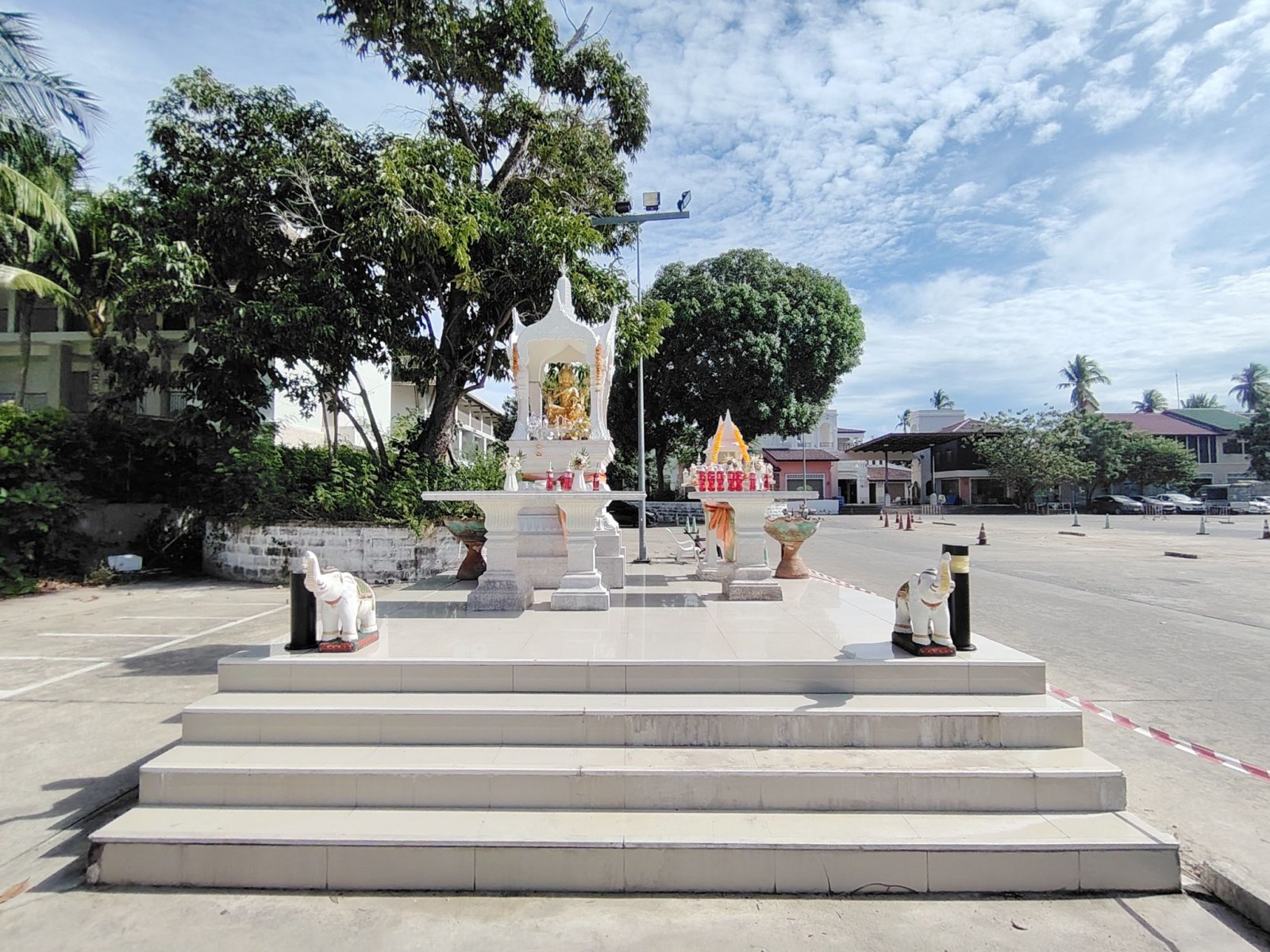
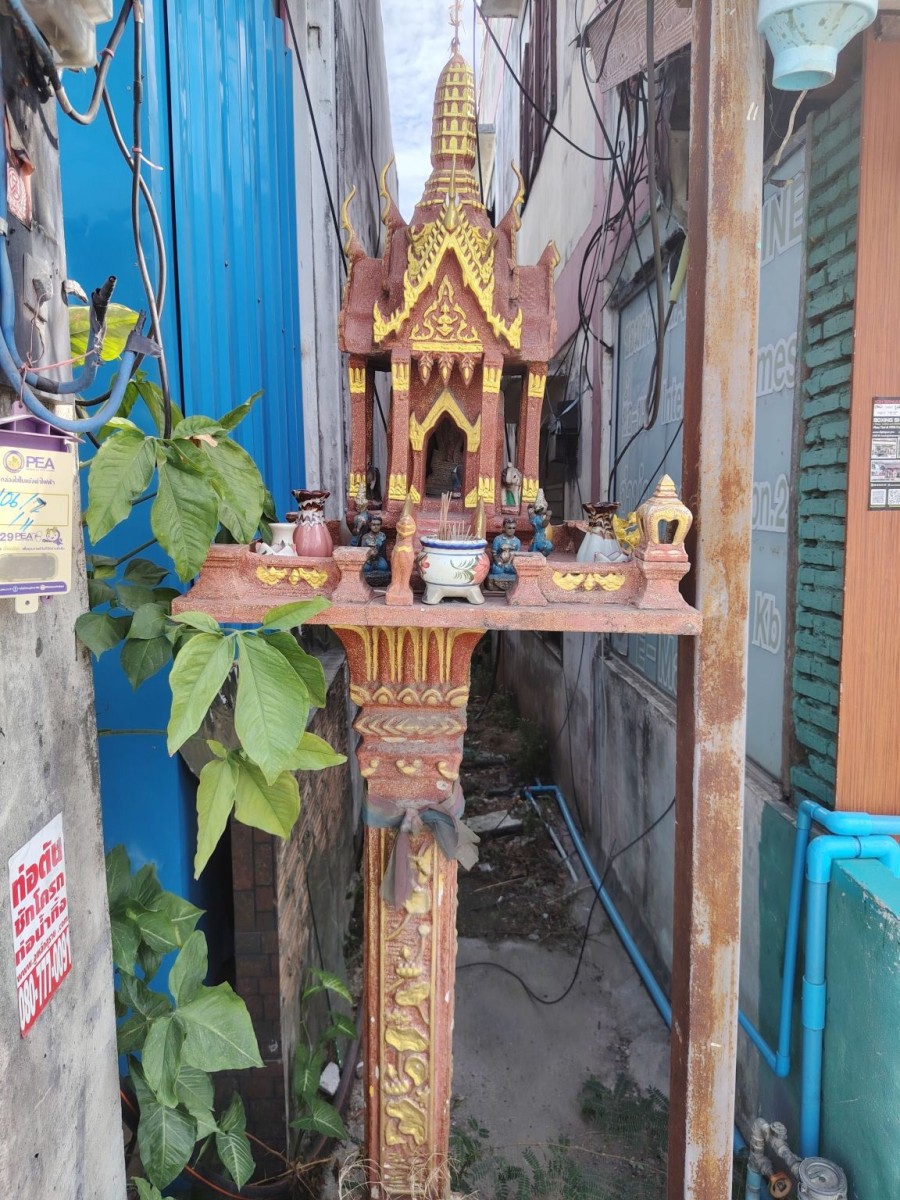
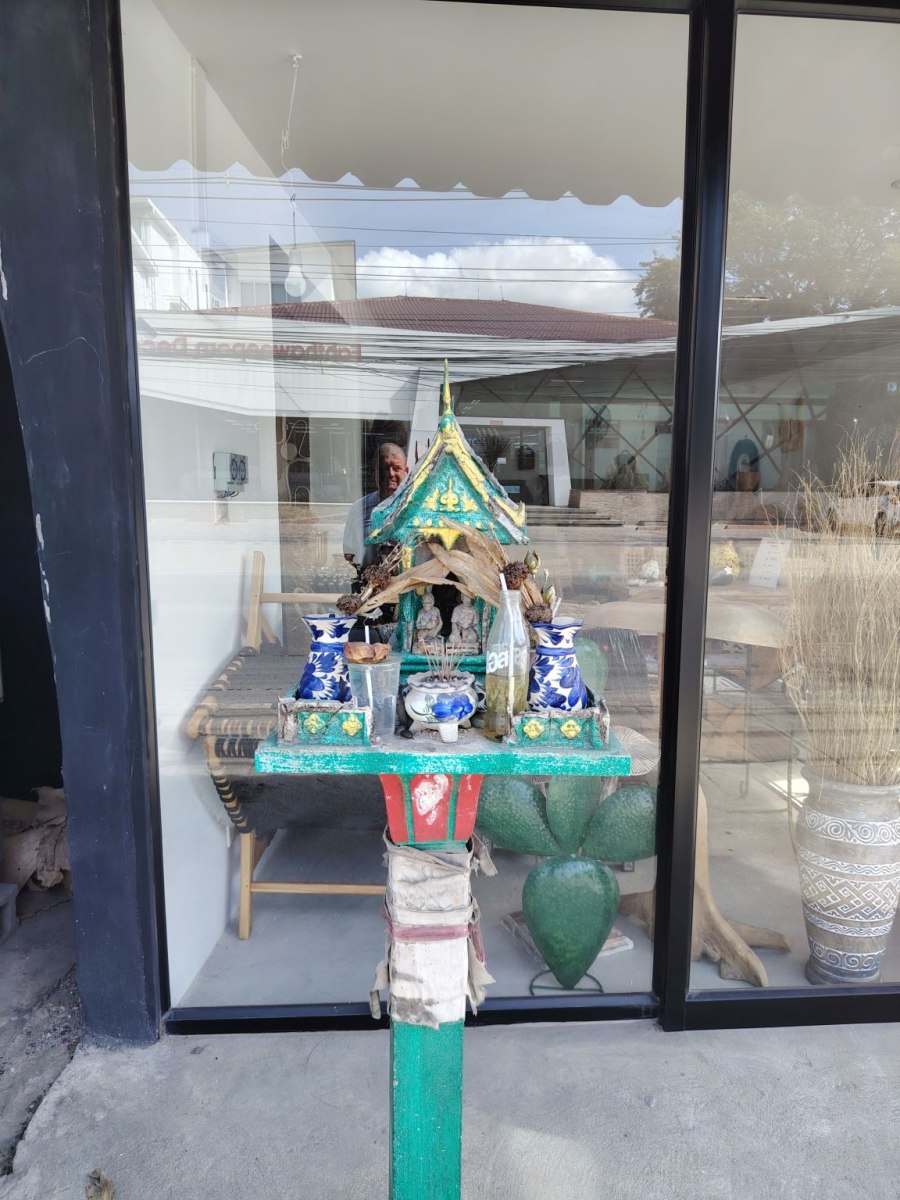
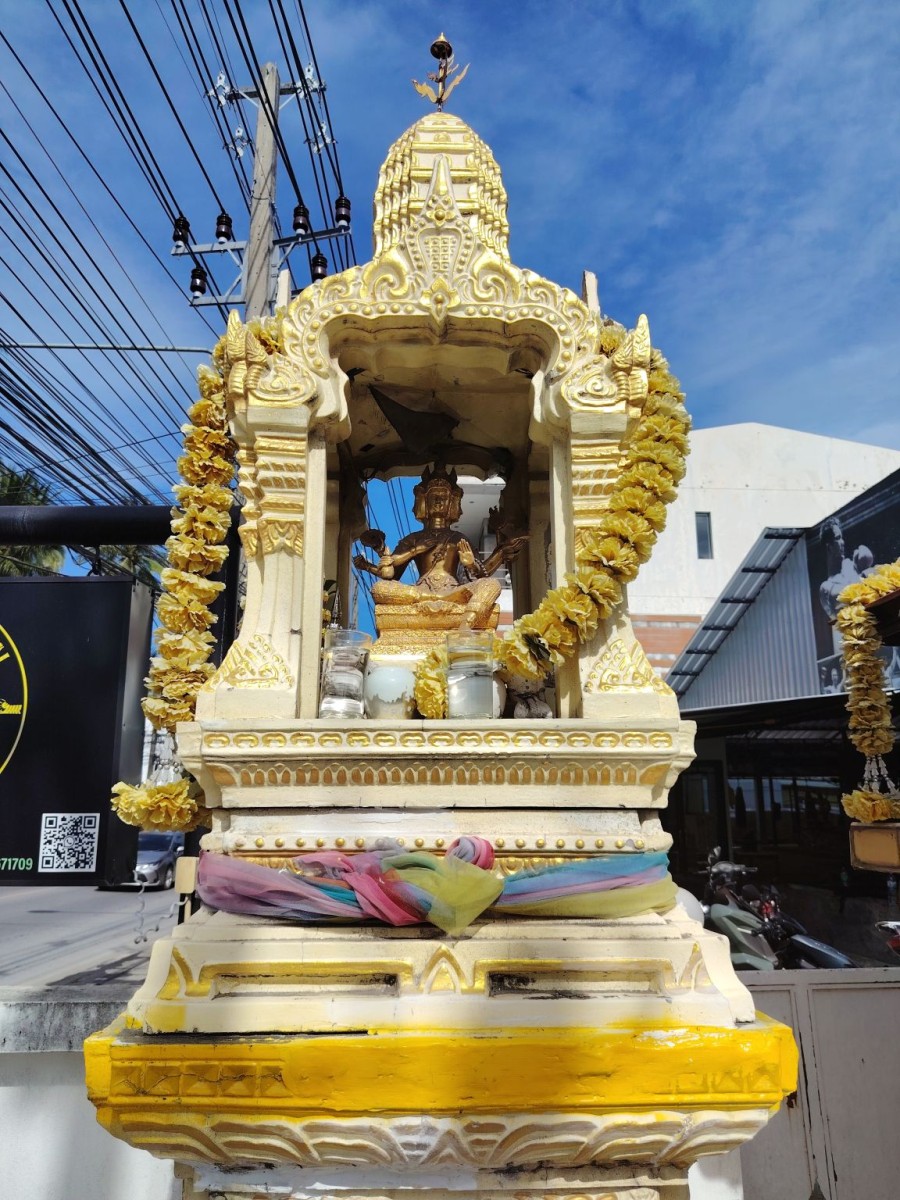
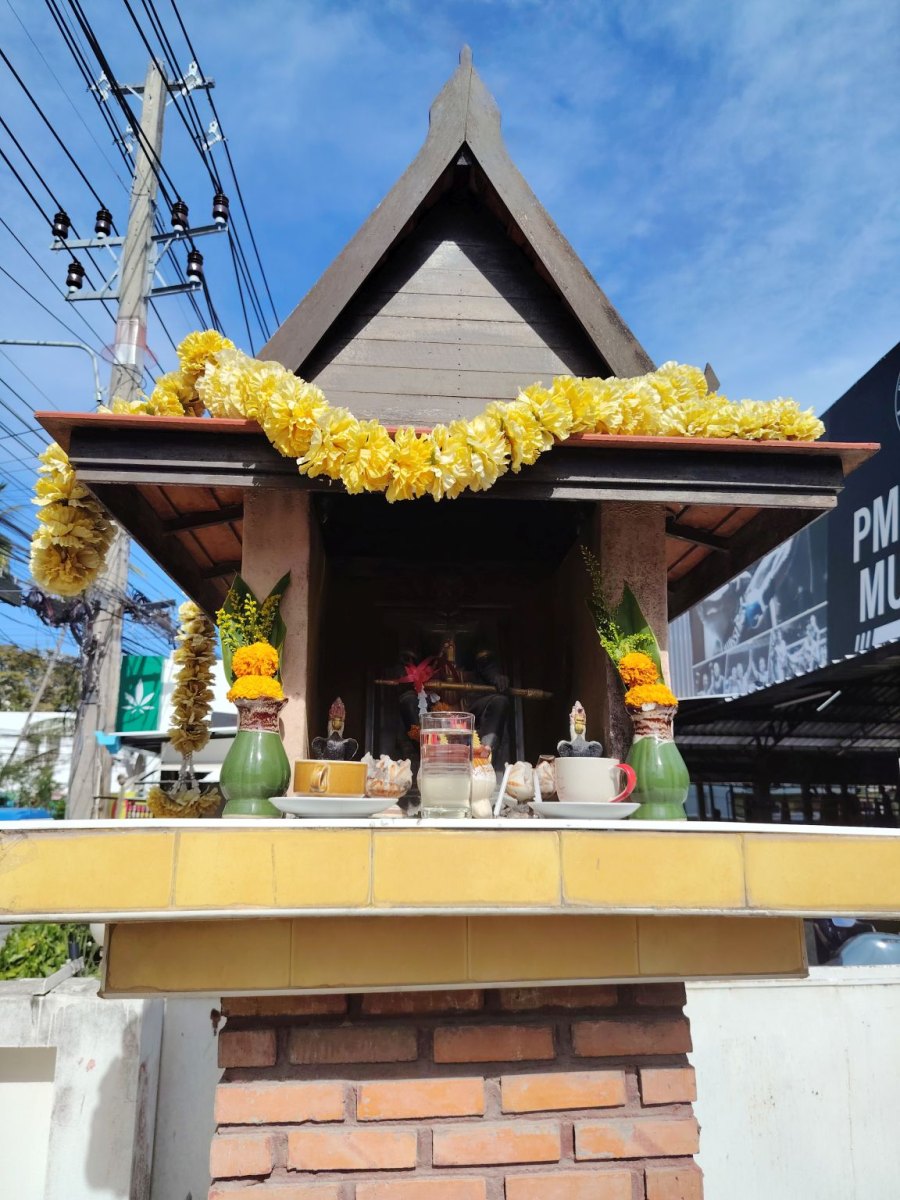
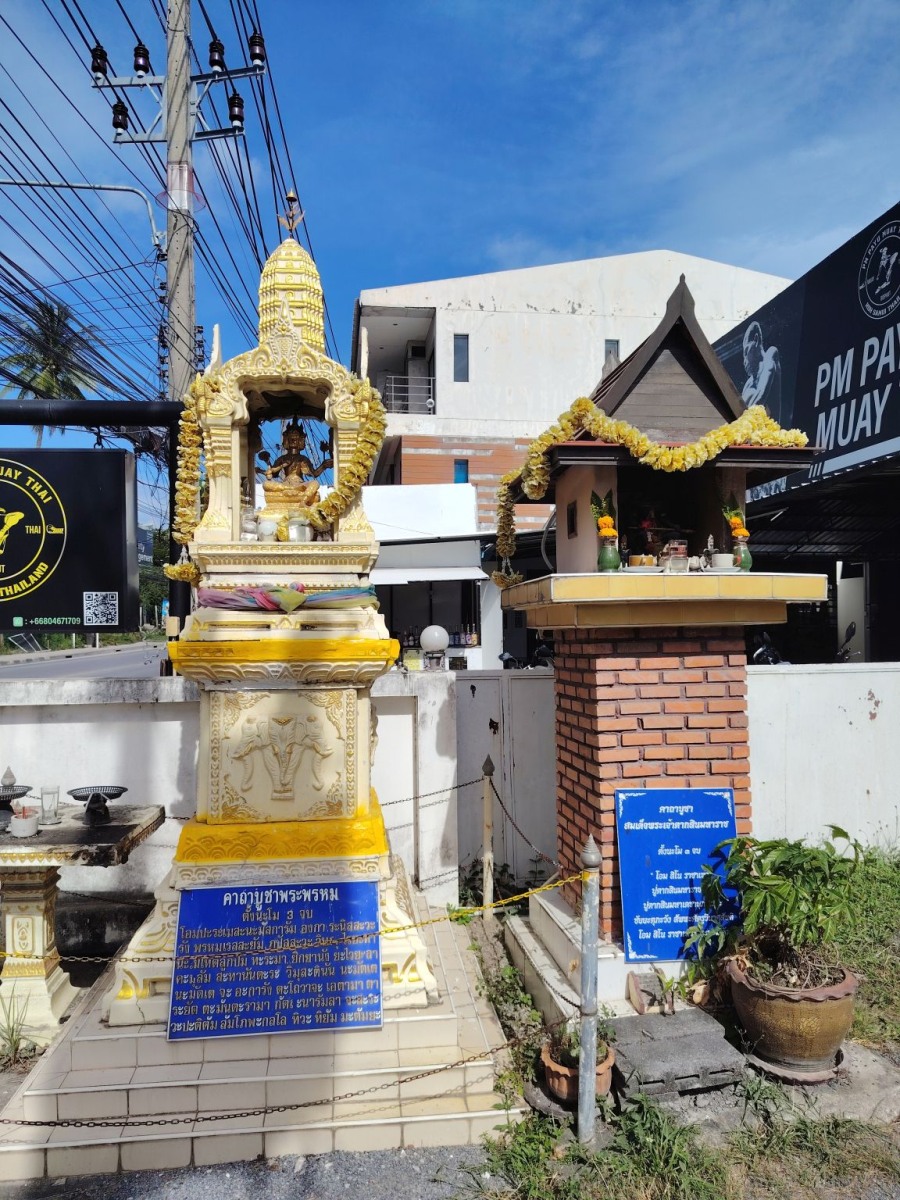
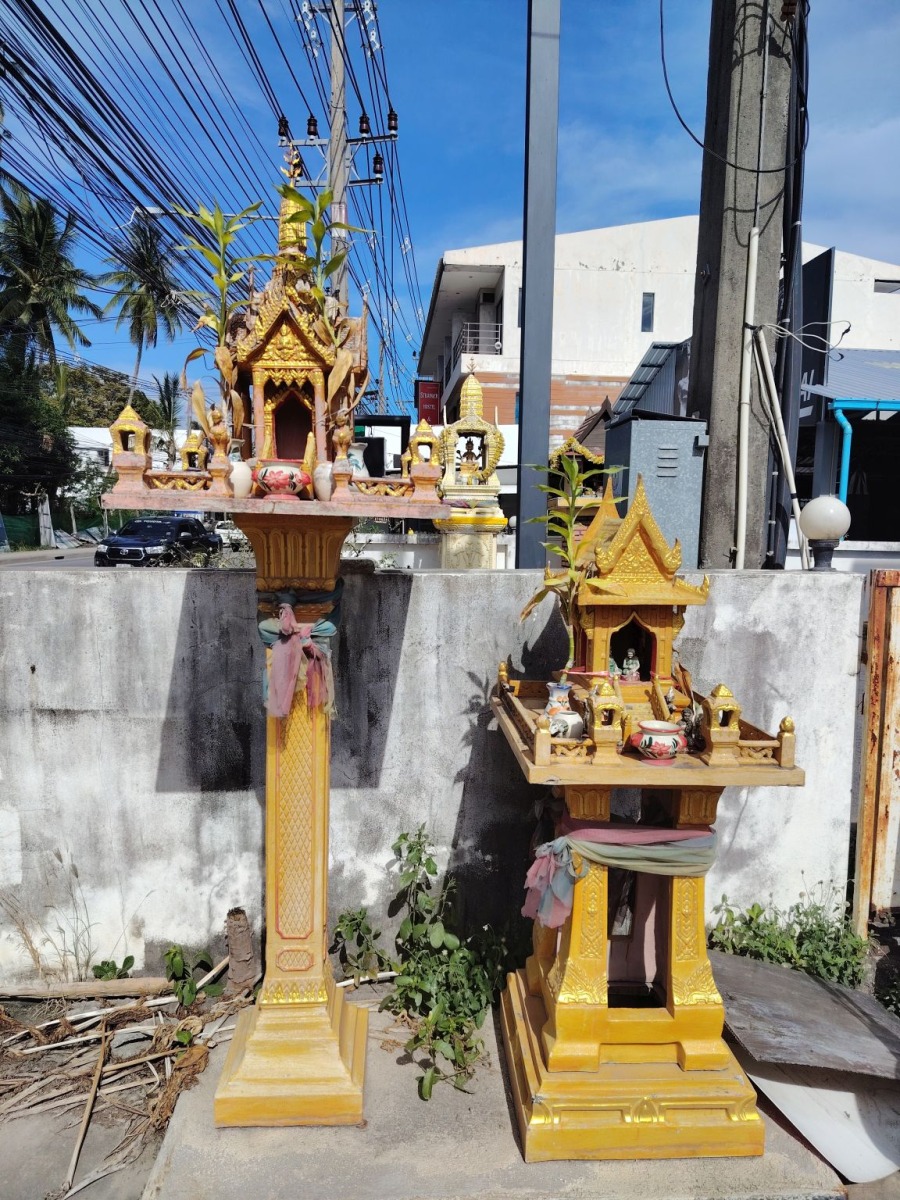
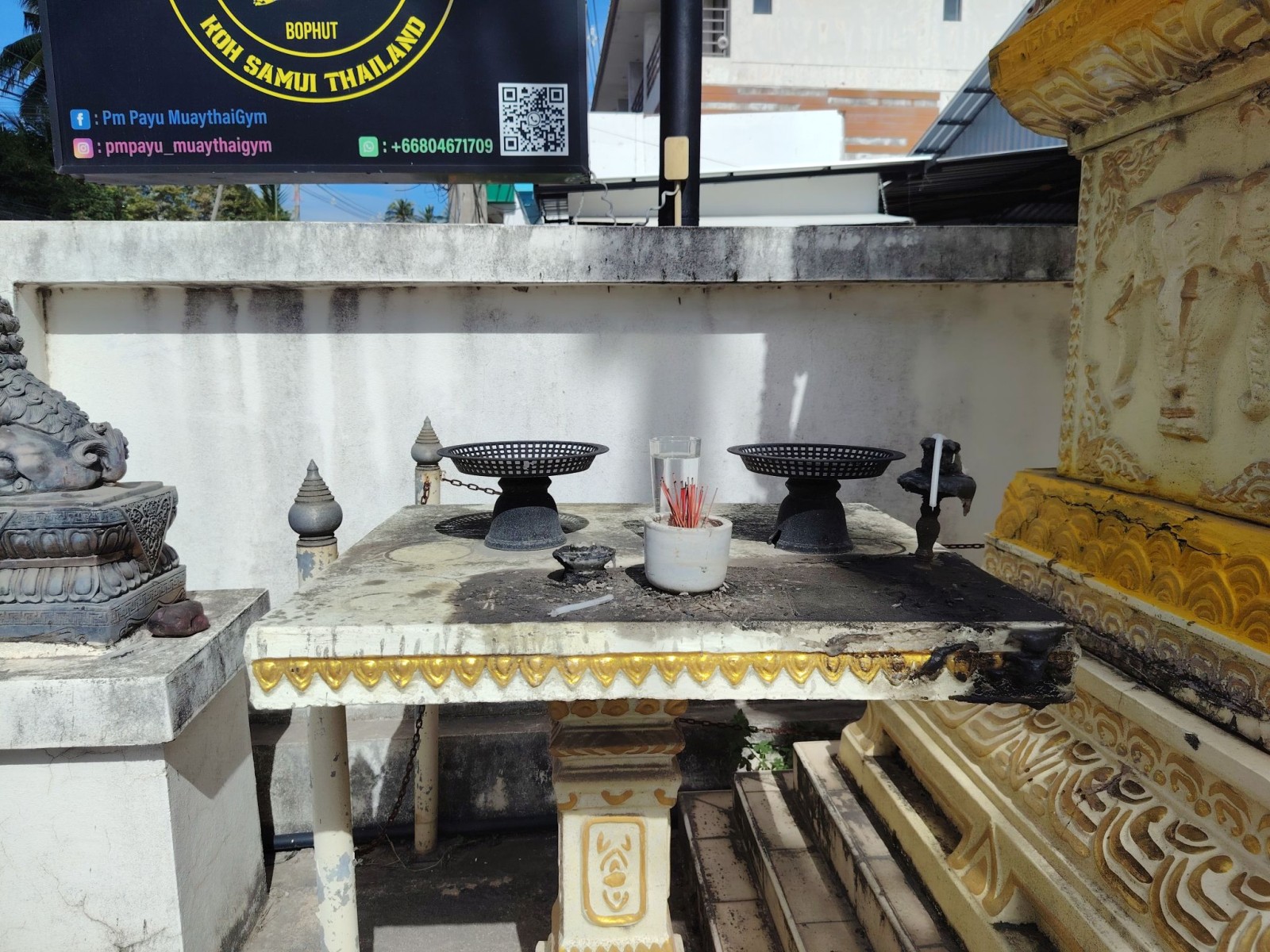
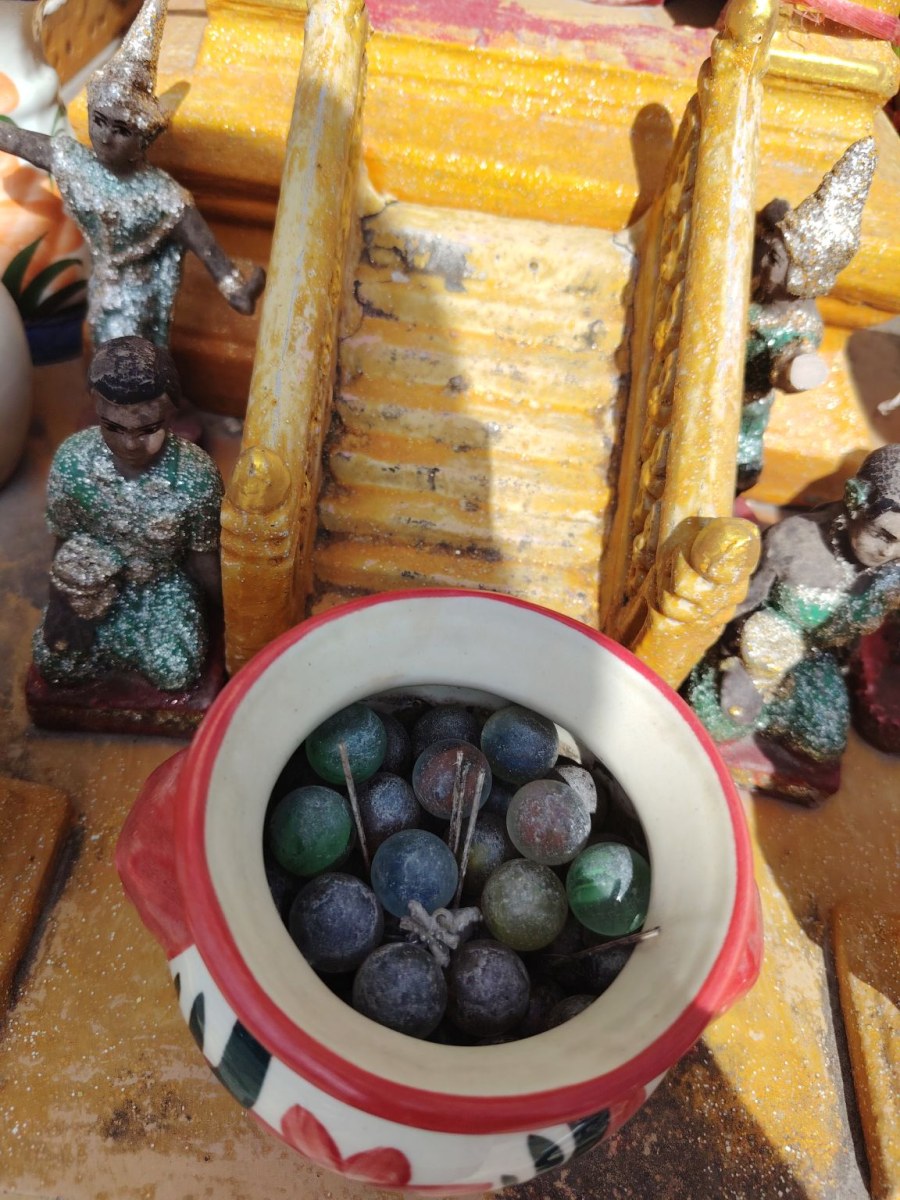
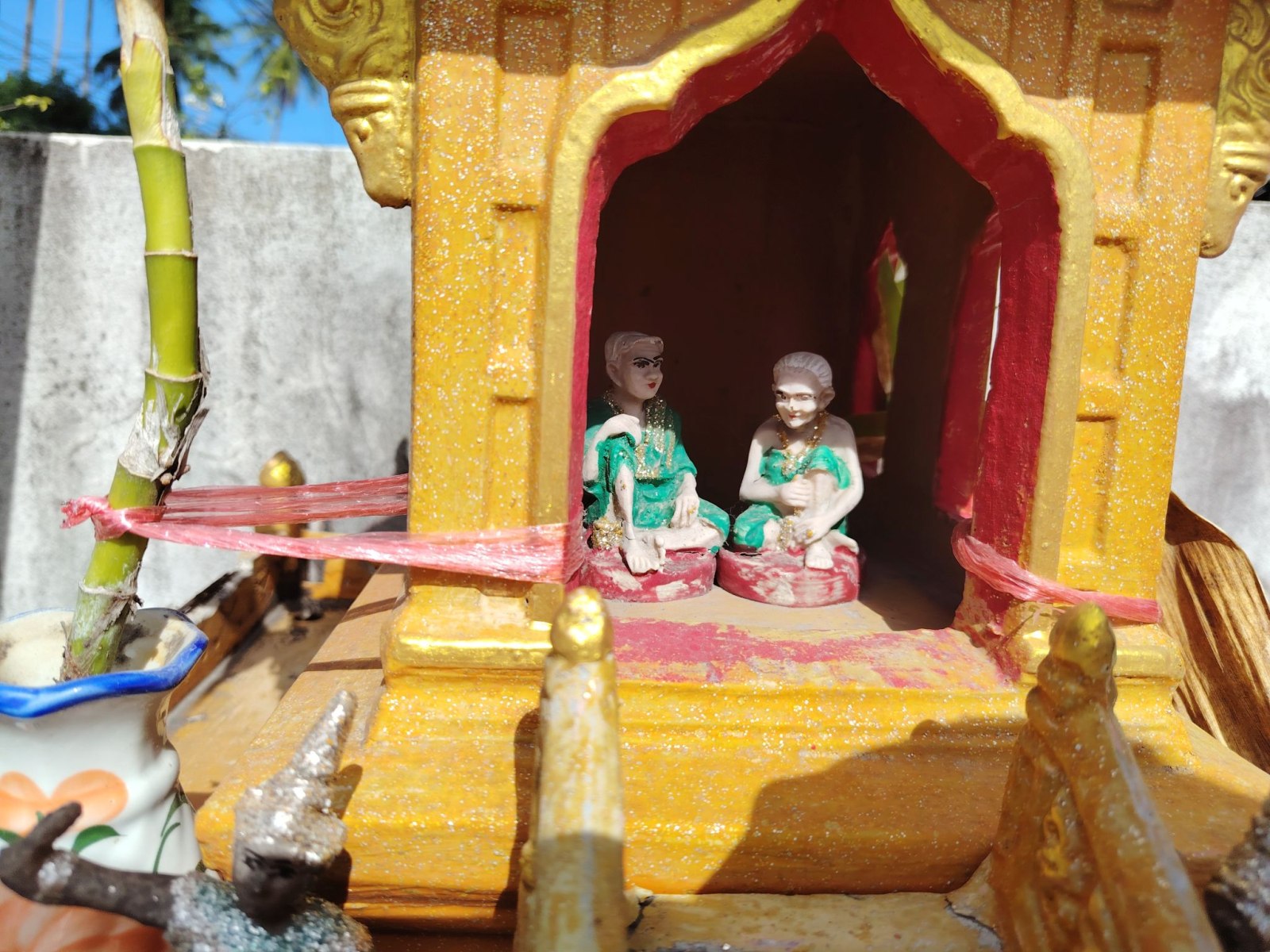
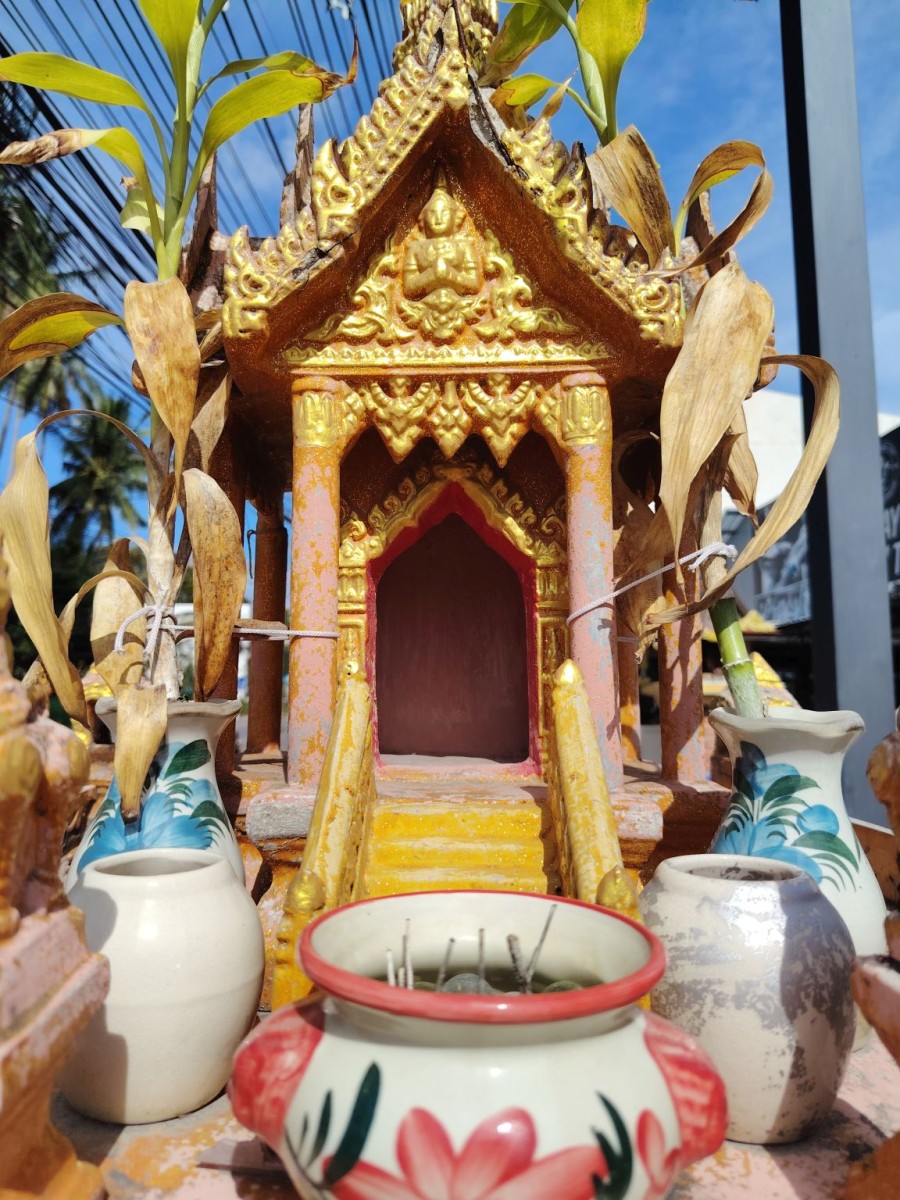
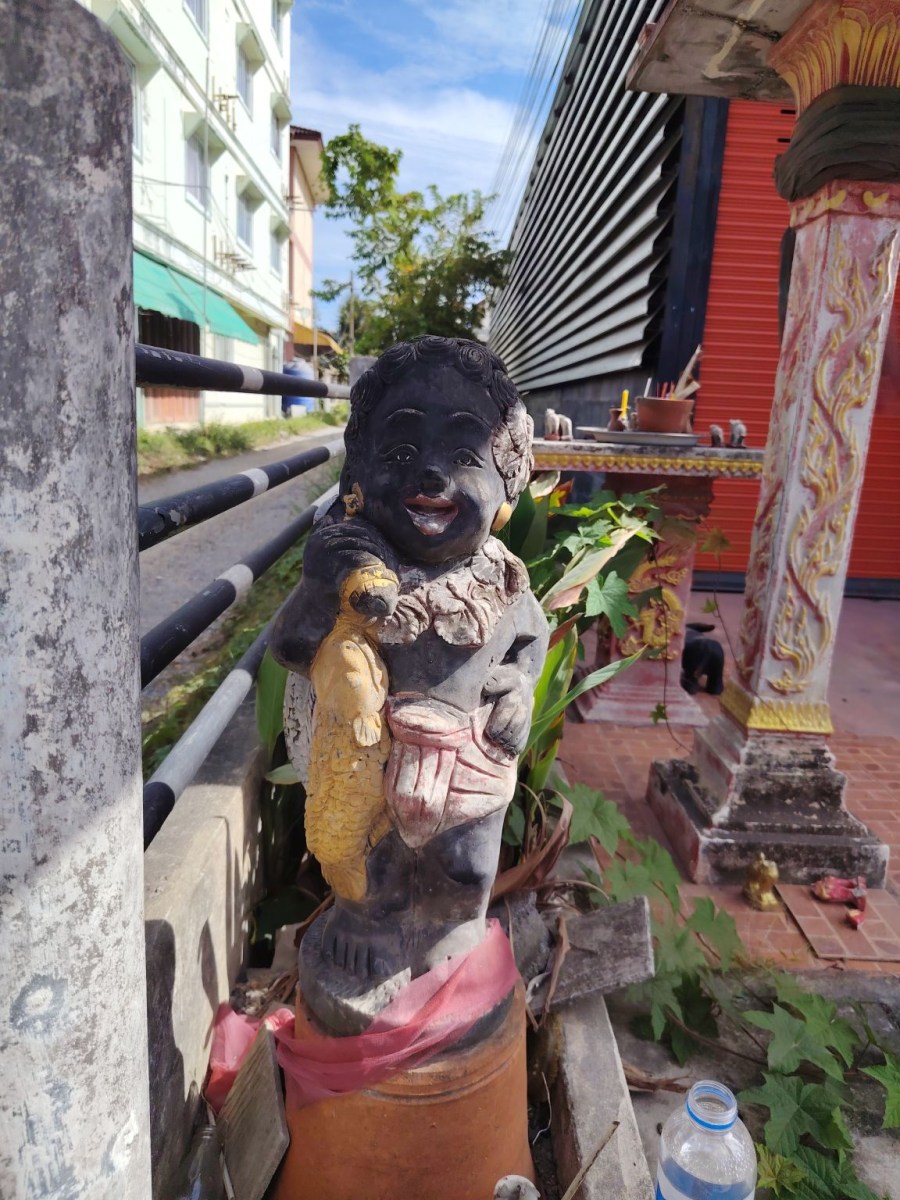
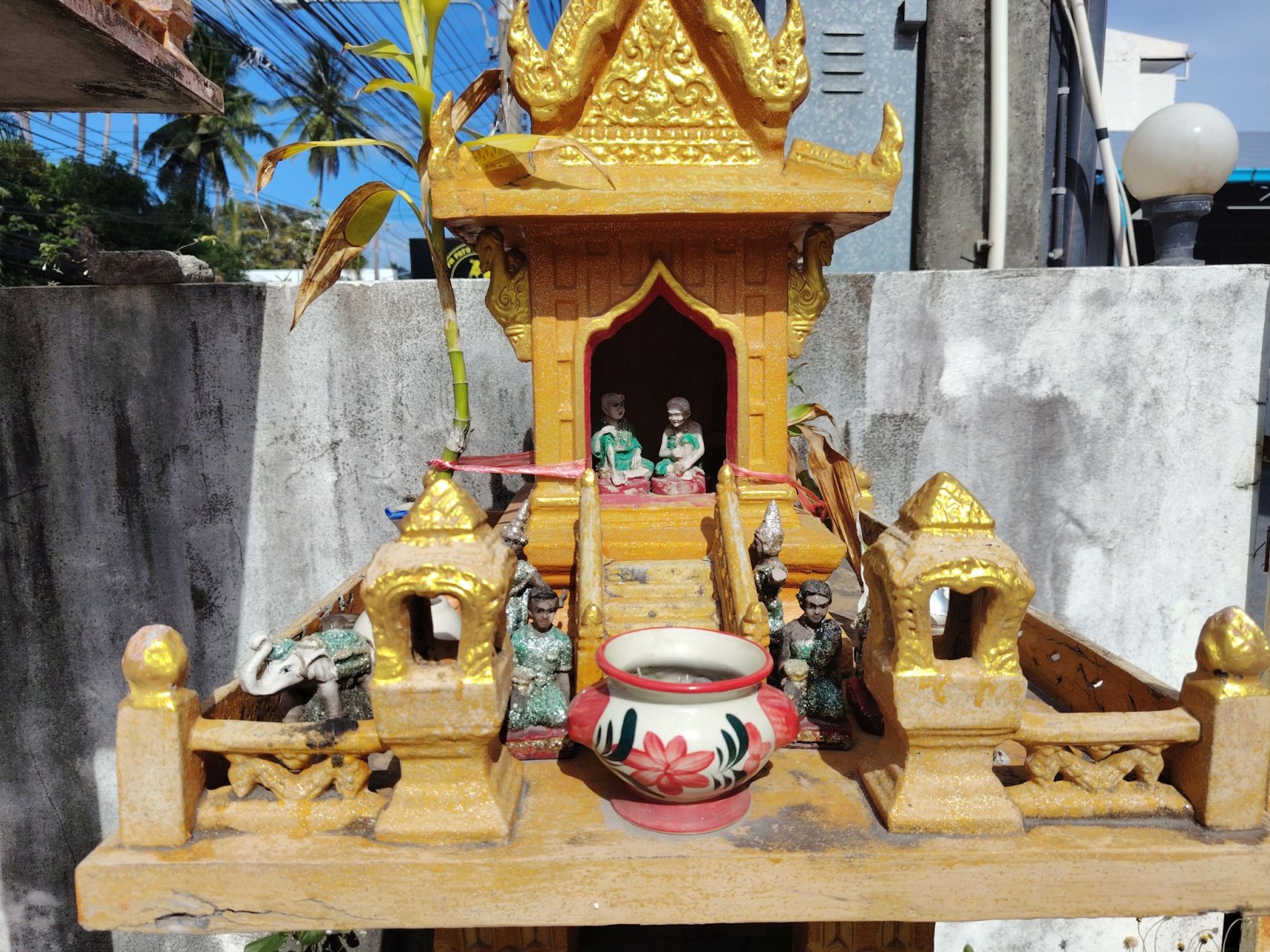
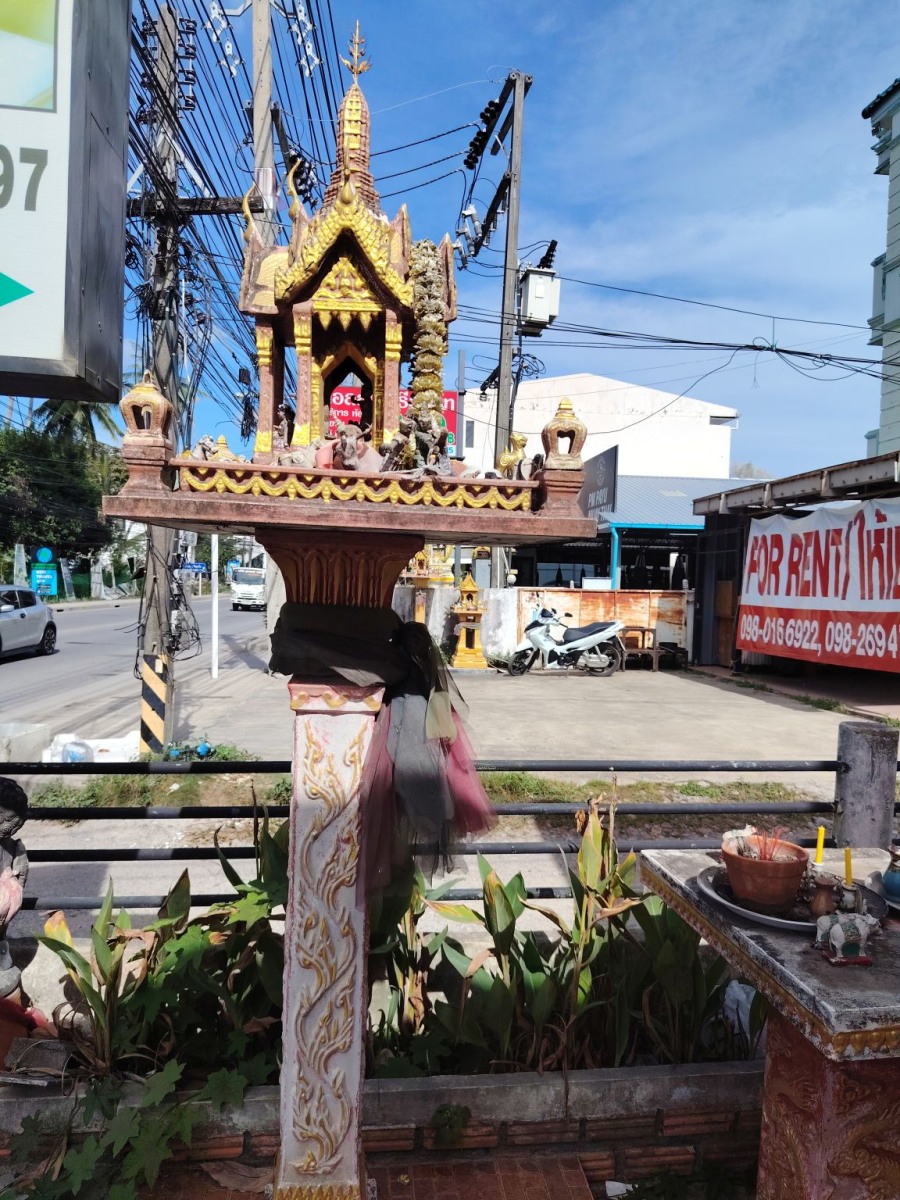
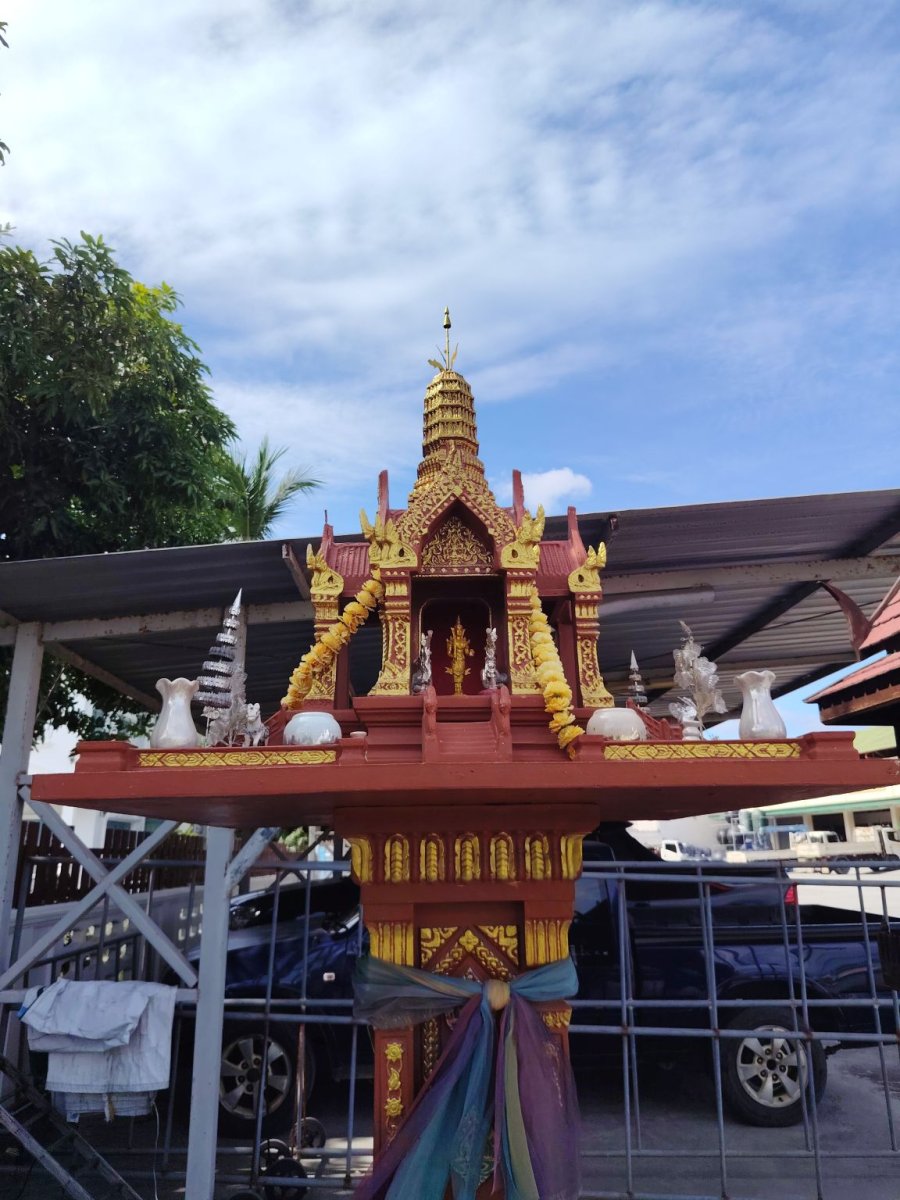
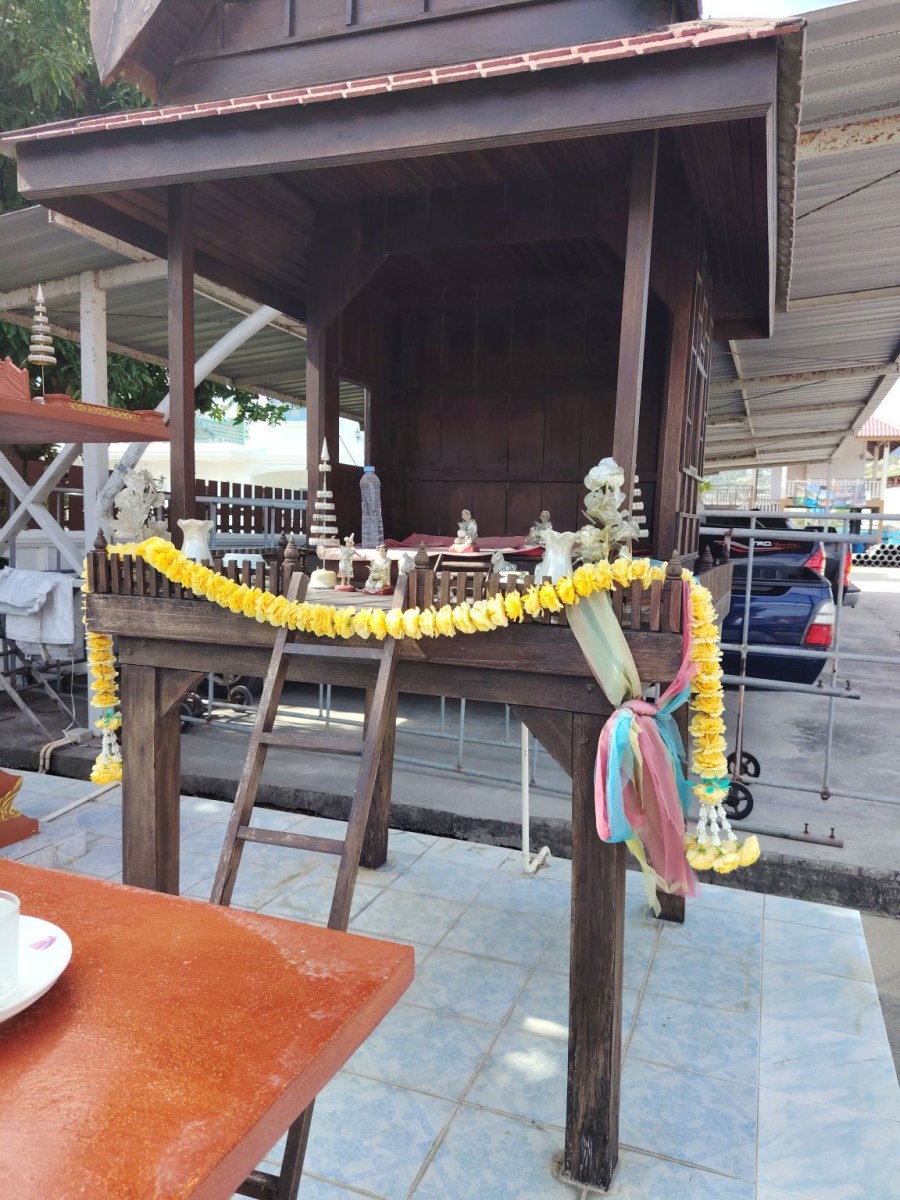
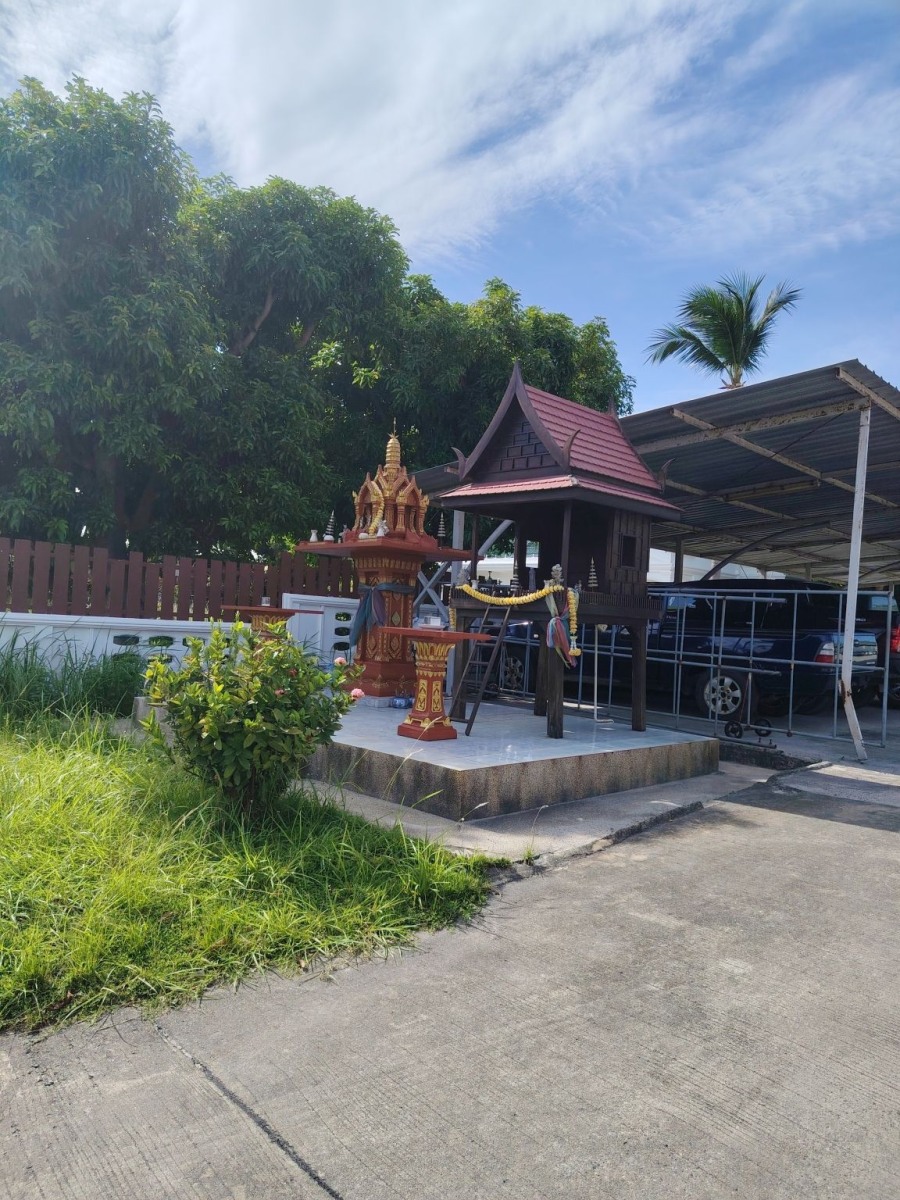
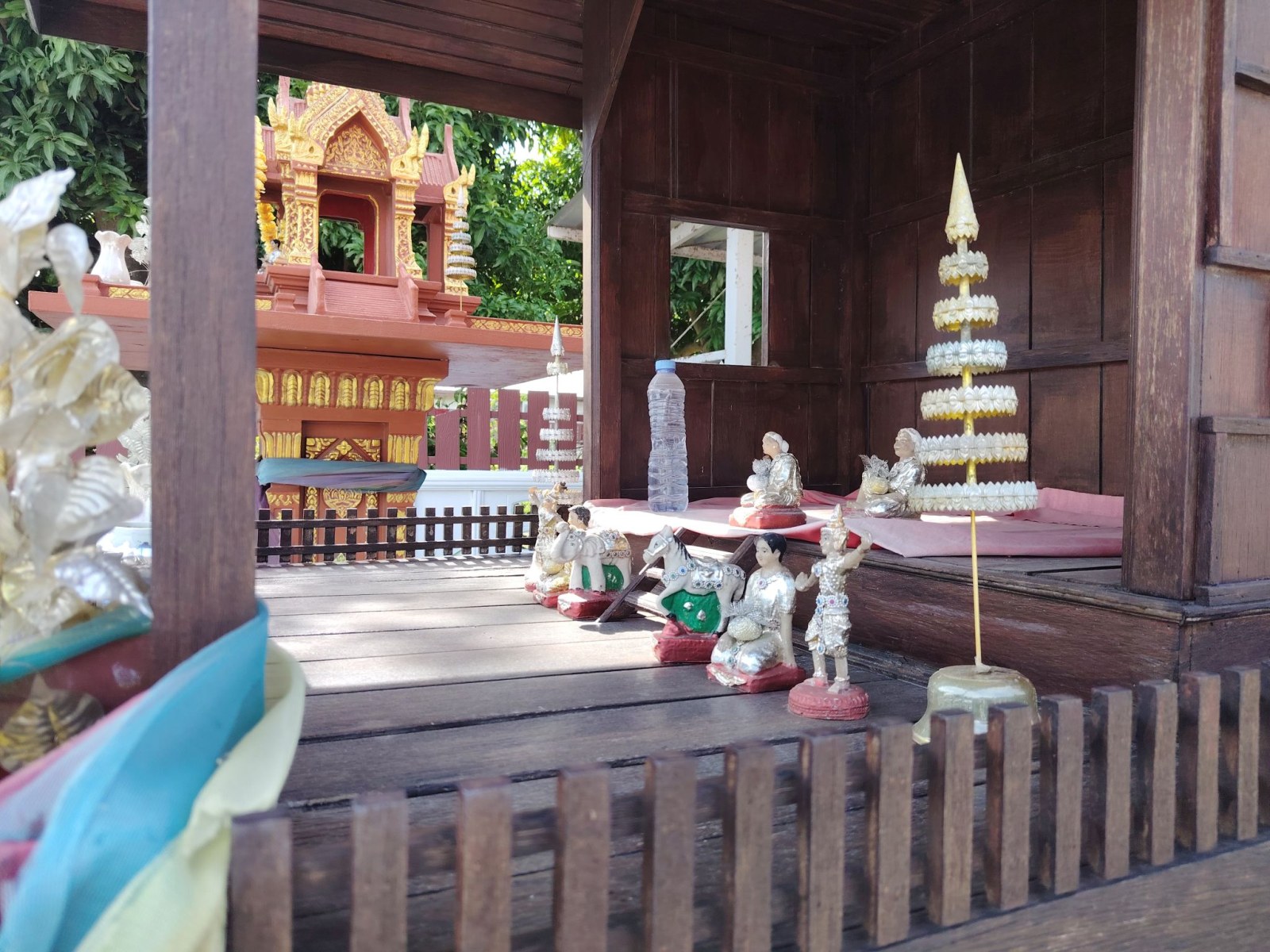
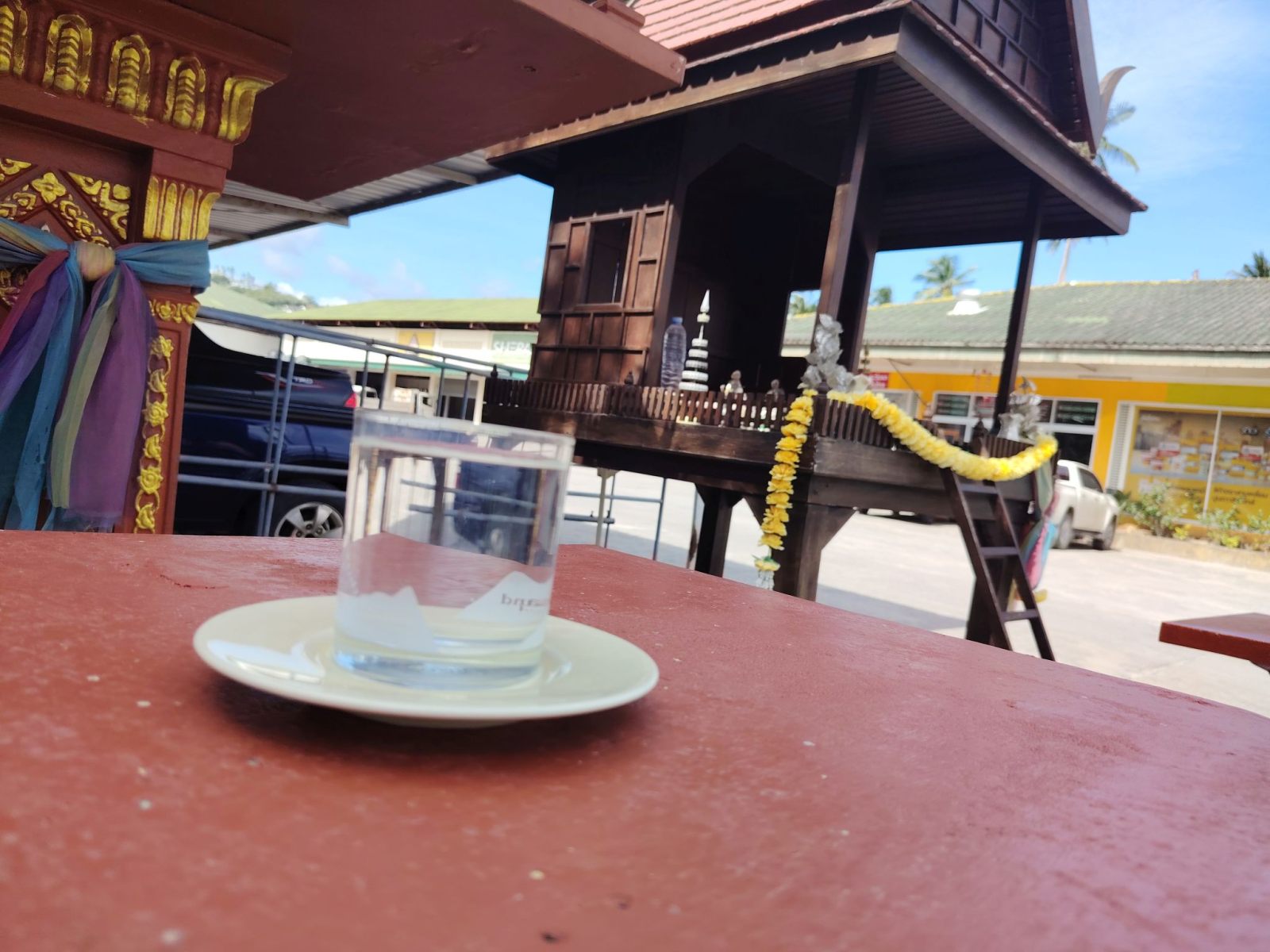
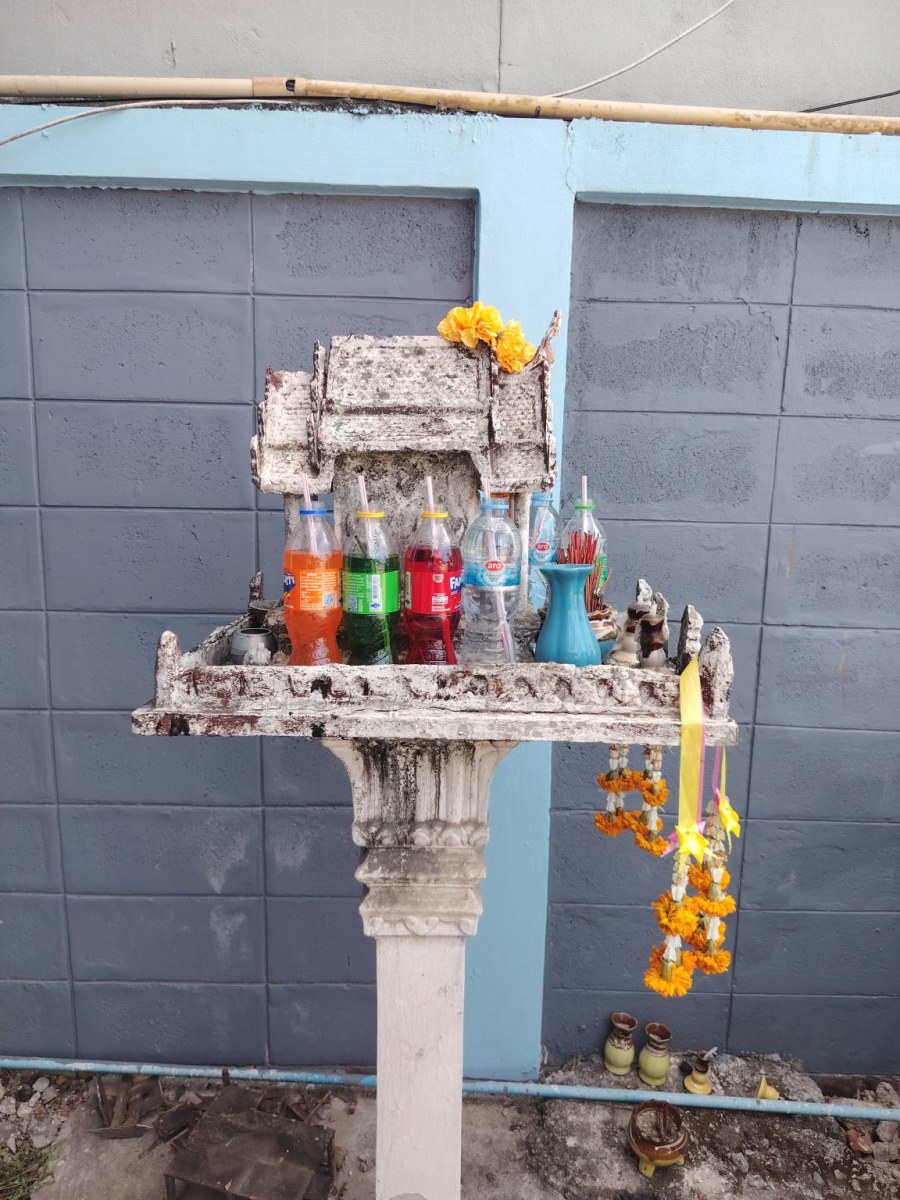
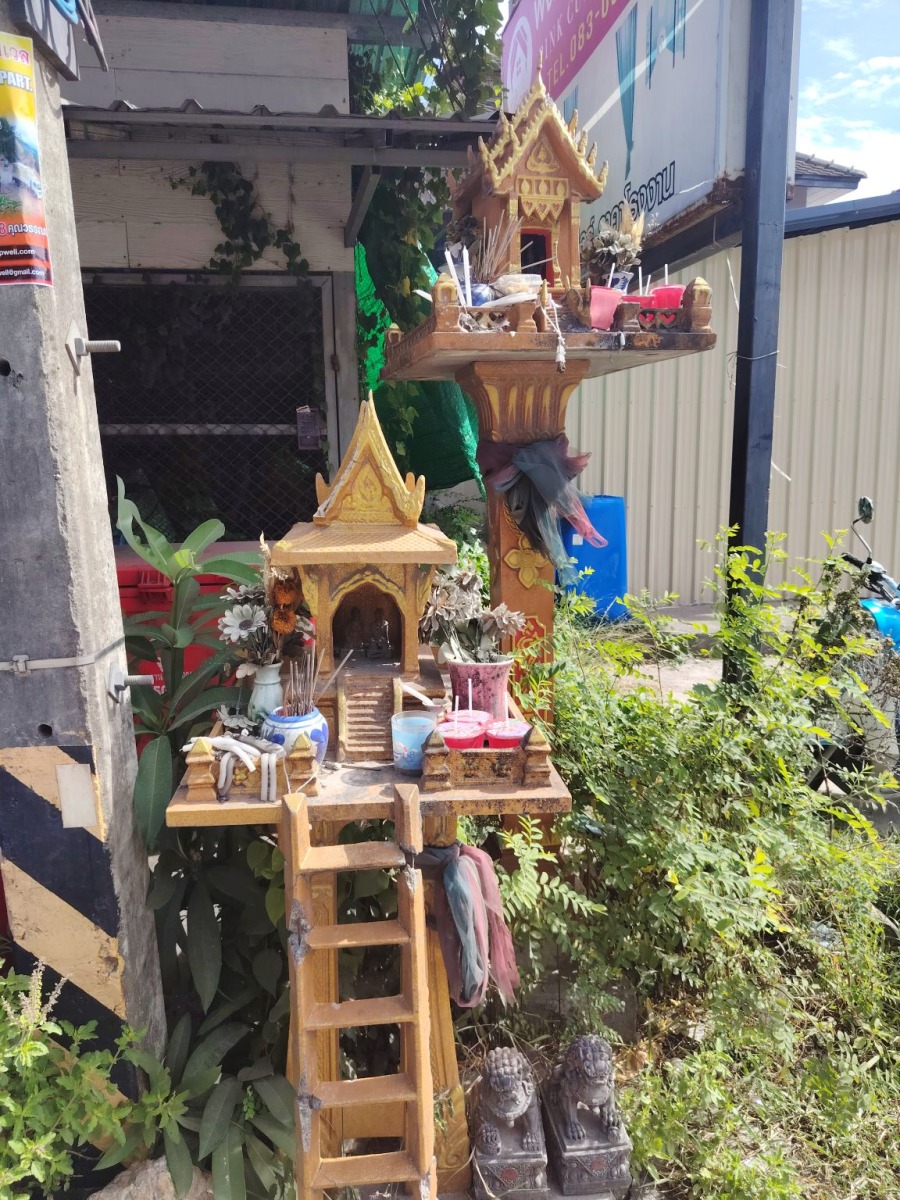
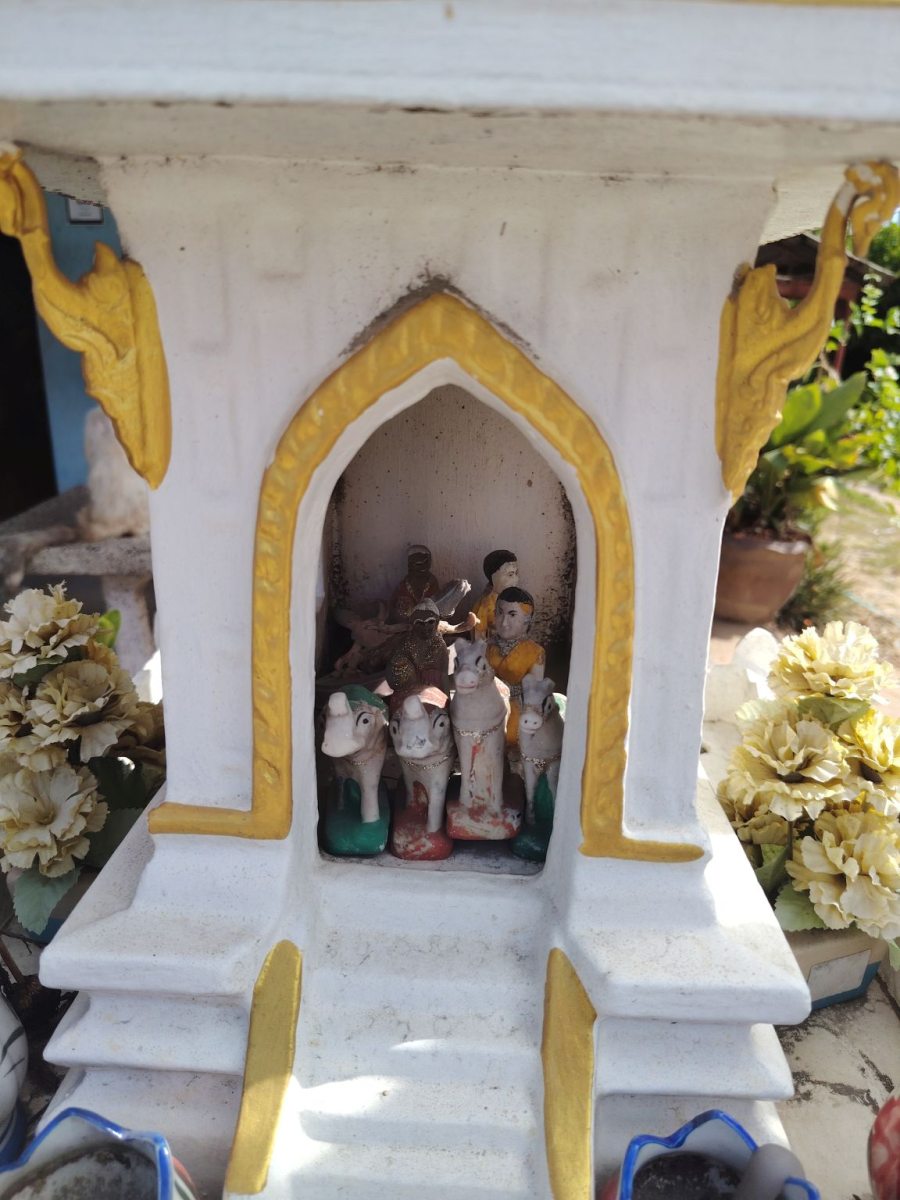
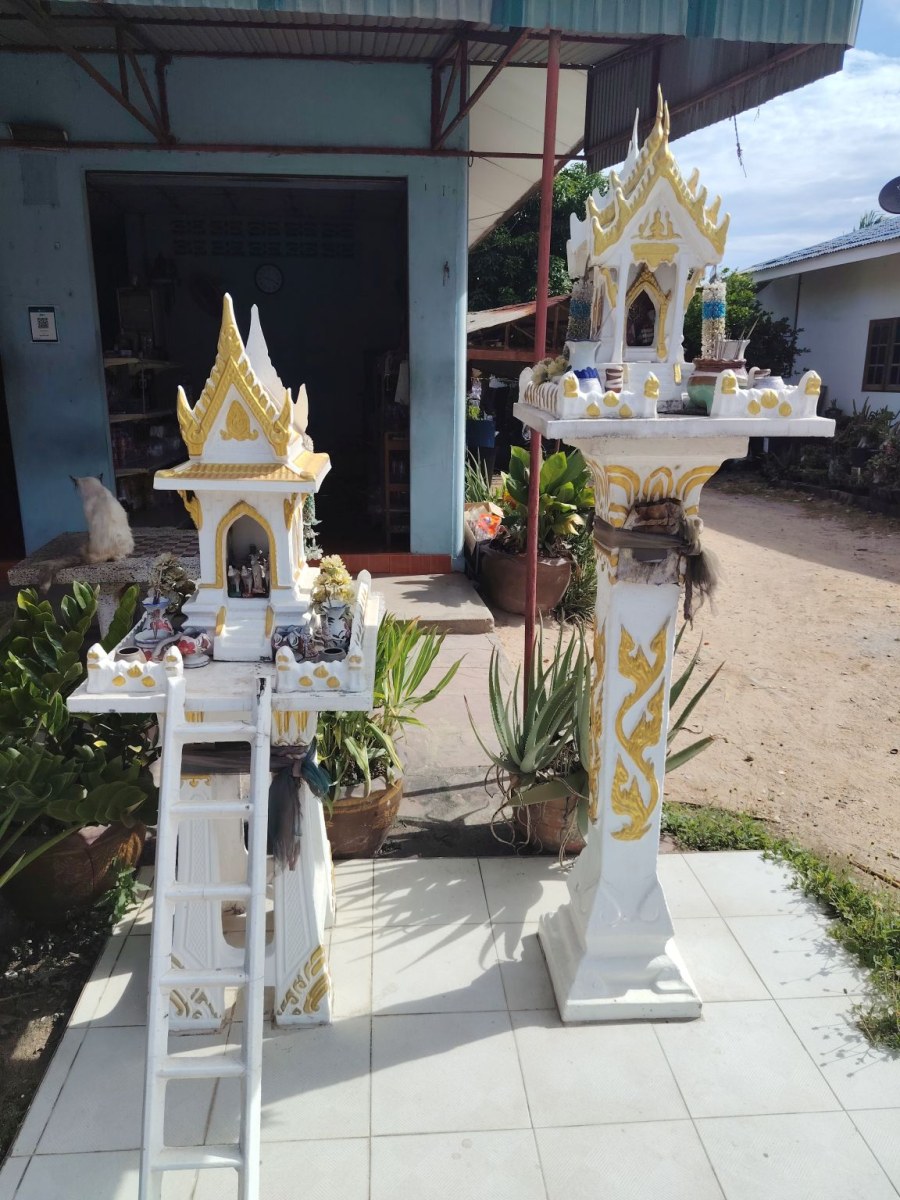
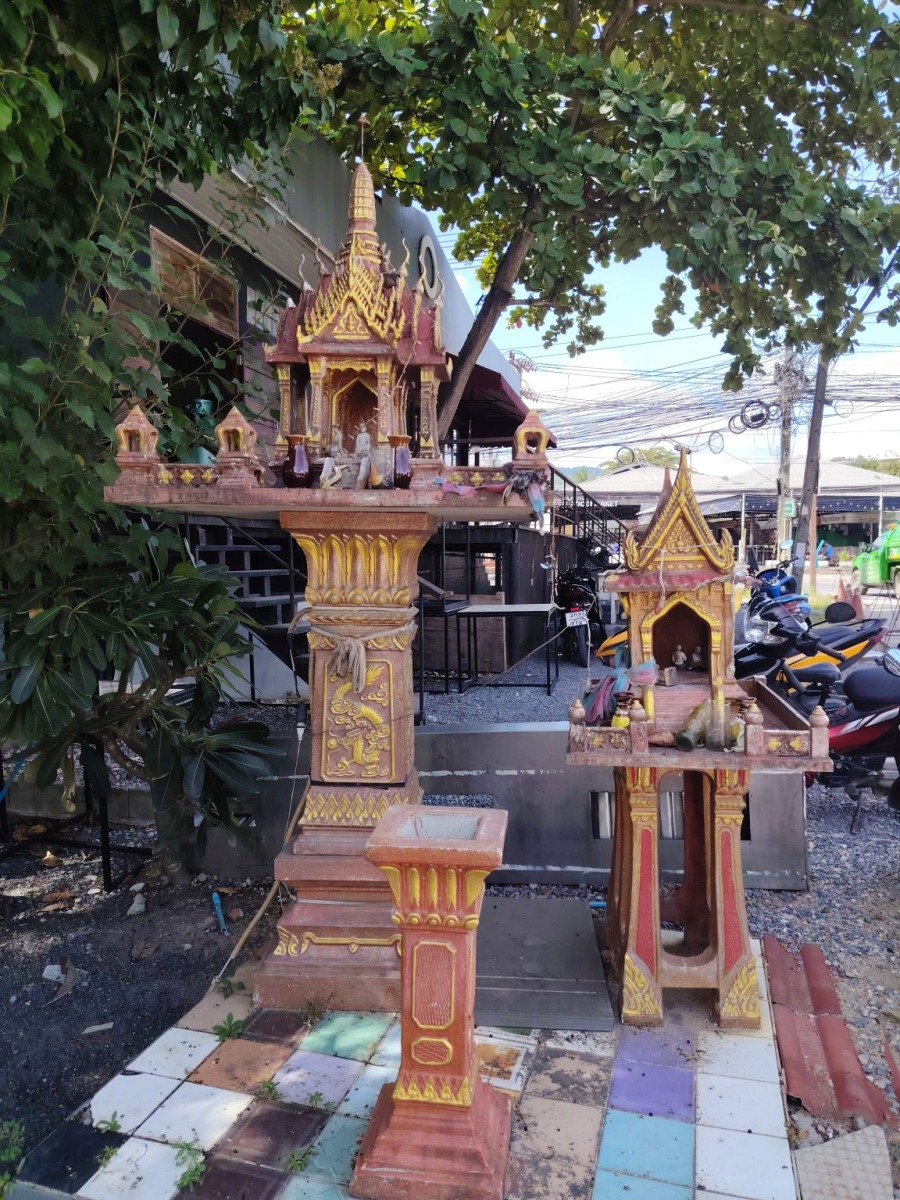
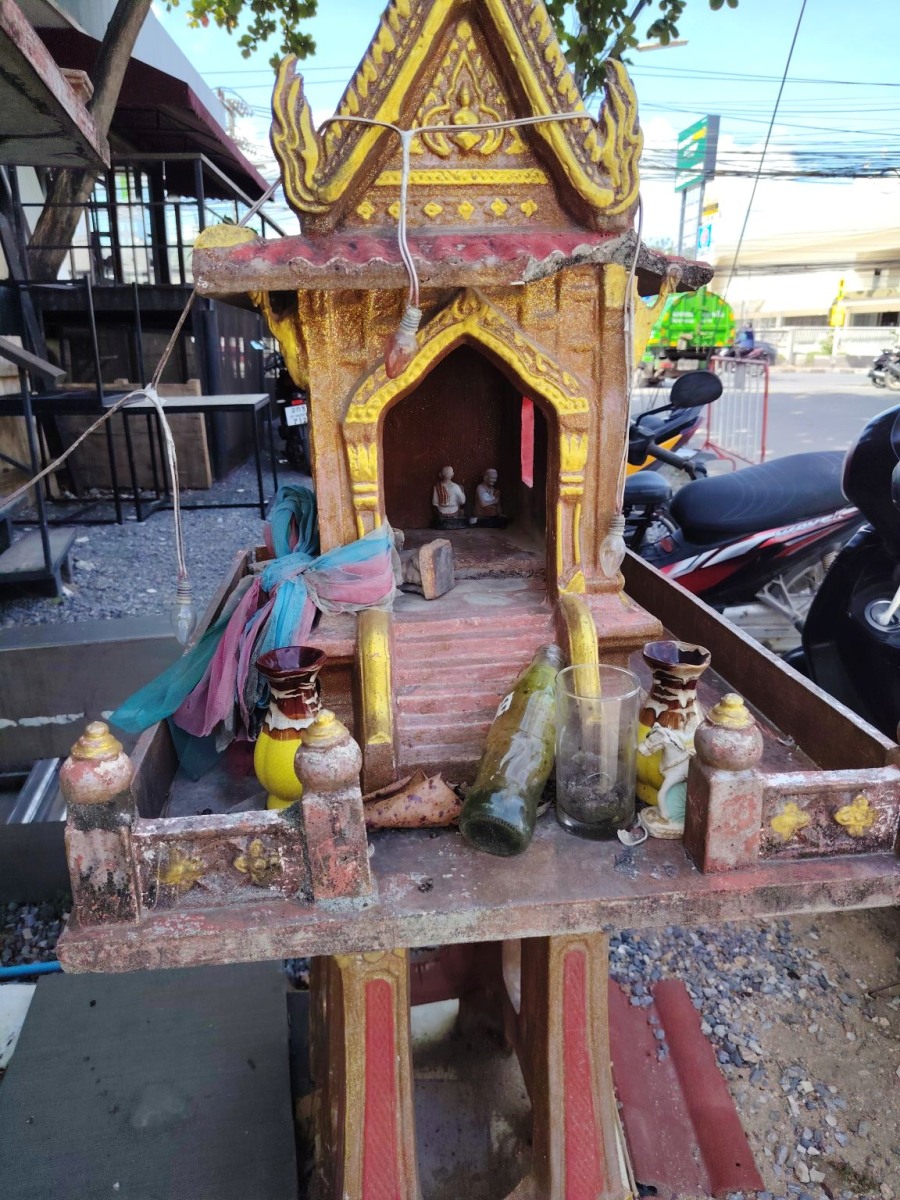
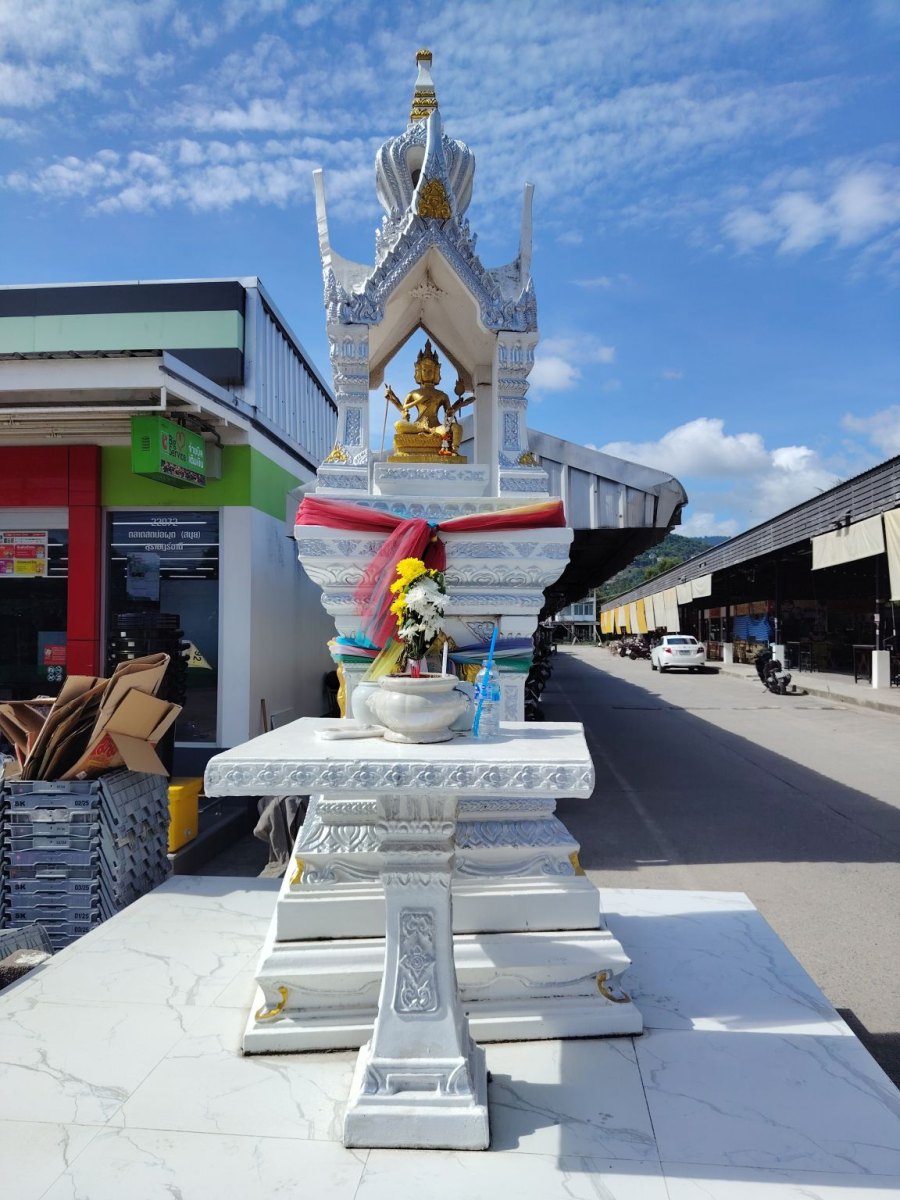
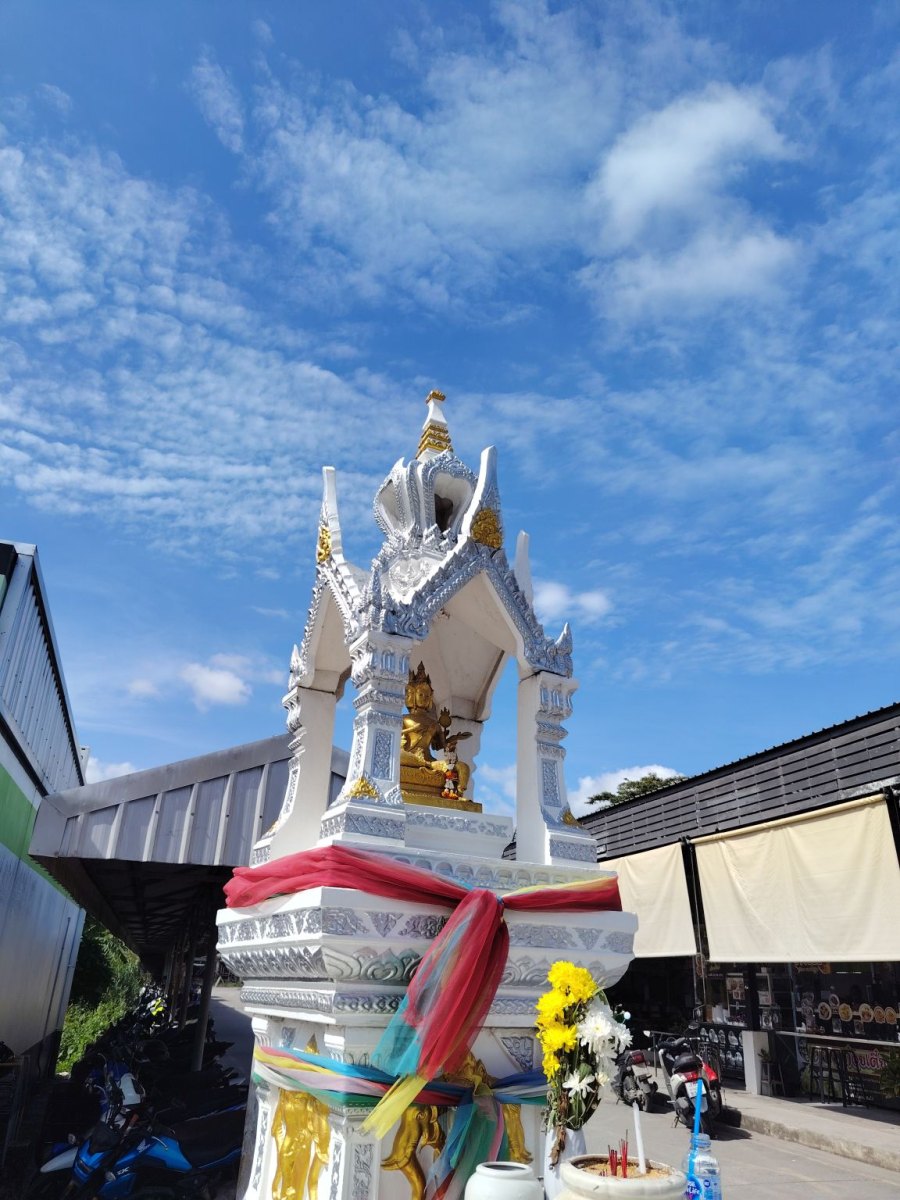
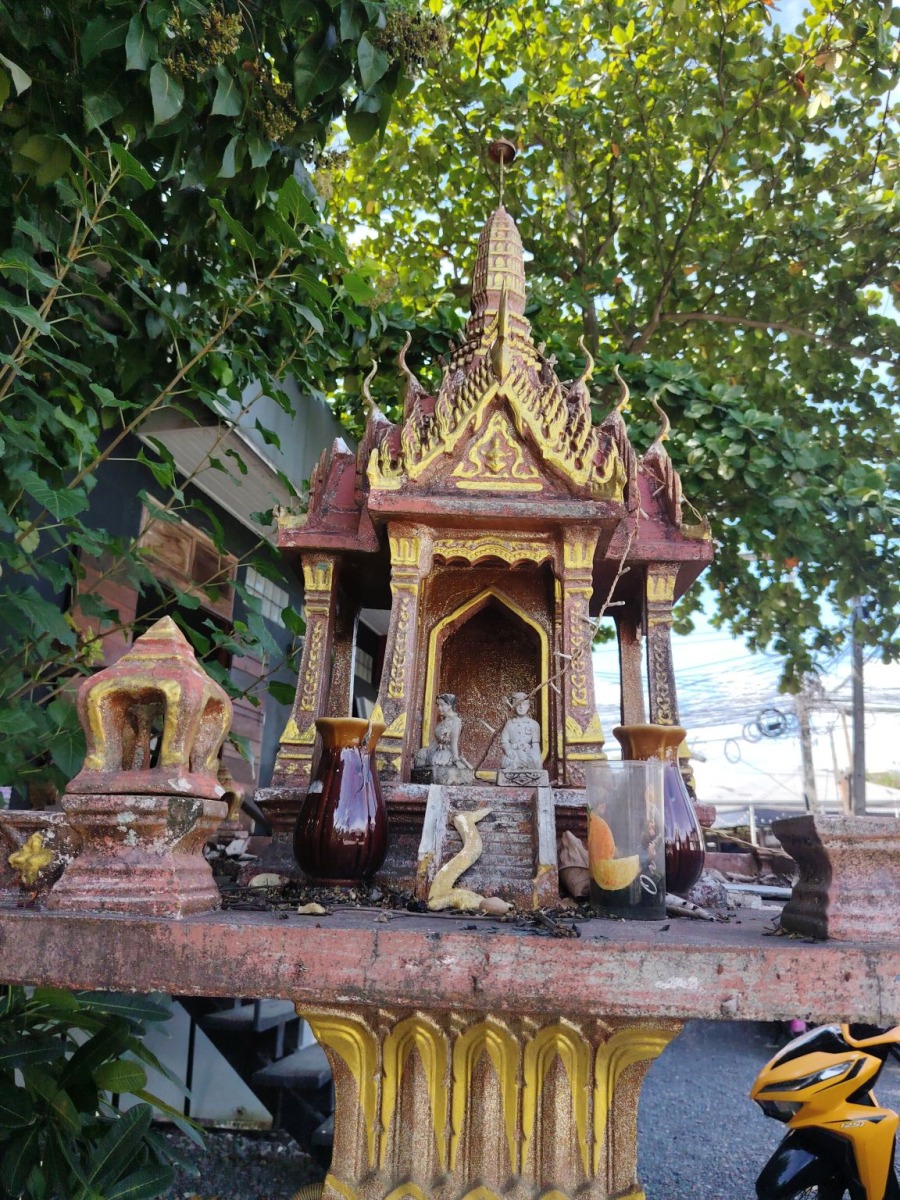
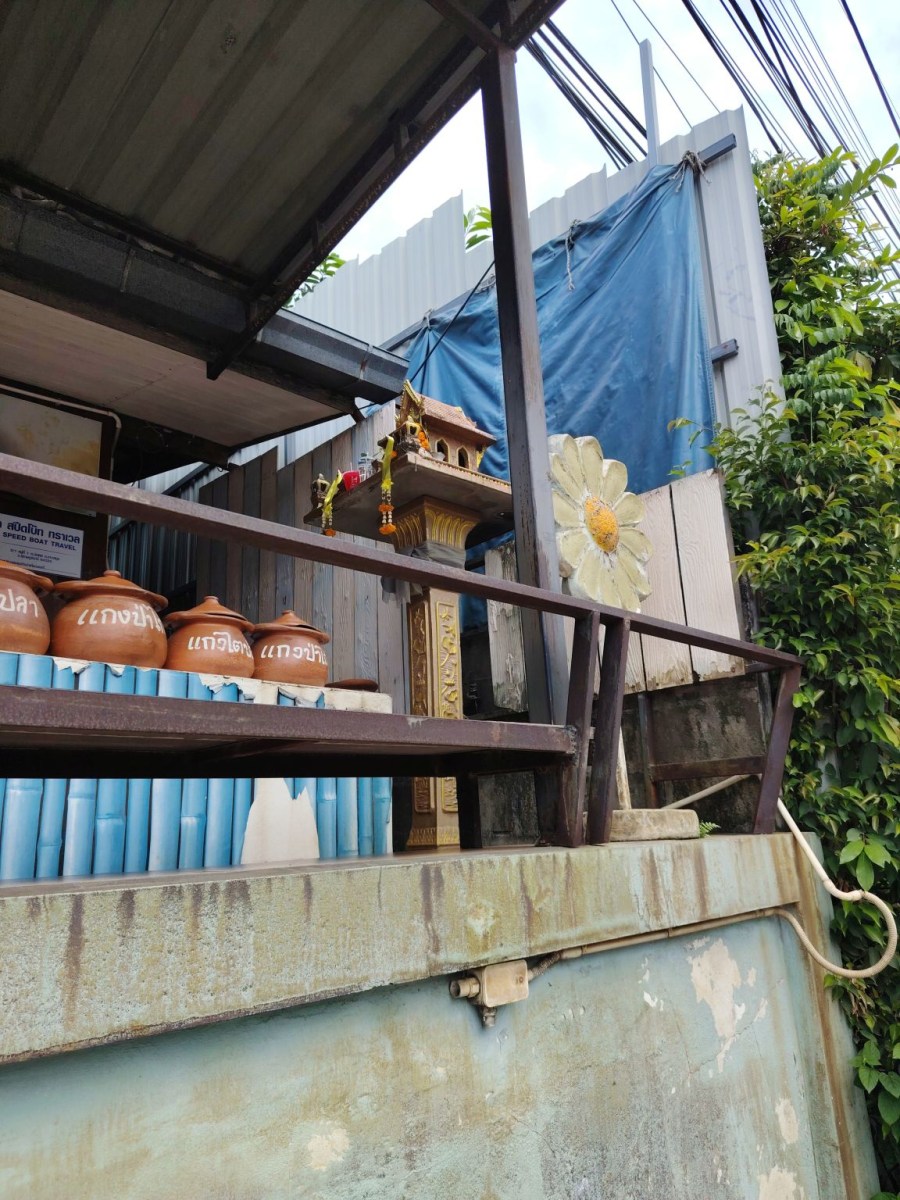
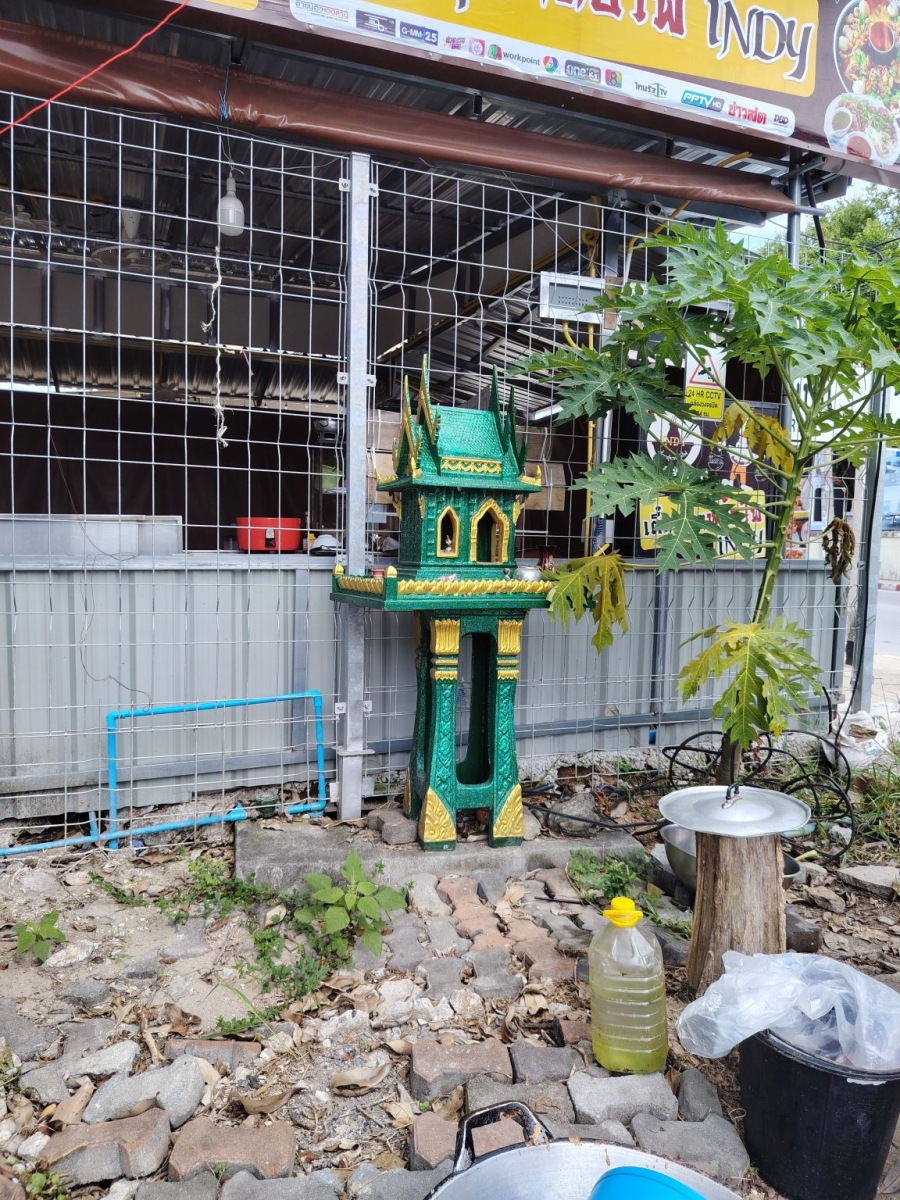
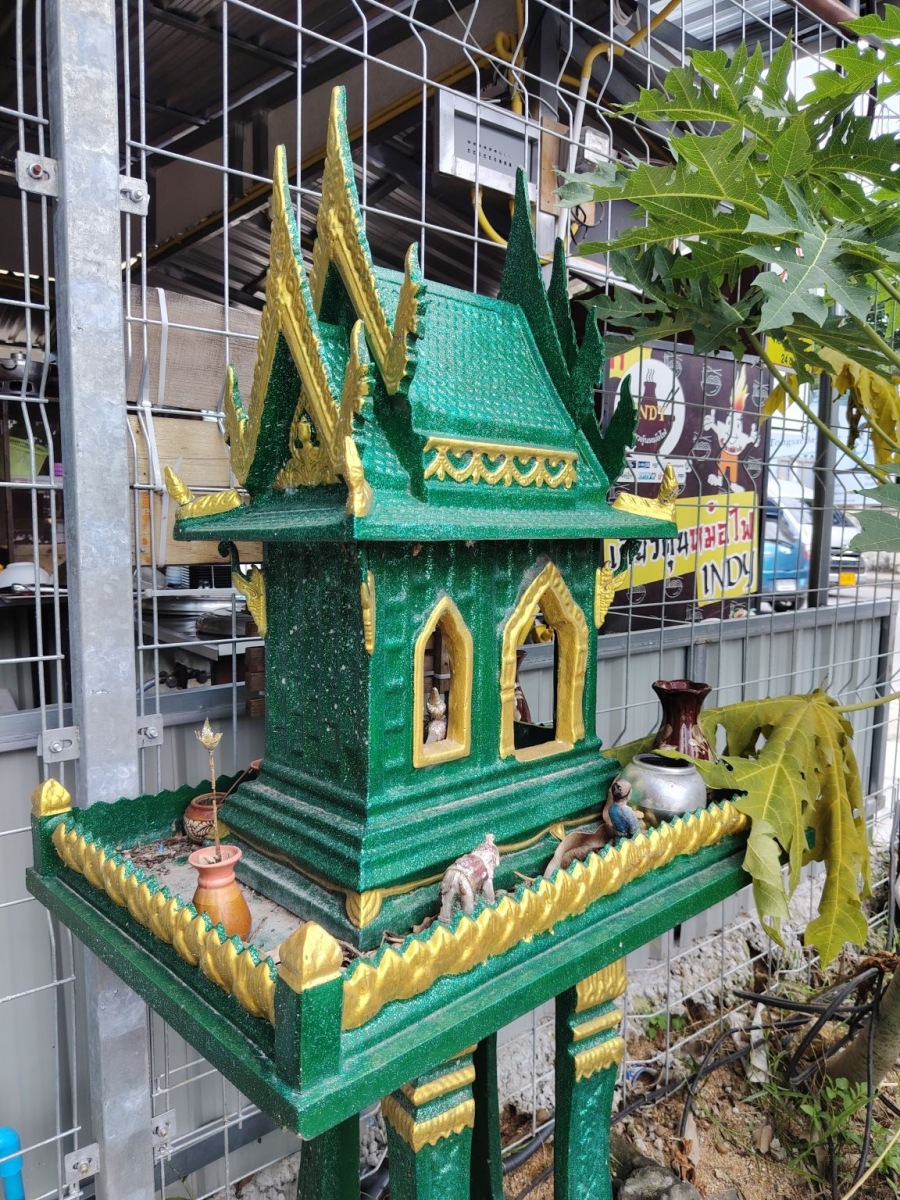
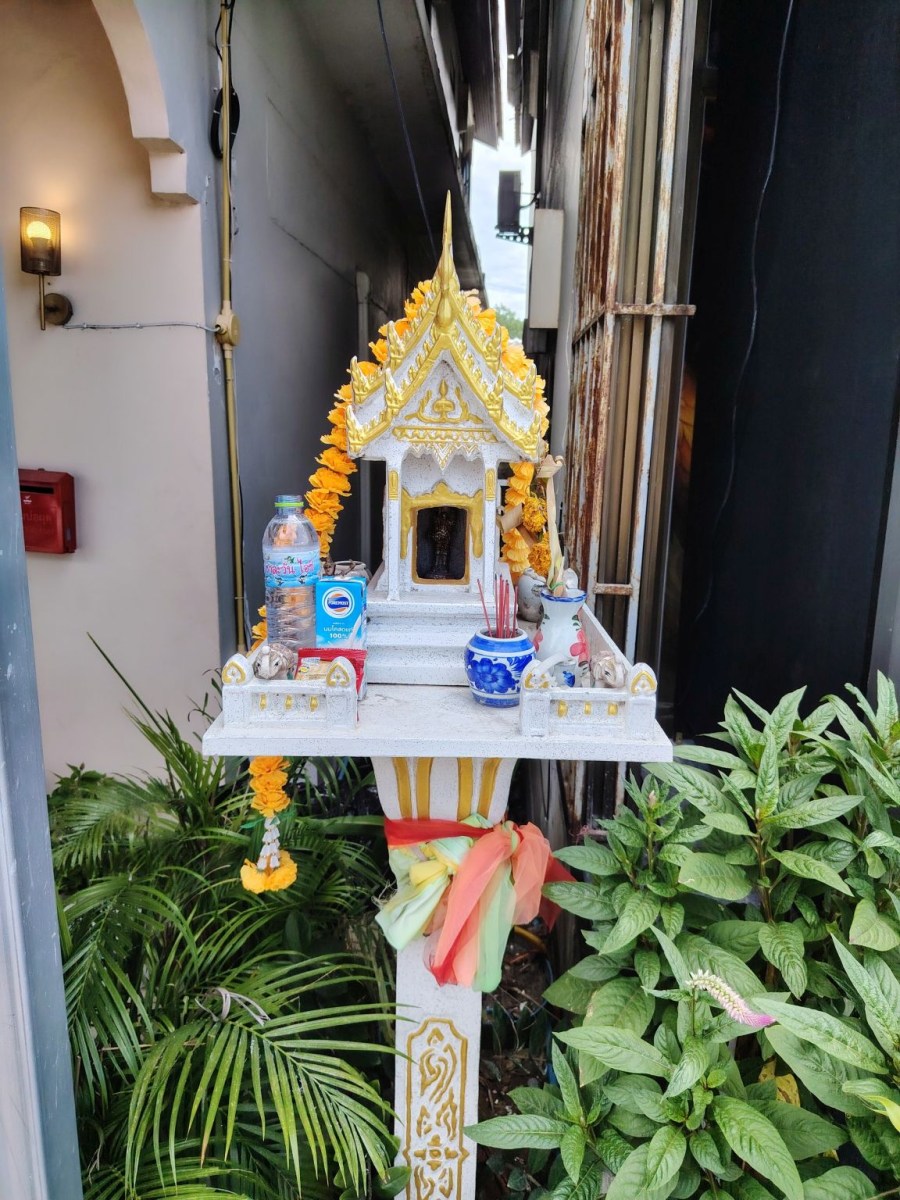
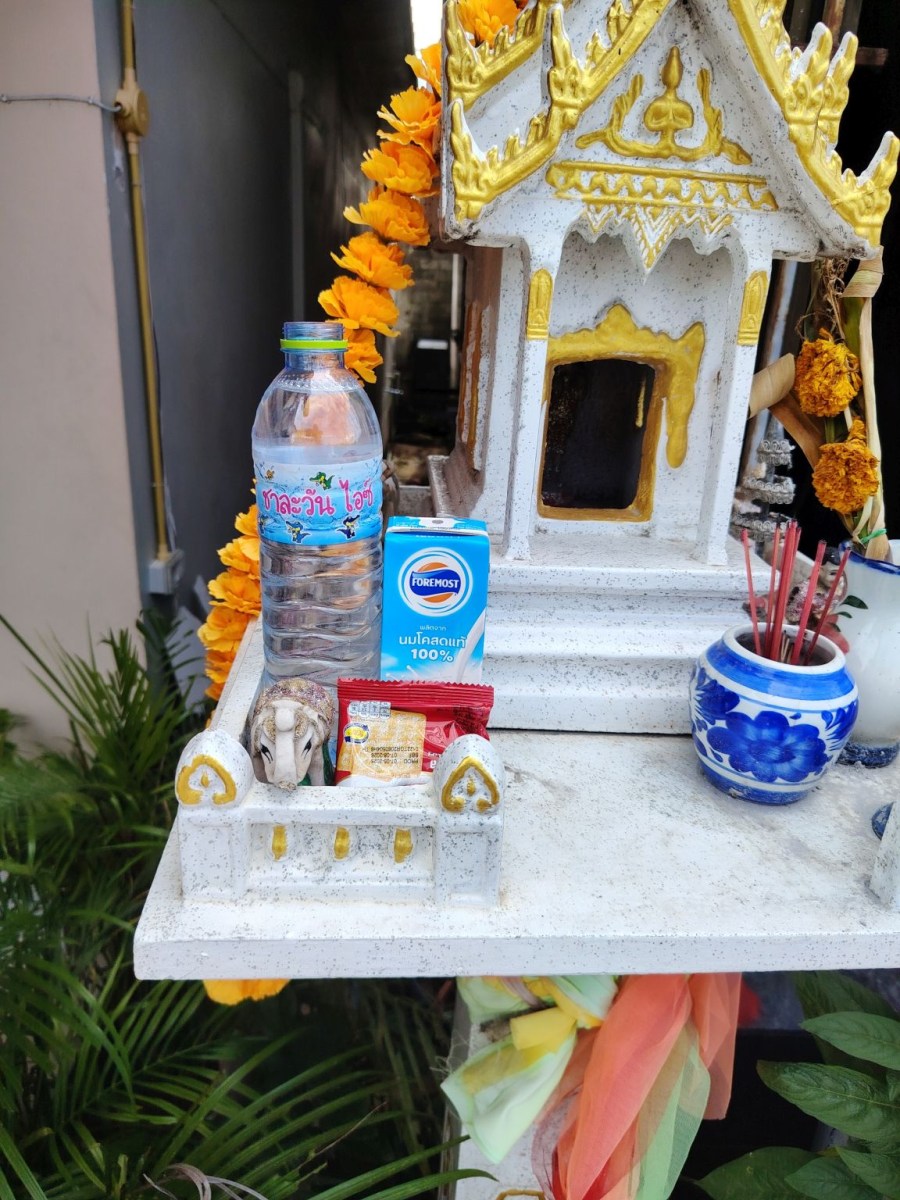
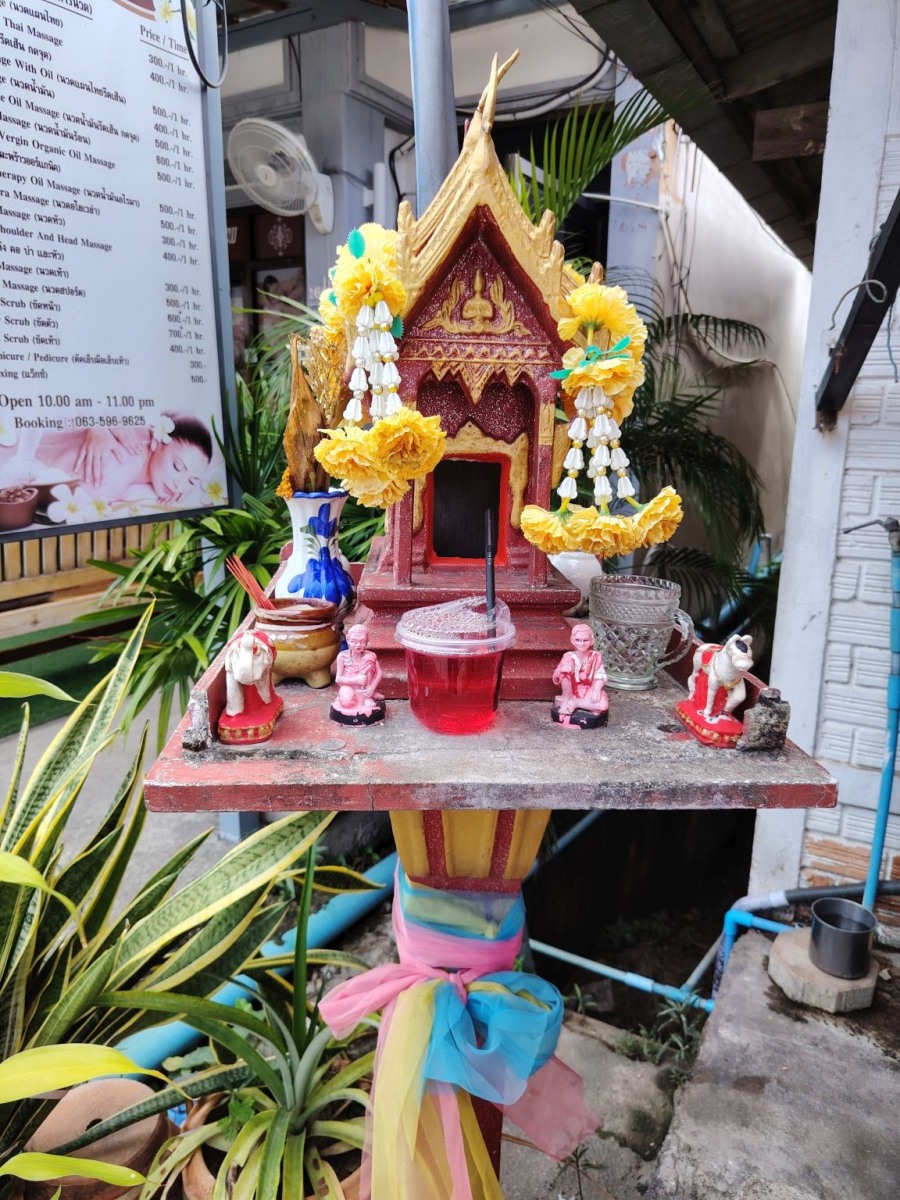
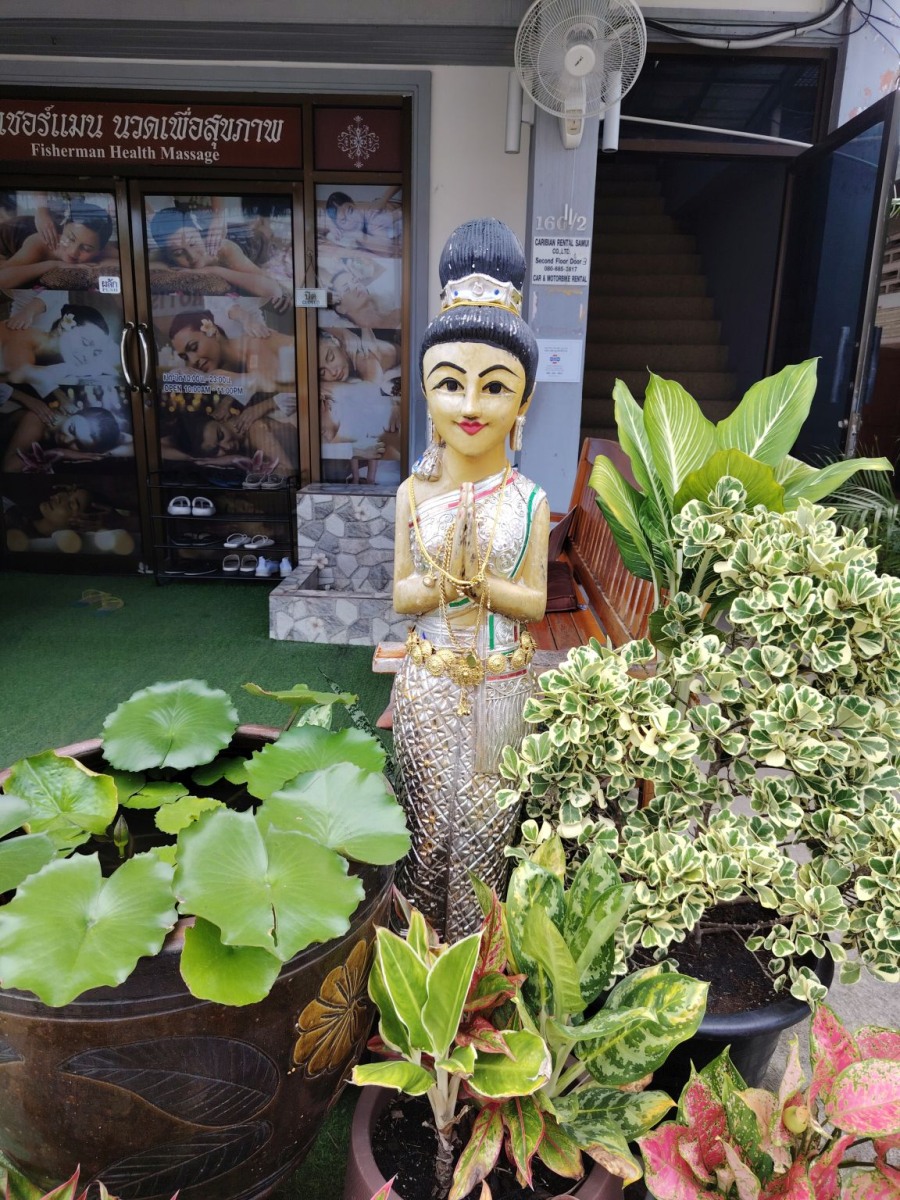
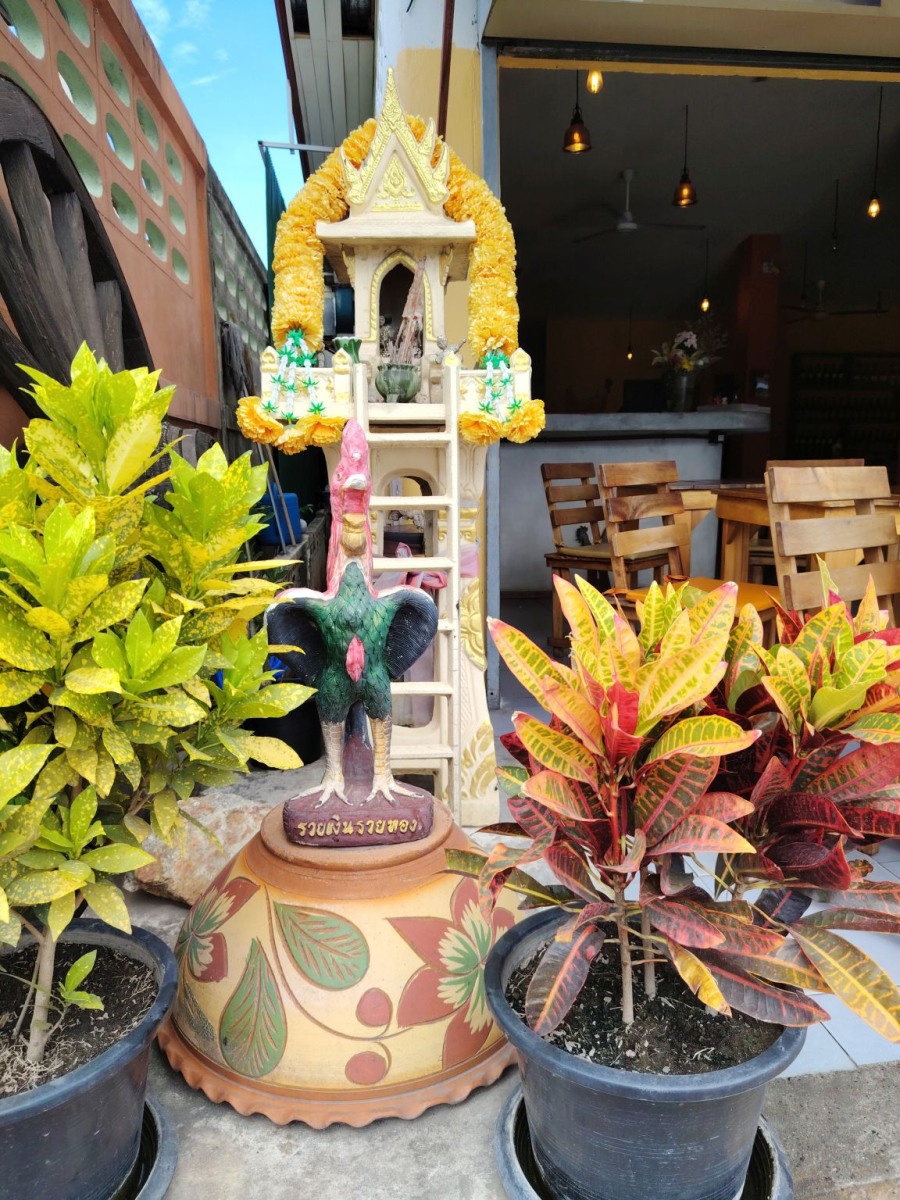
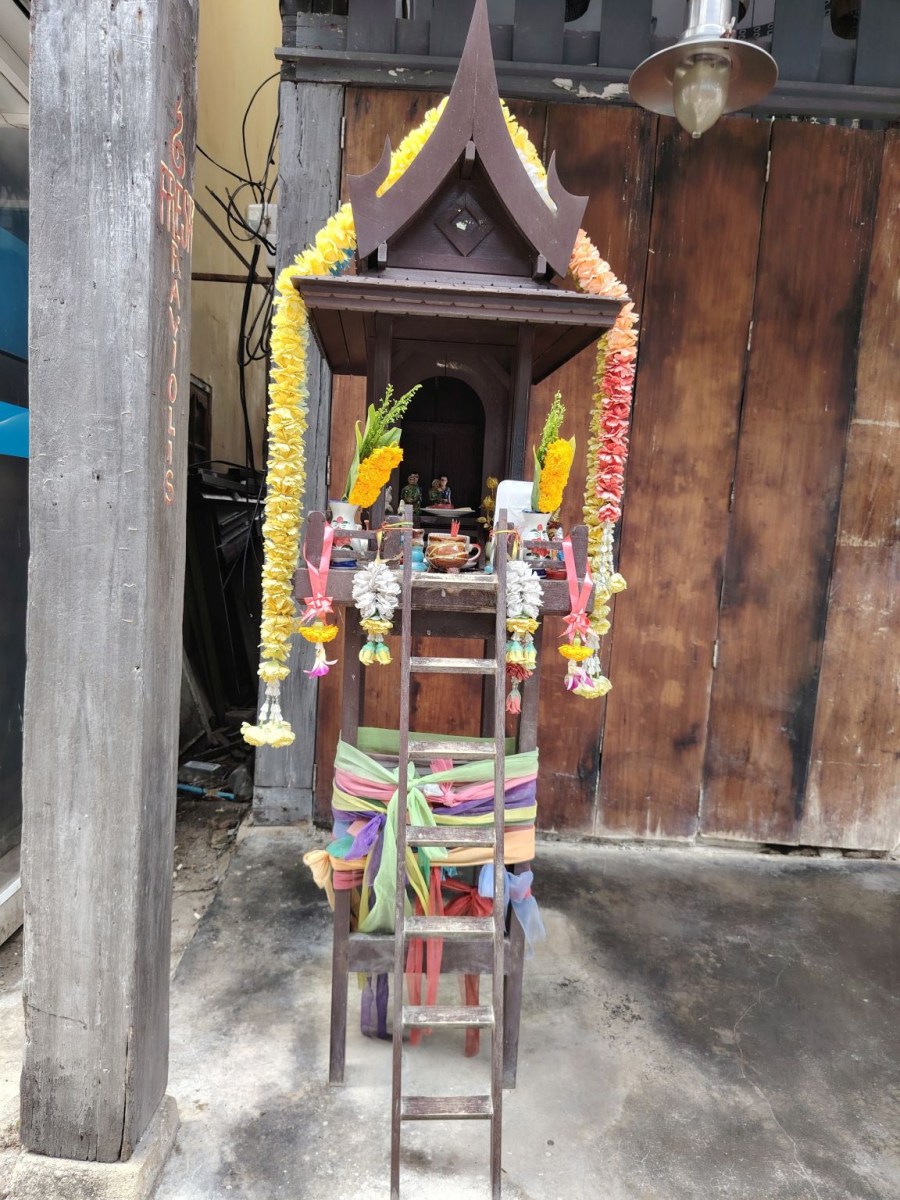
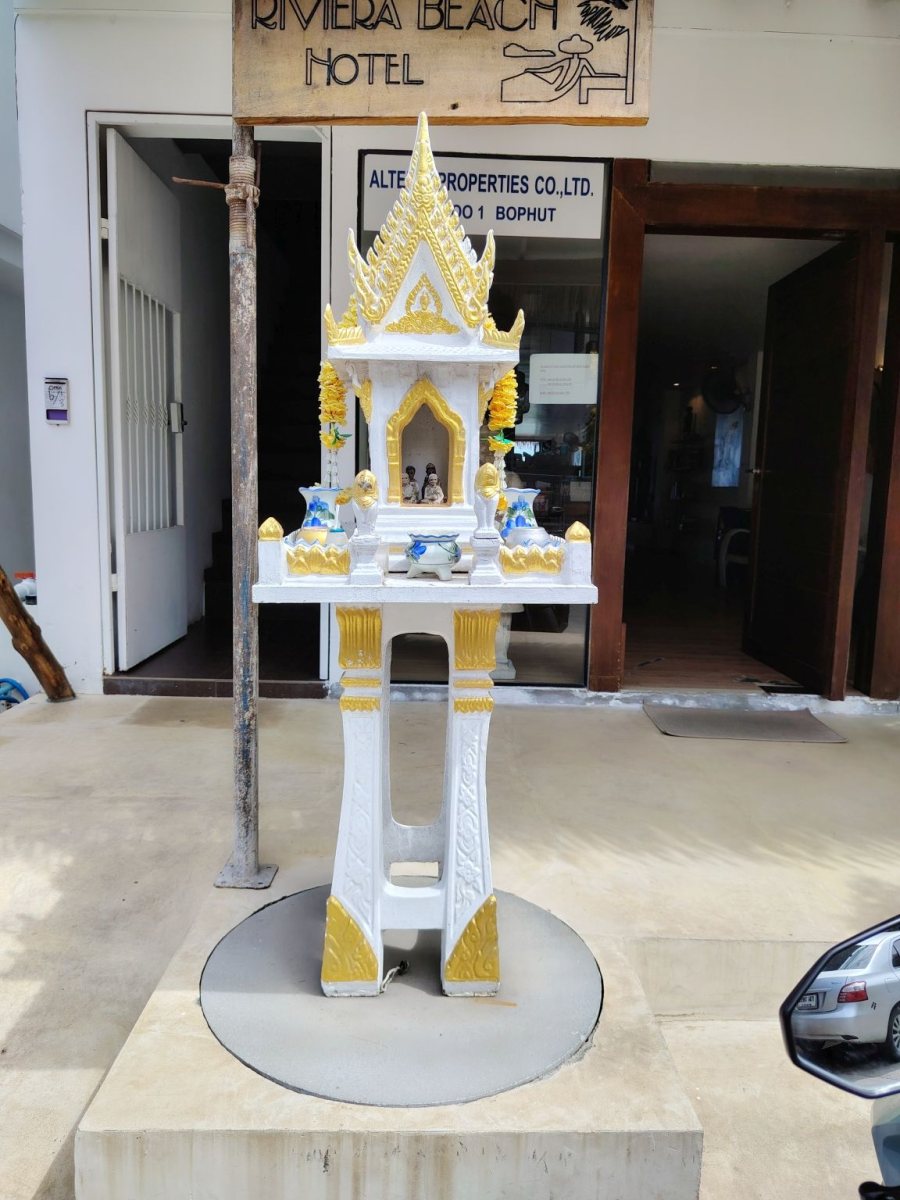
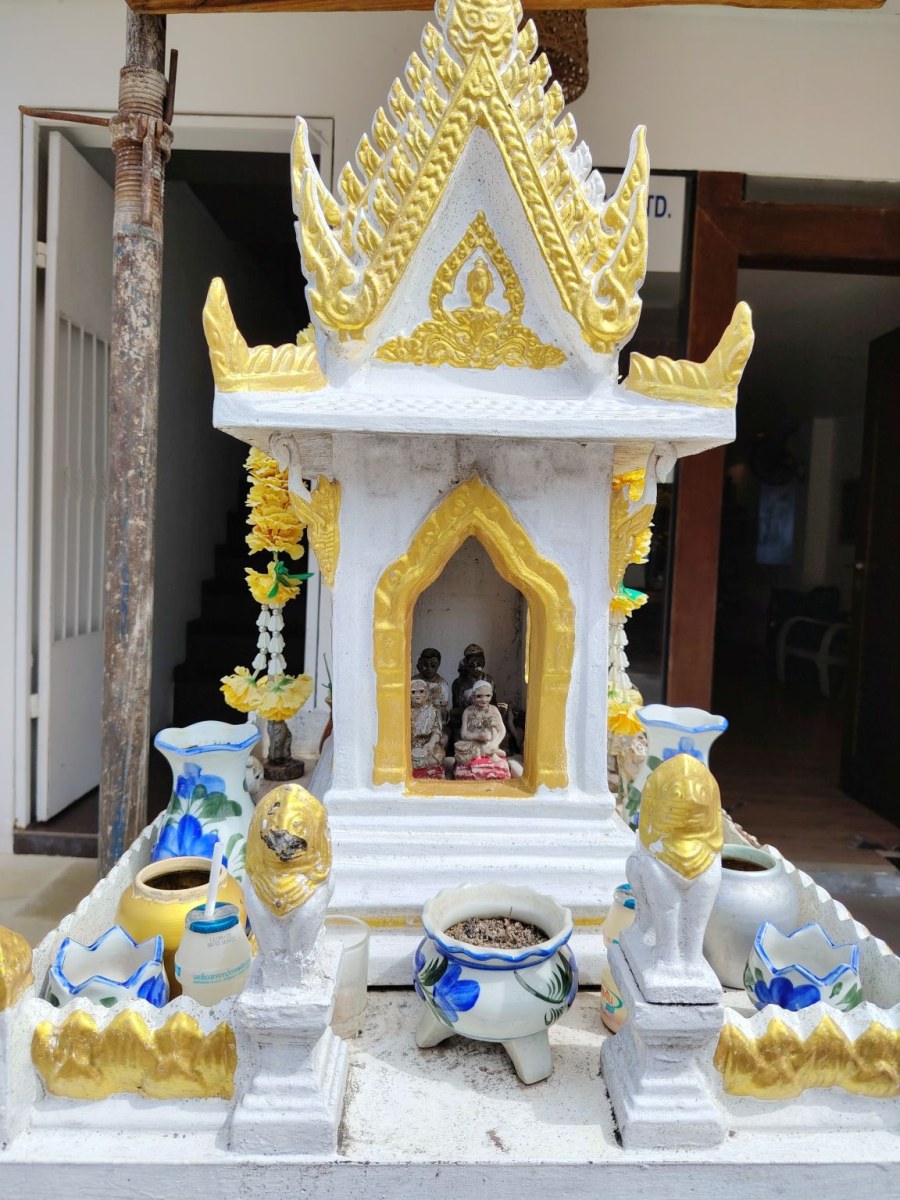
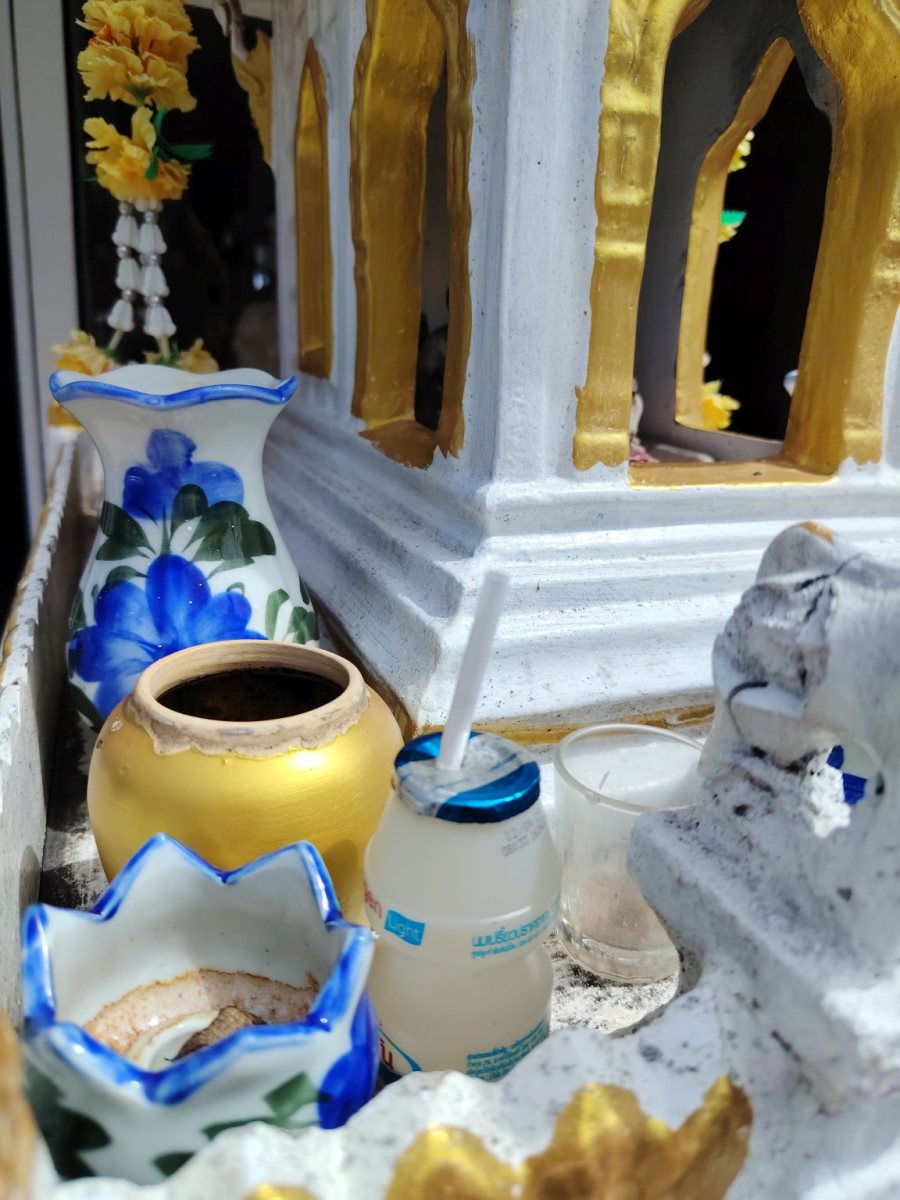
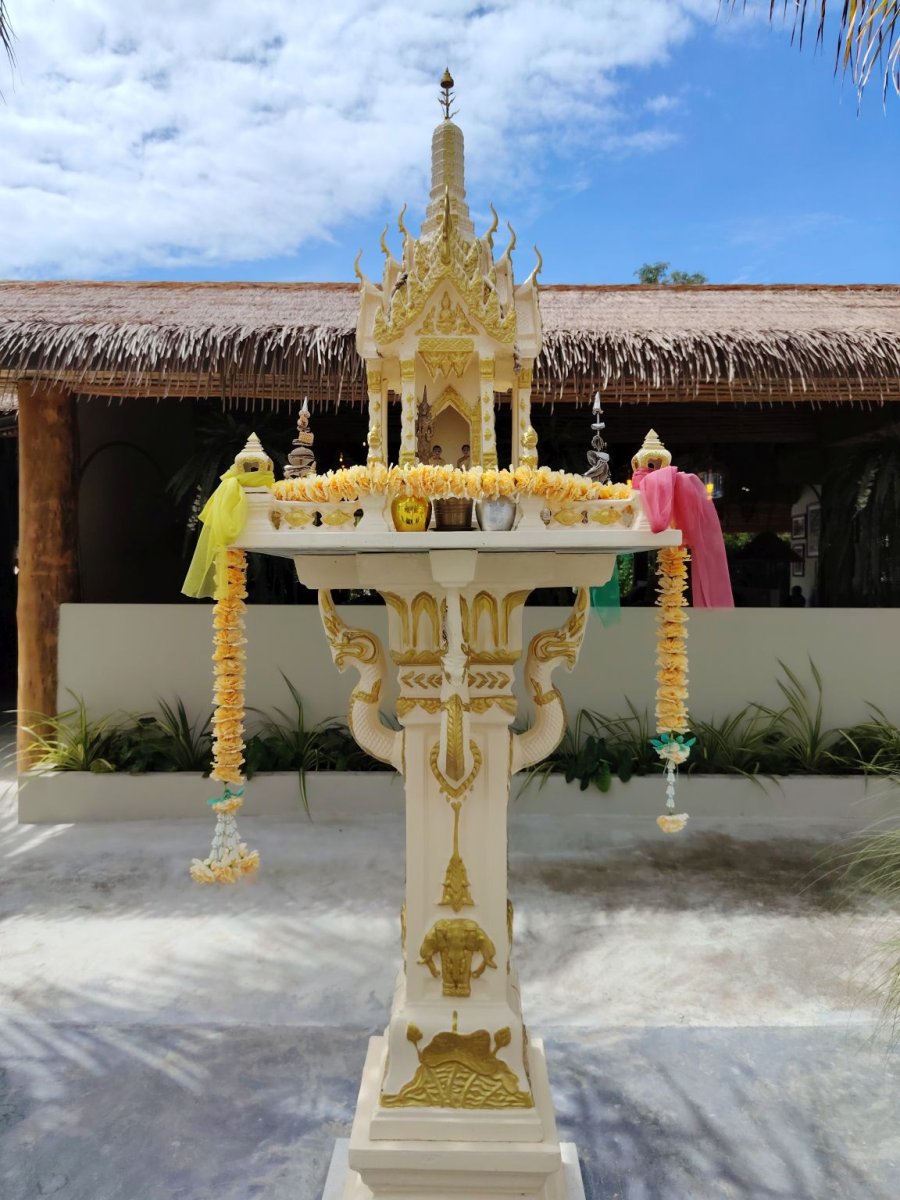
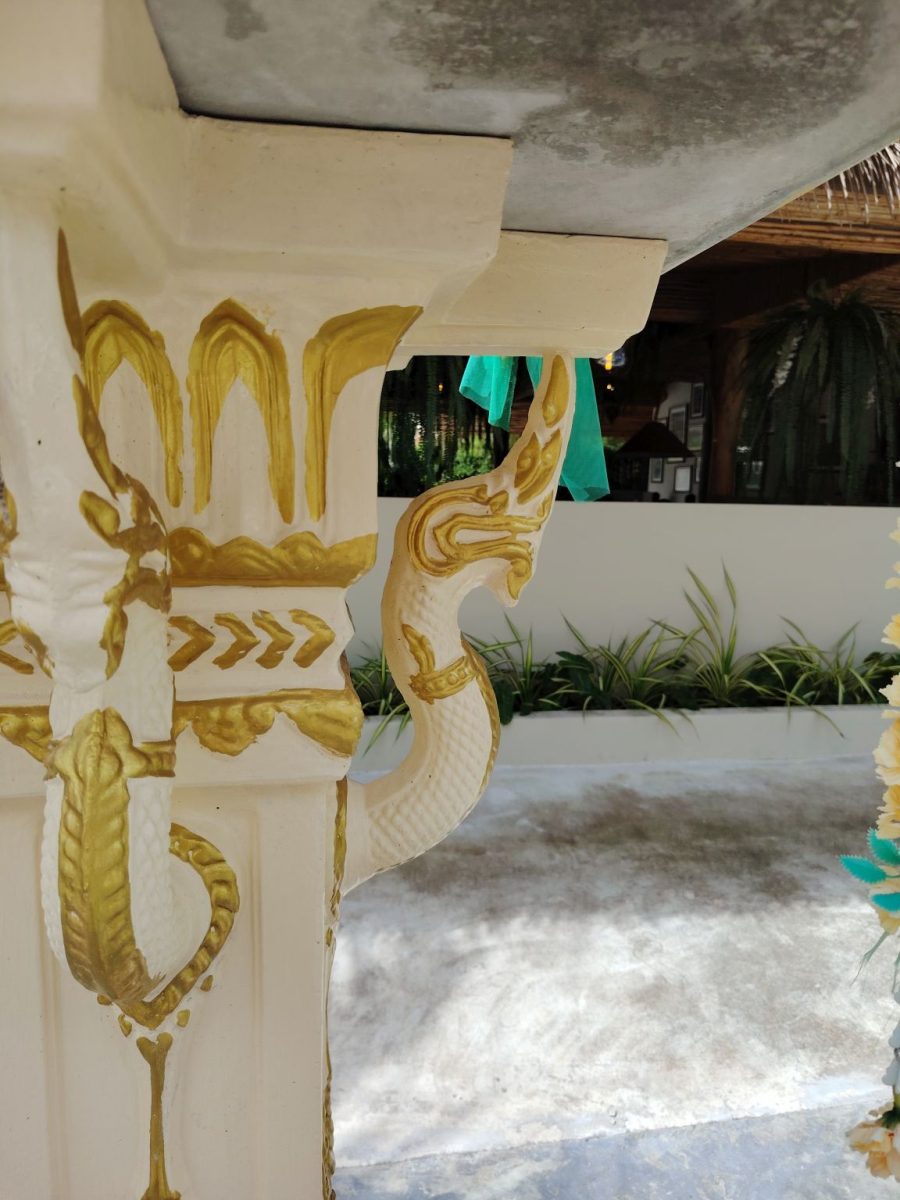
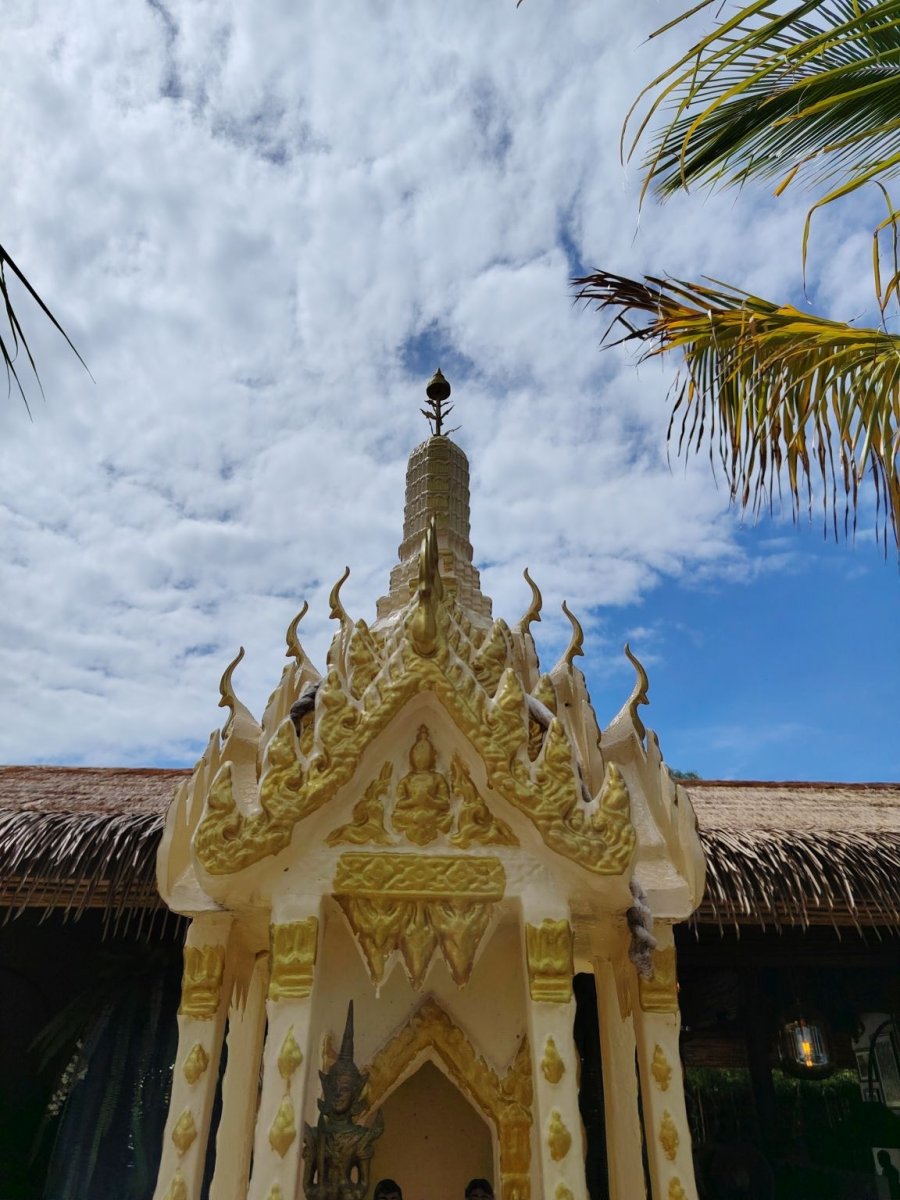
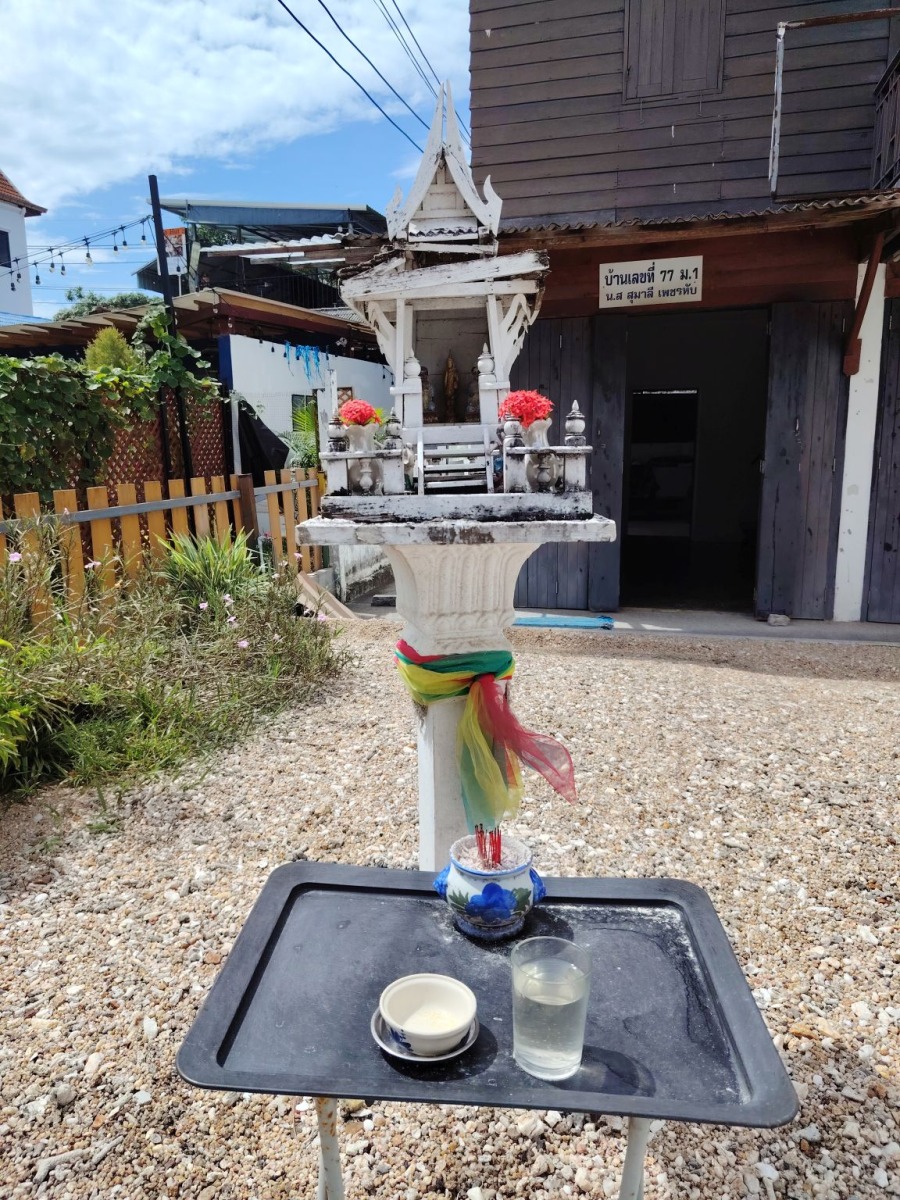
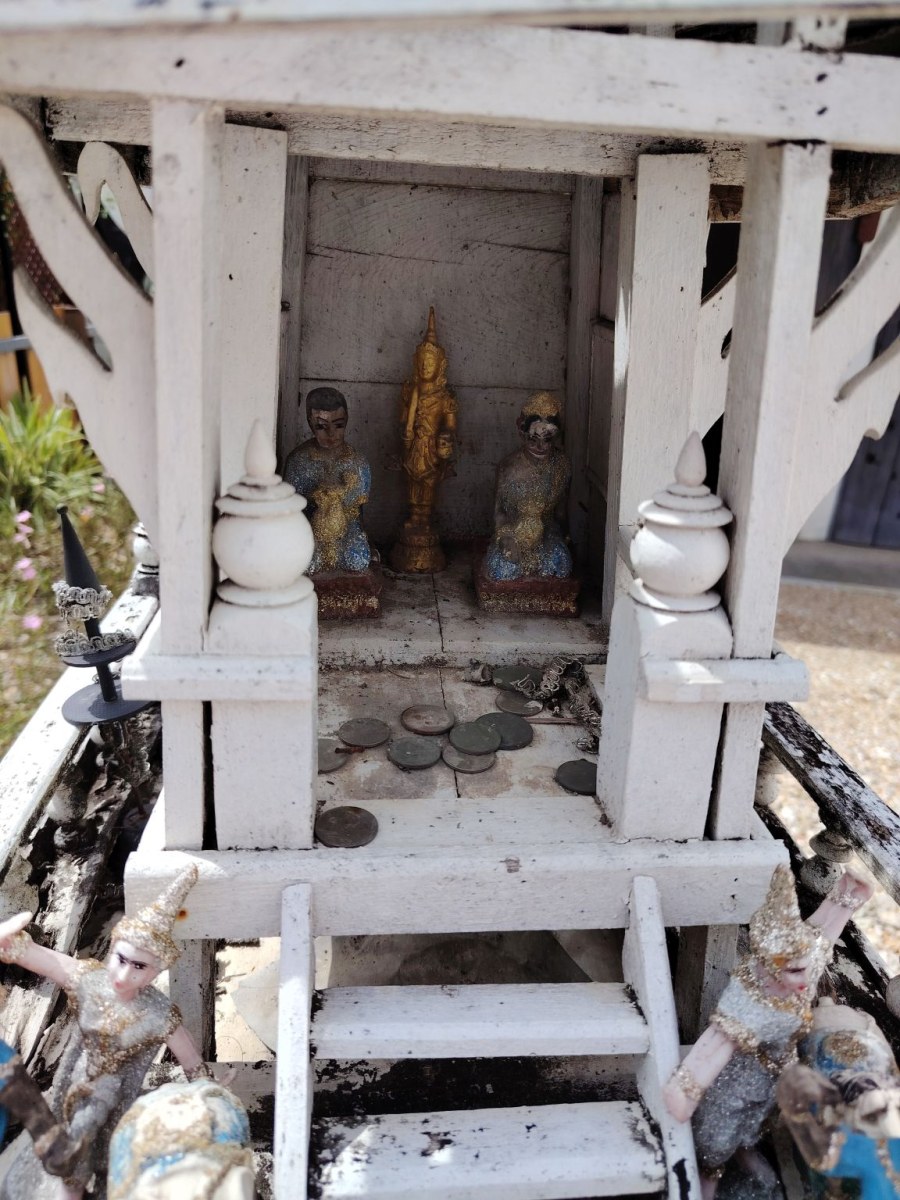
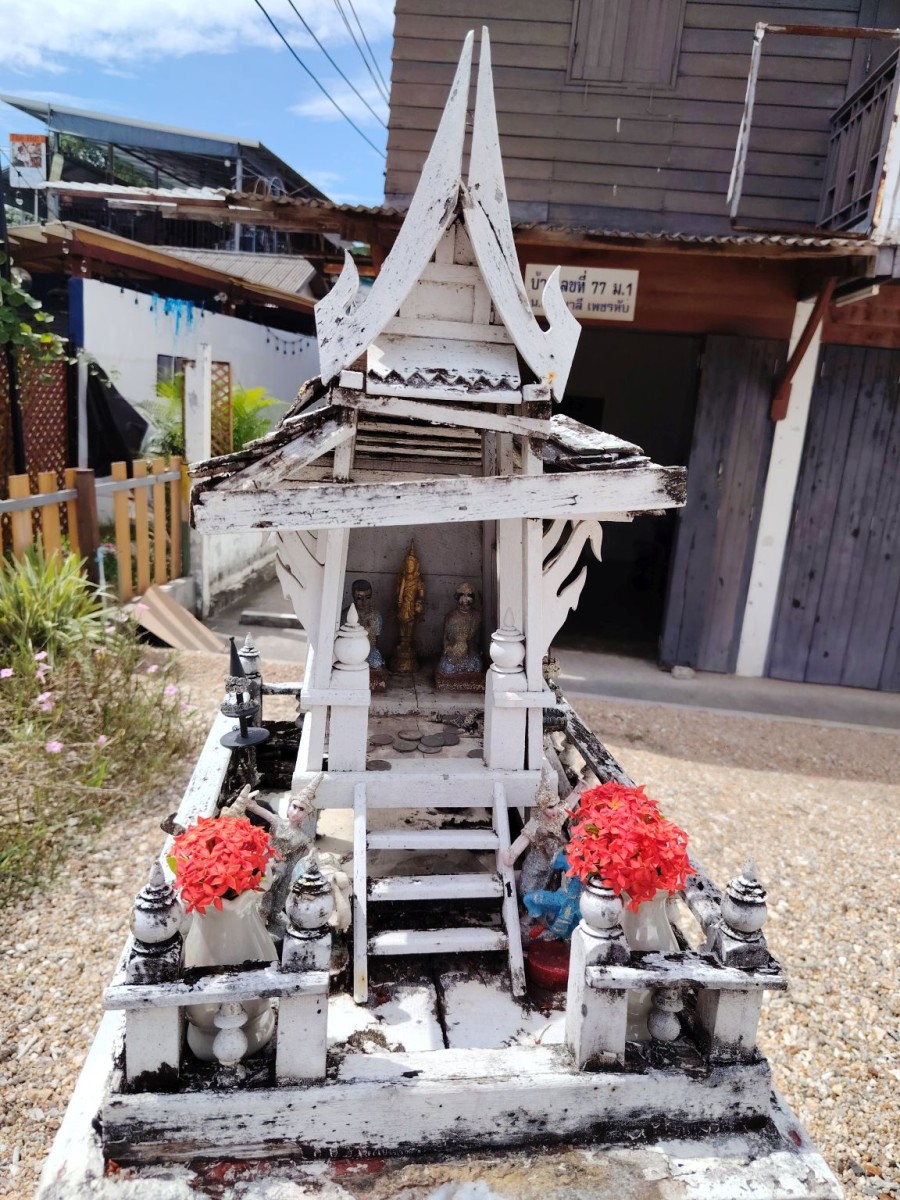
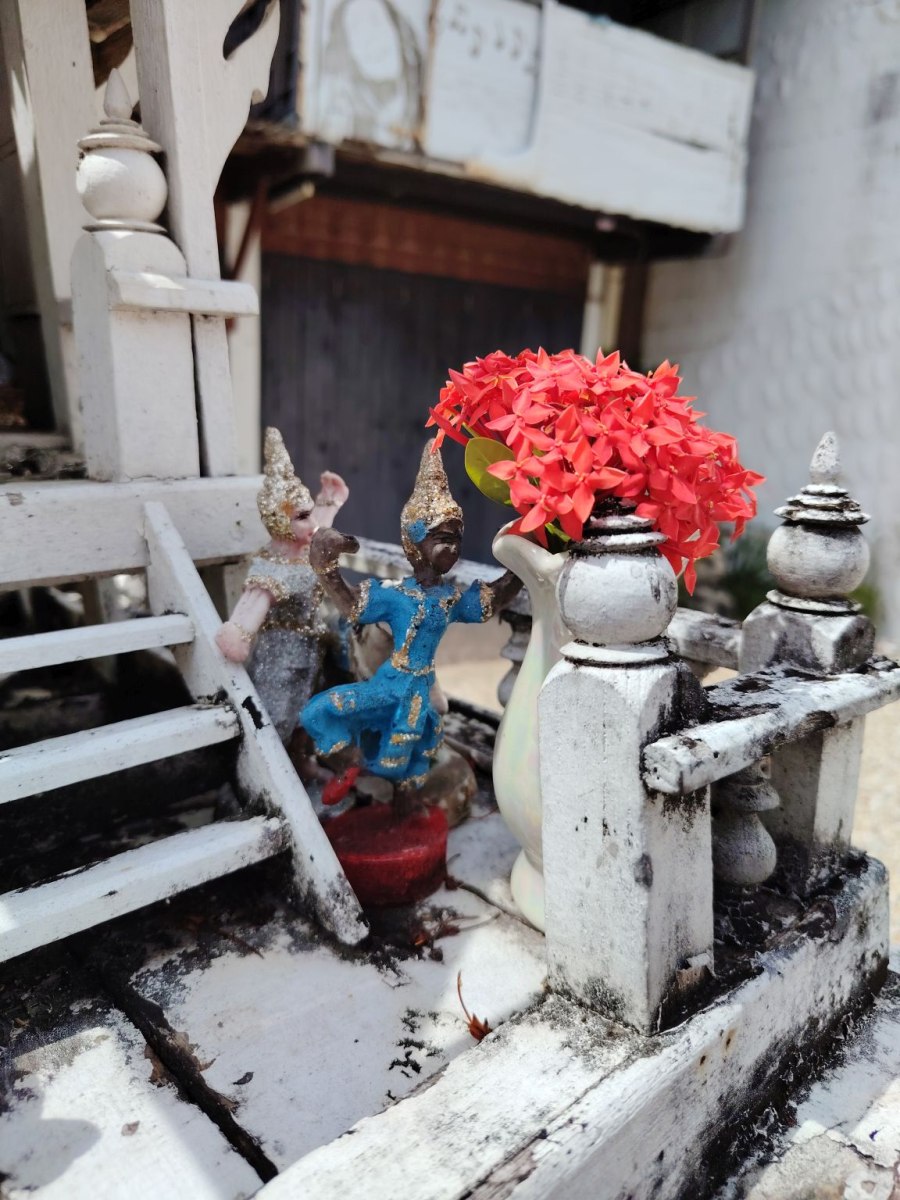
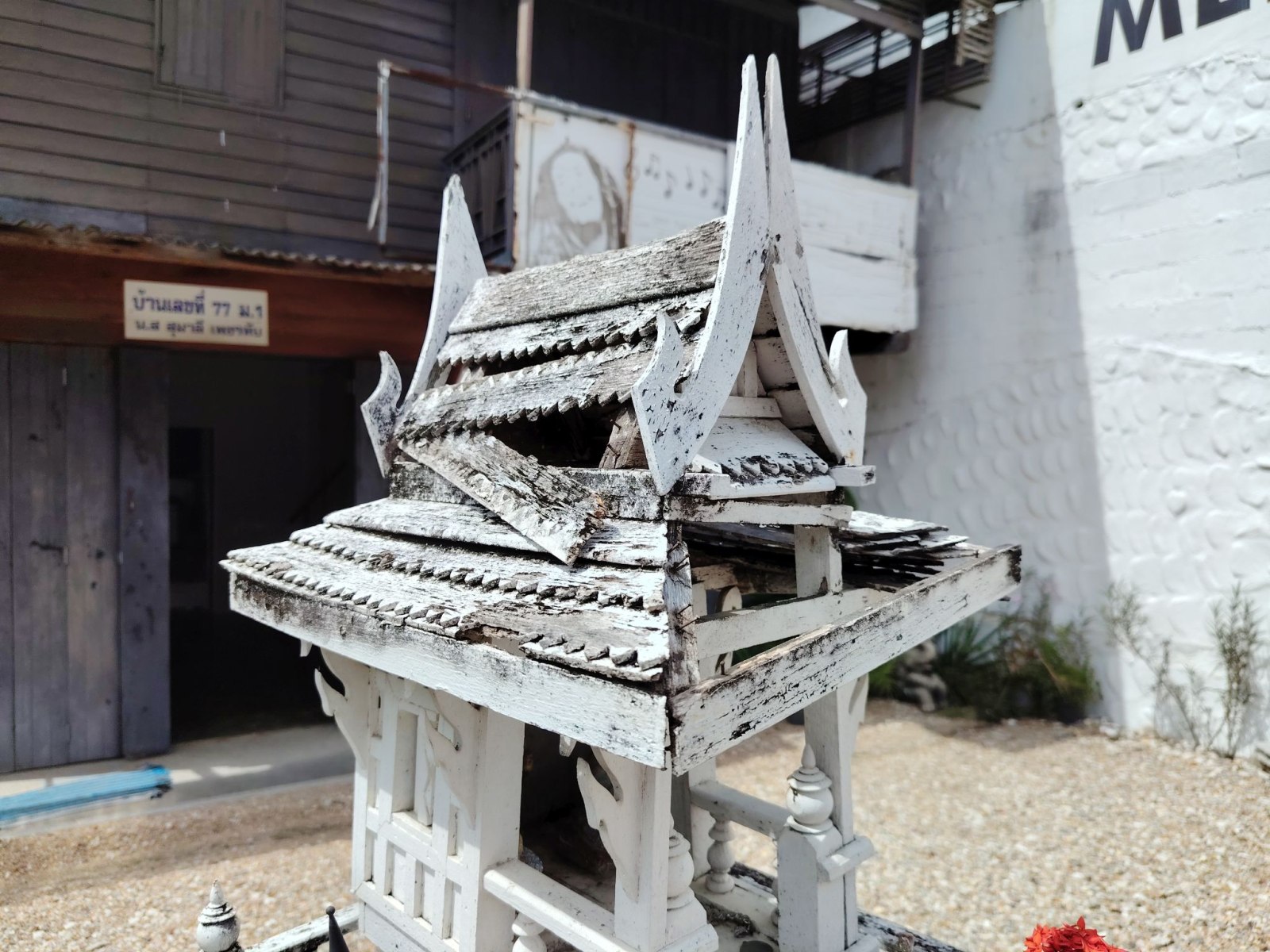
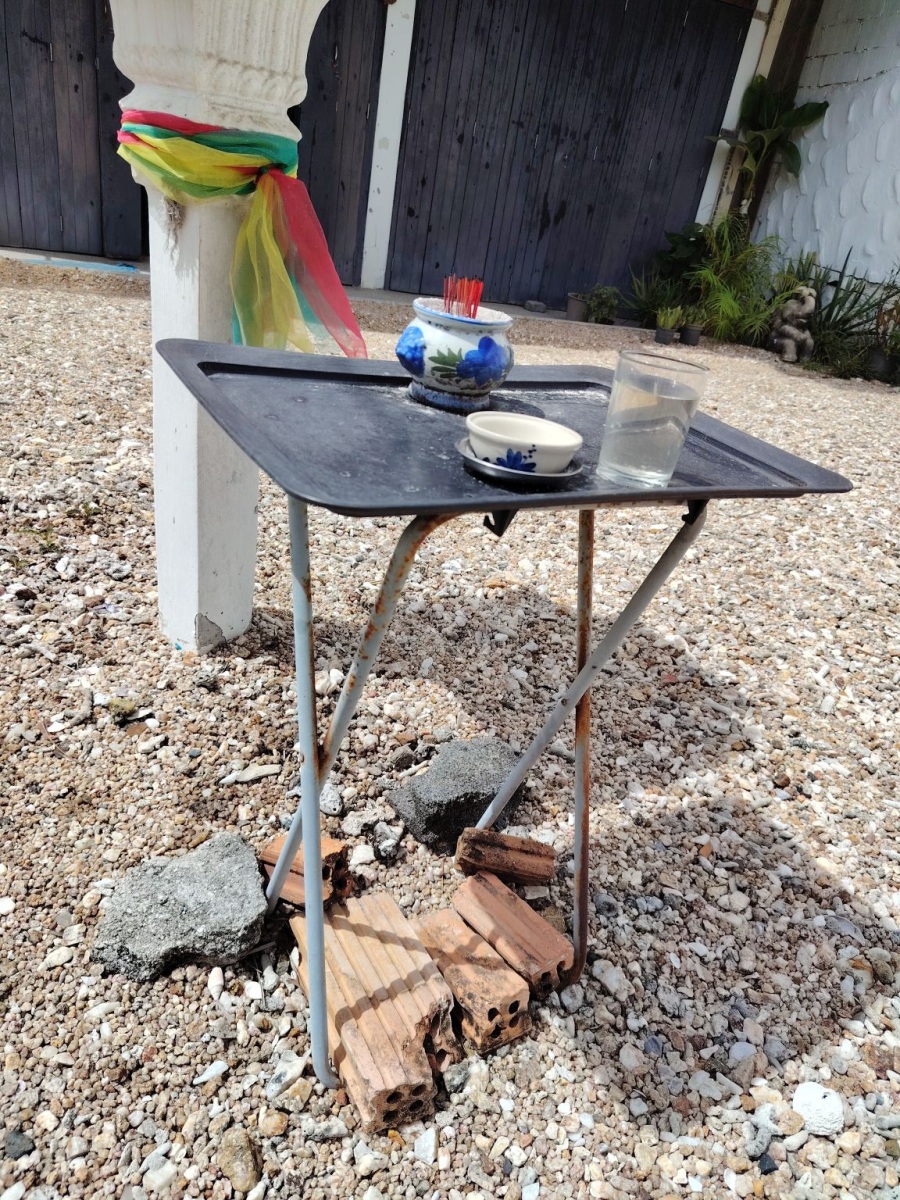
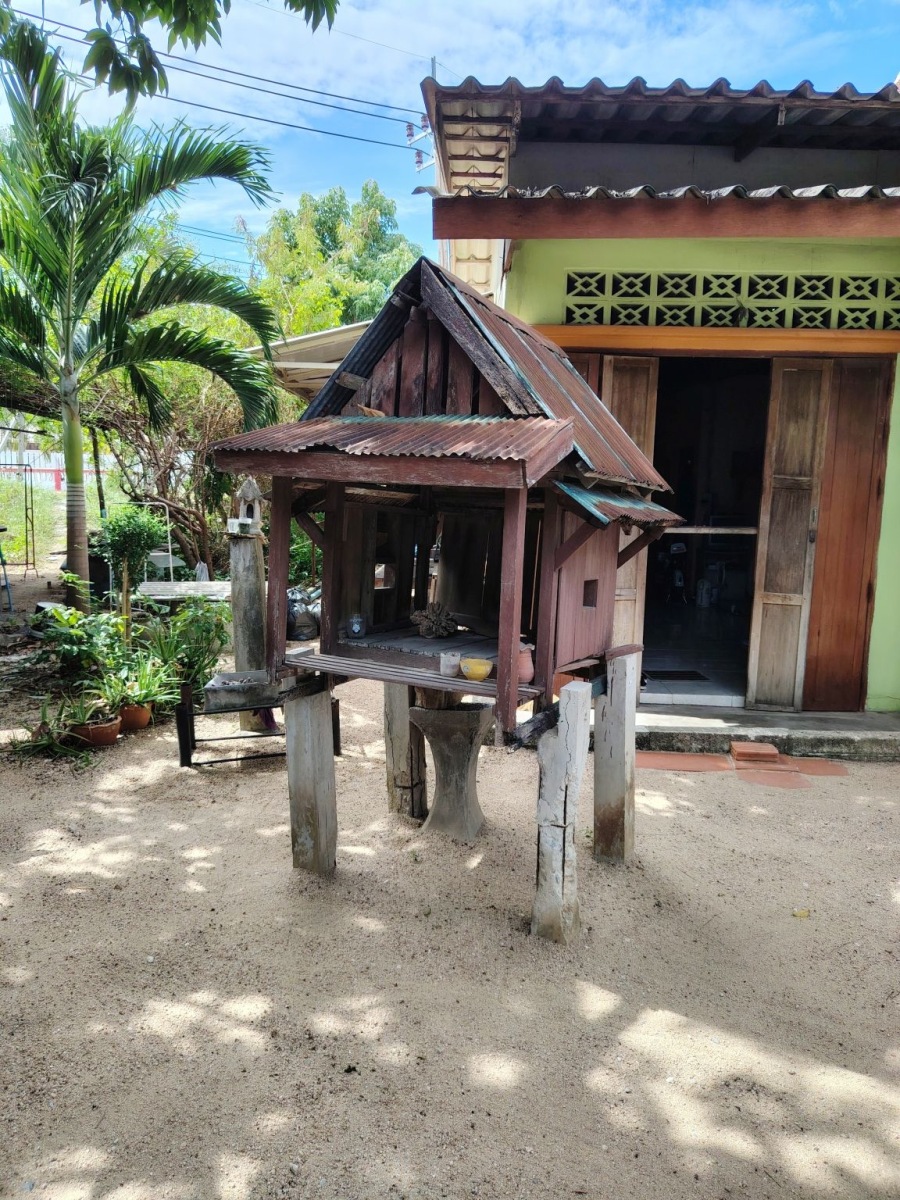
You have a very good eye. What you see in Koh Samui (and all over Thailand, and even Southeast Asia) are ghost houses – in Thai: สางพระพรี (saan phra phum).
What are these?
- Small shrines, often house- or temple-like models, on a pillar or pedestal.
- According to Thai belief, every place (plot, house, business) has its own “spirit” (phra phum) who guards it.
- This spirit can “reside” in a ghost house, so it does not disturb the people living in the house.
Why do they put food, drink, flowers?
- Offering to the spirit of the place: food, drink, fruit, garlands of flowers, incense.
- Purpose: to appease, show respect, ask for favor (e.g. protection, luck, prosperity).
- Similar to leaving an offering to our ancestors: a connection with the invisible world.
Why the ladder?
- The small ladder or staircase is not an ornament, but a “way” for the spirits to “go up” to the cottage – from the plane of the earth to their “dwelling place”.
- This is a symbolic gesture: the spirit can easily find its place. A gesture to make it easy to travel between the invisible world and the visible.
- The ladder or staircase is a gateway for the spirit – This
Broader context
- In Thailand, you can find a ghost house in front of every house, hotel, shop, and even modern office building.
- Sometimes it is very ornate, gilded, and sometimes it is simple wood.
- It is not for tourists, but part of everyday spiritual life.
Meaning of colors
- Gold
- The most common, because it is the color of abundance, luck, and prosperity.
- It refers to the gold decoration of Buddhist temples, symbolizing divine light.
- Red
- Strong, protective energy.
- Sometimes chosen to honor more warlike spirits.
- In Thai culture, red is the color of good luck and strength.
- White
- The color of purity, peace, and spiritual protection.
- Often chosen for places related to healing and peace of mind.
- Green / Blue
- Colors associated with nature and harmony.
- Green is a sign of growth, blue is a sign of protection and tranquility.
- Black (rare)
- For stronger, “stricter” spirits.
- It is more common in places where the area is considered to be ominous.
Types of shapes
- House-like spirit house
- Simpler, often wooden.
- Considered more of a dwelling place for “local spirits”.
- It is as if it were a home for the spirits of the earth.
- Temple-like spirit house (more ornate, gilded, with many details)
- “Phra Phum” – the home of higher-ranking, protective spirits.
- These are said to be inhabited by small statues, divine figures.
- Two shrines together
- It is not uncommon to see two different types standing side by side: a smaller one for the spirits of the earth, and a larger temple-like one for the spirits of greater power.
Photography ethics at spirit houses
- Things to do
- Keep a respectful distance – don’t step on the platform or touch the offerings.
- Take photos from the front or side so that you can see the shrine and its surroundings. This gives the impression that the spirit house is part of the place.
- Pay attention to the light – the colors are most beautiful in the morning or evening, especially with the gold decorations.
- Notice the details – the small ladder, the drinks, the flower garlands all tell a story. You can also take photos of these up close.
- Smile and nod before you click – many Thais believe that a respectful gesture is also addressed to the spirits.
- What to avoid
- Don’t climb on it, don’t touch it – it is taboo to touch or move the shrine/offering.
- Don’t take photos of people eating/drinking from the offerings – it would be disrespectful.
- Do not place your camera/phone on the haunted house – this is offensive to the locals.
- Avoid mocking poses – e.g. as if you are drinking from the soda left there.
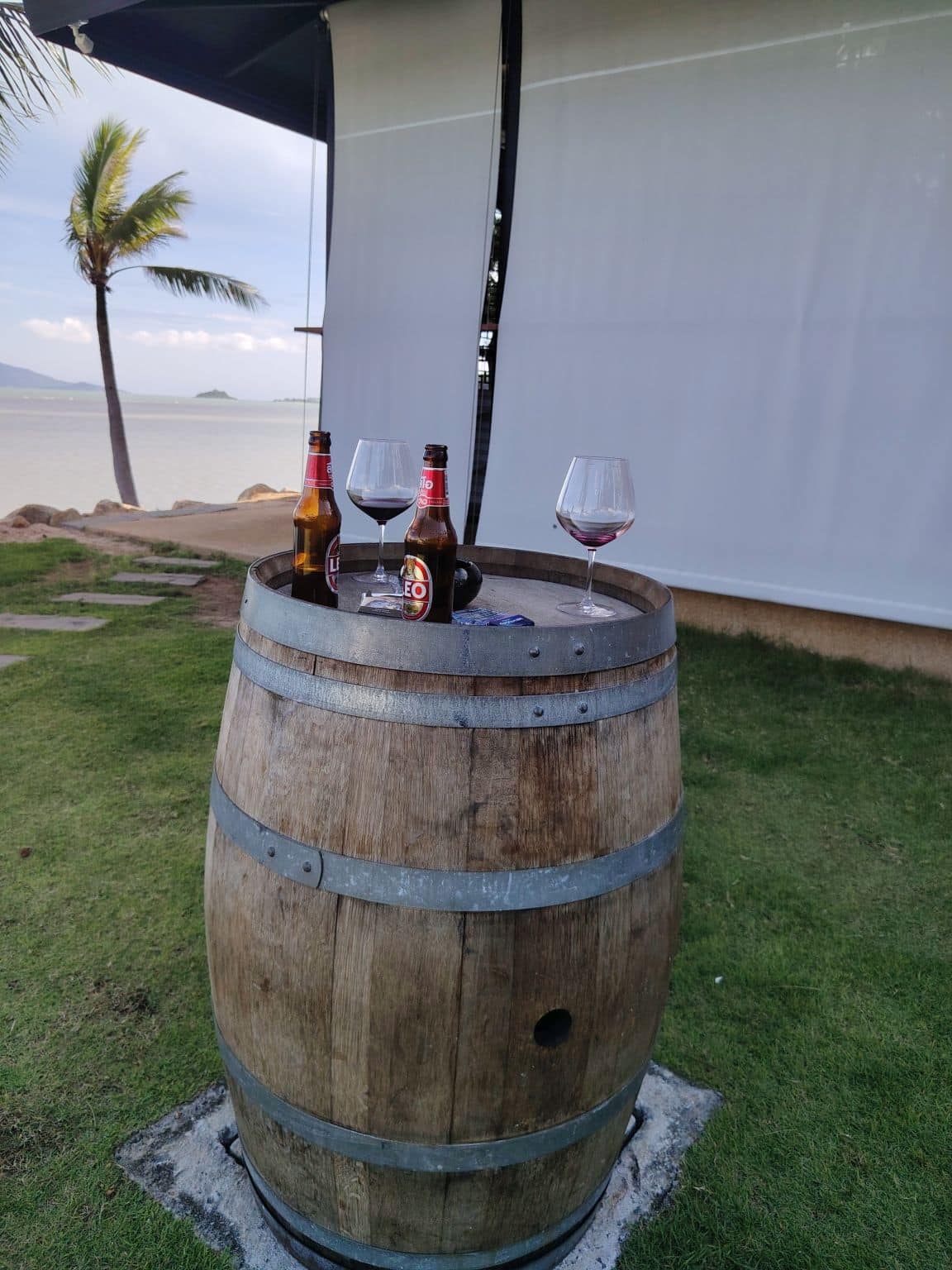
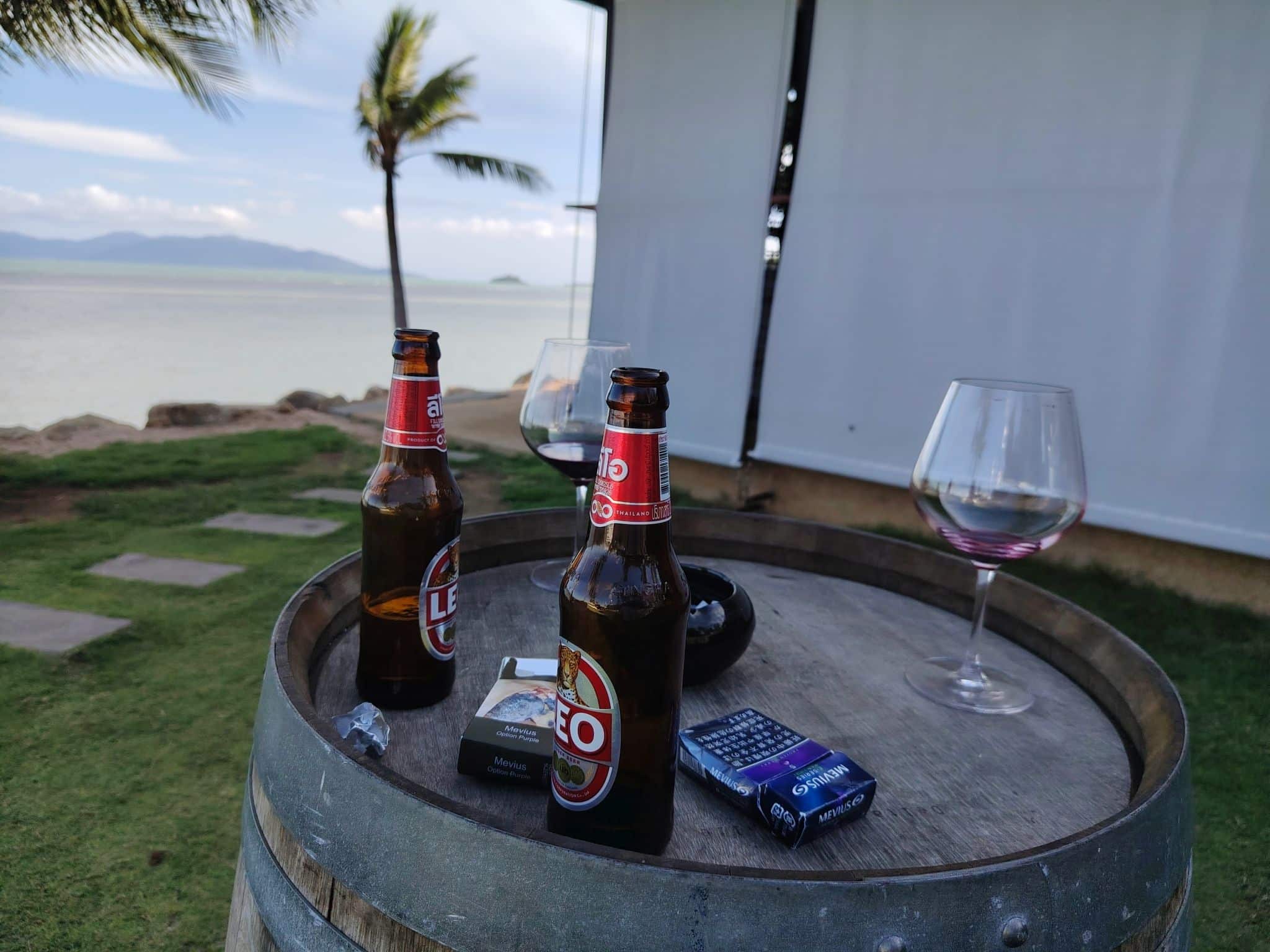
And finally, the European solution to keeping harmful spirits away:
Buy me a coffee?

If you enjoyed this story, you can buy me a coffee. You don’t have to – but it means a lot and I always turn it into a new adventure.
Buy a coffee for Steve
 Linktree
 Short introduction