
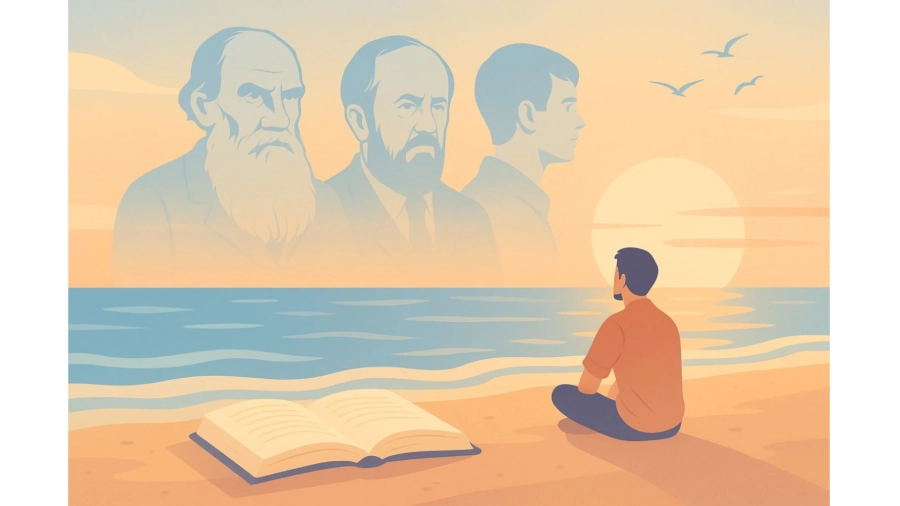
I just finished reading Aleksandr Solzhenitsyn’s book The Gulag Archipelago, today. I found quite a few thoughts in this book – applicable to the whole life – that are worth considering.
The title could have been The Thoughts of Two Soviet Writers, but that would not be a good title. Leo Tolstoy (1828–1910) lived and wrote during the Russian Tsarist Empire, so he was not a Soviet writer, since the Soviet Union was only established after 1917. He is a classic Russian realist writer. Aleksandr Solzhenitsyn (1918–2008) was already born in the Soviet Union and lived for decades, so he began his career as a Soviet writer, but his works (e.g. One Day in the Life of Ivan Denisovich, The Gulag Archipelago) sharply criticized the Soviet system. Because of this, he was exiled, and then returned home after the collapse of the Soviet Union, so in his later period we see him as a Russian writer.
Since Solzhenitsyn’s thoughts were born in that critical period when we do not see him as Soviet, I also think of him as a Russian writer. So the title of my article will remain the original idea and I will write about the thoughts of Russian writers.
It was just two that became three, but I will talk about that at the very end…
Aleksandr Solzhenitsyn: The Gulag Archipelago
I’ll start by saying that the author must have made a mistake somewhere. I’m kidding, of course, but he didn’t spell my name correctly:
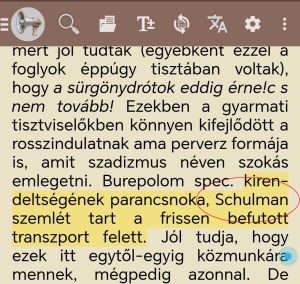
This book is a shocking literary and documentary description of the world of the Soviet Union’s forced labor camps. The author presents the repressive machinery of the Soviet system through his own experiences and the confessions of hundreds of prisoners. The “Gulag” does not mean just camps, but a terror system that engulfed an entire country, which swallowed millions. Solzhenitsyn reveals in detail how the state machinery worked: the logic of arrests, interrogations, interrogations and false accusations. The work shows how fear and conformism became the fundamental driving force of the entire society.
He writes not only about physical suffering, but also about the difficulty of preserving human dignity in the most inhuman conditions. In addition to the daily lives of the prisoners – hunger, cold, humiliation – the book also shows the power of the human spirit to survive. Solzhenitsyn depicts the Gulag as an “archipelago” that functions as an invisible country covering the entire empire.
The work is not only a historical indictment of the Stalinist dictatorship, but also a philosophical reflection on the nature of evil and moral responsibility. Its publication fundamentally shook the image of the Soviet Union and played a decisive role in the world learning about the true face of totalitarian systems.
I think that from this short summary you can feel that this is not an easy work, I feel that it can also be assumed that it can awaken a lot of thoughts in the reader.
We can all resonate with such works. I have repeatedly felt that the book takes me to unknown places.
On my current journey, these thoughts have taken me the furthest:
Have nothing, but have nothing! – this is what Buddha, Christ, the Stoics and the Cynics teach. Oh, we swindlers, why don’t we take this simple teaching to heart? Why don’t we see that possessions only lead to the ruin of our souls?
Well, well, just warm that salted herring in your pocket until you get to the camp, so that you don’t have to beg for water. But if they give you two days’ portions of bread and sugar at once, eat it all at once. Then no one will steal it, you have no more worries about it. You are free as the birds of the sky.
Just have something that you can always carry with you: know languages, know countries, people. Let your only baggage be your memory. Learn, remember! You can only hope that the bitter seeds stored in this way will sprout again one day.
Look around, there are people around you. Maybe there is someone you will remember for the rest of your life, and you regret not asking them. Don’t talk so much about yourself, listen to others. Delicate threads of human destinies weave the entire Archipelago, connecting the individual islands, intertwining with each other, or meeting for just one night in such a rattling, semi-dark wagon, only to part – forever. So put your ear there, listen to the soft murmur amidst the rhythmic jolts of the wagon. Because life is spinning its spindles there; rustling and rattling.
I immediately remembered the corresponding paragraph of my morning greeting, prayer, mentioned earlier on the blog:
I am pure and free like water.
Every day brings me new light.
I trust the flow and let the Spirit guide me.
I was writing these exact lines when a friend of mine called me from Hungary. Then, at the end of the conversation, another friend of mine joined the conversation. By the way, both of them are women. One of them is also a pastor. The other is a cantor. That’s not the point. Now, ten minutes after the long conversation, I’m smiling as I write. There are two reasons for this.
One is that yesterday – 72 days after my arrival here – we got to the point where a friend of mine just dropped by. Here in Thailand… I was working quietly and peacefully when a friend of mine I met a few weeks ago just dropped by. We’ve talked for a few hours in the past few weeks. He’s been to my place twice, last week we went to the sauna and went for a walk together. But yesterday, he just dropped by on his way to the beach. He brought two soft drinks, which we drank and continued to exchange our thoughts.
The other thing that made me smile was that at the end of the conversation I received a comment that I am enjoying freedom now? And I found myself saying yes, very much so. And, what is very important to me, is that I feel my soul becoming more and more free. Isn’t it strange that I say increasingly free? Perhaps the question arises as to how one can say “more and more free” here! Well, I think I don’t want to trust myself. This is also part of the path. That is, achieving freedom. The direction is good, and I am constantly learning and experiencing what it means to me to be free…
Here you go! Here is this Solzhenitsyn quote. “You are free like the birds of the sky.” Or, like water.
At such times, the thoughts I found months ago inevitably come to mind. My thoughts and feelings swirl inside me like a crazy vortex. I begin to understand myself, what freedom it is to “I live a minimalist life”, its simplicity, to be so happy while carrying the pain dreamed of by “My sweet suffering”. What energy it gives to “I love what I do”, to think with a heart full of gratitude that I had the opportunity to think “About my loneliness” and free myself from it. How high it flew me when I formulated the feelings of “Forgive yourself, Soma!”. When I realized that “I want!” to love the world without words! And most of all, the liberating reassurance of “Freedom, selfish freedom”.
In Solzhenitsyn’s thoughts (it was a Freudian typo that I initially wrote “in my thoughts”. Just for English speakers: in Hungarian “gondolatai” is his, and “gondolataim” is mine. Only one “m” letter is the difference.), the connection highlighted above is very clearly visible to me. There should be nothing except what you cannot take with you. Then you will be free, as… Please, now imagine what you would be if you were free!
Write to me! If you are free, then write what you are!
The last paragraph is dear to me from the Russian writer because it resonates with what I wrote about myself in the “Nomad Cruise Summary” post. “I think connecting with people makes me happy.” After all
delicate threads of human destinies entwine it … connecting the individual islands, intertwining with each other, or meeting for just one night … only to be separated – forever, So turn your ear there, listen to the soft murmur …. Because life spins its spindles there; rustling and rattling.
Leo Tolstoy and the rejected Nobel Prize
The following story really struck me. It gave me an example. I saved it so I could use it in a proper post.
The day came today.
Before I published this story in my writings, I wanted to make sure it was authentic. Well, that didn’t work. I mean, authenticity. According to AI:
- Tolstoy was nominated for the Nobel Prize in Literature and Peace Prize, but he never received the Nobel Prize.
According to the Nobel Prize Foundation database, Tolstoy indicated that he would not accept the prize if he were nominated.
However, there is no confirmed documented evidence that he “refused” it, so there is no case like Jean-Paul Sartre who did not accept the prize.
The following story appears on blogs, i.e. not in scientific book sources, but in Internet articles.
Anyway, I intended the story here, I’ll share it with the understanding that it’s just a well-done visit-generating fiction. Because of the title of my post, let me think that it doesn’t matter what kind of Russian writer said this, as long as it’s Russian! Let’s imagine Viktor Mikhailovich Chernov instead of Tolstoy. (Don’t look it up! It’s a made-up name.)
October 8, 1907 – The Day Leo Tolstoy Rejected the Nobel Prize in Literature
He was 78 years old when the opportunity to win the world’s greatest literary award, the Nobel Prize in Literature, came his way. Most people would have welcomed the news that their name was among the nominees with trembling hands – but Leo Nikolayevich Tolstoy, the immortal author of War and Peace and Anna Karenina, had a very different idea.
When the Russian Academy of Sciences announced that it was nominating him for the Nobel Prize in Literature, Tolstoy reacted not with joy but with deep anxiety and inner protest. He felt that the money, glory and attention that came with the prize were all things he had long rejected from himself – because he believed that the true value of a person lies not in gold but in the purity of the soul.
He wrote a long, heartfelt letter to his old friend, Arvid Järnefelt, the Finnish writer and translator. In it, he asked him to intervene with the Swedish Academy and tell them that he did not want the Nobel Prize in Literature. Not because he did not value it, but because he could not bear the burden that money and fame would bring to him.
“Please inform them not to give the prize to me – to give it to someone who really needs it,” Tolstoy wrote.
Järnefelt – shocked but loyal – complied with the request. And so it happened that the 1907 Nobel Prize in Literature ended up going not to Tolstoy, but to a little-known Italian poet, Giosuè Carducci.
Later, when journalists and his students asked him if he regretted turning down the Nobel Prize in Literature, Tolstoy smiled and said:
“Not for a moment. By giving it up, I have freed myself from the heavy burden of having to decide on the fate of such a sum. There is something immoral in the mere possession of money.”
Behind these words stood not just a writer, but a man who spent his whole life proving that peace of mind is worth more than any gold medal.
And so October 8 became not only a day of literature, but also a day of human purity – when Leo Tolstoy proved that there are those who would even turn down the Nobel Prize in Literature if it came at the cost of their peace of mind.“Wealth lies not in possessions, but in not desiring anything.” – Leo Tolstoy
Once again: it doesn’t matter to me that this is probably a fictional story. What resonates with me is the message.
Wealth lies not in possessions, but in not desiring anything. The saying is of Stoic-Cynic origin, most likely a modern paraphrase of Diogenes’s thought. Stoicism again! A basic thesis of Buddhism again. I’m obviously hearing what I want to hear.
But, even so! Every time I hear such a thought, something deep within me speaks, as if whispering an ancient truth: letting go is worth more than possessing!
Because everything we chase eventually begins to possess us. And when we finally let go, that’s when we first feel how easy it is to be free!
Perhaps that’s why the same message returns again and again, only in a different language, in the voice of different masters: true wealth is not in things, but in the peace felt in their absence…
The third is you
The third Russian writer I brought today is Dmitry Somovich Lebedev. I have written about and told you several times in recent months how much I love writing.
I will never forget the story when I became a member of a writing club and went to my first meeting. I knew that one of the members was a head of department at the hospital. I have great respect for him. He publishes under the pseudonym of Juli Havas, and has published two books so far, titled “There Is No Moon If You Don’t Look” and “Paper Dolls”. I have read both of them, and I sincerely recommend that you get to know them too. I read the first one before the meeting so that I would be in the know. I was totally impressed. “Paper Dolls” is a step up from that.
So, I went to this meeting and was waiting to meet a real writer. Who arrived late. It was also her first time at the club. When he arrived at the café, his first question was, “Are you the writers?” Everyone in the group answered, “Yes.” I raised my hand and quietly said that I was not a writer, but I don’t think anyone paid attention…
I love to write! I wrote this piece with great joy and excitement. Maybe this is the first time I’ve thought about being a writer. For some reason, while writing this piece, I felt a familiar feeling. It’s a joy to create something, and I like this piece of writing differently than the ones I’ve done before.
And then let me imagine myself as Russian for half an hour…
Сегодня я свободен как птица…
Buy me a coffee?

If you enjoyed this story, you can buy me a coffee. You don’t have to – but it means a lot and I always turn it into a new adventure.
Buy a coffee for Steve
 Linktree
 Short introduction