
I am grateful…
I’ve been hearing that a lot lately.
The other day, I found myself thinking about it.
In what situations does this happen?
I tried to take stock of where I’ve heard this phrase—just looking at the past few weeks alone.
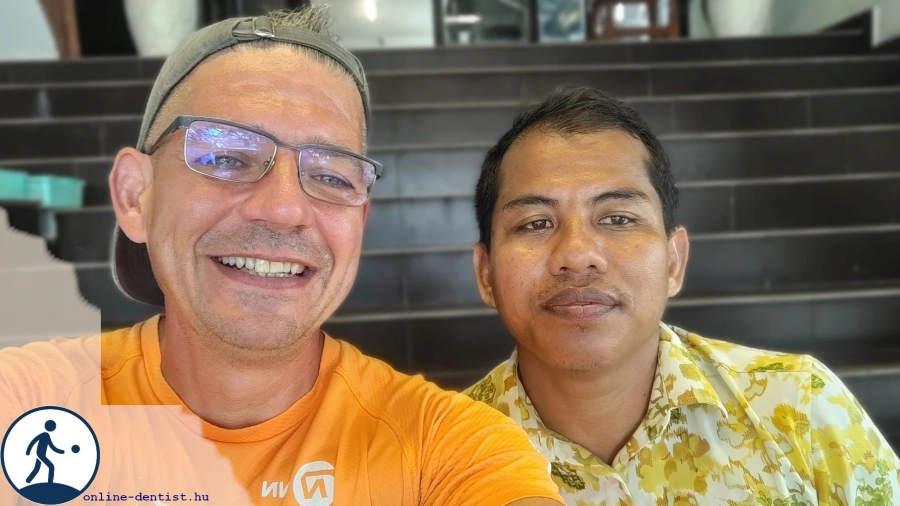
My friend and I stayed at a hotel in Kampot. When we asked for a bed each for a week, we were immediately met with a smile and a sentence: “Thank you for supporting us!”
Here—in the city of Sihanoukville—I’ve visited the same small restaurant for lunch more than once. On the second or third visit, the owner said, “Thank you for supporting my family!”
In general, I often find that people are happy to see me. When I step into small shops—no matter what I buy, even if it’s just a bottle of water—they often thank me for shopping there.
I’ve also been thanked simply for living in a particular country, whether it’s Vietnam or Cambodia. I’ve received especially heartfelt thanks on countless occasions when I mention how beautiful my conversation partner’s country is. A smile, a hand placed over the heart, and sincere gratitude that I am here rather than somewhere else—especially when I add that I love the country.
I think both they and I are well aware that I could be anywhere. In any city in any country. I could be spending my money in any shop or restaurant within that city. Yet, for some reason—almost always—I feel that the thanks aren’t for my money, but for *me*. For the person I am. And it is not gratitude that is the most important feeling within me. It is the respect and the joy—flowing towards me at moments like this—that truly touch me.
Where doesn’t it happen?
This is bound to be a tough thought.
I don’t want to sound discriminatory. I am writing this based solely on my own experiences.
No matter how hard I rack my brain, I can barely find an example of this in Hungary. I have one memory—I’ll write about it a bit later.
I’m reminded of a restaurant in Győr where my colleagues and I used to go for lunch almost every day. They liked us, and we liked the people working there. We laughed together almost daily. We’d chat while our lunch was being prepared or while the card reader was processing the payment. The women there were sad when they found out I wouldn’t be eating there anymore because I was moving to Asia. Even now, they occasionally ask—or so I hear from others—how I am and what I’m up to.
But the thought that *we* chose *them*—and that this was a good thing for *them*—never once came up. Looking back on that time, that was the missing element in the relationship. We could have gone elsewhere. We went there because we liked them and the atmosphere, and the food was excellent. But we could have gone somewhere else. It might have been nice if, alongside our daily “thank yous,” they had occasionally offered one of their own.
That would have been nice.
A simple “Thank you for your purchase!”—often automatically printed at the bottom of a receipt—doesn’t replace that. A spoken word makes it more personal. Friendlier. More intimate. Into a happier moment.
I don’t think it was that specific lack that hurt the most. It was more the feeling—one we all know well; I know this for a fact, having discussed it with so many people—that instead of gratitude, I often felt like a nuisance just by being there. Somehow, it made me feel as though *I* ought to be the one grateful simply for being served. Looking back on those moments—and there are countless ones—I can clearly see why it felt impossible to share or receive a smile.
It wasn’t by accident that I said two years ago: I want to live somewhere in the world where, at least eight times out of ten, we can smile at one another.
This is a key element of my world. Today, I can say this not just in theory, but from experience. I never want to live anywhere where that isn’t the case.
I trust that something will help bring about this change in Hungary, too.
An example from back there just came to mind.
I have a friend. She’s currently in America, so she’ll recognize herself in this. LOL. Whenever I bought something from her, she always thanked me for the purchase. That matters to me! But what matters far, far more is that I’ve heard countless times how she does this with everyone.
Her example could serve as a guide.
And—I hope—mine could, too.
It just occurred to me that there is someone right now to whom I can write:
“Thank you for choosing me!”
Buy me a coffee?

If you enjoyed this story, you can buy me a coffee. You don’t have to – but it means a lot and I always turn it into a new adventure.
Buy a coffee for Steve
 Linktree
 Short introduction