
I have always considered myself the kind of thinker who can admit when he is wrong. I can accept any well-argued argument, but I have not lived in a way that I unconditionally adhere to my own ideas for a long time.
I have been writing a lot in the last 15 months, and this genre has different frameworks than speech. It is worth knowing that this remains until the word is gone.
So – understandably – I am reminded much more often that I am not sure that I am right in everything I write.
But I cannot put a “I may be wrong” sign next to every sentence as a traffic controller.
In the post “Which book tells me who I am?” I mentioned the book:
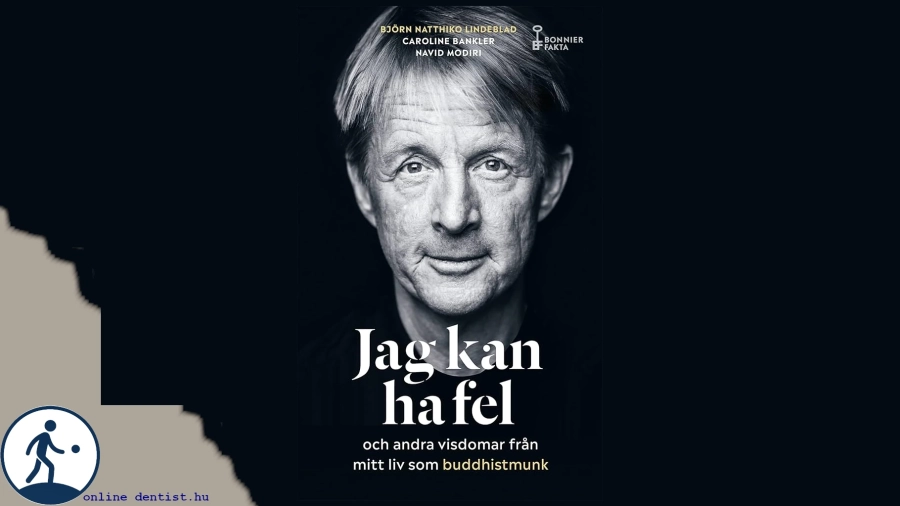
Björn Natthiko Lindeblad, Caroline Bankler, Navid Modiri: I May Be Wrong
And then I promised that I would write a separate post about this book soon.
The time has come for this post.
Why did this book speak to me?
This book was added to my collection on 12/26/2025. I started reading it forty-two (how interesting, since 42 is the answer to the “ultimate question” concerning life, the universe, and everything) days later. I finished it in 1 day. 3 days before I moved to Wat Pa Tam Wua temple.
These numbers don’t really mean much, but it was nice to play with them a little.
I don’t really know how I came across this book. Did someone recommend it to me, or did I just see it?
As a Western European man, preparing to enter a Buddhist temple in the forest of Thailand, I realized that this book was written by a Western European man who had lived as a Buddhist monk in the forest of Thailand for 17 years. Moreover, he began his attempt at monastic life in the city of Chiang Mai, where I first picked up his book.
That was a strong enough invitation to read this book before I even got to the temple.
Here is a quote from the book’s commonly used description:
This book is not about religion. It is not about how you should live or what you should believe. It is not another self-help book. This book is simply about how to relate to your thoughts and feelings in a way that will improve your life.
Those few lines redoubled the power of the invitation for me.
The excellent book through my eyes
I could say that this post is not about me, but rather a book review. But that wouldn’t be true. This post is also about my experiences, but I will also show the book a little.
Let’s see how the book connected to my journey in a strange way.
I have developed the following structure for the travelogue.
- I start with the book’s strongest mantra. I don’t add any thoughts to it.
- Then I go through the book chapter by chapter, addressing the thought that was most interesting to me, and then I will briefly respond to it.
- And at the end of the post, I will publish most of the book’s introduction in the original. This is to make it more enjoyable to read the book.
I may be wrong!
But at the same time, I believe that Natthiko, Björn Natthiko Lindeblad, was not wrong.
The mantra
The next time a conflict looms, when you feel like you can’t possibly get along with another person, just repeat this mantra to yourself three times, authentically and convincingly—in whatever language you want—and you’ll see your worries disappear like dewdrops from a blade of grass on a summer morning.
Of course, we’re all listening to him. There’s complete silence, every ear pricked up for what’s to come. He leans forward, pauses briefly, and then says,
“Okay. Are you listening? Here’s the magic mantra:
I might be wrong.
I might be wrong.
I might be wrong.
Prologue – My Superpower
What I appreciate most after seventeen years of full-time spiritual training is that I no longer believe everything I think.
I definitely need to improve in this. But I feel safe on the path leading to this.
There have been times in my life when this superpower expression came up, when when asked “how is this possible” I answered that maybe this is my superpower. I mean, the one that appeared there and then in the given situation.
The situation was exactly about changing my thoughts…
1. Mindful presence
The title of the chapter is the idea.
It is very interesting that, like Björn, I do not like the Hungarian version of the term mindfulness, conscious presence.
From now on, I will also use the term attentive presence.
How interesting the difference between the terms “conscious” and “attentive” is. Which side does the scale tip?
2. Successful but not happy
What should one do to find inner peace and not be hypnotized by one’s own thoughts?
It’s good to be on this path. If I find a way to tell it, well, I will.
I especially like the way Björn writes about his decision in this chapter. He made it quickly, just like I made my own “Decision.”
3. Breathe more, think less
It was as if I had taken a step back inside and understood that I had thoughts, but my thoughts were not me.
I read this thought in a book in church. Now I think that this is a very deep thought, it is easy to grasp what it could mean, but it is very difficult to understand and even more so to live it. This thought is a very high mountain, the road to the top is difficult.
4. The Brothers Karamazov
I think everyone who has ever tried backpacking for an extended period of time knows what it feels like after a while: life somehow gets simpler day by day.
I identify with this idea very much. I think it’s obvious, because it appears so often in my writings.
5. Probationary period
We doubt that others would like us even if they knew who we really are. We play a role to make sure.
This doubt and the resulting drama have caused quite a bit of trouble in my life. I chose to play it differently. It’s a good thing that this is my favorite thought from this chapter.
6. Don’t believe everything you think!
I have discovered that when sadness, anxiety, or loneliness strike, I have the opportunity to breathe consciously, focus on my body, and not immediately believe every thought my mind comes up with.
The essence of mindful presence in my eyes. The goal of Buddhist philosophy, if I may say so. I observe, I interpret, I let go.
I believe this because it is not my “invention”.
7. Mom, I’m going to be a forest monk.
From now on, I will live completely like a converted Buddhist: I will follow the five precepts until I become a monk.
The 5 rules: I refrain from taking life or harming others or myself. I do not steal, I refrain from sexual misconduct. I do not lie, and I refrain from intoxicants.
Björn chose this path. I will not give up sex and the occasional use of intoxicants. That will not make me a Buddhist monk.
But!
I have believed for many, many years that everyone needs to live according to some kind of rules. This can be religion, law, custom, morality, etc.
But at least one is essential in our lives, because without a compass, every ship goes astray, which ends in chaos.
A small note: within the Theravada school (I was here) monks live according to 227 rules, and nuns live according to 311 rules. You can see the rules here.
8. Natthiko – “He who grows in wisdom”
… to be fully present in everything you do.
I don’t argue with myself that the word “in everything” is key in this sentence.
I’m just trying to manage my existence this way. Sometimes it works…
9. The intelligence of the moment
Listening to the inner voice is not a rational act, it involves the rational.
This is what I wrote about in the post “Desire and Real Life” two days before reading the book:
… I feel these thoughts. …
I should also highlight the quote from Einstein that Björn quoted:
Intuitive thinking is a sacred gift, rational thinking is a devoted servant. We have created a society that exalts the servant and has forgotten the gift.
In these two serious thoughts I am happy to see my own shadow.
I feel that (sometimes) I already have the gift in front of me and (sometimes) I have already managed to send the servant to his place.
10. Eccentric community
If you want to get along well with someone, to be someone you have no serious objections to, there is one secret little key: learning to accept them exactly as they are.
I have had and still have a part in this in life.
Dulcinea, are you listening?
Hello! Welcome, just the way you are, it’s good to be you. You don’t have to be different, there is room for your quirks, your eccentricities, your unusual things, I’d love to see you in my world just the way you are. There is room for you
11. The rhythm of life in the monastery
For me, this is the strongest chapter in the book.
Obviously because of my own experiences in the church.
Therefore, I will highlight three thoughts from here.
I felt like I had found that certain thing and that I had the answers to all my questions.
I felt this too. I put it in that moment that all the questions I have in my current life are here within me with their corresponding answers.
Then new questions will come and there will be new answers.
It is perfectly acceptable for someone to simply say, regarding a task or decision:
“That doesn’t feel right.”
For those of us who come from Western organizational cultures, it was a bit difficult to understand that such an argument could carry sufficient weight.
All I can say now is that I trust the flow and let the soul guide me.
Buddha was very wise and clear about the various ceremonies. A ritual or ceremony in itself has no meaning. We give it meaning. As a monk, you must give the events of your life a meaning that makes sense to you.
How good it was to experience this while practicing temple ordinances!
12. Kitsch wisdom
This entire chapter dances elegantly around the following idea:
I don’t want to let go of the idea, because it’s right.
The chapter also shows an excellent example of this, so I have nothing to add.
In this scene, Winnie the Pooh and Piglet are out and about. You can probably see them in your mind’s eye: Winnie the Pooh in his short red T-shirt, Piglet in his pink striped one. They visit Bunny, and after they leave, Winnie the Pooh sighs:
– Bunny is not stupid at all! […] – That’s right. He’s smart – thought Piglet.
– He’s got brains.
– He’s got brains – thought Piglet. – He’s got brains.
Then there was a long silence.
– I think – said Winnie the Pooh – that’s why he never understood anything.
13. The magic mantra
I might be wrong.
I might be wrong.
I might be wrong.
14. Maybe yes, maybe no
This part is a description of a fable about an old farmer, which I didn’t read for the first time in this book. I found the summary idea interesting.
The old farmer does not believe in the thoughts that determine whether the events of life are good or bad. If we can distance ourselves from these ideas, it gives us freedom and indicates great wisdom. It is useful to remember how little we know about the future, to be able to distinguish what we believe from what we know.
Based on my own experience, I think this is a very difficult task. Especially for me, who spent certain parts of my life for many, many years in an illusion of my own making.
I find this part of the sentence particularly important: … the events of life are good or bad. I feel that there is a lot of meaning hidden in these few words.
15. Ghosts, asceticism and mourning
This is not the first book I have read by Buddhist monks, written by monks.
I really like the parts where the writers honestly highlight that they are also human. That certain things cause them difficulty, and like others, they also need a lot of practice to become different in certain things.
That is why in this sentence I found the difficulty in simplicity.
Being a forest monk means trying to let go of things, and ninety percent of the time you fail.
16. Voluntary psychological suffering
This is (also) a very short chapter. In short chapters, it is especially difficult to imagine my own thoughts alongside the essential ones. Perhaps this is not always necessary.
For me, the essence of this chapter was the recall of already well-known thoughts.
Most of the spiritual suffering we humans experience is voluntary and self-inflicted. This was one of the greatest discoveries of the Buddha.
17. How many Pepsis can a hermit drink?
This chapter gave me a subtle formulation of inner beauty.
And I affirmed many of the qualities that are most beautiful in us, as humans: generosity, empathy, patience, compassion.
I can so easily imagine my own realizations based on his spoken words into this thought: I have it, I give it to you because you need it, all with humility and not out of pity.
18. Clenched hand, open palm
I feel small, awkward, lonely, and thoughts containing the word should fill my head.
If you recognize yourself, because sometimes this happens to you too, try this hand gesture – clench your hand into a fist, then slowly open your fingers.
I think this exercise is great, I’ve done it several times since I read it. Sometimes just like that, in a strange way.
At such times I think that in my clenched fist there is a force that holds something. Not only the thing in my palm, but also me. I release my palm and feel that something quickly fly away. He became free. Yes, and so did I.
Maybe that something was a thought that caused suffering? Maybe I don’t even need to know who or what it was.
I just open my palm…
19. Get yourself a fucking job, mate!
… I notice that the more I can look inward, the more I embrace the inner silence, the brighter something begins to shine. Something that seems to always be with me. Something that wants good for me.
To write this post, I read the book I had already read much faster for the second time, to spin the thoughts I found and select the ones that stood out.
So – naturally – I had a realization that came to me during the second reading. It is a very interesting experience that a previously selected thought transforms into a different form here. Like a butterfly.
Over the past year or so, I have developed a lot in that I have learned to pay attention outwards, to breathe together with my environment. Today, I simply put this as being present.
Of course, I also pay attention inwards a lot and in other ways. That is why I had a pleasant realization about how my idea that everything I could possibly need is inside me is connected to presence. Be it outwards or inwards.
20. Don’t forget to leave room for miracles
The title of the previous chapter (also in Hungarian) had the word fuck in it. In this chapter I said it twice.
Natthiko, don’t forget to make room for miracles!
Sometime three years ago I had a sentence that I wrote down. I didn’t know where I would be able to use this idea. I’ve carried it with me ever since.
This is what I wrote down then:
To experience the moment as a miracle, because I want to experience the moment as a miracle.
In this chapter, I decided where I wrote this sentence. My experience was that while listening to a song, I had the feeling that I had a moment of miracle because of the beauty of the song. And immediately afterwards, I wrote the above, which means to me that I do have the opportunity to experience moments of miracles.
Now I know for sure that even several times a day. It’s just a simple decision on my part.
The other thought – which I won’t comment on now – was what I said to myself some four months ago:
You will know
what you need to know
when you need to know
21. Only one thing is certain.
You don’t always get what you want, but you always get what you need.
I feel that these sentences are difficult to understand. I mean to understand in their pure simplicity. It is even more difficult to accept.
I look at this sentence as a friend.
Further chapters
The further chapters also contain many valuable thoughts. But the book takes a different direction here. Since I do not want to spoil the story, I will not quote from the further chapters.
I would rather just say that I have read a human story so far, and from now on even more, that moved me infinitely.
A true story. That is why it is much more beautiful than a novel.
I have already said it, now I am just repeating myself: it is a very beautiful book, I recommend it so that you too become richer!
I may be wrong, but the author may have written a book about doubt, which I somehow read with open and hopeful glasses.
Now I will open my palms and let go of both doubt and hope.
May gratitude remain within me.
Thank you, Natthiko!
Introduction to the book
Reading a good book is like going on a journey. You step out into the unknown and let yourself be carried away by impressions and experiences. I Might Be Wrong is about a man’s journey through the uncharted, inner regions of his soul. It tells the story of Björn’s journey as a Buddhist monk towards ever greater heights of peace, love and freedom. But, like all good stories, it reflects something universally human. There is no finish line, no grand conclusion – just a human soul awakening to its inner freedom, meaning and happiness in life, and making this as concrete and real as possible in its everyday life.
Wisdom is not something learned information, but something that we acquire through our real life experiences. True wisdom is born when we face life consciously and openly. It is often the result of trials, of difficulties that open our eyes to unexpected insight and fill us with humility and love. Wisdom does not float in the clouds, but is hidden down here on earth in our everyday experiences. I May Be Wrong is not just a wonderful title, but also a profound and touching wisdom. The kind of wisdom that can change a person’s entire life and perhaps open their heart to eternal happiness.
Living with the attitude that I may be wrong is a necessary prerequisite for an open mind and an open heart. It is a wisdom that opens the door to even greater insights, perhaps even to the depth of revelation that the Buddha reached at his enlightenment. This path leads to love, togetherness and understanding, and at the same time to solutions to the great challenges facing humanity. A humble key to a great door. And this is just one of the gems that Björn shares with us in this book, in which he tells us what he learned on his journey as a Buddhist monk.
It takes immense desire, courage, honesty, and sincerity to walk the path that I can only call the path of the heart. This path was laid out by the Buddha over 2,500 years ago. It often feels like we are stumbling in the dark, forever watching for flashes of light to show us the way. Some of these lights come in strange ways from within—often when we least expect them or feel least worthy of them. Other rays of hope come from without in the form of life experiences, helpful teachers and mentors, or the touch of a mysterious mind that sometimes offers us a helping hand in the most surprising ways.
Deep down, we all long for a freer and more authentic life, where we belong somewhere. But many do their best to suppress this desire because they are afraid that it will be difficult to fulfill it. Our modern consciousness has certain shortcomings when it comes to “translating” what our soul is telling us. Others plunge headlong into the traditions of ancient wisdom in an attempt to reconnect with the inner light, to awaken the eternal truth that lies dormant in the depths of every human heart. Some of these spiritual adventurers then slowly become bridges between the wise masters of the past and the seekers of today. I am convinced that Björn, in his own particularly human and sincere way, is such a bridge. And I May Be Wrong is a book that builds such a bridge.
What I appreciate most about this book is its disarming honesty and intimacy. It reveals profound and great spiritual wisdom to the reader, while being soberly practical and relevant to our everyday lives. I have found that some books carry a special peace that one can almost feel between the lines, and that comes to life in the reader when the book is opened in the absence of the author. This is exactly what happened to me when I read You May Be Wrong in one sitting, savoring Björn’s blend of wisdom and enjoyable storytelling.
But I recommend that you take your time with the book. Enjoy it slowly, like a pleasantly warm summer day or a cup of delicious tea. And pay attention to what it may awaken in you: the quiet and peaceful presence that we so easily forget in our endlessly troubled world.
This book, in its gentle way, does not tell us who we should be or what we could achieve if we “followed these five steps to success.” Instead, it tries to guide us to who and what we are, beyond who we are, beyond who we imagine ourselves to be, or what we think we should be. I May Be Wrong speaks to the quiet presence within us: beyond thoughts and the images projected by the mind. It reminds us—in a loving and human way—of who and what is looking out through our eyes, and how we can live in that light better and better each day.
May all creatures flourish!
Buy me a coffee?

If you enjoyed this story, you can buy me a coffee. You don’t have to – but it means a lot and I always turn it into a new adventure.
Buy a coffee for Steve
 Linktree
 Short introduction