
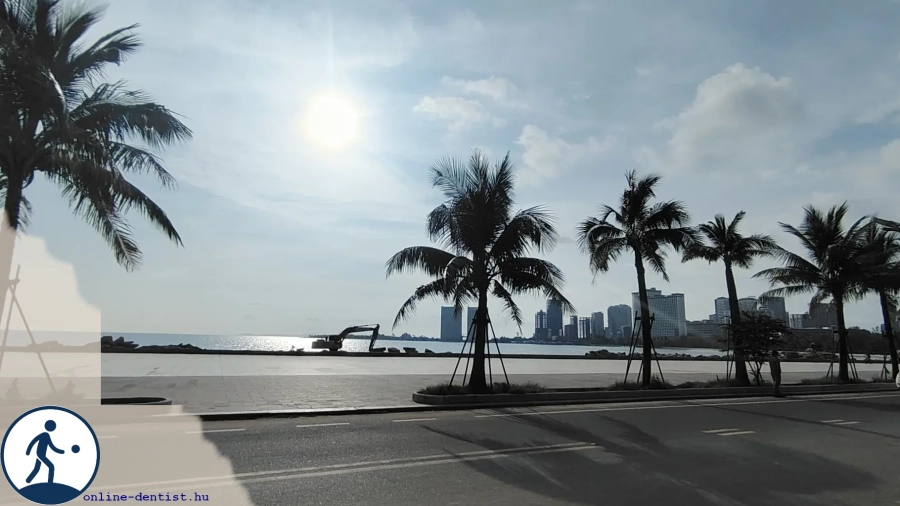
I began my fifth day in this seaside town.
I’ve gained some interesting culinary experiences over the past few days.
And had an exciting encounter—though it’s too early to talk about that just yet.
Ghost City
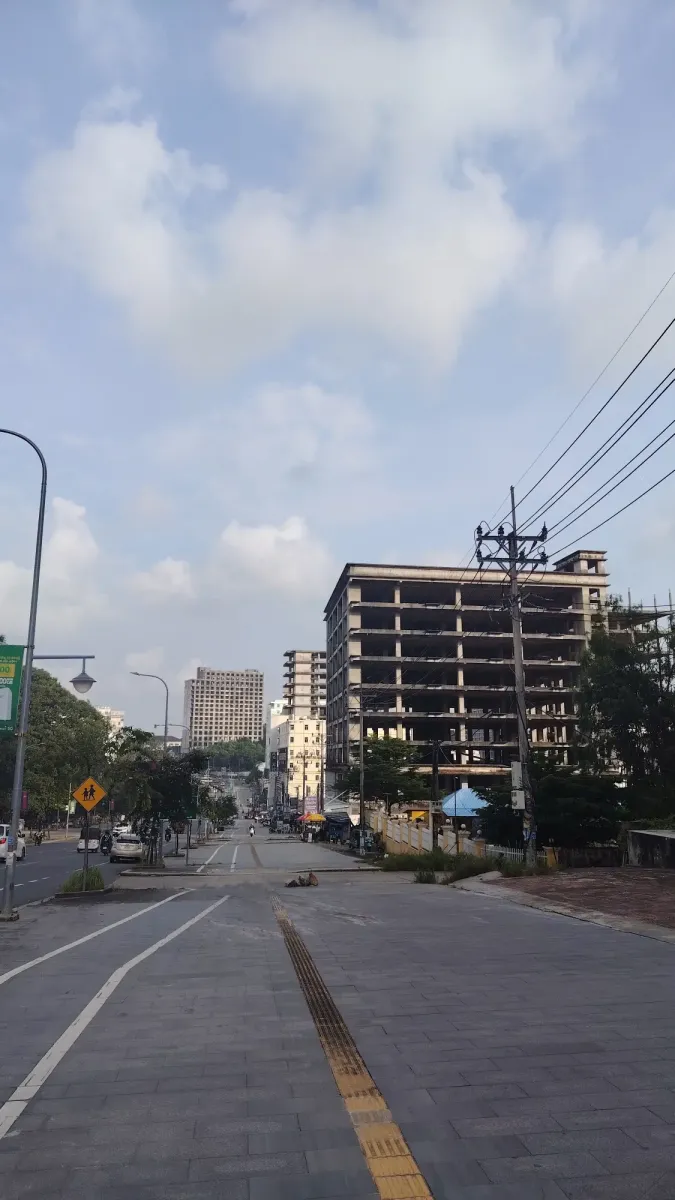
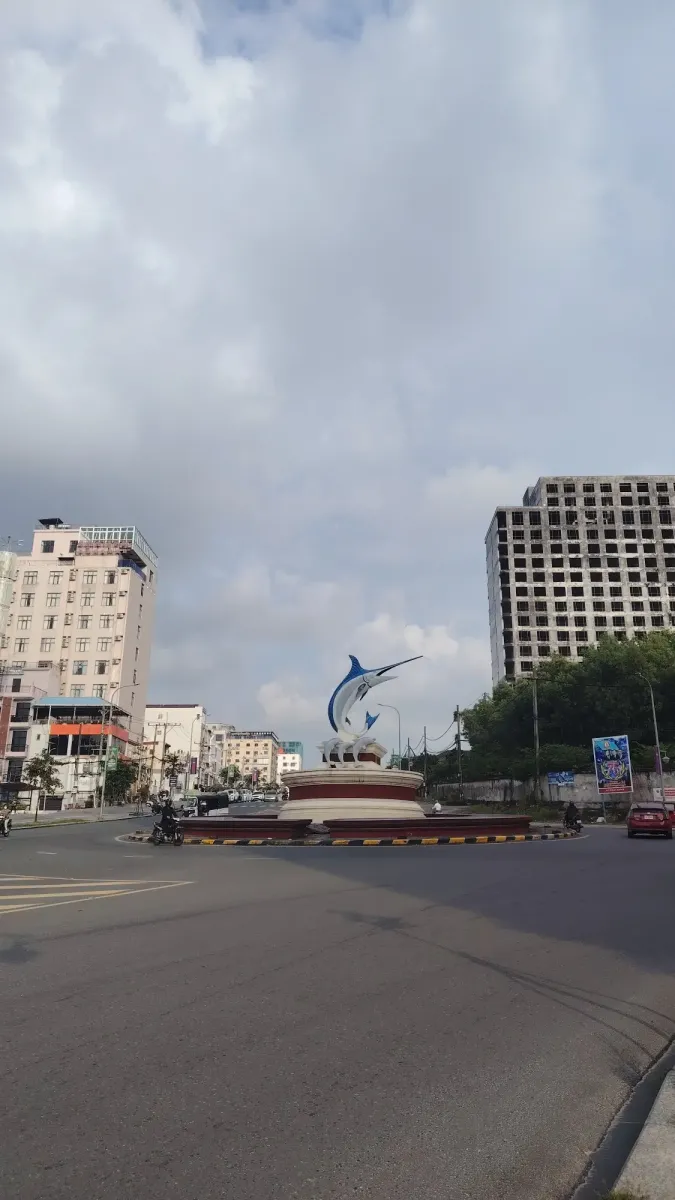
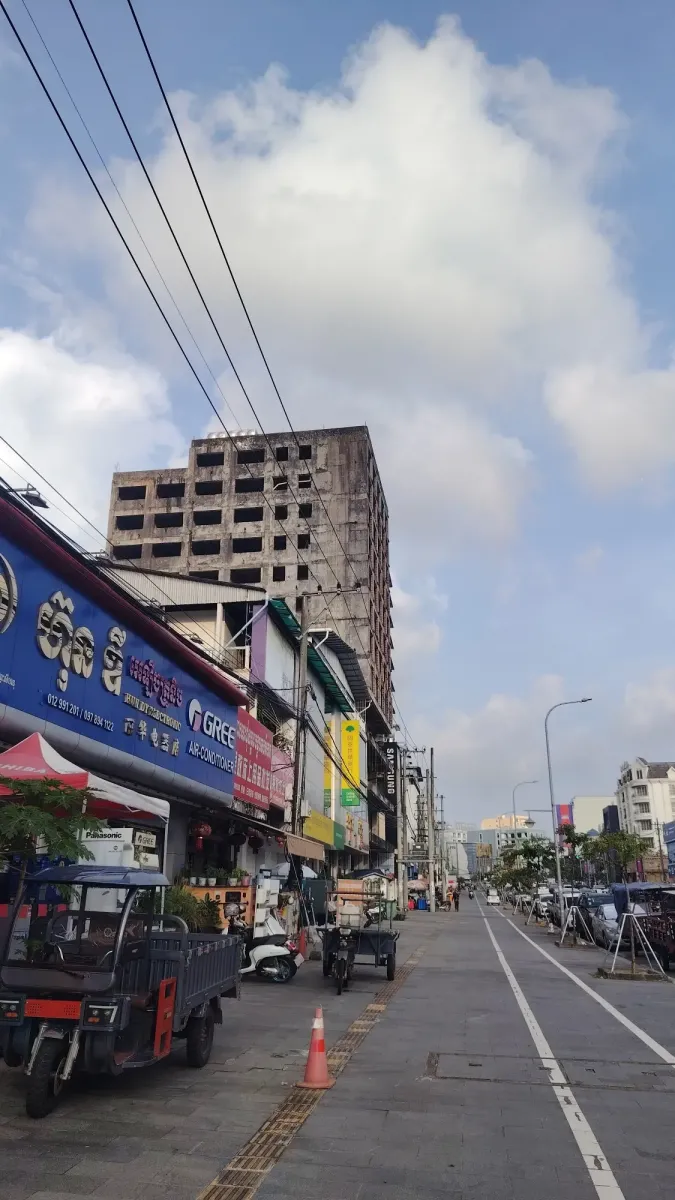
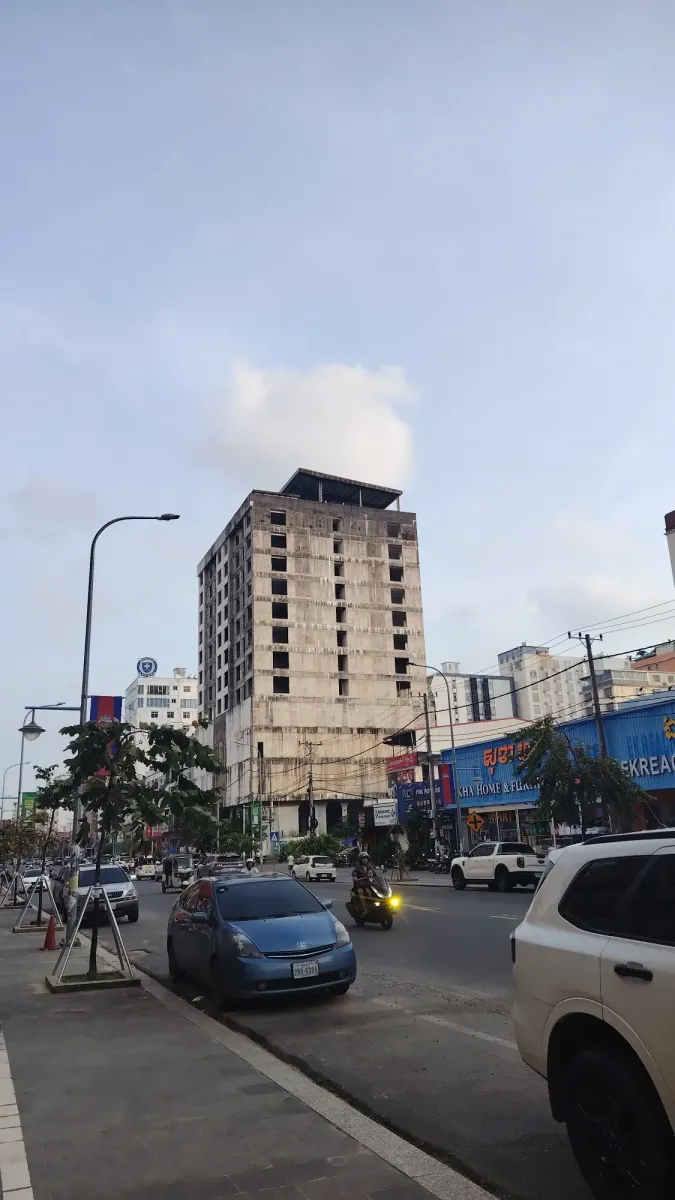
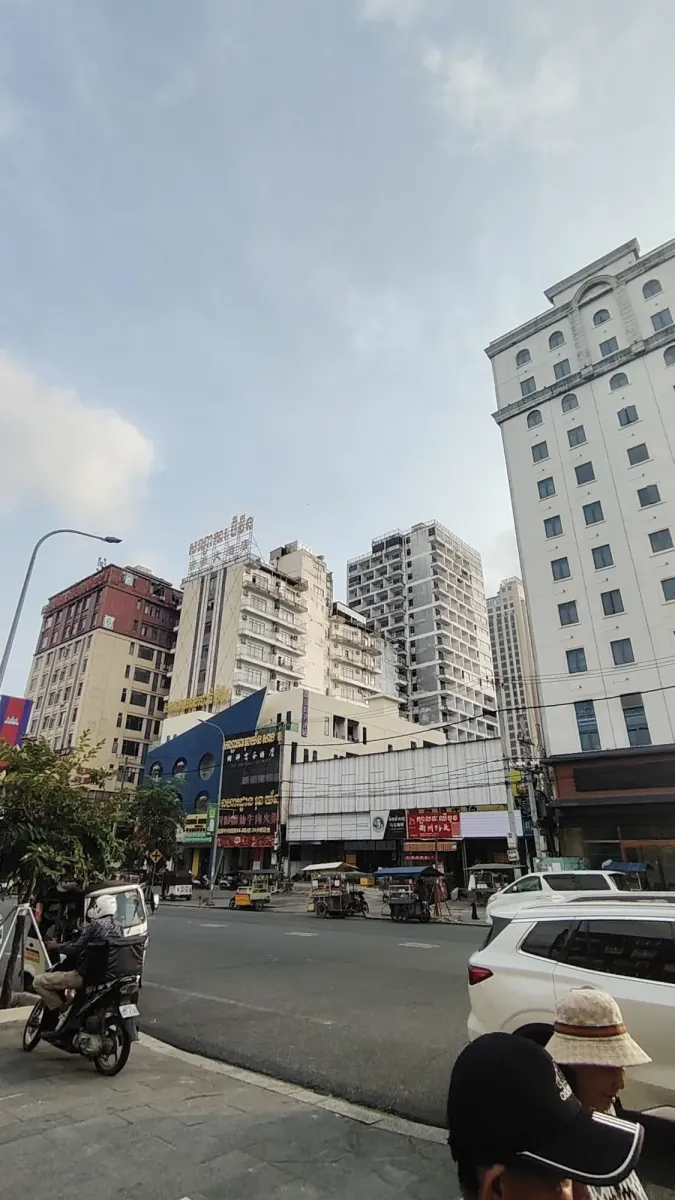
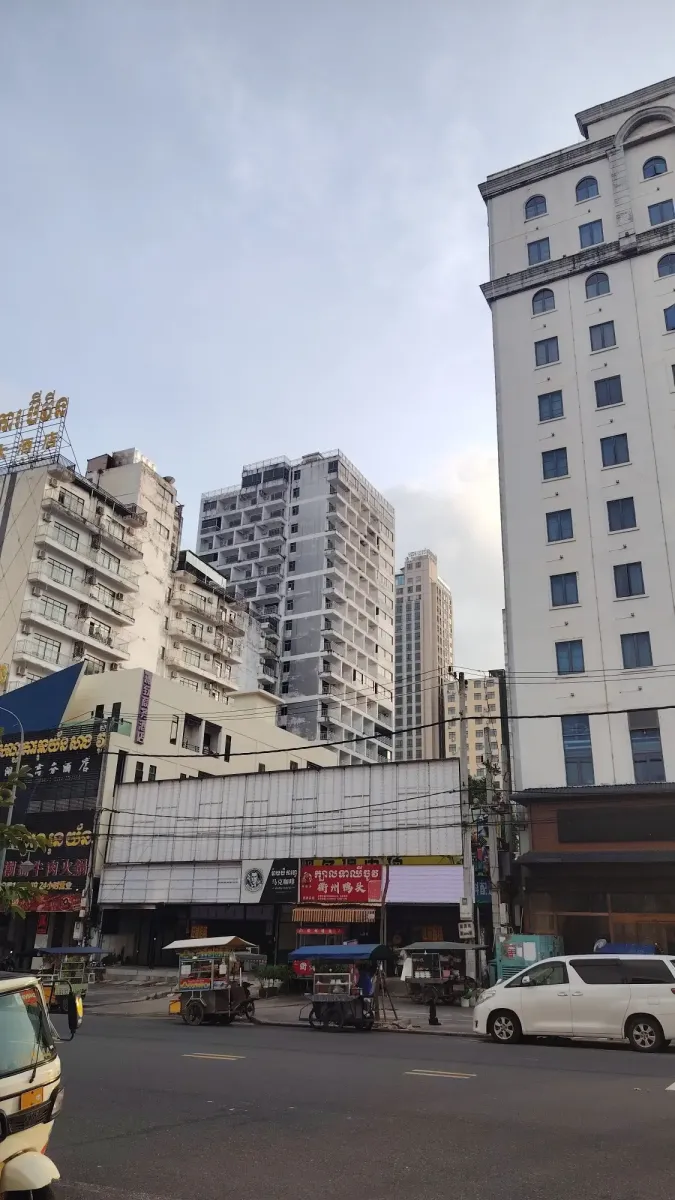
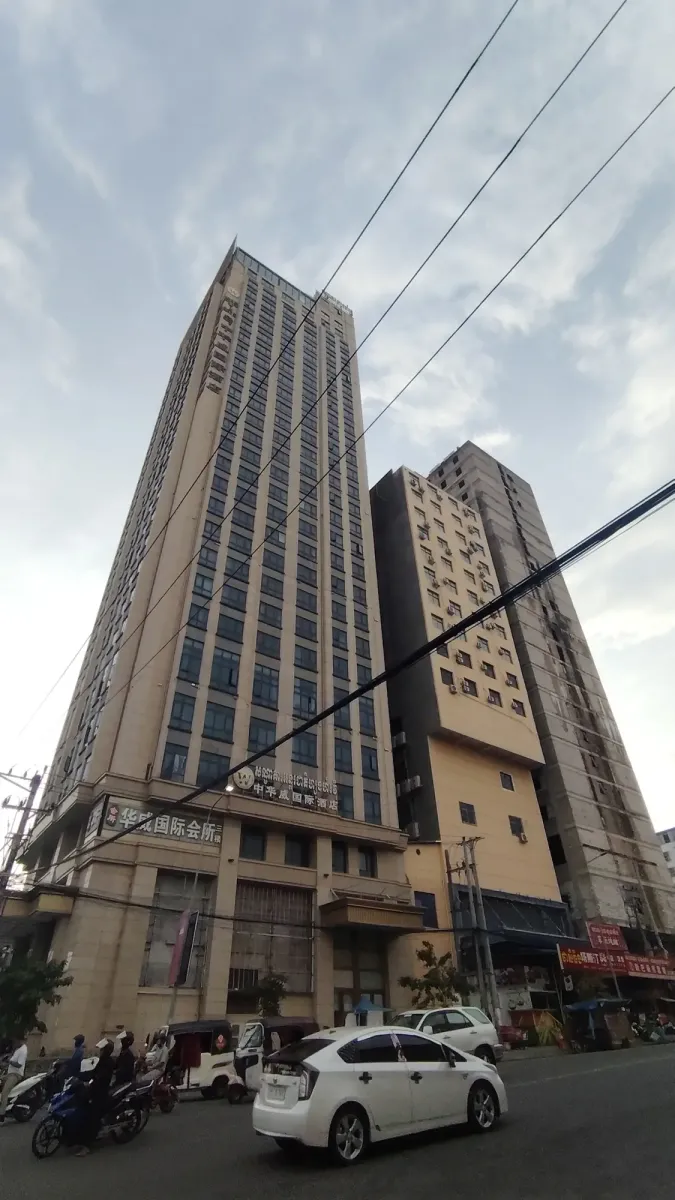
At first glance, I noticed that this city was different. Massive buildings, vast streets—the kind I’ve seen countless times before. Yet, the traffic and the number of people somehow don’t match the scale of the place.
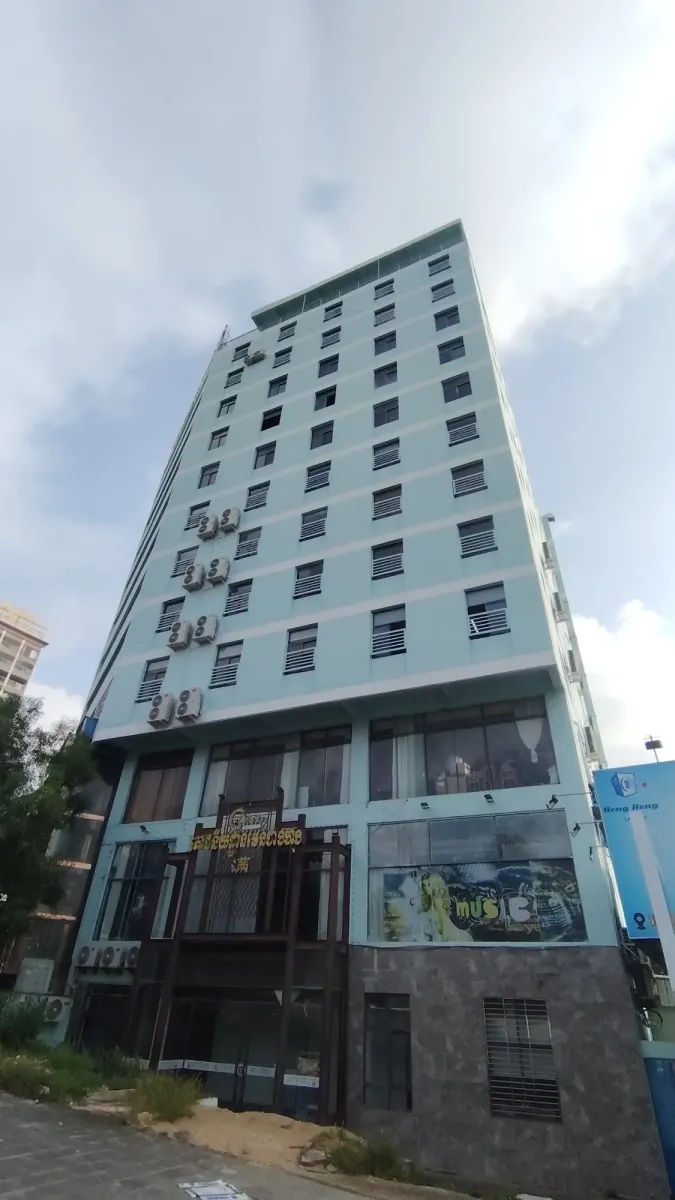
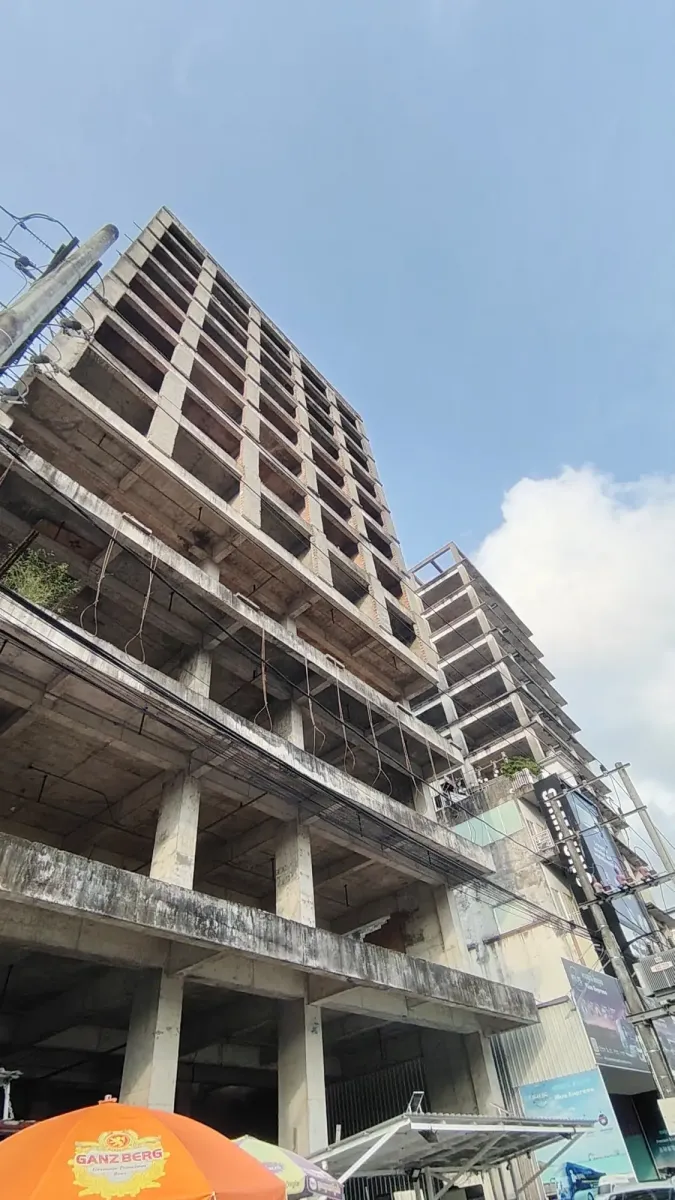
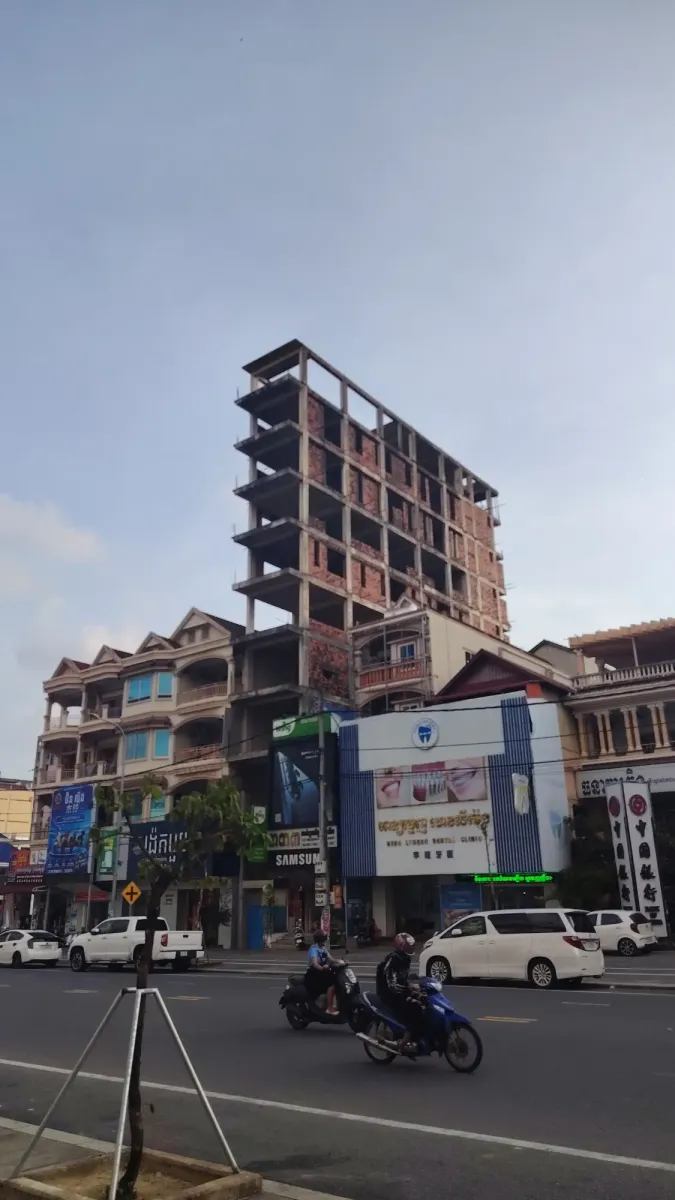
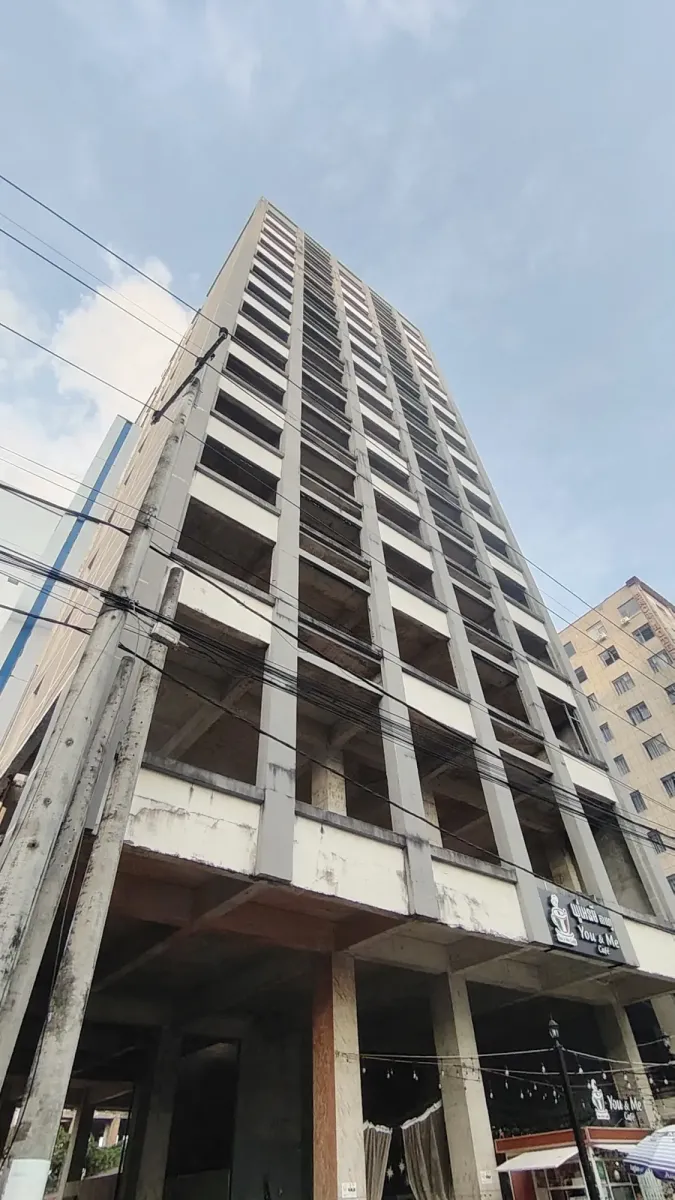
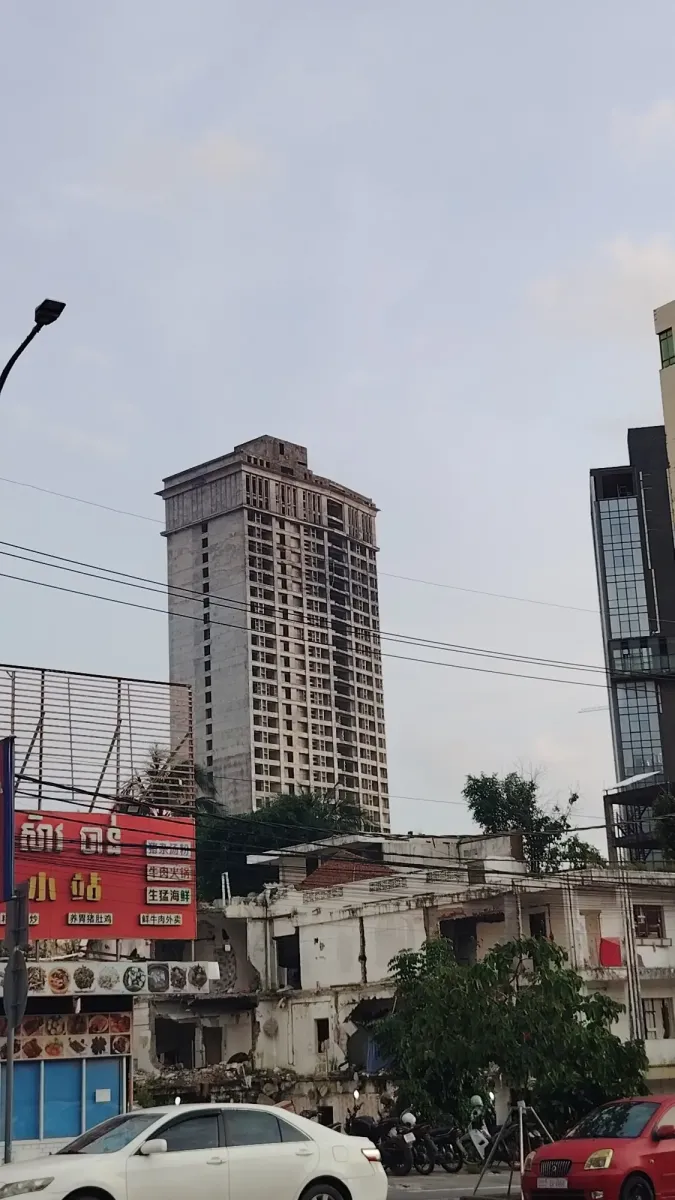
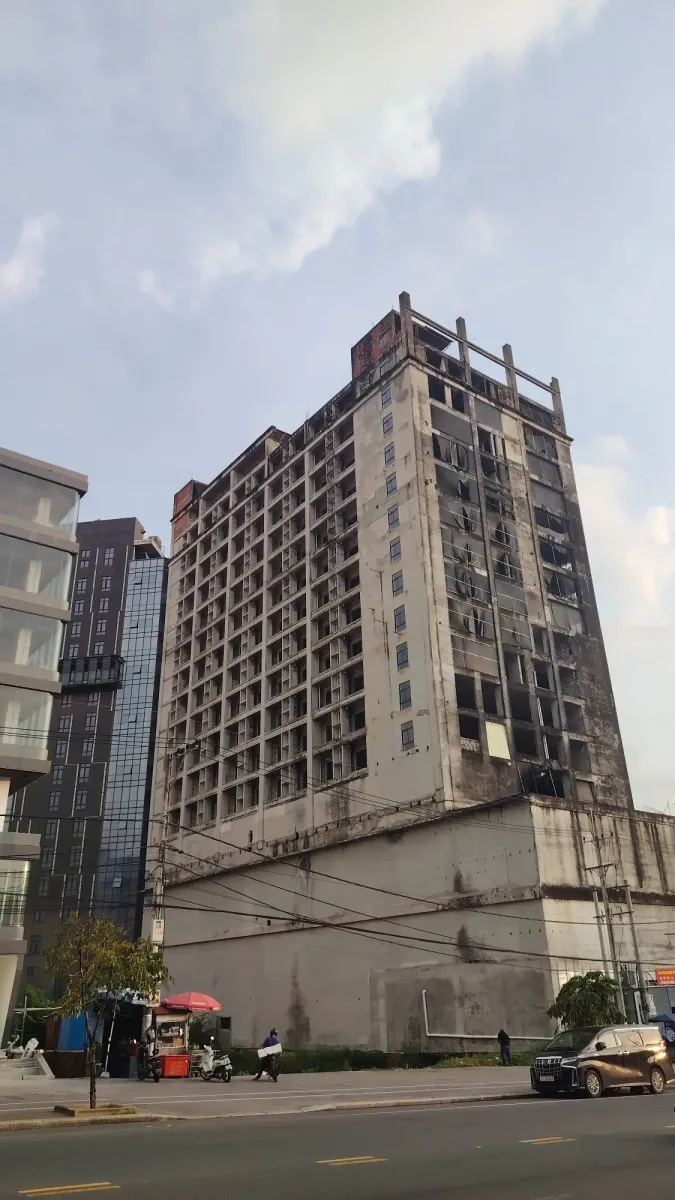
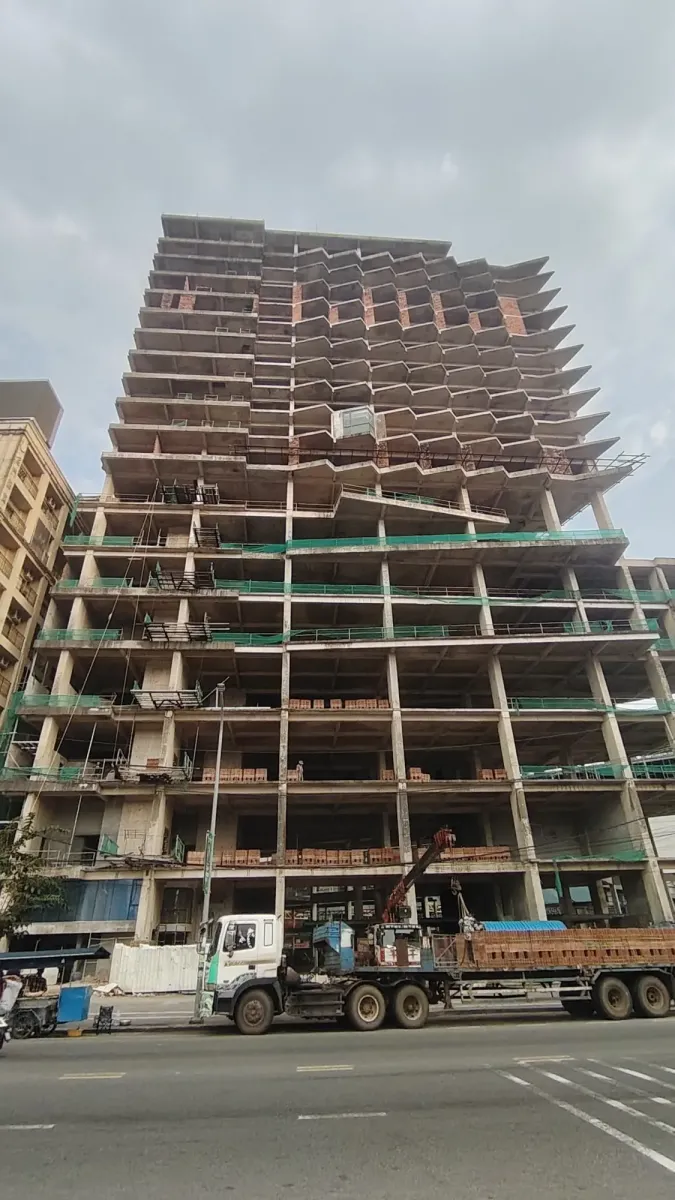
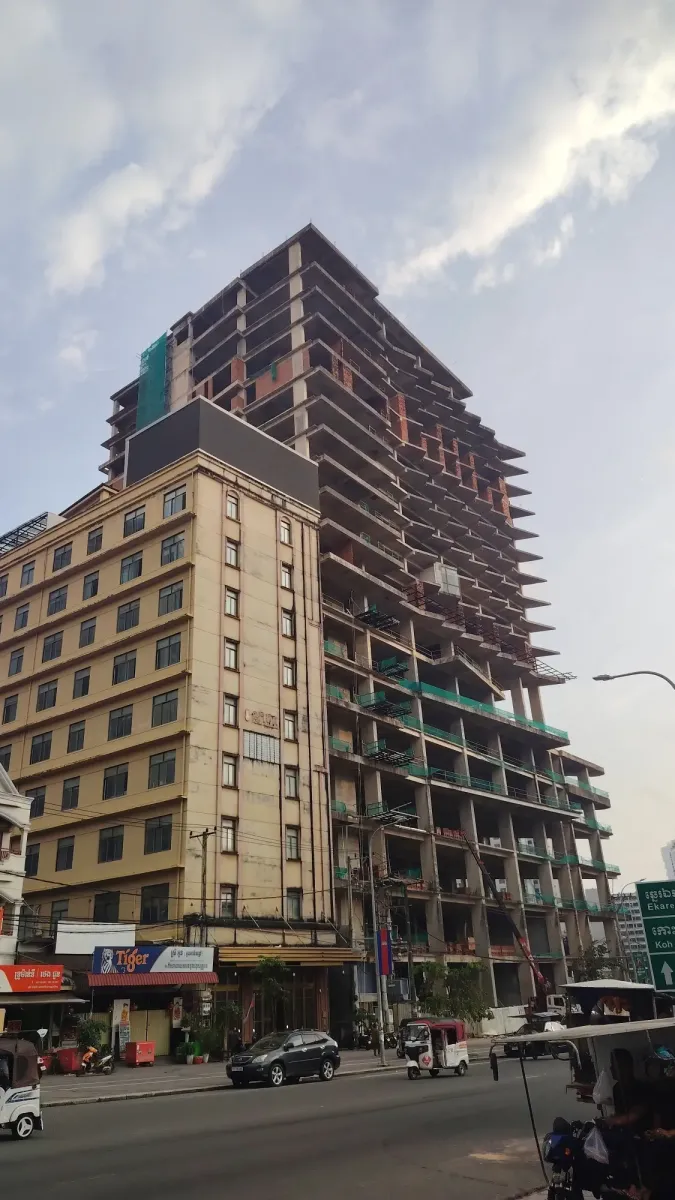
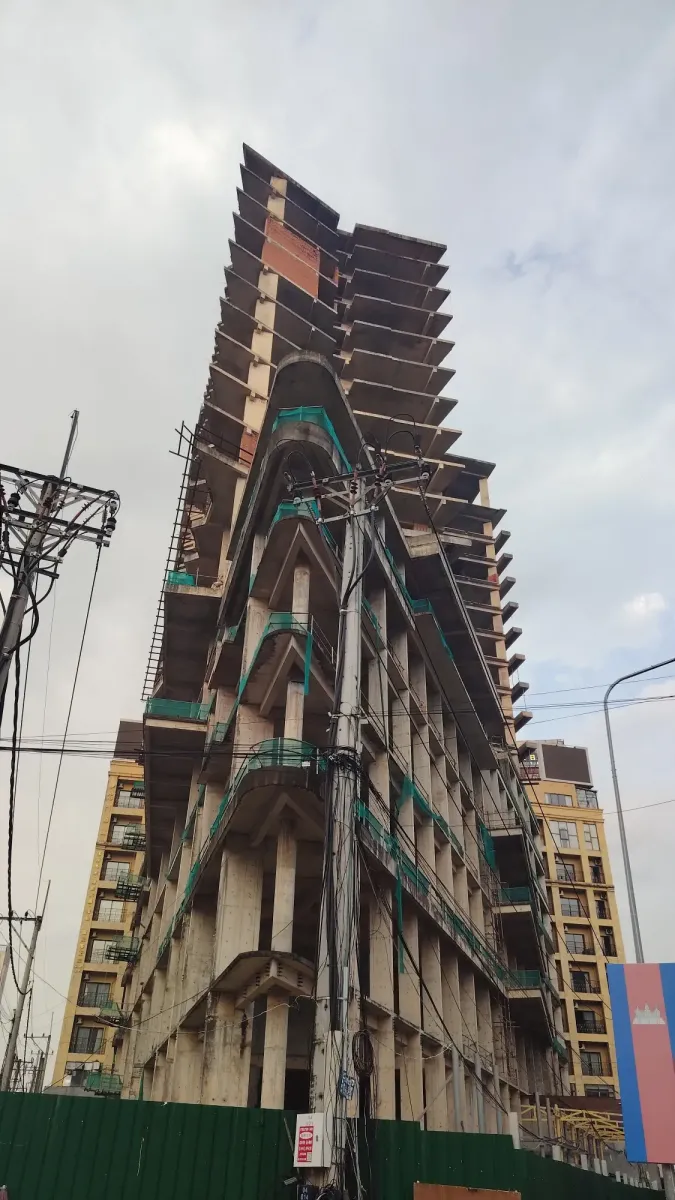
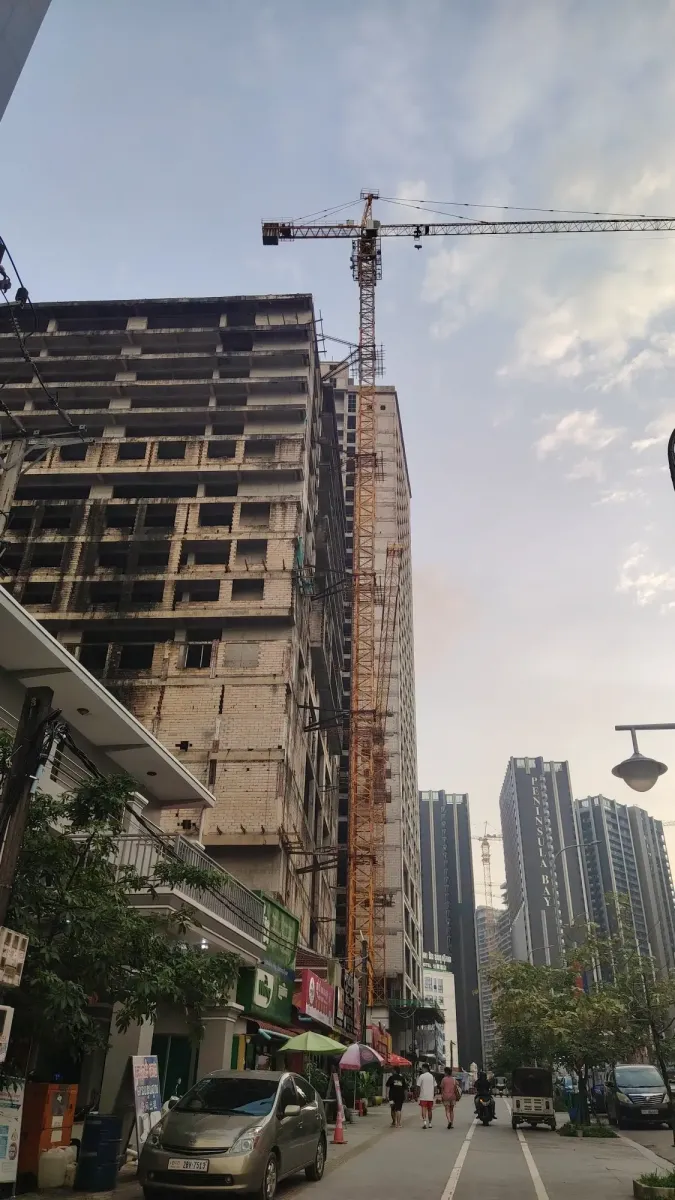
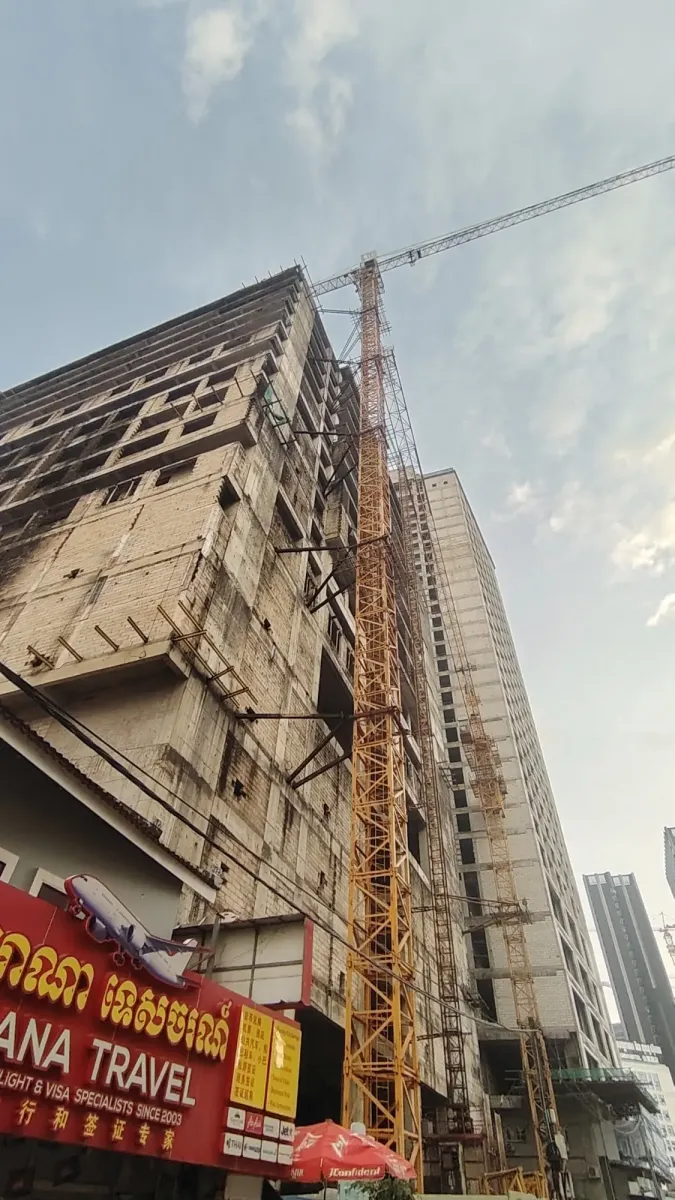
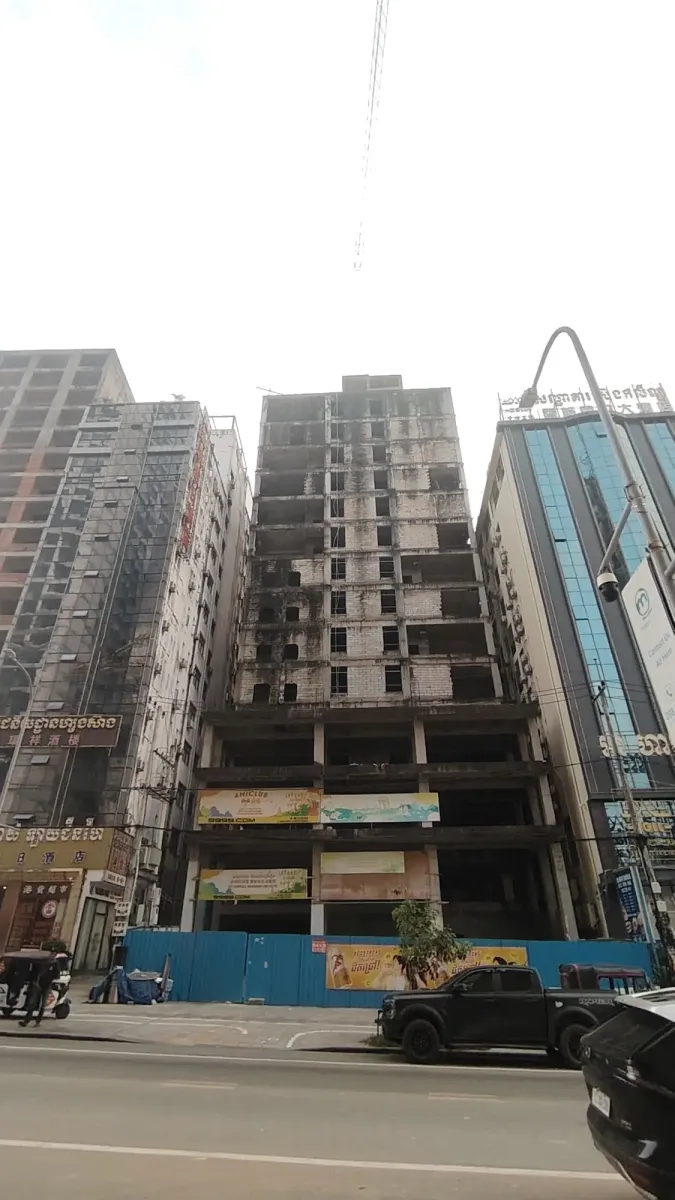
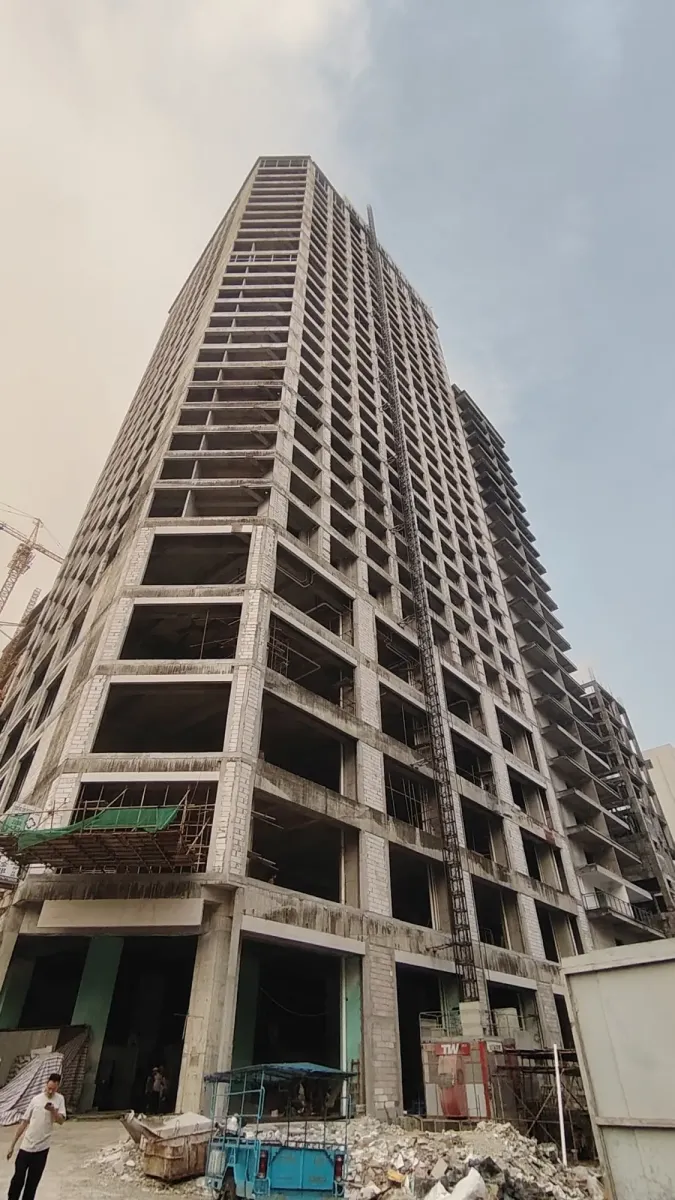
I see a multitude of huge structures here—ten or twenty stories high—standing in a state of near-completion. It is evident they have been this way for years: fenced off, empty, yet not exactly solitary. I get the distinct feeling that for every finished building, there is at least one that was never completed.
The streets at night seem even more out of sync with the city’s size. There are hardly any dogs on the streets, let alone people. There is nightlife, of course; plenty of vendors offer food even around midnight. I could even get a haircut at night, just as one might expect. Motorbikes come and go. Yet, for all this movement, the city feels even emptier at night. Or rather, the unfinished buildings seem even stranger then—after all, they aren’t illuminated. They simply stand there, forlorn and dark, in the black of night.
A város története
Ennek a különleges városnak a történelme is különös. Szokásomtól eltérően kicsit itt is foglalkozom a tényekkel. Ha nem érdekel, ugorj nyugodtan a következő bekezdésre. Ott már enni fogunk.
A város az 1950-es években kezdett el kialakulni. Nevét Norodom Sihanouk királyról kapta. Ezért nincsen olyan régi történelmi városmagja, mint “Phnom Penhnek” vagy “Kampotnak”. Eleve kikötővárosként született.
Aztán a 2010-es évek második felében elképesztő tempóban érkezett a kínai tőke. Kaszinók, szállodák, apartmanházak és hatalmas ingatlanfejlesztések épültek. Csak 2016–2018 között körülbelül egymilliárd dollárnyi kínai befektetés érkezett a tartományba. Máris megvan a válasz, hogy Sihanoukville méretei miért nincsenek összhangban az utcai élettel.
A kínai befektetők kaszinókat, hoteleket, apartmanházakat, irodaházakat kezdtek építeni, de nem csak ennyi történt. Az egész modell egyik motorja az online szerencsejáték volt. Nem egyszerűen arról volt szó, hogy turisták ültek a kaszinókban: Sihanoukville-ből interneten szolgáltak ki főként kínai játékosokat. Ehhez rengeteg kínai dolgozó, vállalkozás és ingatlanfejlesztés kapcsolódott.
Aztán 2019-ben a kambodzsai kormány kihúzta a dugót. Nem újították meg az online szerencsejáték-engedélyeket. Így annak az évnek a végéig közel fél millió kínai ember hagyta el Kambodzsát. Erre jött még a COVID. Megvan tehát a válasz, hogy miért van itt ennyi be nem fejezett épület.
Mennyi is.
Engem annyira lenyűgöznek a számok, hogy végül ezt is megosztom. 2023 szeptemberében 1069 vizsgált épületből csak 475 működött; 177 elkészült, de nem működött, 364 építése pedig fel volt függesztve.
Ennyit a történelemről és a számokról. Együnk valamit.
The City’s History
This unique city has a unique history, too. Contrary to my usual habit, I’m going to touch upon the facts here. If that doesn’t interest you, feel free to skip to the next paragraph—that’s where we get to the food.
The city began to take shape in the 1950s. It was named after King Norodom Sihanouk. Consequently, it lacks the kind of historic city center found in places like Phnom Penh or Kampot; it was established as a port city from the very start.
Then, in the second half of the 2010s, Chinese capital poured in at an astonishing rate. Casinos, hotels, apartment complexes, and massive real estate developments sprang up. Between 2016 and 2018 alone, approximately one billion dollars in Chinese investment flowed into the province. This immediately explains the disconnect between Sihanoukville’s scale and its street life.
Chinese investors began building casinos, hotels, apartment blocks, and office buildings, but that wasn’t the whole story. A key driver of the entire model was online gambling. It wasn’t simply a matter of tourists sitting in casinos; Sihanoukville became a hub for serving—via the internet—players located primarily in China. This generated a massive influx of Chinese workers, businesses, and real estate projects.
Then, in 2019, the Cambodian government pulled the plug. They stopped renewing online gambling licenses. By the end of that year, nearly half a million Chinese nationals had left Cambodia. Then came COVID. So, there is the answer as to why there are so many unfinished buildings here.
Just look at the numbers.
I am so fascinated by the figures that I’ll share this, too: in September 2023, out of 1,069 buildings surveyed, only 475 were operational; 177 were completed but not in use, and construction had been suspended on 364.
So much for history and statistics. Let’s get something to eat.
A Test of Courage
I tried to think back on what I’d eaten in Asia that I hadn’t tried before. I don’t go out of my way to hunt for exotic foods; I simply eat whatever comes my way. Consequently, the list of “delicacies” isn’t huge, though there are a few.
Locusts. Grasshoppers. Larvae. Snails. Frogs. Eels. Balut (duck egg with the duckling inside). Goat. Countless local dishes containing all sorts of things I couldn’t even begin to identify or name. I’d also include exotic fruits in this category—among them, my favorite, durian.
My culinary adventures began the moment I arrived on Koh Samui. That’s where I first ate fried insects. I’ve bought them several times since—most recently, a large cupful just last week. A portion of locusts is more than enough to last through a half-hour movie, and they cost a fraction of the price of potato chips. So, I eat them as a snack rather than a main course.
Back then, I passed on the scorpion and the tarantula; I simply didn’t have the courage for it at the time. Since then, I’ve been curious about whether I’ll have the nerve to try them next time.
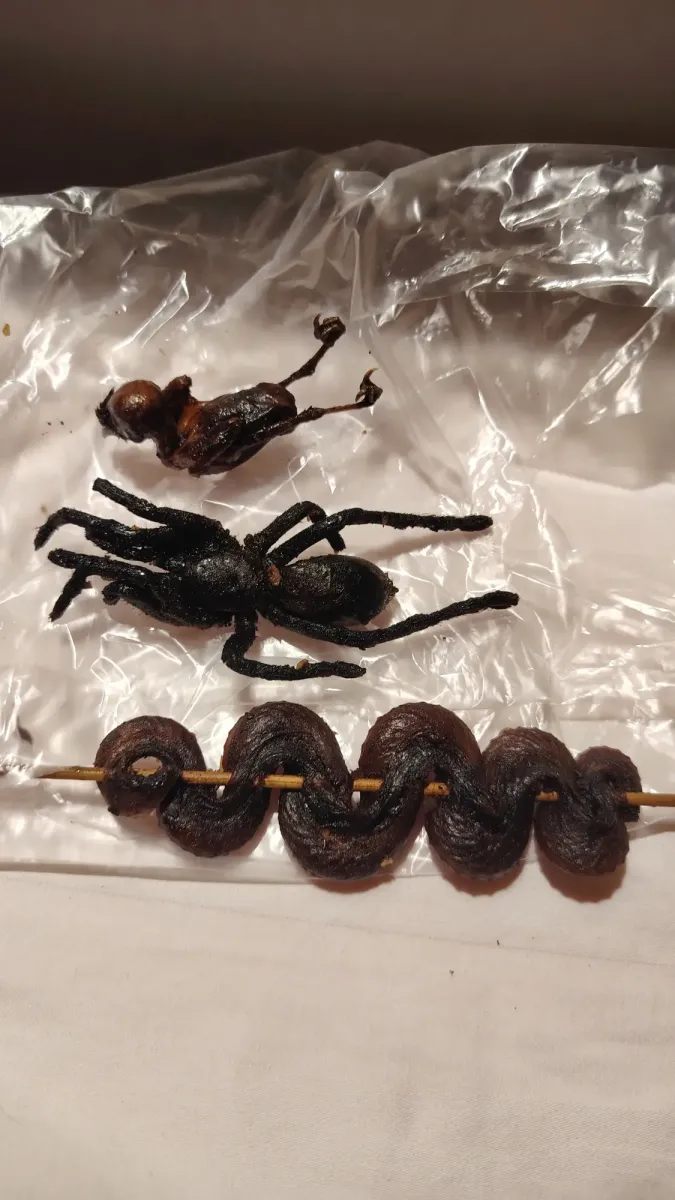
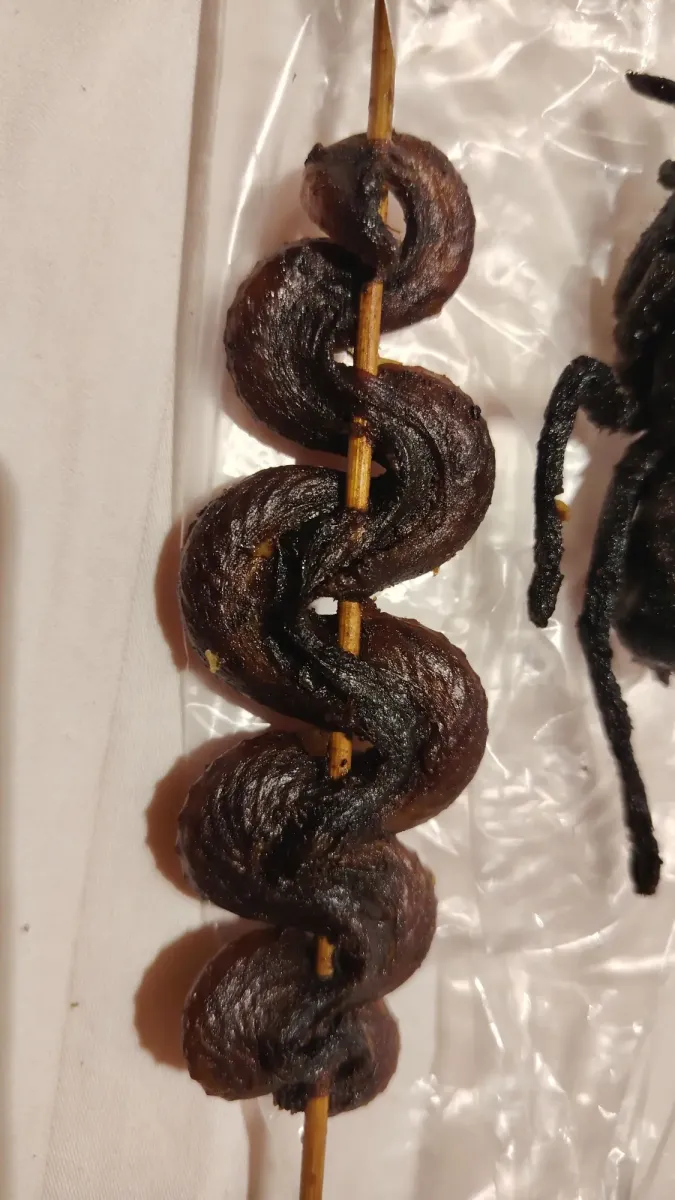
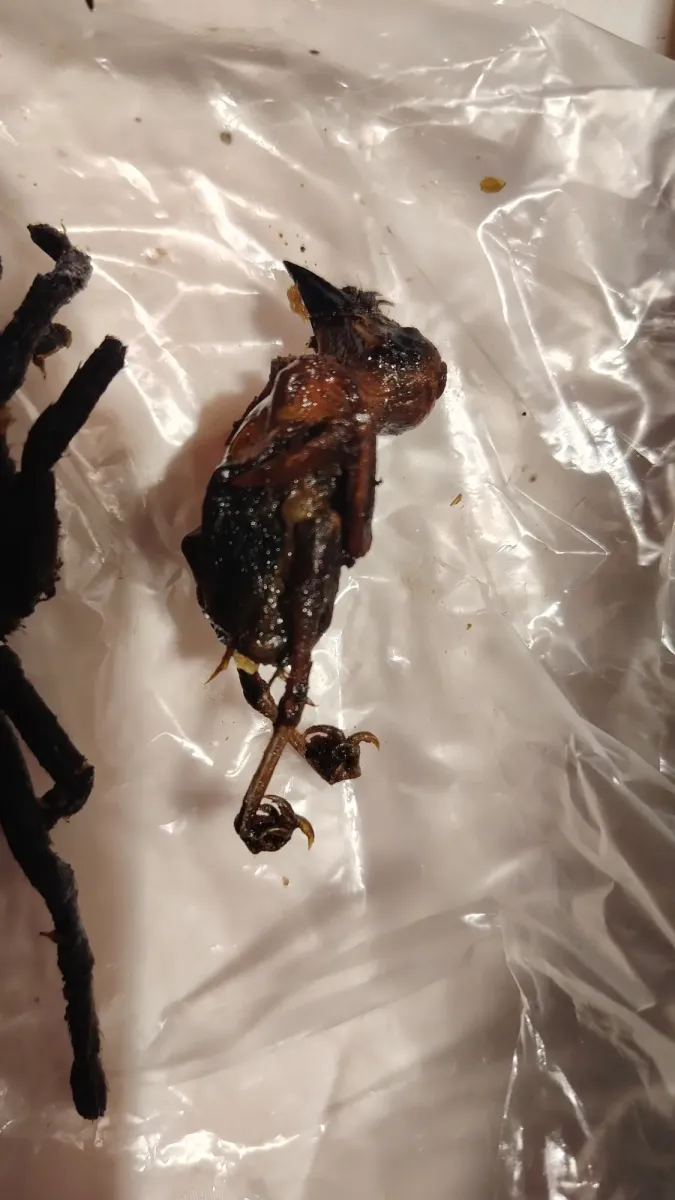
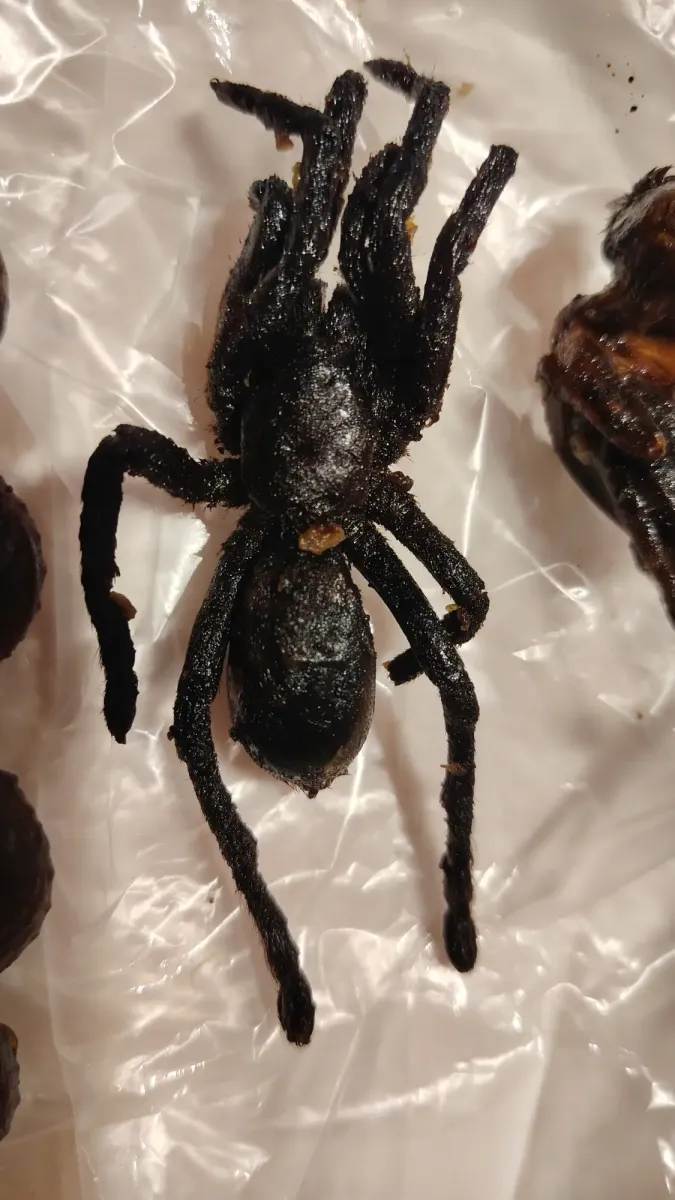
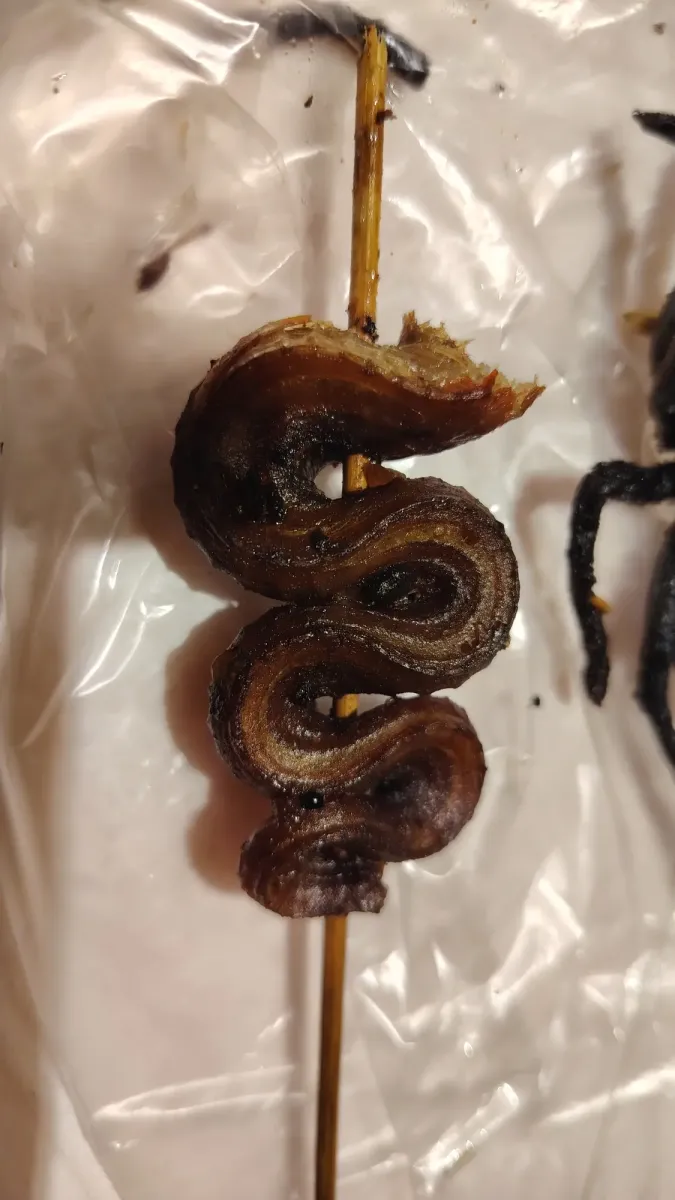
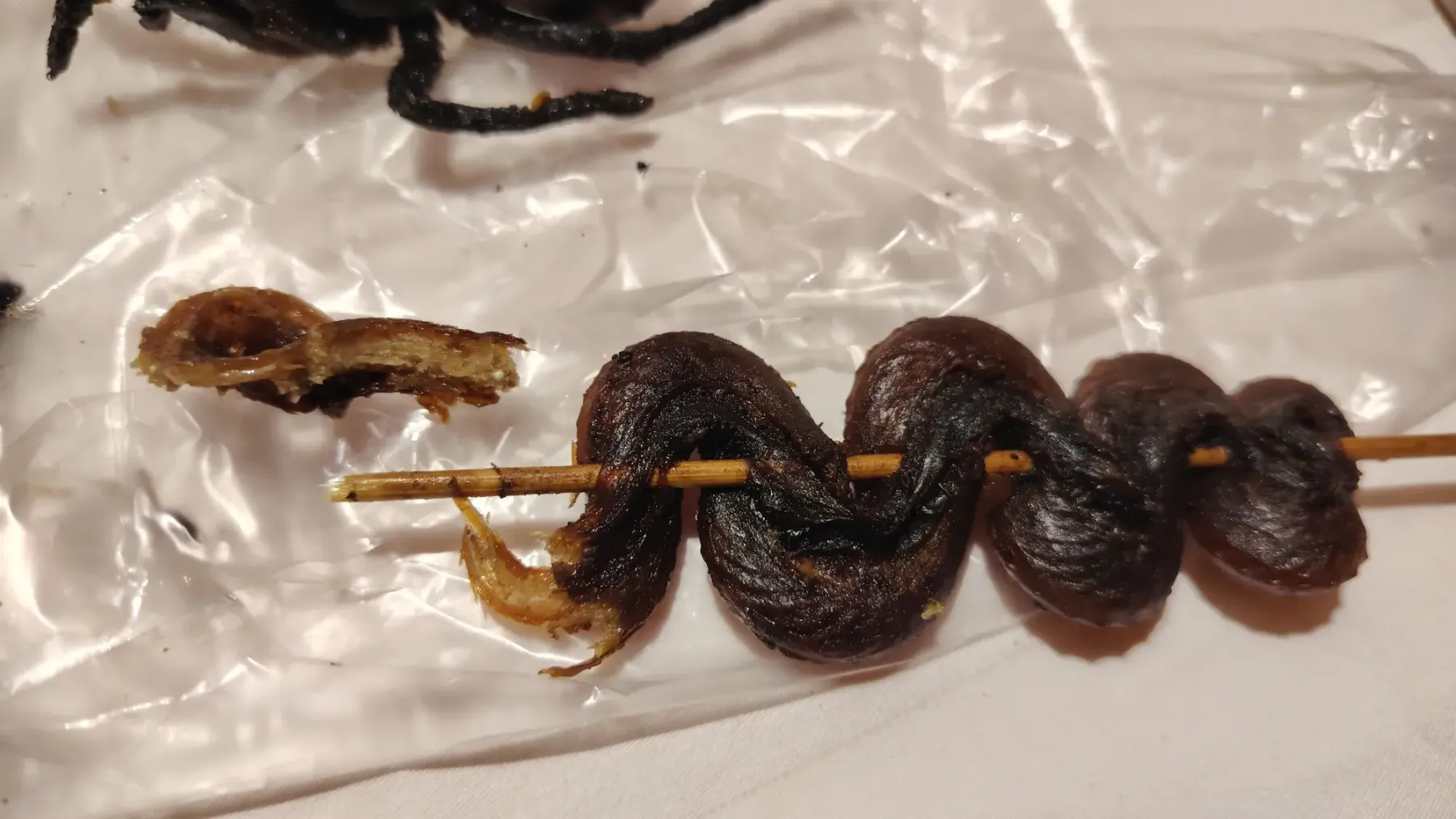
The day before yesterday, while walking down the street, I spotted a vendor. You can usually tell from a distance if someone is selling insects, as they tend to display them in large piles on their stalls. I decided to pick up a little evening treat for myself. And then I saw it. The tarantula was so big it easily filled my entire palm. But it wasn’t alone! To its left were plenty of small snakes skewered on sticks, and to the right, a small bird prepared whole.
At first, all I could blurt out was, “Jesus!” Then I bought one of each. The die was cast; now I just had to eat them. I planned to do that at home.
Before diving in, though, I asked the AI whether I should eat them whole. We agreed that—aside from the wooden skewer piercing the snake—it was proper to eat everything.
Once I knew that, I started eating. In the meantime, the AI threw in another question: “And now, just one question remains: are you actually going to eat all three? 😁”
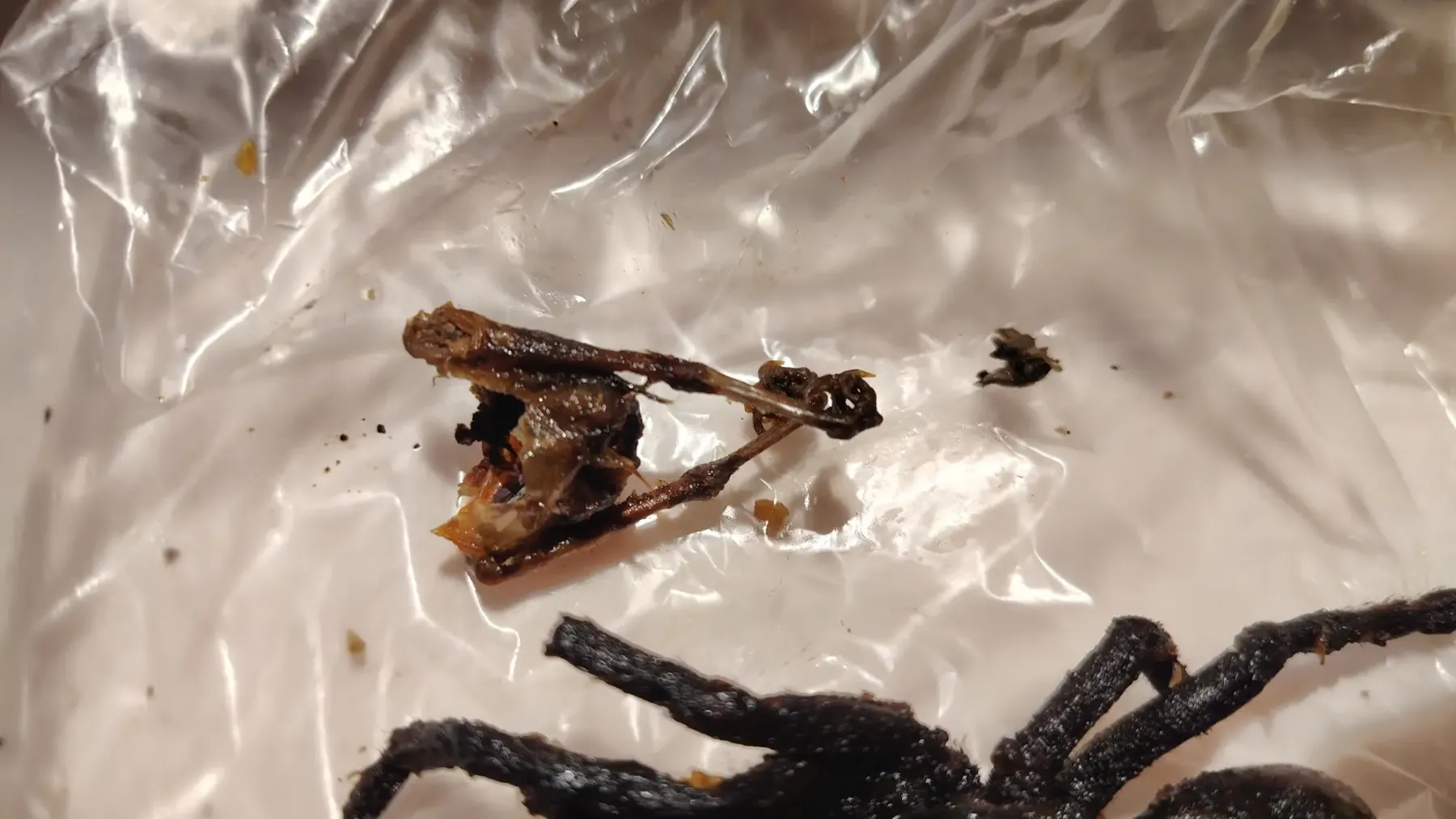
I wrote back: “I just bit the head off the chick. There was a tiny feather on it, too. I just swallowed it. It tastes just like the grasshopper I had last week.” That way, I already had an answer ready for when someone asked me the next day what it tasted like. Saying it tastes exactly like a grasshopper isn’t the most helpful description, but it’s the truth.
Then came the rest of the experience. The bird was tough; I had to work hard just to bite it in half. But the taste was excellent. The snake was also hard to tear apart—I assume because of the skin. However, the bones were not at all difficult to eat. I saved the spider for last. I ate its legs one by one. Then its head, and finally its abdomen. There wasn’t a single part of either dish that I didn’t enjoy.
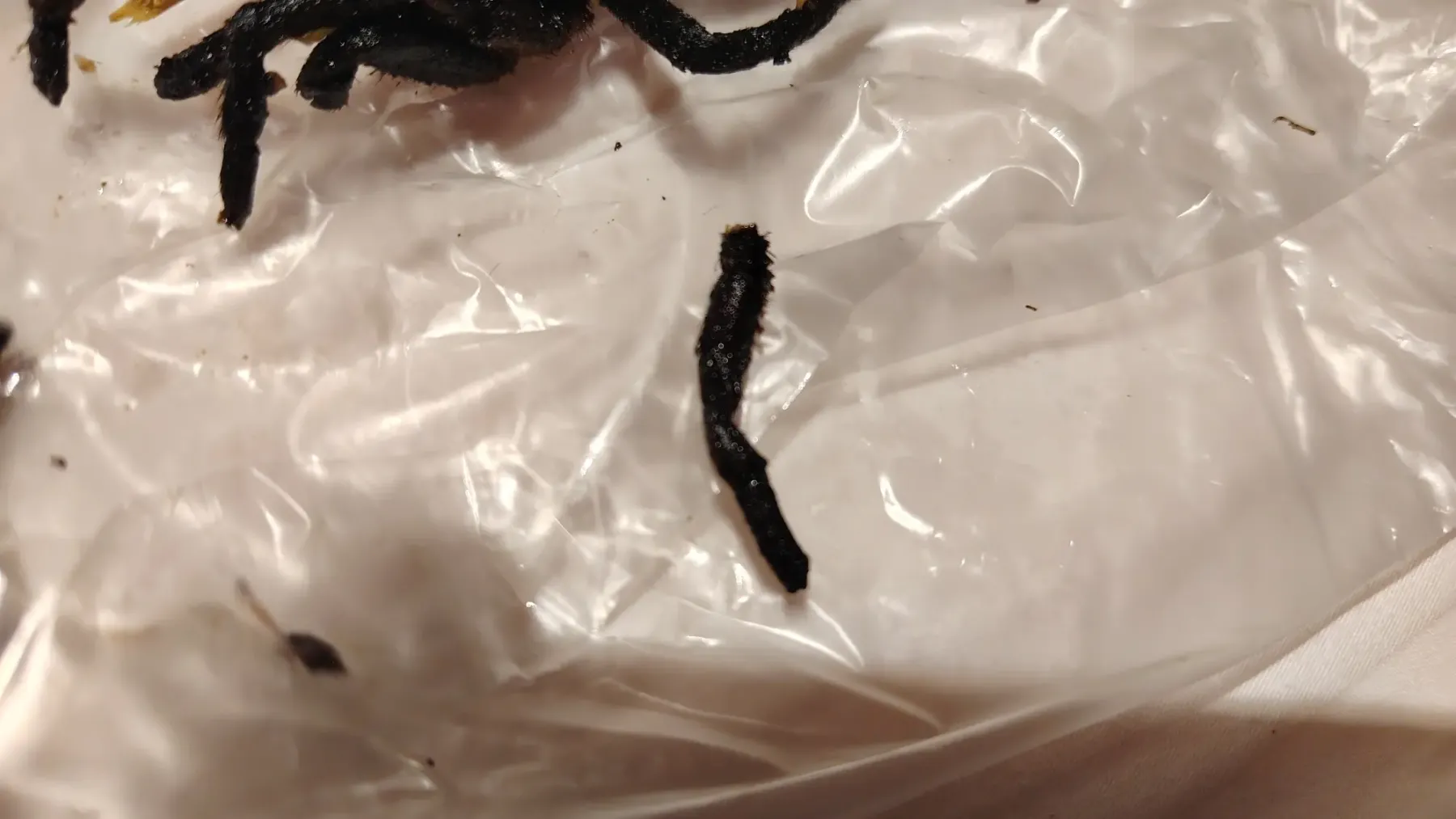
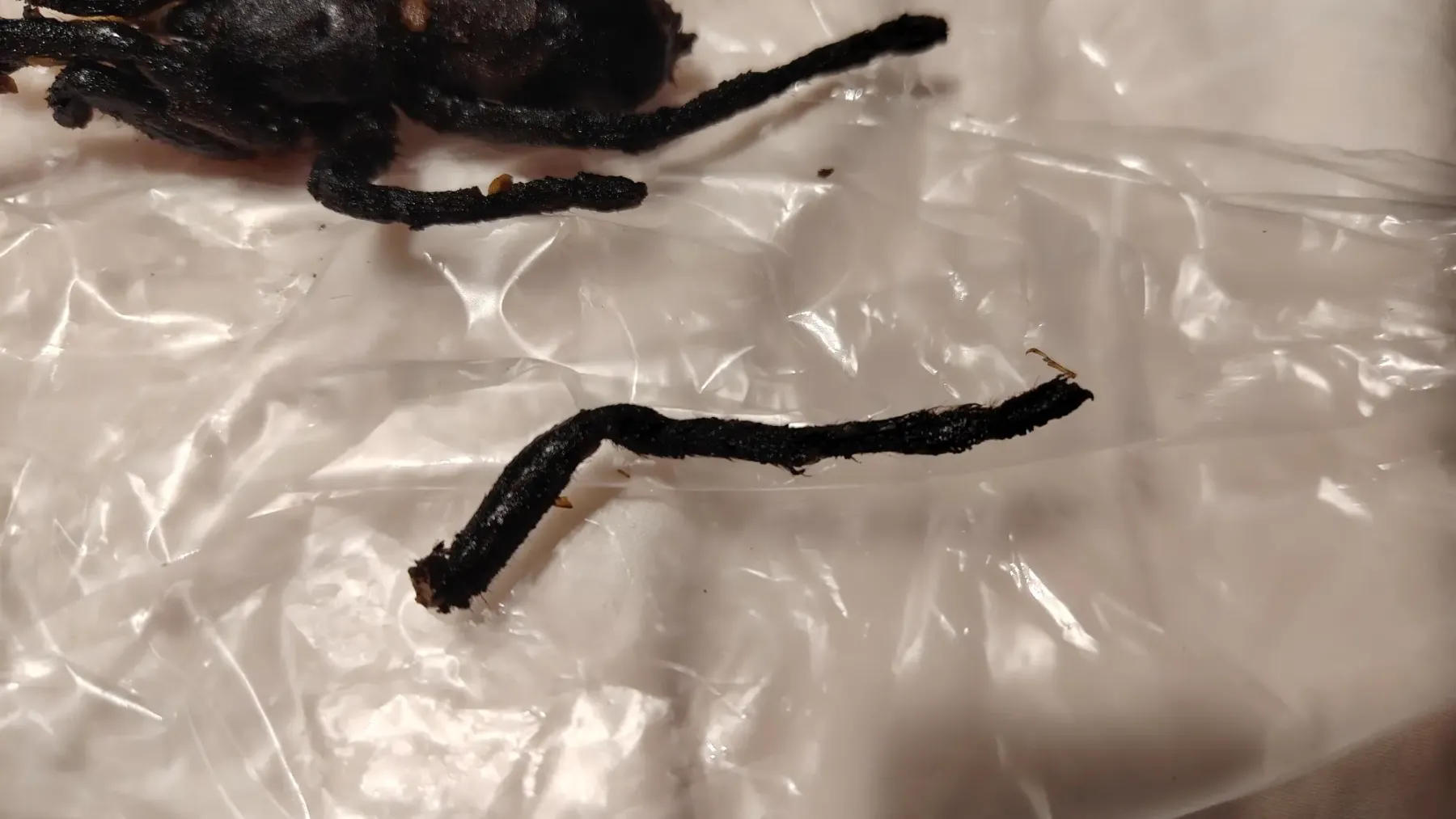
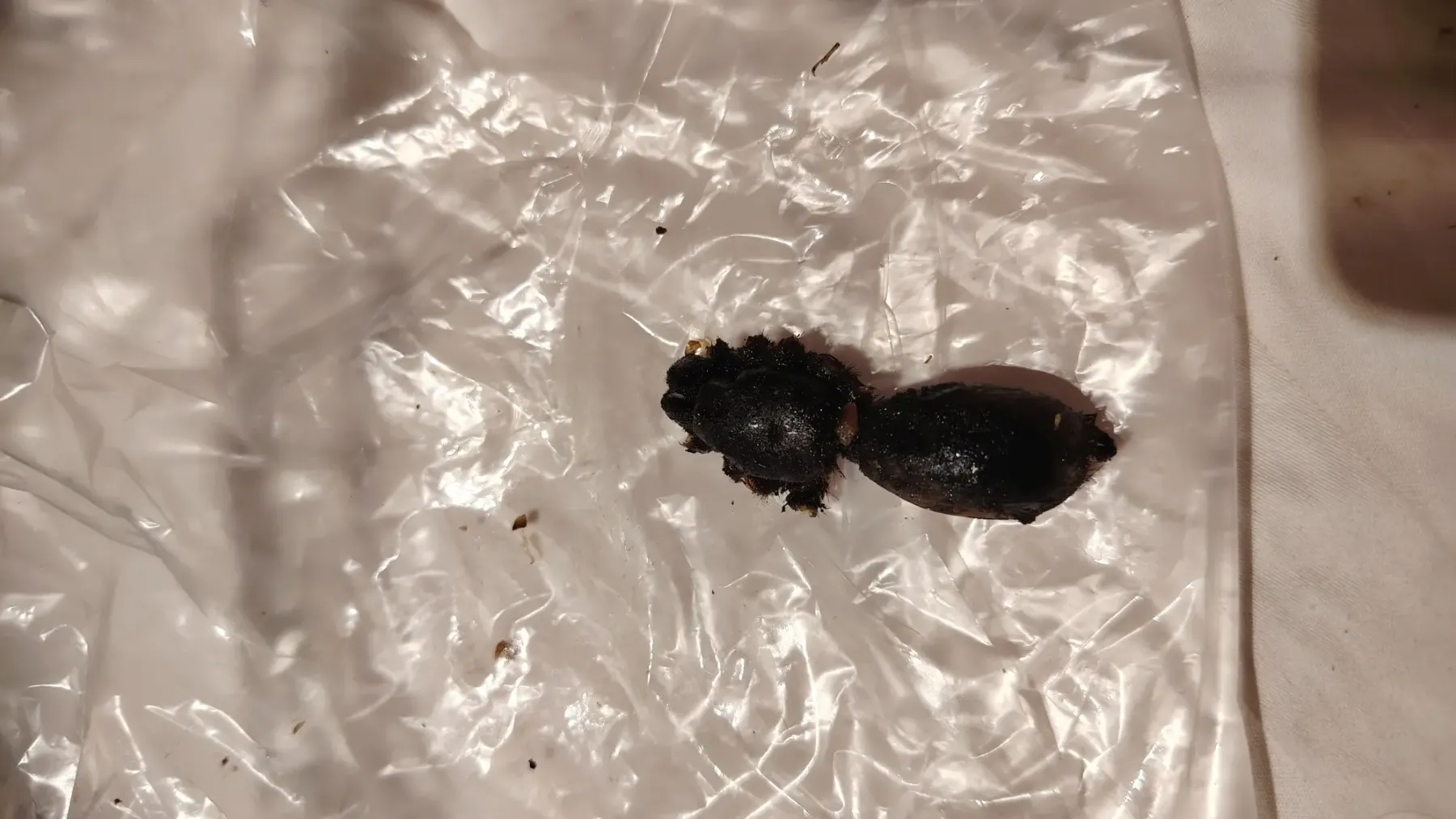
I discussed this with my younger daughter afterward. It occurred to me then that if I had simply started from the assumption that the local people likely wouldn’t eat anything bad, those prejudices might have melted away much sooner.
I could say, “So much for culinary adventures.”
But that wouldn’t be true. Yesterday, I visited a genuine Russian restaurant. I ate real, authentic borscht—accompanied by vodka and pickles—followed by Russian salad.
And just a short while ago, I was at a Japanese restaurant. I started with octopus in wasabi sauce. That was followed by a teriyaki rice bowl and then an egg tart. I washed it all down with my beloved watermelon juice. The juice is always excellent, and this time was no exception. I think it speaks volumes about today’s lunch that the excellent watermelon juice was the weakest item on the menu. The rice alone made me re-evaluate my life, and I nearly lost consciousness over the octopus. Okay, perhaps that’s a bit of poetic exaggeration. Let’s just say it was an incredibly delicious lunch.
A Funeral at the End
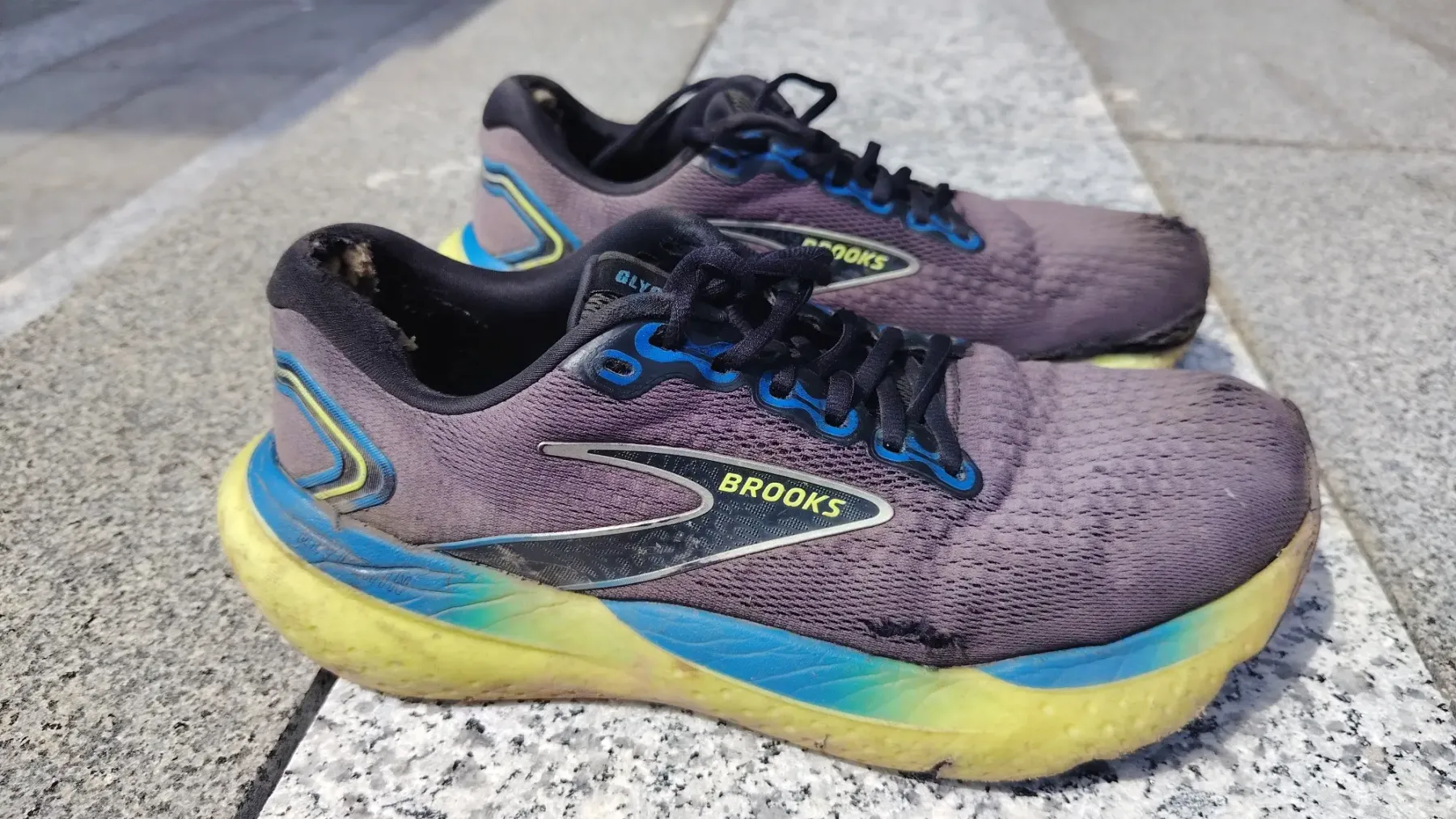
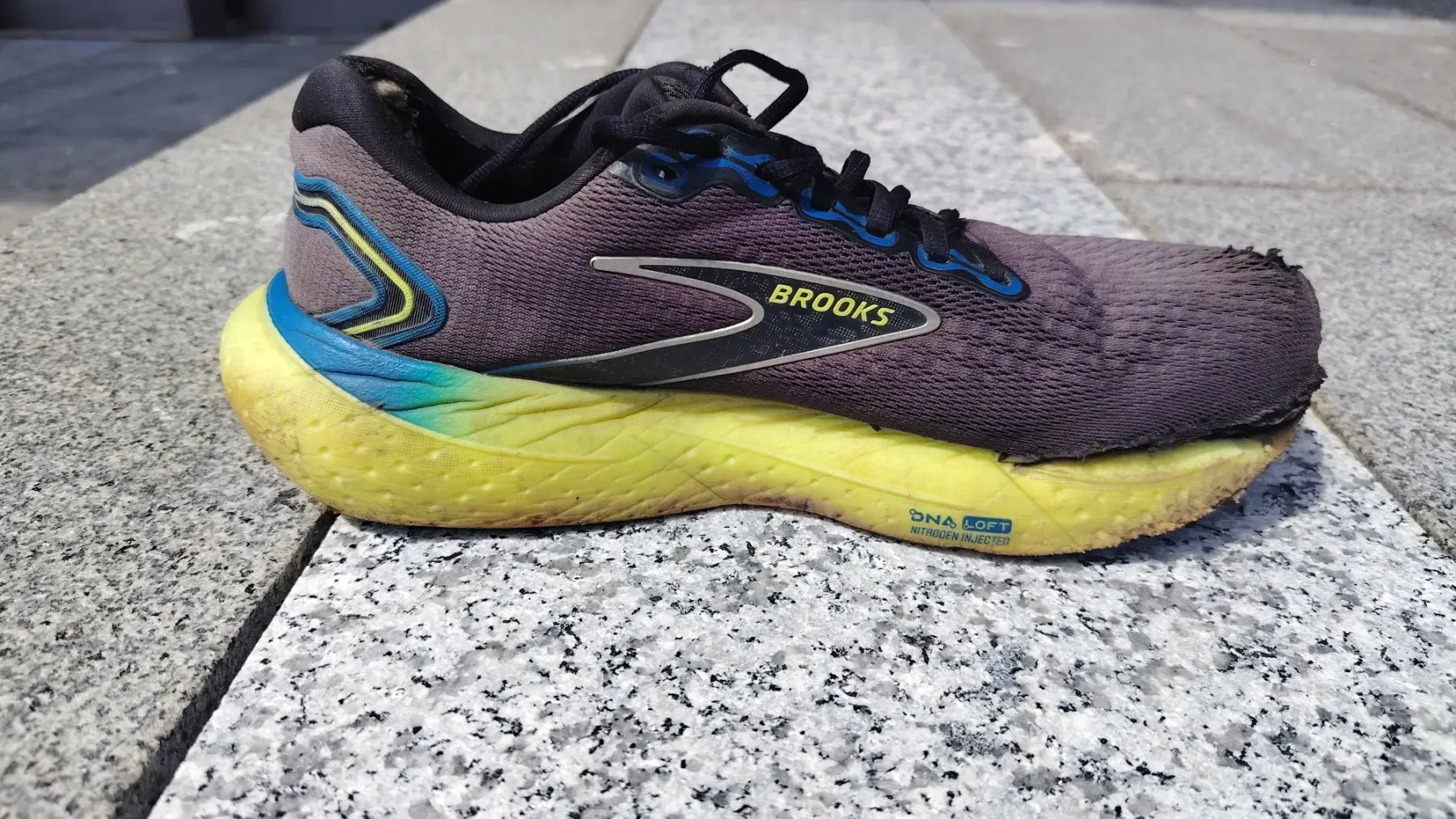
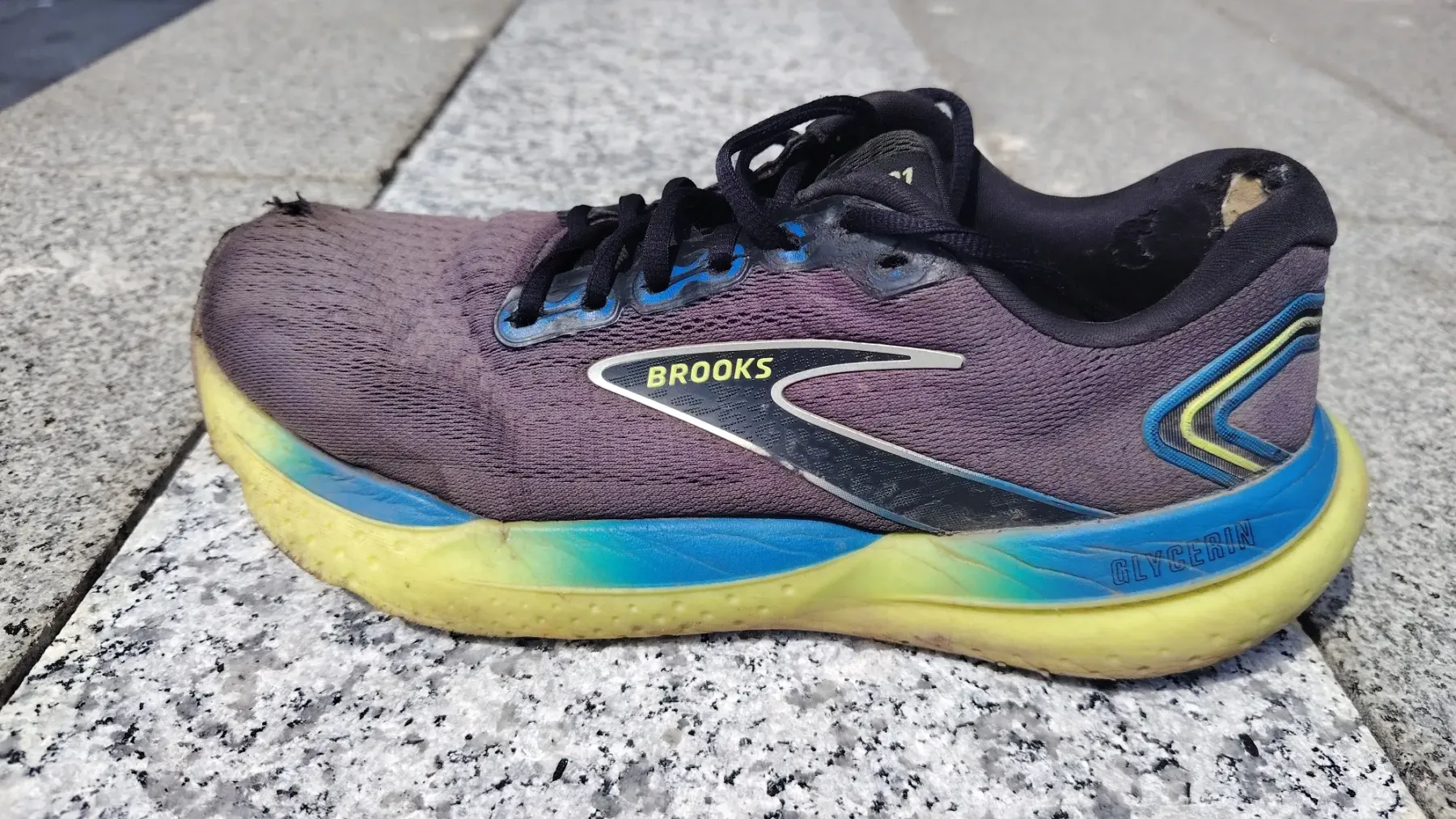
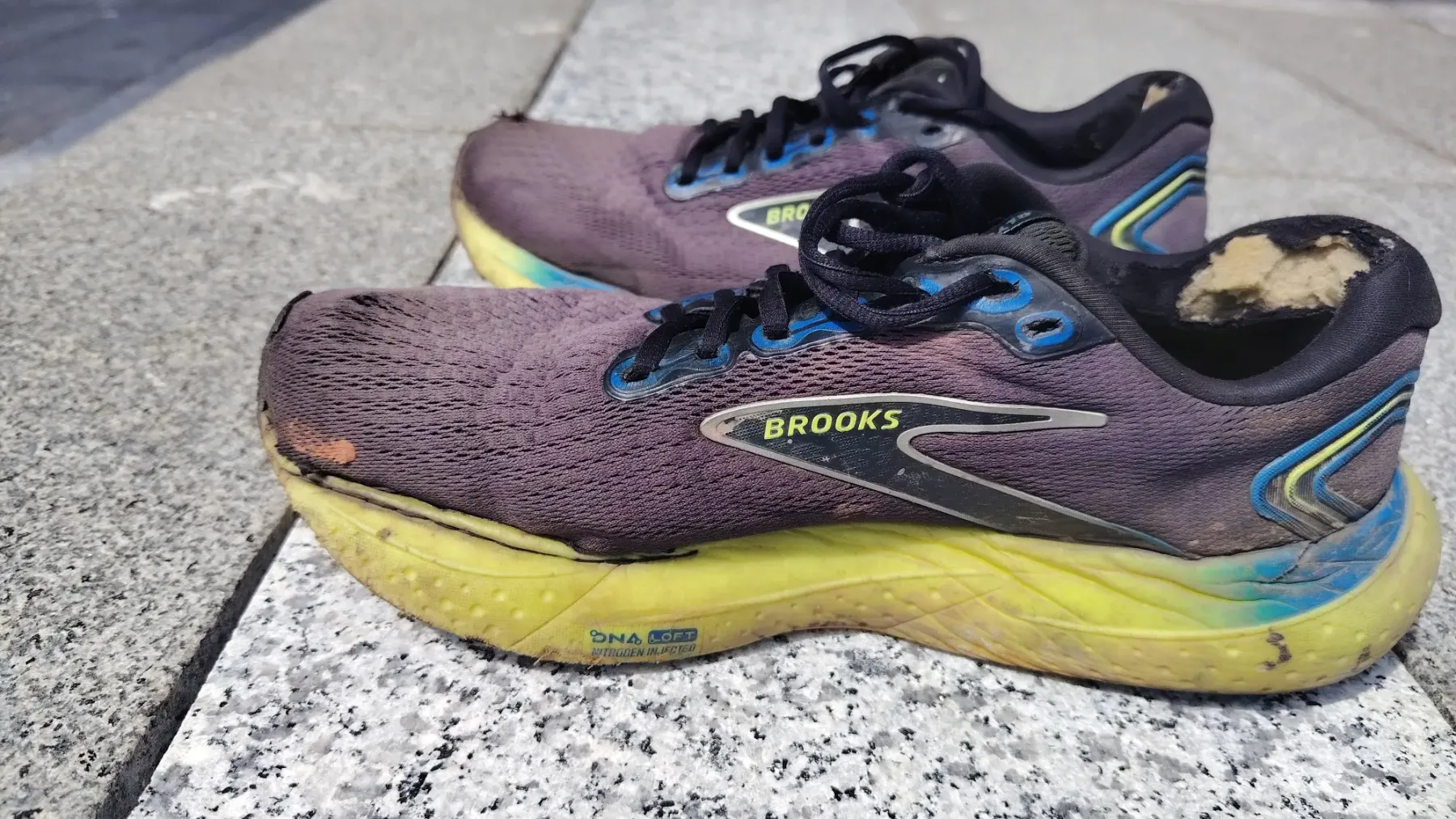
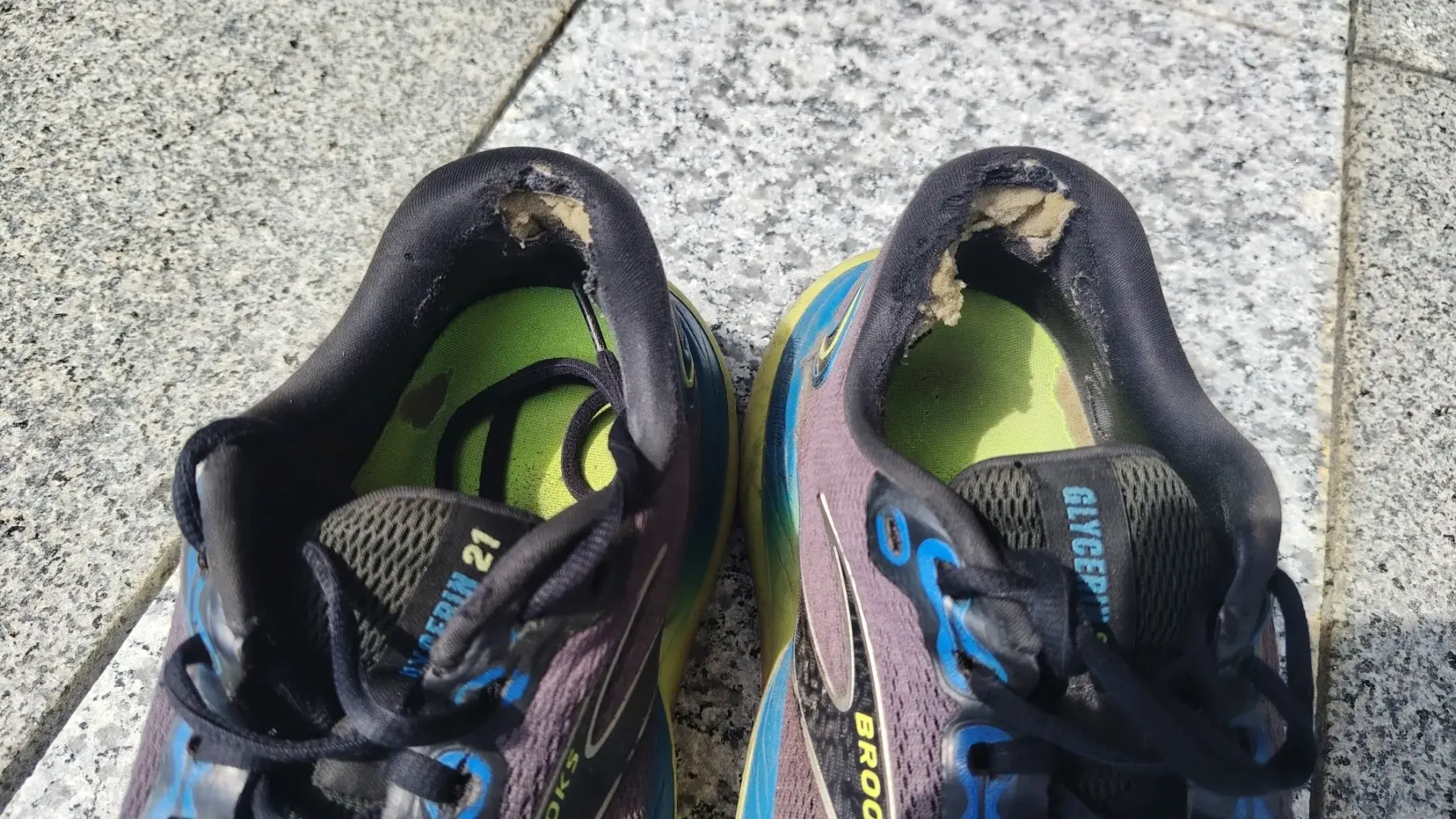
I didn’t buy it to have it breathe its last here.
It wasn’t designed to look after my steps for 5–10 kilometers every day.
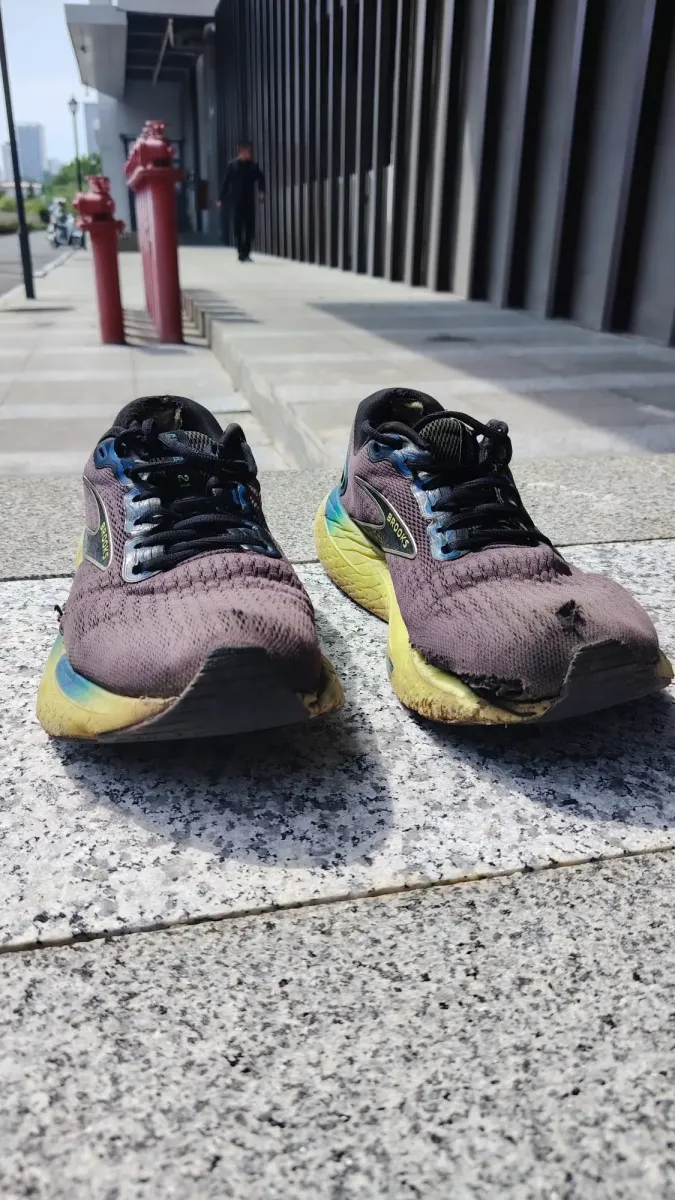
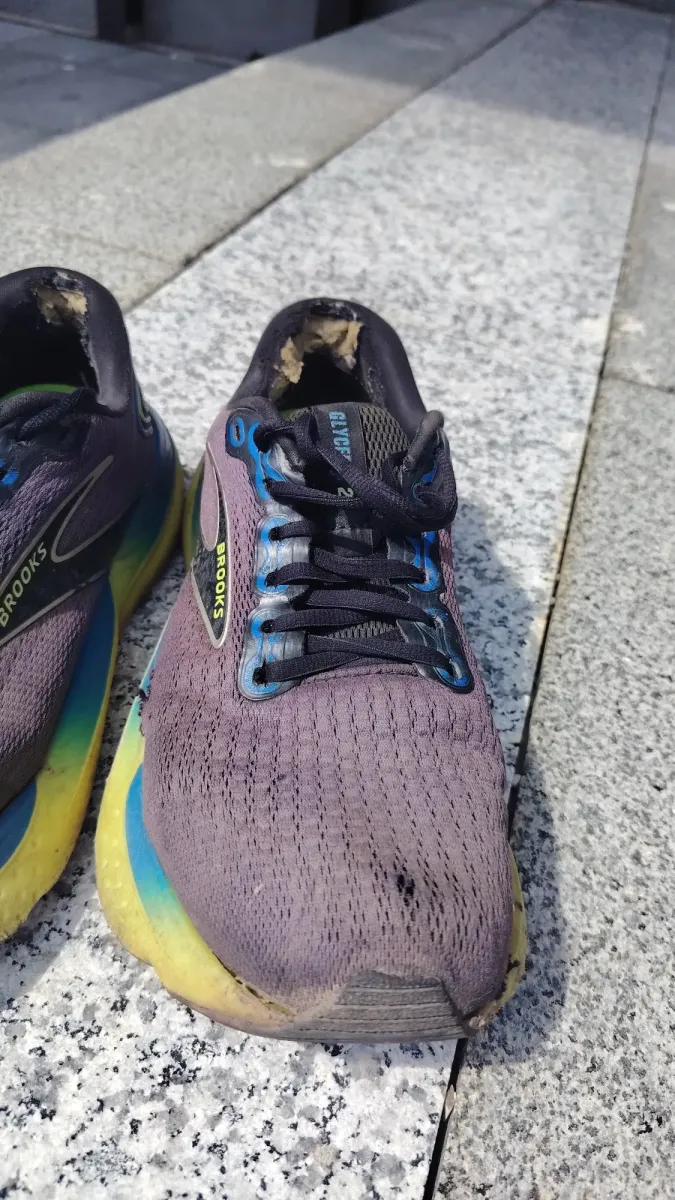
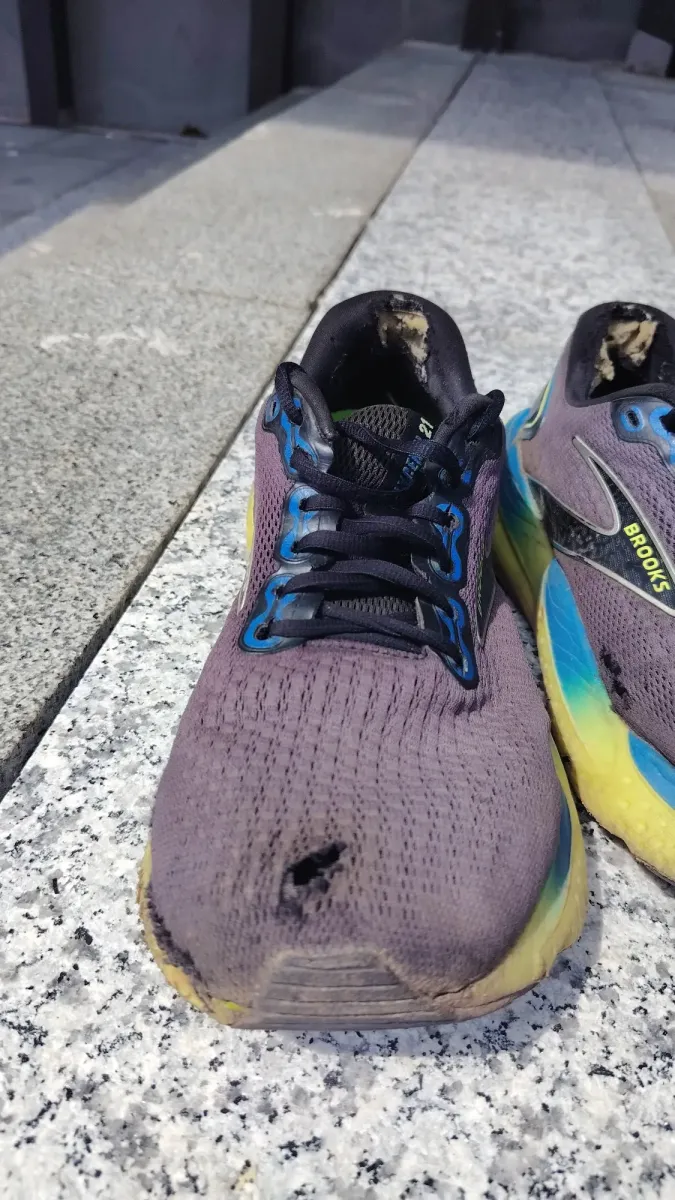
Yet, it did what was required. It took about 3,000 km for its final day to arrive. That is, I believe, many times the distance it was built for.
Today, I said goodbye to my old running shoes.
I bought a new pair at the local mall. I took a few photos and a video of the old ones because I want to feature them in the “The Miracle Is Already Here” video series. While I was capturing those final moments next to the mall, a security guard got suspicious. He came over, and the two of us watched the footwear’s final minutes together.
I admit, I did commit a bit of desecration of the corpse: I took the laces out of the shoes.
The funeral wasn’t sad. I felt gratitude for the shoes. They served me well for a long time. That’s what I was thinking as I tossed them into the trash.
If there is a heaven for shoes, then this pair is surely very happy there right now.
At least as happy as I am in Sihanoukville.
Buy me a coffee?

If you enjoyed this story, you can buy me a coffee. You don’t have to – but it means a lot and I always turn it into a new adventure.
Buy a coffee for Steve
 Linktree
 Short introduction